Publish with Us

Follow Penguin

Follow Penguinsters

Follow Penguin Swadesh

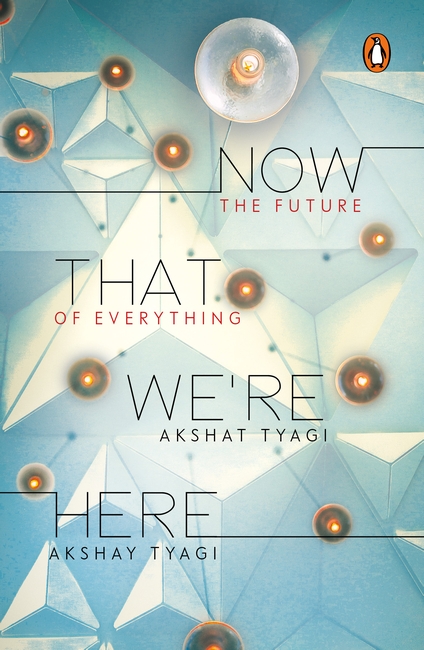
Now That We’re Here

How do you prepare for a future if you don’t know what it is? How do you specialize in anything if the horizon is constantly shifting? What’s the goalpost and how do we get there? Is there even a goalpost?

The hyperconnected world that once seemed futuristic is now here. And now that we’re here, it’s time for us to educate ourselves for sweeping and endless possibilities. One way to do that is to blur the lines between technology, democracy, design, economics and data, and reconfigure our approach to learning altogether. This book is a giant leap in that direction. By harnessing the wisdom of thought leaders and intellectuals throughout history, by blending business and humanity, industry and society, and by covering cross-disciplinary themes, authors Akshay Tyagi and Akshat Tyagi give us a groundbreaking, genre-defying and utterly mind-bending collection of essays that will help us prepare for the here and now.
Faster

Our phones, computers and tablets are getting more powerful-but how many of us know the ways to get the most out of them? Bestselling author Ankit Fadia shows you how.

· Send an email in the future
· Fake an incoming call on your mobile phone
· Catch a cheating partner red-handed!
· Remember where you parked your car
· Block inappropriate websites from your kids
· Automate tasks on your mobile phone
· Hide files inside photographs!

Faster: 100 Ways to Improve Your Digital Life contains all the tips and tricks for you to stretch the limits of emails, computers, social networks, video sites and everything else digital. With easy-to-use examples and loads of screenshots, this edition, updated with all the latest information and apps, is the perfect digital companion for you.

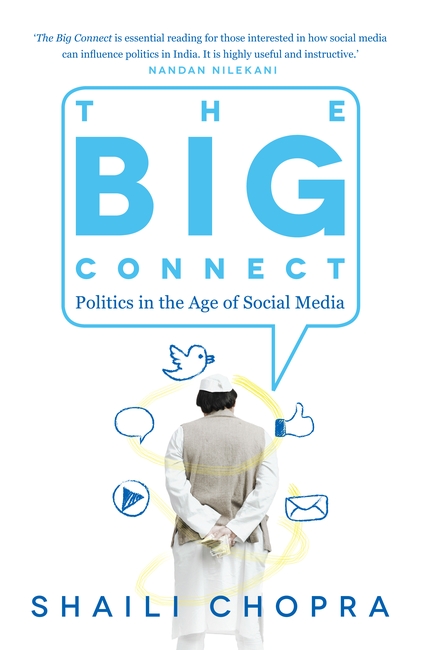
The Big Connect

Are digital means of communication better than traditional bhaashans and processions? Will a social media revolution coerce armchair opinion-makers to head to poll booths?
Twitter, Facebook, and LinkedIn are changing the way the denizens of the world, and more specifically youth of this country, communicate and connect. In The Big Connect, Shaili Chopra traces the advent of social media in India and how politics and lobbying has now shifted to the virtual floor. She argues that though a post, a pin, or a tweet may not translate into a vote, it can definitely influence it. With comparisons to the Obama campaign of 2008 and 2012 and analysis of the social media campaigns of political bigwigs like Narendra Modi, Rahul Gandhi and Arvind Kejriwal-the book discusses the role of a digital community in Indian politics.

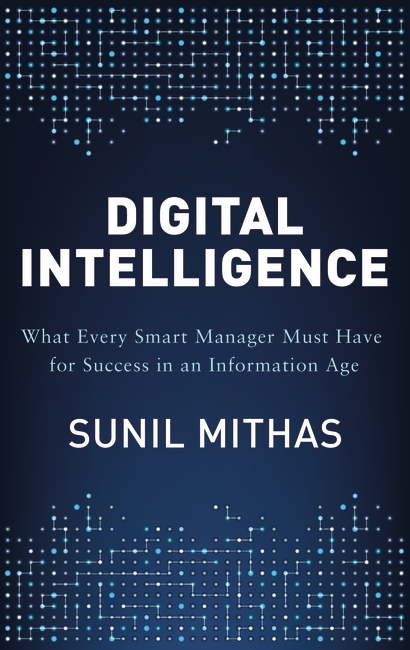
Digital Intelligence

Digital intelligence-the ability to understand and use the power of information technology-is becoming critical for organizations and managers to thrive in the global marketplace. The digital revolution is impacting almost every industry, functional area and business process, as shown by innovative market entrants such as Uber and Airbnb. Success in the digital economy will require leaders and managers to invest in their own digital intelligence and that of their teams to navigate the ongoing transformations.
Technical skills and knowledge are important in any dynamic and growing economy, and especially in economies such as India where technology provides a way to leapfrog competitors and accelerate growth. Here, managing and nurturing digital intelligence is not only key for economic success, but also necessary to achieve sustainable development for millions of consumers and workers at the base of the pyramid.
This remarkable book by an expert and leading scholar on digital strategy tells you how to innovate digitally and make your organization future-ready.

Genie in the Machine

The future of businesses depends on how they respond to the lightning-speed changes in innovation technology

We have long considered inventing to be a uniquely human activity. But software today can automatically generate designs for everything, from toothbrushes to automobile frames, more quickly and inexpensively than ever before. Artificial invention is enabling small teams of inventors to compete with mega-corporations who depend on old methods, and is making it possible for even consumers to design and manufacture new inventions from the comfort of their home.

The Genie in the Machine is a landmark book that explores the impact of AI-powered innovation on businesses. Along with practical advice for inventors, high-tech companies and patent lawyers, this futuristic book attempts to answer two necessary questions: Should inventions designed by software be patentable? Should the software that produces those designs be patentable?

Our decisions about these inventions today will dictate who gets to control this powerful technology tomorrow.

Breach

A journalist accused of hacking the inbox of a billionaire
A company which fought back when its data was stolen
An entrepreneur who fought an international battle to end piracy
A hacker who decided to take a start-up hostage by stealing its data
Full of riveting stories of hackers, police and corporates, Breach reads like a thriller. The book brings to light several incidents which till now were brushed under the carpet. It has instances of piracy, data theft, phishing, among many others.
Even though he focuses on India, Nirmal John takes great pains to show links between underground international networks working to undermine data security.

Moong over Microchips

Venkat Iyer was living a fast-paced life in the IT world in Mumbai when he decided to stop and take a long, hard look at where he was headed. Disheartened by his stressful existence in the city, he decided to give it all up and take up organic farming in a small village near Mumbai. But it wasn’t easy. With no experience in agriculture, his journey was fraught with uncertainty. He soon went from negotiating tough clients, strict deadlines and traffic to looking forward to his first bumper crop of moong. As he battled erratic weather conditions and stubborn farm animals, he discovered a world with fresh air and organic food, one where he could lead a more wholesome existence. At times hilarious, and other times profound, this book follows his extraordinary story.

Your Happiness was Hacked

We’ve become a tribe of tech addicts, and it’s not entirely our fault.
Taking advantage of vulnerabilities in the human brain function, tech companies entice us to overdose on technology interaction. This damages our lives, work, families and friendships. Swipe-driven apps train us to evaluate people like products, diminishing our relationships. At work, we email on an average of seventy-seven times a day, ruining our concentration. At home, light from our screens contributes to epidemic sleep deprivation.
But we can reclaim our lives without dismissing technology. The authors explain how to avoid getting hooked on tech and how to define and control the roles that it plays and could play in our lives. This profound and timely book turns personal observation into a handy guide to adapting to our new reality of omnipresent technology.

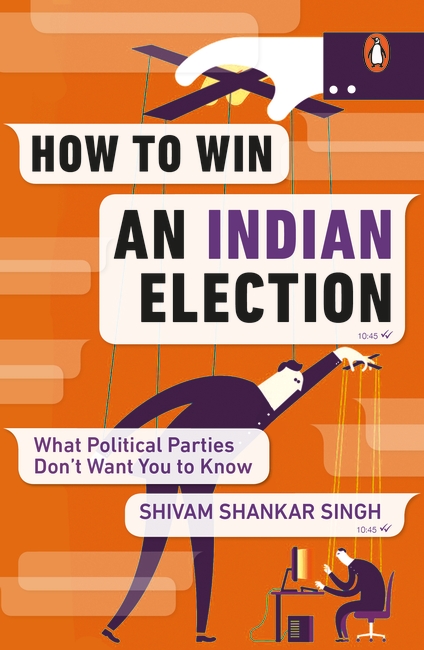
How to Win an Indian Election

What role do political consultants play in election campaigns? How are political parties using technological tools such as data analytics, surveys and alternative media to construct effective, micro-targeted campaigns? How does the use of money impact election results? What aids in the en masse dissemination of divisive propaganda and fake news? What does it take to win an election in India today? What is the future of politics in the country?
Written by a former election campaign consultant for a major political party, How to Win an Indian Election takes readers into the forbidden world of election war-rooms and gives them a glimpse of how strategy is formulated, what works with voters on the ground and what doesn’t. Based on research, interviews and the author’s own experiences, this book is invaluable for its insight into the inner workings of politics, political parties and what really makes for a winning election campaign.

A Human’s Guide to Machine Intelligence

Through the technology embedded in almost every major tech platform and every web-enabled device, algorithms and the artificial intelligence that underlies them make a staggering number of everyday choices for us: from what products we buy to where we decide to eat, from how we consume our news to whom we date and how we find a job. We’ve even delegated life-and-death decisions to algorithms-judgments once made by doctors, pilots, and judges. In A Human’s Guide to Machine Intelligence, Kartik Hosanagar surveys the brave new world of algorithmic decision making and reveals the potentially dangerous biases to which they can give rise as they increasingly run our lives. He makes the compelling case that we need to arm ourselves with a better, deeper, more nuanced understanding of the phenomenon of algorithmic thinking. The way to achieving that is understanding that algorithms often think a lot like their creators-that is, like you and me.

Hosanagar draws on his own experiences designing algorithms professionally, as well as on examples from history, computer science, and psychology, to explore how algorithms work and why they occasionally go rogue, what drives our trust in them, and the many ramifications of algorithmic decision making. He examines episodes like the fatal accidents of self-driving cars; Microsoft’s chatbot Tay, which was designed to converse on social media like a teenage girl, but instead turned sexist and racist; and even our own common, and often frustrating, experiences on services like Netflix and Amazon. A Human’s Guide to Machine Intelligence is an entertaining and provocative look at one of the most important developments of our time and is a practical user’s guide to this first wave of practical artificial intelligence.

error: Content is protected !!