



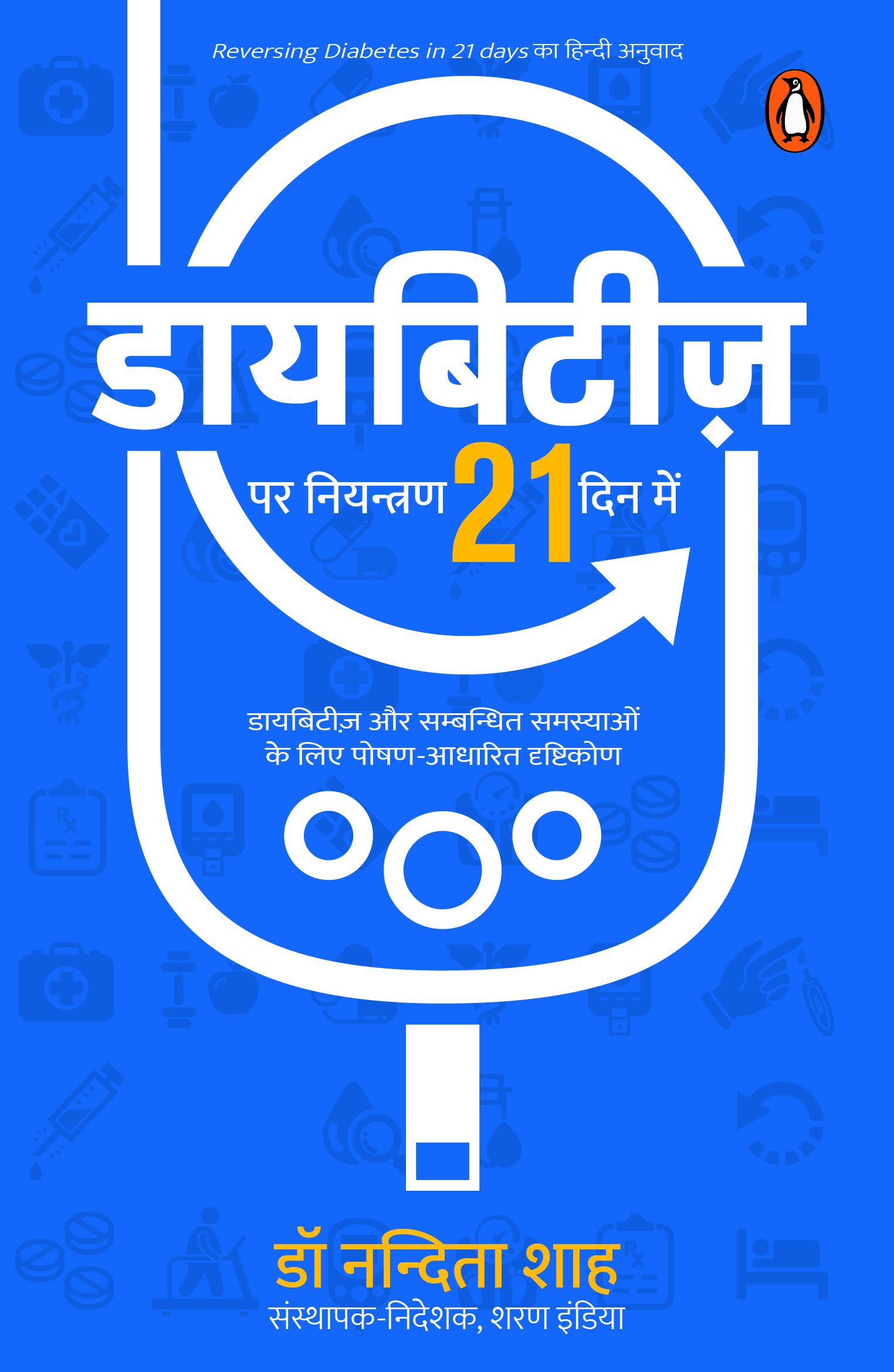
डायबिटीज़ पर नियन्त्रण, वह भी 21 दिनों में।अविश्वसनीय नहीं, यह सच है।जानी-मानी और अनुभवी डॉ नंदिता शाह वैज्ञानिक प्रमाण देते हुए टाइप 2 और टाइप 1 डायबिटीज़ के वास्तविक कारणों को विस्तार से बताती हैं, और अपनी विशेषज्ञता से एक ऐसी दिनचर्या की रूपरेखा तैयार करती हैं जो इस बीमारी को नियन्त्रित करने में मदद करती है।इंसुलिन प्रतिरोध और इंसुलिन की कमी के कारण का पता लगाकर, 21 दिनों में डायबिटीज़ ठीक करने के तरीके पर एक ताज़ा, व्यावहारिक दृष्टिकोण सामने आया। इसे भारतीय सन्दर्भ, रीति-रिवाज़ों, स्वाद और विचार प्रक्रियाओं को ध्यान में रखते हुए सावधानीपूर्वक बनाया गया जिससे आम भारतीय के लिए बढ़िया स्टेप-बाइ-स्टेप मार्गदर्शिका तैयार की जा सके।प्रशंसा-पत्रों, कहानियों और वास्तविक जीवन के अनुभवों के ज़रिए यह बेहतरीन पुस्तक आपको बताती है कि ऐसे कई मामले काफ़ी हद तक नियन्त्रित किए जा सकते हैं‘डायबिटीज़ पर नियन्त्रण 21 दिनों में, इसमें डॉ नंदिता शाह ने आपसे वो उपाय साझा किए जो डायबिटीज़ से निपटने में आपकी मदद करेंगे और स्वास्थ्य में क्रान्तिकारी बदलाव लाएँगे। अनेक लोगों ने डॉ शाह की विशेषज्ञता से लाभ लिया, अब आप भी लें’—डॉ नील बरनार्ड, अध्यक्ष, फ़िज़िशियन’स कमेटी फॉर रेस्पोंसिबल मेडिसिन और लेखक ।
Catagory: Crafts, Home & Lifestyle
Fabulous Feasts, Fables and Family
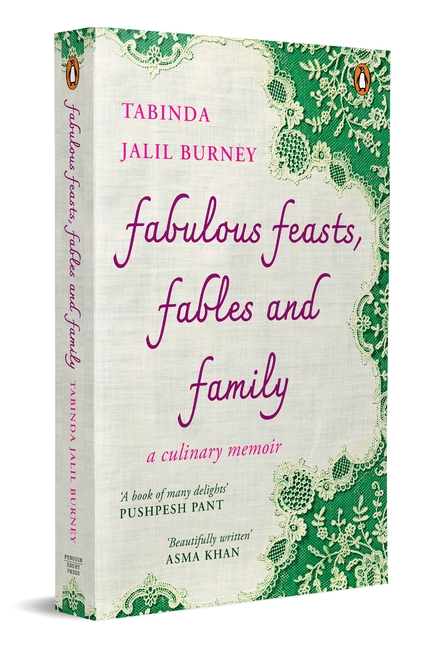
Deeply personal and intimate, this absolutely magical culinary memoir by Tabinda Jalil-Burney combines recipes and memories from the idyllic summers of her childhood which she spent with her grandparents in Aligarh. There, presided over by Amma—her formidable grandmother—the extended clan gathered and as the women concocted delicious dishes, they exchanged family stories and lore, embroidered, knitted and crocheted, while the children played games free of distractions.
Family entertainment included bait bazi, involving people reciting couplets in a chain. Some family dishes were prepared by talented home cooks and some by the women from extended family. Over the years, recipes began to be associated with a particular aunt or grand aunt. No one used a recipe book or measured quantities when cooking. They cooked with the seasonal produce available at home and measurements were by andaaza. Everyone would eat sitting cross-legged by a courtyard with tamarind and guava trees and the large thorny bushes of the sour kakronda berries.
In here are family secrets for the best shami kebabs, qormas, chuquandar gosht and desserts. This richly textured, densely peopled memoir conjures the vanished world of an Aligarh family in the sixties and seventies through food and cooking, and of India long gone.
General Knowledge Genius! A Quiz Encyclopedia to Boost Your Brain (DKYR EDITION)
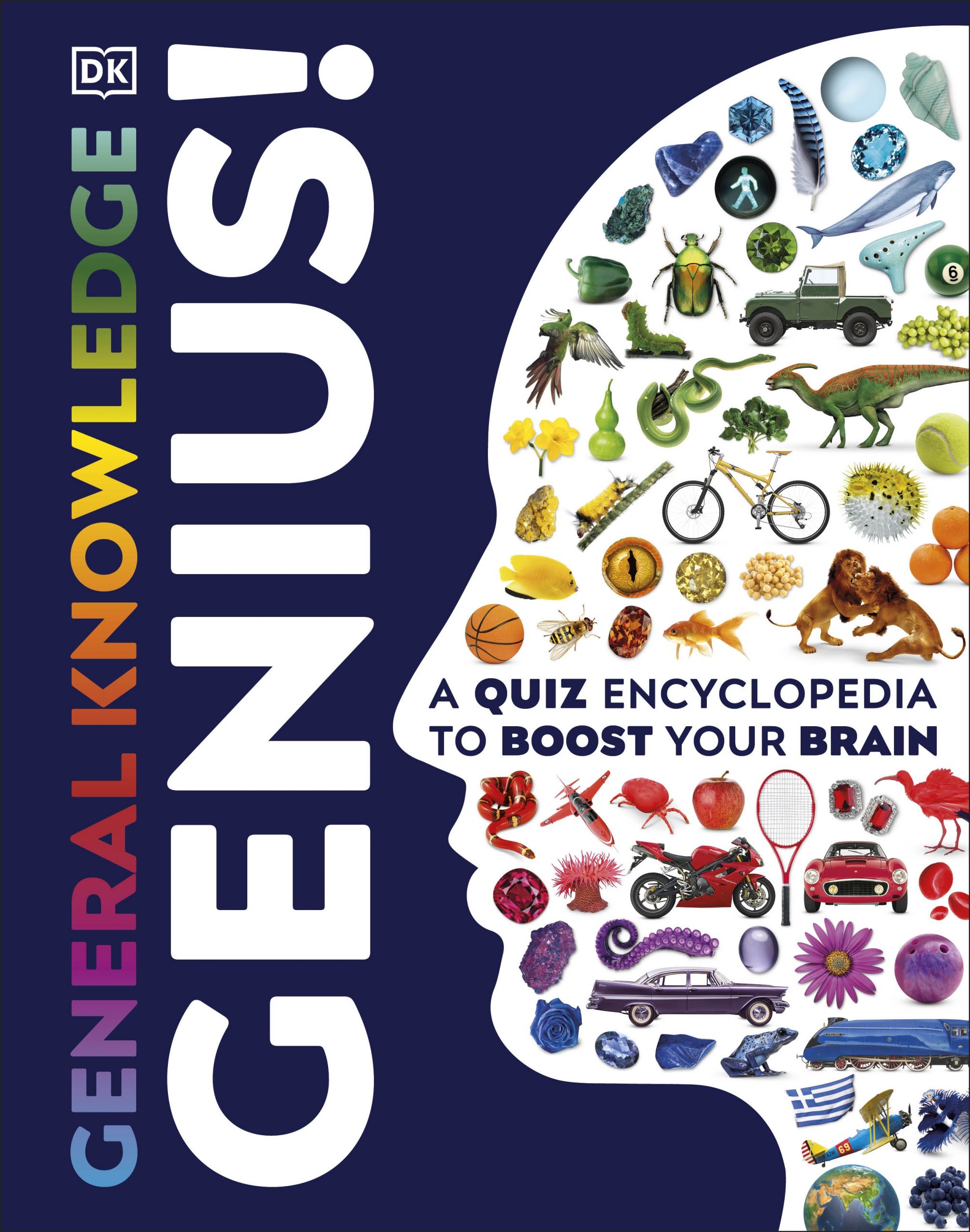
A brilliant quiz book for clever kids – put your general knowledge to the test and boggle your family and friends with your brainpower!
Can you name the longest river in Europe? Do you know your skull from your sternum? Can you identify an archaeopteryx and an allosaurus? Can you recognise the flags of India and Italy?
You can!
Then what are you waiting for? Open the pages of General Knowledge Genius to find out what you know, and challenge yourself to learn even more!
With more than 60 topics, from across the encyclopedia, there’s something for everyone. The pages are packed with eye-popping pictures – but do you know what they show? To help you, “Test Yourself” panels list what you’re looking for. With three levels of difficulty, the challenge gets harder as you work your way from Starter, to Challenger, and finally the truly tricky Genius category. If you need it, there’s a fun fact with every picture to give a helpful clue.
Take on the General Knowledge Genius brain-busting challenge!
The Illustrated Masala Lab
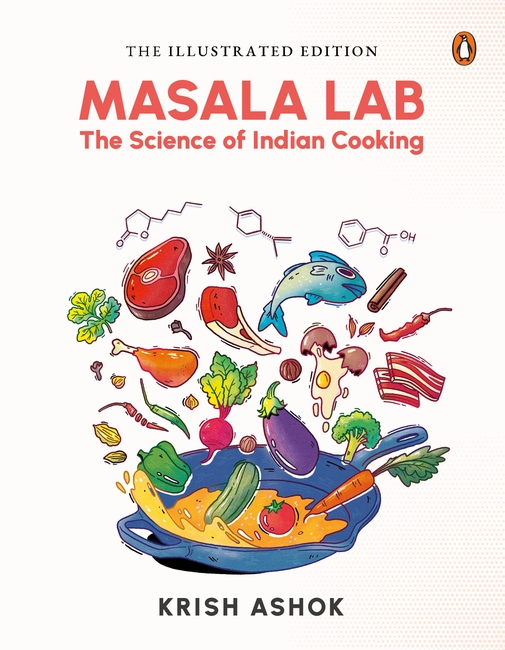
With its meteoric rise to bestseller status, Masala Lab has captivated readers across generations, and now returns as an irresistible collector’s edition, adorned with ingenious additions, illustrations, infographics and charts: it’s the collector’s edition you know your kitchen-laboratory needs.
Ever wondered why your grandmother threw a teabag into the pressure cooker while boiling chickpeas, or why she measured using the knuckle of her index finger? Why does a counter-intuitive pinch of salt make your kheer more intensely flavourful? What is the Maillard reaction, and what does it have to do with fenugreek? What does your high-school chemistry knowledge, or what you remember of it, have to do with perfectly browning your onions? Just like memorizing an equation might have helped you pass an exam but not become a chemist, following a recipe without knowing its rationale can be a sub-optimal way of learning how to cook.
Masala Lab by Krish Ashok is a scientific exploration of Indian cooking aimed at inquisitive chefs who want to turn their kitchens into joyful, creative playgrounds for gastronomic experimentation. In this special edition, Meghna Menon’s vibrant illustrations effortlessly complement Krish Ashok’s lighthearted approach to the demystification of culinary science, making it the perfect vehicle to absorb the exhaustive testing, groundbreaking research and scientific rigour that went into the making of this revolutionary book.
Naam, Namak, Nishan
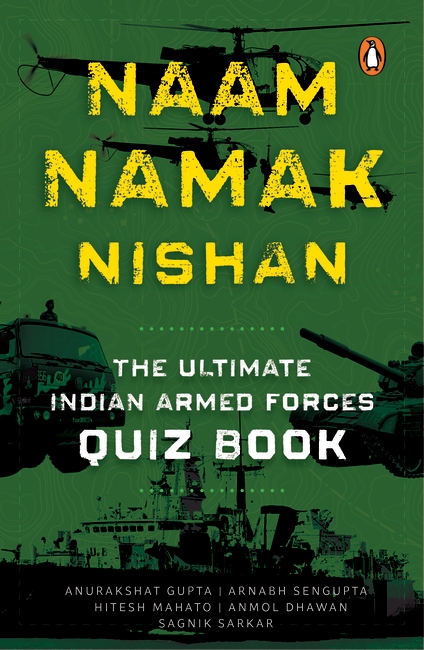
Do you know why the Indian Navy counts ‘One, Two, Six’ instead of ‘One, Two, Three’ while doing group tasks?
Or that the Intelligence Bureau was set up in response to an assassination?
Or that a Frenchman who had served three nations before turning thirty eventually rose to become the most powerful general of the Marathas?
Or that an army man gave his name to the highest mountain without ever having set foot on it?
Find out the answers to these and more as a team of quizzer-doctors from the Armed Forces Medical College (AFMC) Pune takes you on a journey across 250 questions, exploring trivia that connects the Indian Armed Forces to topics ranging from mythology, history and art to geography, fashion and sport.
This and more in a quiz book that will help you see the Indian Armed Forces through a lens you might never have seen before.
Happy exploring!
Mrs K M Mathew’s Finest Recipes
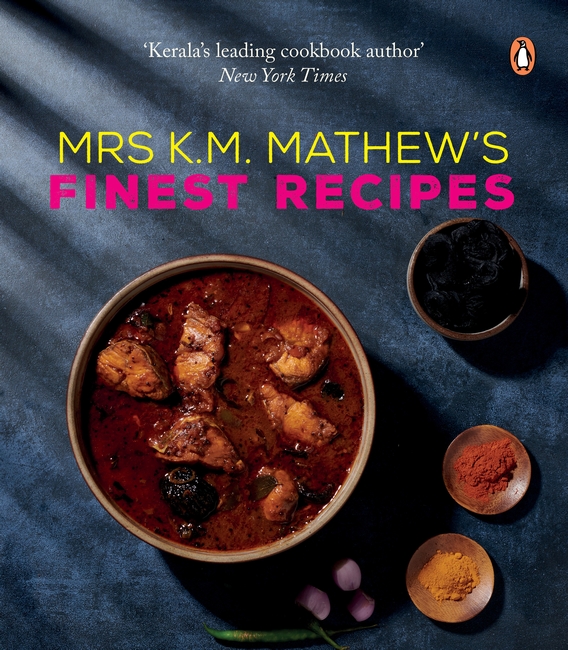
Few have championed the cuisine of Kerala like Mrs K.M. Mathew (1922-2003), who authored many a column and twenty-three cookbooks, introducing an entire generation to the culinary culture of the state. A true master of the craft, she travelled across the length and breadth of Kerala, visiting homes and restaurants, noting down recipes, before going back home to experiment with dishes repeatedly until they were perfect. Eventually, she ushered in a shift from the oral telling of recipes to written instructions, and before long, due to her innovative and easy step-by-step approach to cooking, her cookbooks were being
gifted to newly married couples. Even today, her books not only serve as a treasure chest of unforgettable recipes but also inspire new readers to rush to the kitchen.
Mrs K.M. Mathew’s Finest Recipes brings a definitive compilation of her all-time top recipes, which have been enjoyed around the world, to a new generation of readers.
Slow is Beautiful
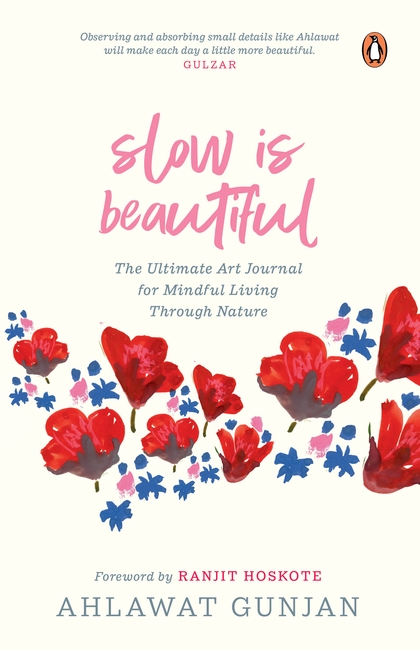
Slow is Beautiful is an invitation to embark on a journey through mindfulness and cut through the clutter and noise of the world around you. Under the guidance of artist and visual designer Ahlawat Gunjan, you’ll learn to see, observe, reflect, and practise using artistic techniques developed through years of training to re-kindle a lost instinct. This beautiful collector’s edition prepares you to welcome a new artistic vision into your lives by building a relationship with form, colour, and composition in a uniquely accessible way.
Each of the sixty easy-to-use prompts in this book is an essential step highlighted by vibrant ink and watercolour paintings inspired from nature, created and curated by the artist himself to motivate readers to draw, erase, paint, experiment, create and, most importantly, embrace their mistakes.
The Book of Dals
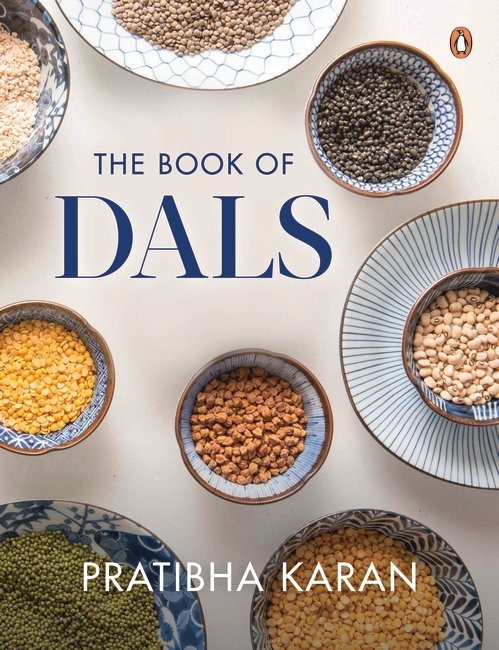
Dals have been an essential part of the human diet for centuries and they are an integral part of Indian cuisine. There are many enticing varieties of dals to choose from.
Pratibha Karan, in The Book of Dals, takes you on an incredible journey to different regions of the country and shows how locally available spices and herbs, vegetables and fruit impact the food of that region. The variety of dals and dal-based dishes that you can make with these are phenomenal and mind-boggling.
This book offers many varieties of beautiful, fragrant and beguiling dals that will have anyone savouring them in raptures. From the southern India, you will find Telangana Sambar, Khatti Dal and Dalcha with Vegetables and Meat. They are made using delicious combinations of chillies, tamarind, cloves, cardamom, pepper, coconut, curry leaves and drumsticks. It also has recipes such as Kootu from Tamil Nadu and the famous Bisi Bele Huliyana from Karnataka.
You will also find Lentils in Coconut Milk, Katachi Amti and Moong Sprouts from Maharashtra, and Dhansak, a Parsi dish, from Gujarat in western India. Dals from eastern India such as Chana Dal Bengali-style and Assamese Mati Maa are included. From the northern India, Delhi Rajma and Punjabi Dal Makhani find a place in the book.
This book is not limited by borders. It includes exotic dal recipes from the neighbouring countries like Nepal and Sri Lanka, and some delicious and wholesome dal-based soups too.
Degh to Dastarkhwan
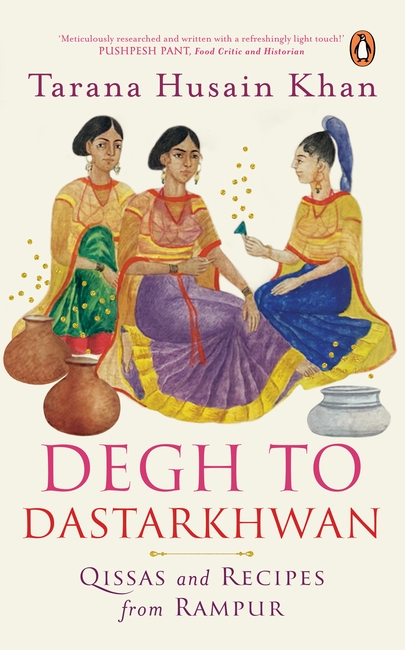
Tarana was an indifferent eater and an unenthusiastic cook until a chance encounter with a nineteenth-century Persian cookbook in Rampur’s fabled Raza Library started her off on a journey into the history of Rampur cuisine and the stories around it.
Part food memoir and part celebration of a cuisine, Degh to Dastarkhwan answers the question-‘what constitutes and distinguishes Rampur cuisine?’ Each chapter represents an emotion, an observance or a celebration. The spread of Rampuri food from the grand royal cuisine to the simple daily fare becomes the arena to express love, loss, forgiveness and spirituality. Peopled with compelling characters from all walks of life, the book is a tour de force that includes recollections of a princess to the spiritual ambience of a Sufi shrine, with stories of khansamas, weddings and funerals.
How to Raise a Plant Baby
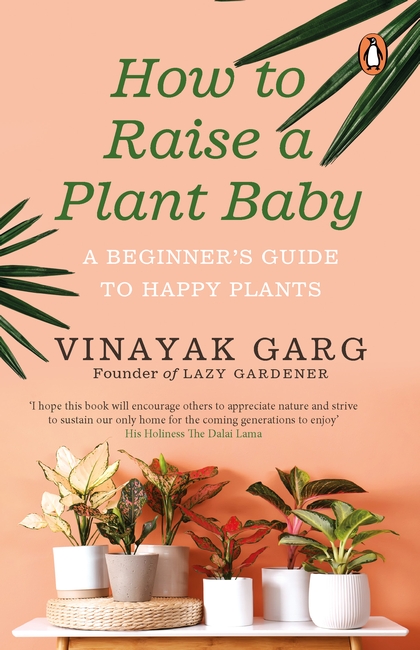
Urbanization has changed the way we garden and raise plants in our homes. As large spaces have become a luxury, the sprawling lawns in a house are a rare sight. They are replaced now by plants grown in small spaces, often indoors, with limited light, water and nutrition. This calls for relearning the principles of gardening that suit this new paradigm.
Written for all plant parents trying to raise their plant babies in an urban setting, this book is built on basic principles that keep plants healthy and covers all topics that any plant parent need to know-how to prepare their space, how to choose the right plants for their home, how to care for the plants and keep them happy and how to get family and friends started with plants of their own.
With stories from the Lazy Gardener community, supplemented with chapter-end summaries, explanatory illustrations and plant lists, the book will equip the reader to ask the right questions as they continue to garden and cultivate their knowledge of gardening. Useful for both new and experienced plant parents, Vinayak Garg’s How to Raise a Plant Baby guides them and explains everything they need to know.