



Just as each ruler left his architectural mark on Delhi, so each bequeathed to it a culinary legacy. Flavors of Delhi: A Food Lover’s Guide tells the story of Delhi through its food. It explores the city’s culinary history beginning with Indraprastha, taking us through the Sultanate period, Mughal rule and the British raj, and bringing us right up to the present. Professional chef and food writer Charmaine O’Brien’s love for Delhi and its culinary delights is evident. She tells us not only what to eat, but also where to eat it. From paranthas in the galis of Chandni Chowk to kakori kababs at the fancy Dum Pukht, from chaat at a roadside stall to appams at Keraleeyam, from fresh fruit and vegetables at INA Market to fish at Chittaranjan Park, O’Brien takes us on a guided tour through the capital, encouraging us to sample and savour as we see. History comes alive as the recipes in this book allow us to recreate the varied flavors of the city in our kitchens. The result of extensive travel and research, and lavishly illustrated with photographs taken by Kirsten Grant, Flavors of Delhi is a fascinating read that whets the reader’s interest and appetite.
Catagory: Crafts, Home & Lifestyle
Anglo Indian Food And Customs
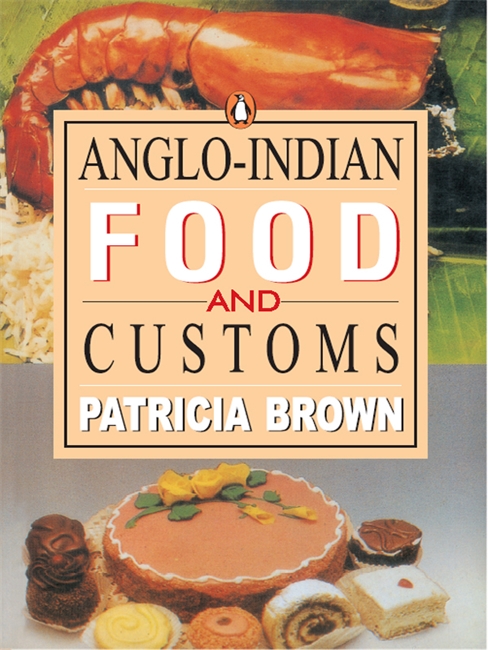
East meets West to create a unique cuisine of mixed European and Indian parentage, the Anglo-Indians adopted the religion, manners and clothing of their European forefathers. Yet, over the years, those of them who made India their home successfully integrated into the mainstream of Indian society. And some of the most glorious results of this assimilation took shape in the kitchen, the territory of the memsahib and her trusted khansamah. Anglo-Indian cuisine is a delicious blend of East and West, rich with the liberal use of coconut, yogurt and almonds, and flavoured with an assortment of spices. Roasts And Curries, Pulaos And Breads, Cakes And Sweetmeats, All Have A Distinctive Flavour. The Western Bias For Meats And Eggs Is Offset By The Indian Fondness For Rice, Vegetables, Curds, Papads, Pickles And Chutneys. And There Is A Great Deal Of Innovation And Variety In Soups, Entrees, Side Dishes, Sauces, Salads And Desserts.
Kashmiri Cooking
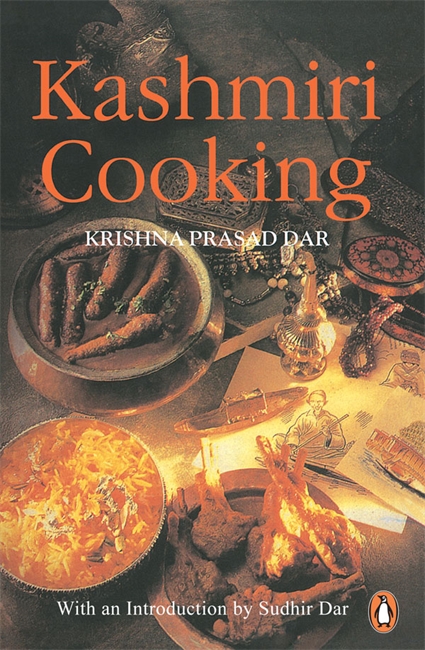
Krishna Prasad Dar’s collection of over a hundred Kashmiri recipes became a classic in its time. First published a decade ago. this new revised edition is beautifully illustrated by his son, cartoonist Sudhir Dar, with an informative introduction to Kashmir! food, one of the subcontinent’s most elaborate and interesting cuisines.
The Essential Kerala Cookbook
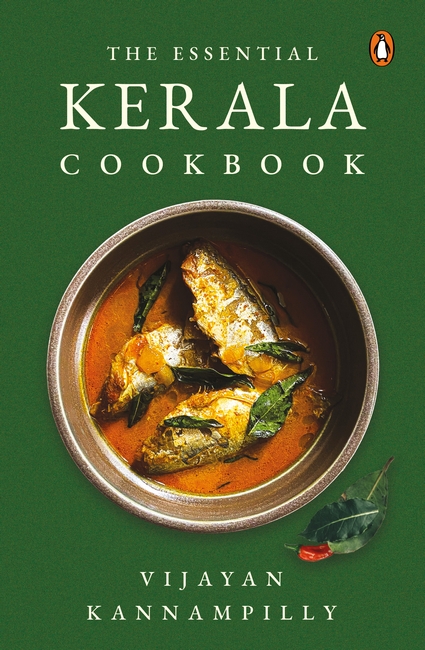
In recent times, the coconut-flavoured cuisine of the Malayalis has gained immense popularity. Appam and Istoo, Avial and Olan, Irachi Biryani and Pathiri, all these and more are now served in restaurants and homes all over India. As the author explains in his introduction to the book, the ancient association of food with religion, the influence of foreign trade and the intermingling of different communities have all combined to make Kerala cuisine what it is today. Interestingly, even though a variety of spices grow literally in their backyards, Malayalis abstain from an overpowering use of these, rendering their cuisine different from other Asian cuisines. Instead, there is a range of delicately spiced dishes, harmoniously balanced and simple to prepare, neither too rich nor too bland, and always delicious. The recipes in this volume cover the entire range of vegetables, meat, seafood, pickles, sweets and snacks, served both as daily fare and as part of the sadya on festive occasions, taking in the specialities of the different regions and communities of the state.
Diabetic’s Cookbook

Being a diabetic does not mean you have to eat boring or insipid food, and here are some interesting and unusual recipes to prove it. Not only are these recipes simple to follow, they also use ingredients readily available in a regular kitchen. The end result is healthy food that is so delicious that non-diabetic members of the family will also enjoy it, thus doing away with the need to prepare `special’ food for a diabetic person. And to help monitor calorie intake, a crucial aspect of diabetic care, every recipe is supplemented with a list of the protein, fat and carbohydrate content as well as the total calories per serving. The introduction, by a dietician specialized in diabetics, clears many myths and fears concerning the disease. It explains lucidly how and why diabetes occurs, what its side effects are and what causes them, and how to control diabetes. So, if you are a diabetic or know one in search of a healthy yet adventurous diet plan, this is the perfect book for you.
Eating India
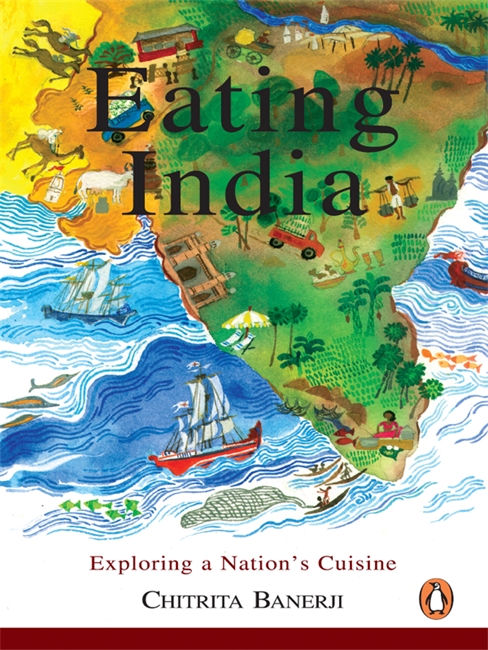
In Eating India, award-winning food writer Chitrita Banerji takes us on an extraordinary journey through a national cuisine formed by generations of arrivals, assimilations and conquests. Traveling across the length and breadth of the country-from Bengal to Goa and Karnataka, via the Grand Trunk Road, then northwards to Amritsar, Lucknow and Varanasi, on to Bombay and Kerala-Banerji discovers a civilization with an insatiable curiosity, one that consumes the old and the new with eager voracity. Weaving together myths and folklore associated with food, the people and their culture, the author narrates captivating accounts of life in the subcontinent: the legend behind the week-long harvest festival of Onam; the strictly observed rules of kosher in the Jewish households of Cochin; the best Benarasi thandai that has a dollop of bhang in it; and the food and culture of the indigenous people who hover on the edges of mainstream consciousness, among others. Eating India is also peppered with fascinating tidbits from India’s history: the use of ‘shali’ rice to make pilafs during the Mughal period; the advent of chillies with the arrival of the Portuguese; British, apart from Goan, influence on Parsi society that prompted the Parsis to open the first girls’ school in India in 1849; and the medieval movable feast that unfolded on the travellers’ platter as they moved from east to west on Sher Shah Suri’s Sarak-i-Azam. At different points in her journey, Banerji shows us how restructuring old customs and making innovations is what India is all about: food in India has always been and still is fusion-one that is forever evolving. Certain to enchant anyone enamoured of Indian food and culture, Eating India is a heady blend of travelogue and food writing.
Following Fish
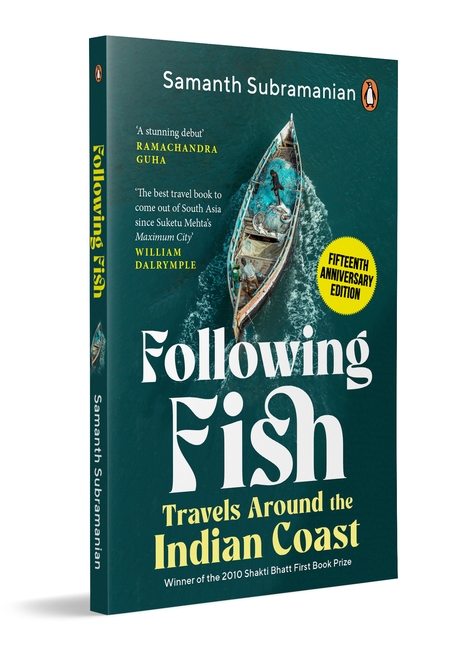
In a coastline as long and diverse as India’s, fish inhabit the heart of many worlds – food of course, but also culture, commerce, sport, history and society. Journeying along the edge of the peninsula, Samanth Subramanian reports upon a kaleidoscope of extraordinary stories. In nine essays, Following Fish conducts rich journalistic investigations: among others, of the famed fish treatment for asthmatics in Hyderabad; of the preparation and the process of eating West Bengal’s prized hilsa; of the ancient art of building fishing boats in Gujarat; of the fiery cuisine and the singular spirit of Kerala’s toddy shops; of the food and the lives of Mumbai’s first peoples; of the history of an old Catholic fishing community in Tamil Nadu; of the hunt for the world’s fastest fish near Goa. Throughout his travels, Subramanian observes the cosmopolitanism and diverse influences absorbed by India’s coastal societies, the withdrawing of traditional fishermen from their craft, the corresponding growth of fishing as pure and voluminous commerce, and the degradation of waters and beaches from over-fishing. Pulsating with pleasure, adventure and discovery, and tempered by nostalgia and loss, Following Fish speaks as eloquently to the armchair traveler as to lovers of the sea and its lore.
Biryani
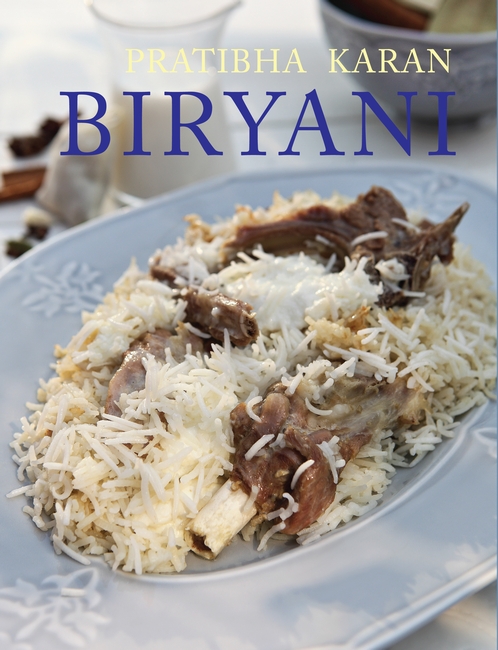
The biryani is India’s most beloved dish-one that has spread to all the four corners
of the country and assumed many forms.
It originated in the Mughal courts, flowering in the jagirs of Awadh, and it is in Lucknow, Delhi and
the small Muslim principalities of north India that one finds the classic versions, subtle, refined and
delicately flavoured. Pratibha Karan gives us not just the definitive recipes from these regions but
unearths rare and old dishes such as a biryani made with oranges, Rose Biryani and Kebab Biryani.
In the south, the biryani has an equally distinguished lineage, if not more so. There are the blue-blooded
biryanis of Hyderabad which include gems such as the Doodh ki Biryani, Keeme ki biryani
and Bater ki biryani. Away from the royal courts, the biryani has adapted itself into a spicy local
delicacy in Tamil Nadu, with many towns like Salem, Aambur, Dindigul boasting of their own
signature version of the dish. Kerala too is home to many-a prawn biryani spiced with curry leaves
and aniseed, a mutton one laced with star anise.
There are as many stunning variations in the east and west-Goan biryanis using vinegar and
olives; unusual dishes from the Parsi and Sindhi communities; Bengali adaptations using fish and
mustard seeds, even a dish from Assam!
Immaculately researched, full of extraordinary recipes, and beautifully designed and photographed,
Biryani is the ultimate book on this princely dish.
What’s Cooking in India?
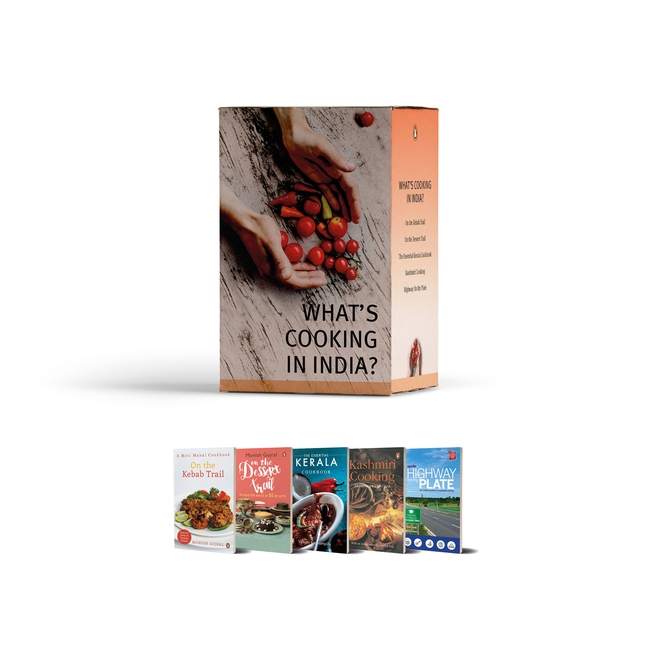
Monish Gujral’s On the Kebab Trail and On the Dessert Trail are the perfect reads for those who want to travel the world through their palates!
Vijayan Kannampilly’s The Essential Kerala Cookbook is a comprehensive guide to all your favourite Malayali foods.
P. Krishna Dar’s Kashmiri Cooking is a stunningly illustrated edition of a celebrated classic with over a hundred Kashmiri recipes!
Rocky Singh and Mayur Sharma’s Highway on My Plate: The Indian Guide to Roadside Eating is an indispensable companion for all your road trips!
Your Health in Your Hands

Ever been dissatisfied with following ONE fitness routine, and still holding on to your love handles? Here comes a collection that focuses on the complete you-from using yoga to mould your body to the fitness level you want and keeping stress at bay while losing weight, to eating the good home-made food that your body will love. This box set is for anyone and everyone looking for a healthy lifestyle, not a crash course in fitness.