



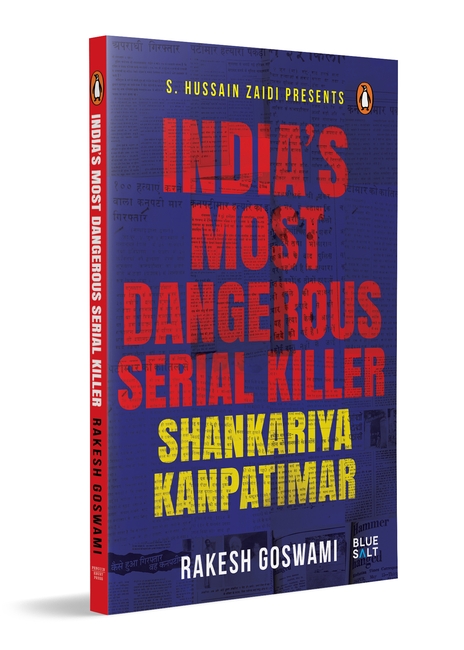
Shankariya Kanpatimar murdered nearly seventy people across Rajasthan, Punjab and Haryana in eighteen months, and that makes him India’s first recorded serial killer. He was hanged in the Jaipur Central Jail on 15 May 1979. He committed crimes in the most ‘brutal and dastardly’ way— all for theft. He would enter his victim’s house naked, kill with whatever object lay at hand, eat, smoke bidis, take a bath and leave only with the cash he found. In one of the murders, he managed to find only two rupees in the house. He came to be known as ‘Kanpatimar’ for the striking similarity of his murders with all his victims being hit on their temples, or kanpati, in Hindi.
Drawn from police files, FIRs, contemporary reportage and interviews, India’s Most Dangerous Serial Killer reconstructs both the killings and the world that enabled them. Told in the most truthful and unsparing voice of Rakesh Goswami, Shankariya’s story of how a petty thief turned into a dangerous serial killer, reveals a deeper moral rot.
Catagory: Crime, Thriller & Mystery
Portraits of Valour: Timeless Military Art | A Military Art Book on Indian Army Battles Including War Paintings | Celebrating the Bravery of the Armed Forces
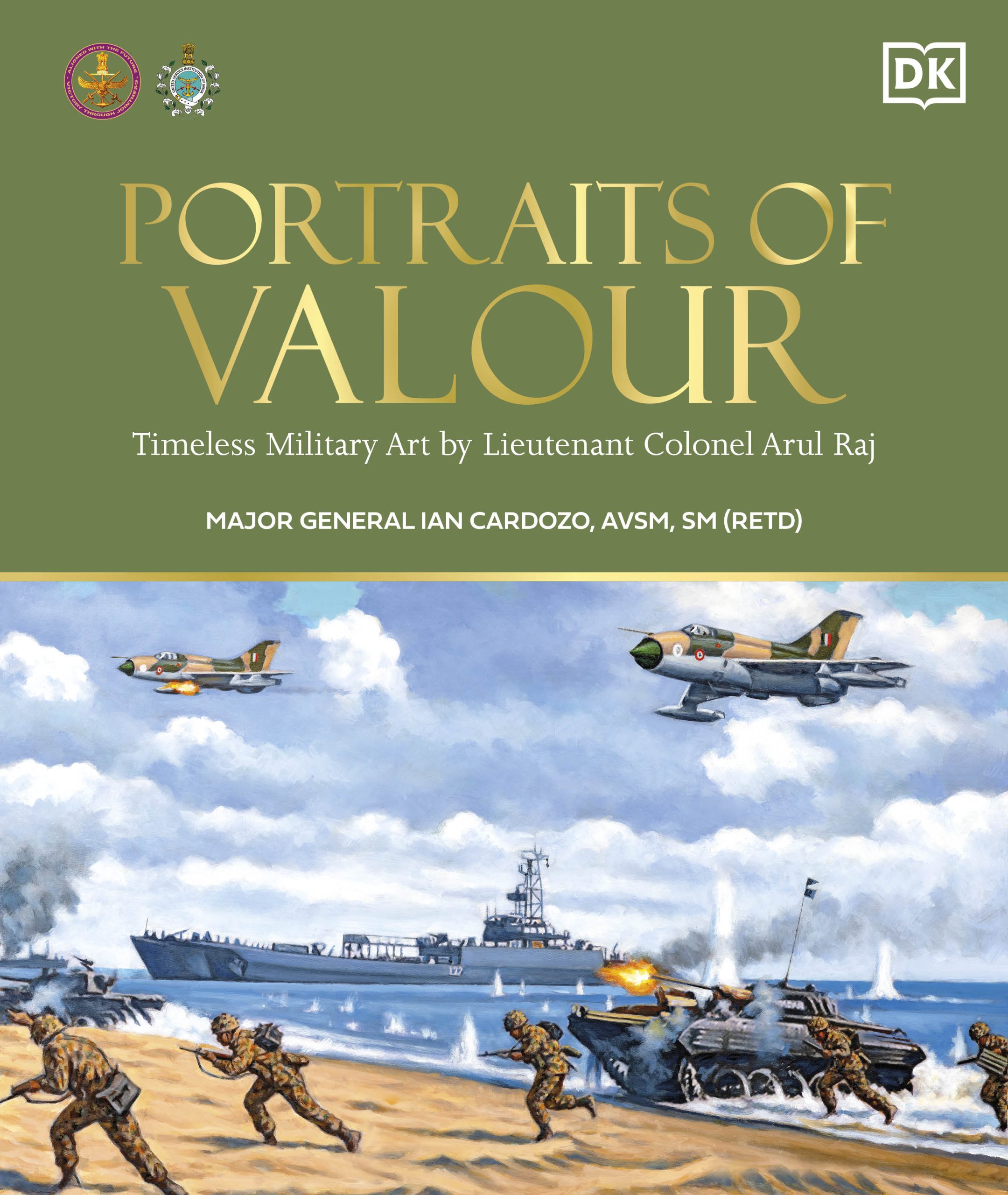
Ever wondered what a war truly looks like – in its heat and colour, its chaos and charged stillness?
Over five decades, Lieutenant Colonel Arul Raj, among India’s few military painters, has transformed experience, research, and memory into paintings that hold the small, electrifying truths of the battlefield: the tension in a commander’s stance, dust rising under marching boots, the silent focus of gunners. In Portraits of Valour, every artwork is rendered with striking clarity and carries the emotional depth of someone who has lived at the frontlines. You are not just looking at history – you are feeling it.
Paired with Major General Ian Cardozo’s insightful storytelling, the artworks in this book take on a rare authenticity. The narrative reveals not only the valour of soldiers, but the human stories behind their uniforms. It is a tribute to those who served but also to the power of art to hold memory.
Whether you come to learn, marvel at the art, or dive into incredible true stories, this is India’s military history rendered vivid, honest, and enduring, one brushstroke at a time.
Red Alert
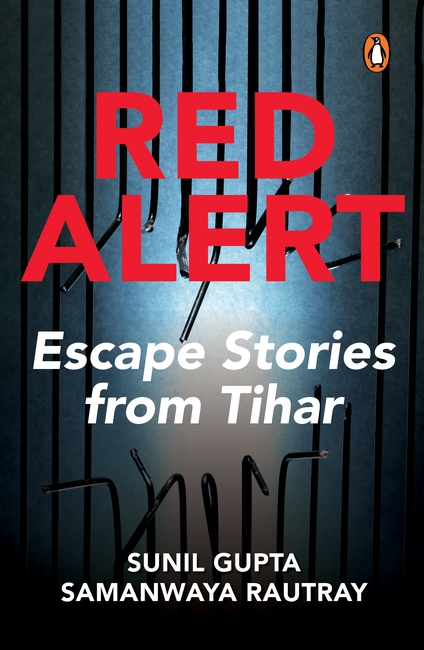
What happens when a jailer becomes the witness to the country’s most explosive secrets?
In Red Alert, Tihar’s long-serving superintendent Sunil Gupta returns with another unflinching look into the underbelly of India’s prisons — this time from the frontlines of riots, lockdowns, jailbreaks, and death sentences that shook the nation.
Do jailbirds ever stop dreaming of freedom? Of course not, says Gupta, who spent a lifetime guarding those condemned to stay within Tihar’s towering walls. Only the desperate dare to flee — like Charles Sobhraj, who walked out days before his release to dodge a foreign noose, and Sher Singh Rana, Phoolan Devi’s killer, who escaped to Afghanistan on a self-proclaimed royal mission.
From terror convicts who turned poets to guards who lost their sanity on duty, from mysterious deaths to audacious breakouts — Gupta reveals what the red alert siren inside Tihar really means. Red Alert goes beyond the black warrants — into the moments when the system itself is on trial, and freedom becomes the most dangerous dream of all.
A rare insider’s chronicle of power, crime, and survival within India’s largest prison, Red Alert exposes the cracks in the walls meant to contain others — and shows us what freedom, punishment, and humanity really mean.
Shiva: The God of Gods

He is Mahadeva, supreme and serene. He is Bhairava, full of wrath, annihilating all that is in his path. He is Mahakaal, encompassing time and eternity, a symbol of the end. He is the androgynous Ardhanarishvara, representing the balance of opposites. He is the lord of dance and protector of animals, he is a teacher and healer, the destroyer, but also the creator. He is a husband, a lover, a poet, and a warrior. He is the infinite Shiva, divine, yet human.
Shiva: God of Gods explores the many dimensions of Shiva and Shaivism, unpacking the history, mythology, folklore, and philosophy behind a deity whose paradoxes have long captivated both scholars and devotees. Moving beyond traditional religious study, the book offers a nuanced look at the theological and cultural currents that have shaped his presence across millennia. It also traces how Shiva has influenced – and been influenced by – those who worship him, inviting both the believer and the sceptic to encounter him not as a fixed figure, but as a living, evolving idea. Dr Nilima Chitgopekar’s uniquely expressive voice animates these histories and ideas, bringing these strands together into a narrative that is as compelling as it is insightful.
Shiva blends rare visual culture – classical paintings, modern artworks, artefacts, and photographs from sacred sites and festivals – with an evocative narrative, all of which seeks to illustrate the universality of Shiva and his philosophy, making it an ideal book for mythology and theology enthusiasts, followers of the Hindu faith and Shaivism, and those interested in Indian culture.
When It All Began
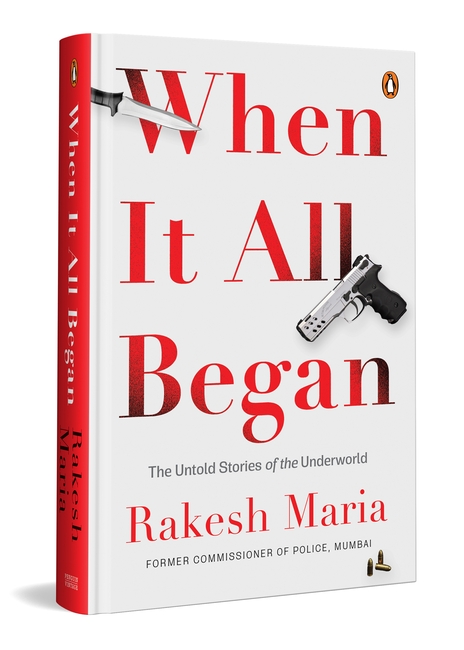
In the 1980s, the streets of Dongri, Pydhonie, Nagpada, Agripada and Byculla witnessed some of the bloodiest gang wars and reigns of terror India had ever seen. These neighbourhoods became the battlegrounds of crime. But when did it all begin?
Tracing it back to the 1930s, when Abdul Karim Sher Khan Pathan, aka Karim Lala—considered one of the first feared dons of Bombay—arrived in the city. He soon mastered the tricks of the trade with the Pathan lords Babul Khan and Jumma Khan, thus gradually establishing his dominance. As the Pathans grew in power, resentment against them simmered among the Pathans. Petty criminals from the city’s streets and markets began to evolve into ‘dadas’ and ‘bhais’, forming gangs of their own.
This gave rise to the first generation of dons—figures including Karim Lala, Haji Mastan and Dilip Aziz—who built empires through smuggling, extortion and other rackets. Over time, these groups diversified, regrouped and expanded into larger syndicates of organized crime.
But the next generation of gangsters were ruthless. Power struggles turned volatile, and many began to pose serious threats to one another. Dawood Ibrahim and his allies too emerged during this time. What followed was an era of bloody rivalries, gangsters eliminating their rivals with impunity, openly defying the police.
Rakesh Maria, the veteran Indian Police Service (IPS) officer, who led some of India’s most high-profile investigations, reflects on the tumultuous history in this extraordinary book, When It All Began. Replete with rare information, landmark cases and the full arc of gang wars at every turn, the account captures the rise and fall of Bombay’s underworld like never before. With its authoritative voice and an insider’s perspective, this book will grip you to the very end.
Lores of Love and Saint Gorakhnath Hindi / Lokkathayen Prem Ki Aur Sant Gorakahnath / लोककथाएँ प्रेम की और संत गोरखनाथ
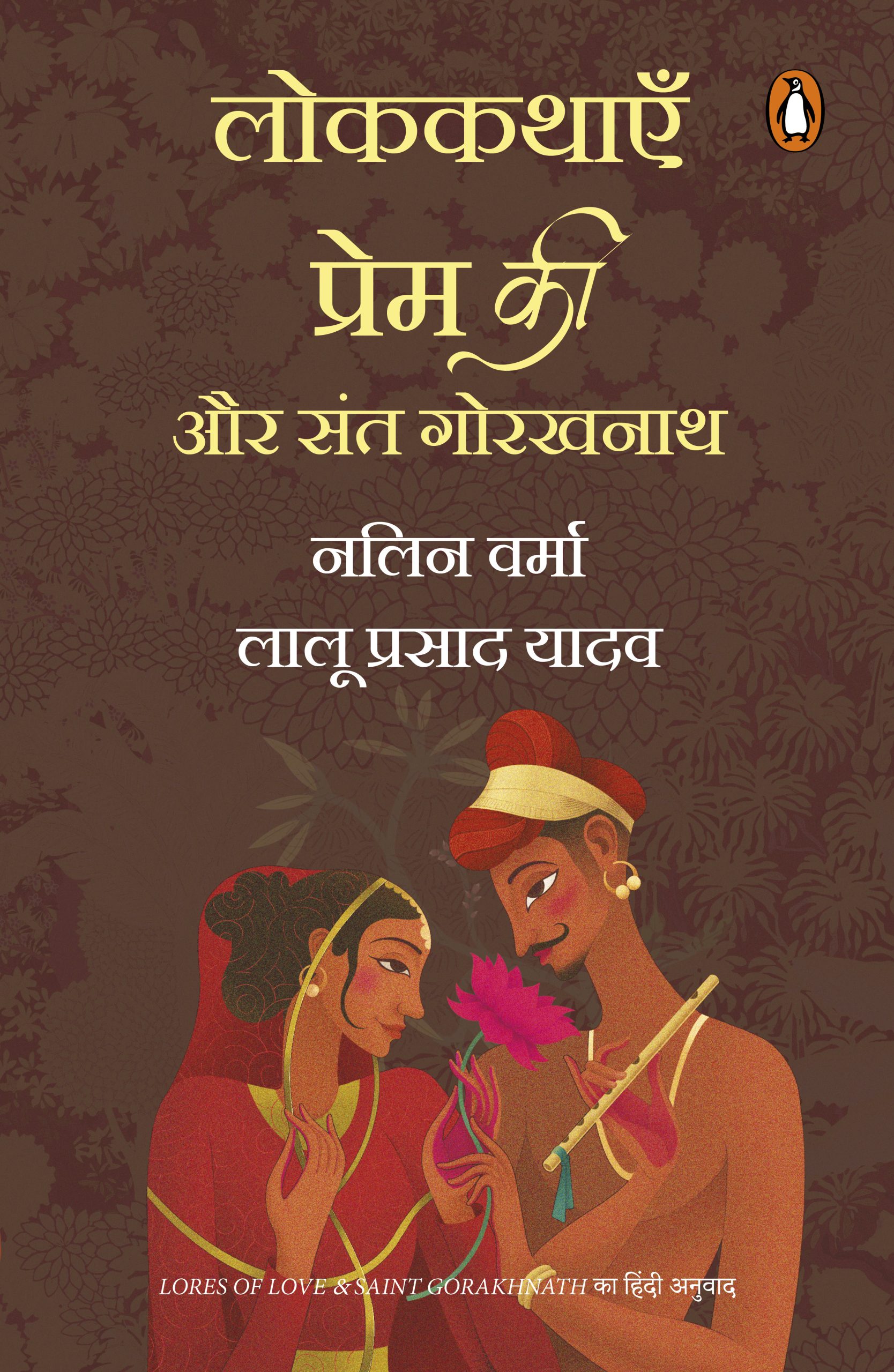
गोरखनाथ संप्रदाय के योगी प्रेम की लोककथाओं को सारंगी की धुन पर गाते थे और घर-घर जाकर भिक्षा माँगते थे। ये कहानियाँ पीढ़ी दर पीढ़ी लोकगीतों के रूप में सुनाई जाती थीं। समय के साथ इन कथाओं ने लोक-साहित्यकारों, रंगमंच कलाकारों और नौटंकियों को प्रेरित किया है, जो इन्हें मेलों, धार्मिक आयोजनों और अन्य समारोह में प्रस्तुत करते आए हैं।
Perfect Storm

In the dead of night on November 26, 2008, ten men slipped silently into Mumbai by sea. Over the next 60 hours, they unleashed a storm of violence that brought India’s financial capital to its knees and shocked the world. The true story of this attack, the most audacious terror plot since 9/11, begins decades earlier, spans multiple continents, and enmeshes a diverse array of characters with varying motivations.
This is a story that has never been told in full. Until now.
Perfect Storm peels back the layers of this conspiracy, taking readers on a riveting journey that extends from the blood-soaked birth of Pakistan in 1947 to the treacherous geopolitical landscape of the post 9/11 world. Based on meticulous research and drawing on Prabhakar Aloka’s decades-long experience in counter-terrorism in the Intelligence Bureau, and co-author Nikhil Ravi’s expertise as a screenwriter and filmmaker documenting Indo-Pak geopolitical flashpoints, the book pieces together the spider’s web behind 26/11, spanning worlds as disparate as dusty training camps in rural Pakistan and neon-lit hacker dens in South-East Asia, casting an unprecedented look into the anatomy of a state-sponsored terror attack.
Scamlands
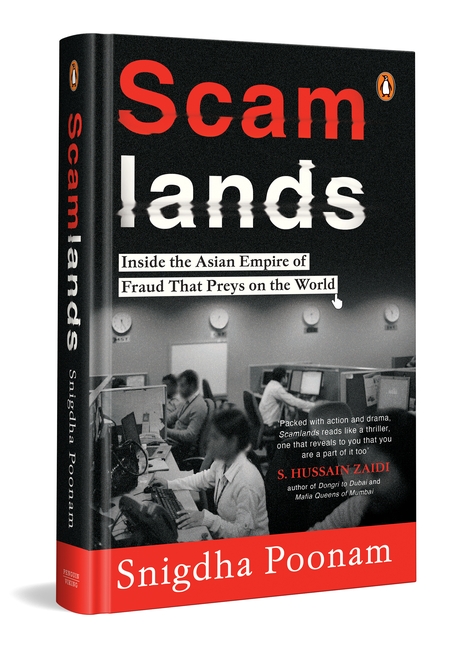
Snigdha Poonam’s Scamlands takes you to parts of the world where a scamster is born every minute. Beginning from the rural heartland of eastern India, where she grew up and ending in a shining city by the South China Sea, Poonam follows the networks of deceit across an invisible empire that thrives on inequality, technological change and the erosion of trust. It is a world where fraud is at once a route to upward mobility, an act of revenge against the privileged and uncaring, and a blatant disregard for the pain of others.
A gripping account of the people and forces behind the scams reshaping societies and economies in India, Asia and beyond, this book describes places where corruption is not just an abuse of power but also an expression of agency and of ingenuity. It uncovers what it means for the social order, in India and elsewhere, when deception becomes a way of life. When fraud triumphs over trust, none of us anywhere in the world will escape its armies of foot soldiers and scam lords. We may all become unwilling citizens of this dark empire.
Nij Jeevan Ki Ek Chhata / निज जीवन की एक छटा

निज जीवन की एक छटा रामप्रसाद बिस्मिल द्वारा लिखा गया आत्म-चरित्र है, जिसमें उनके पूर्वजों का जीवन वर्णित करते हुए रामप्रसाद बिस्मिल ने स्वयं अपनी कहानी लिखी है कि उन्होंने क्रांति के क्षेत्र में कैसे कदम रखा। बिस्मिल को तत्कालीन संयुक्त प्रांत आगरा व अवध की लखनऊ सेंट्रल जेल की 11 नंबर बैरक में रखा गया था। इसी जेल में उनके दल के अन्य साथियों को एक साथ रखकर उन सभी पर ब्रिटिश राज के विरुद्ध साजिश रचने का ऐतिहासिक मुकदमा चलाया गया था। बाद में बिस्मिल को गोरखपुर जेल में लाया गया। 16 दिसंबर 1927 को बिस्मिल ने अपनी आत्मकथा का आख़िरी अध्याय (अंतिम समय की बातें) पूर्ण करके जेल से बाहर भिजवा दिया। 18 दिसंबर 1927 को माता-पिता से अंतिम मुलाकात की और सोमवार 19 दिसंबर 1927 को प्रात:काल 6 बजकर 30 मिनट पर गोरखपुर की जिला जेल में उन्हें फाँसी दे दी गई। बिस्मिल के बलिदान होते ही उनकी आत्मकथा प्रकाशित हो गई थी, लेकिन तब प्रकाशित होते ही सरकार ने इस पर प्रतिबंध लगा दिया। लेकिन आज़ाद भारत में यह ऐतिहासिक पुस्तक पुन: प्रकाशित की गई है, ताकि अपने बलिदानियों के बारे में नई पीढ़ी सबकुछ जान सके।
From Dubai to Karachi
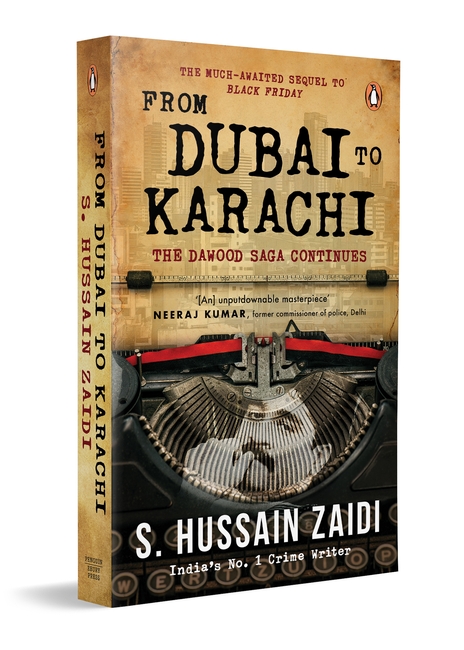
‘Who is bigger than the King?’
Dawood Ibrahim went undercover after the serial blasts of 12 March 1993 in Mumbai. Nobody knew how he had managed to escape from India while his D Company had proven links to the blasts. Yakub Memon was subsequently executed, resulting in the bloody split of the Mumbai Mafia.
What happened to Dawood Ibrahim then? Where is he now? As these questions began to surround, S. Hussain Zaidi’s riveting investigation led to Karachi, where Dawood is now the Kingmaker. Fiercely protected and valiantly denied by the Pakistani government, he has come to become the protector of the country’s dwindling economy and tumultuous polity. Yet, Dawood Ibrahim remains untouched by either of the governments across the Line of Control.
From the lanes of Dongri to becoming world’s most wanted fugitive and a powerbroker for the Pakistani government, Dawood has come a long way. Thrilling and jaw dropping, From Dubai to Karachi is a much-awaited sequel to Black Friday, uncovering his last thirty years as S. Hussain Zaidi pens a definitive end to the Dawood saga.