One night in the summer of 2014, two teenagers disappeared from their home in the village of Katra Sadatganj in Uttar Pradesh. The next morning, India woke up to the devastating image of their dead bodies hanging from a tree in a mango orchard.
The girls’ names were Padma and Lalli, but they were so inseparable that people in the village called them Padma Lalli. Sixteen-year-old Padma sparked and burned. Fourteen-year-old Lalli was an incorrigible romantic. Who were they and what had happened to them? In the ensuing months, the investigation into their deaths would implode everything that their small community held to be true and instigate a national conversation about sex and violence.
Slipping deftly behind political manoeuvring, caste systems and codes of honour in a village in northern India, The Good Girls returns to the scene of Padma and Lalli’s short lives and tragic deaths, and dares to ask: What is the human cost of shame?

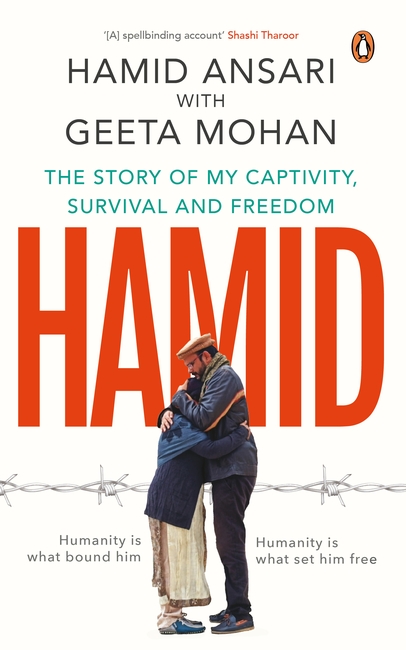
In November 2012, Hamid, a 27-year-old Mumbai-based techie, disappeared into thin air. What happened? Where did he go? All his parents knew was that he had gone to Kabul, Afghanistan, to explore a job opportunity. Upon some investigation, they found out that their son had been chatting online with some Pakistani friends, in particular a girl, across the border.
Authored by Hamid Ansari and Geeta Mohan, this is the definitive insider account of the man who saw no boundaries when it came to saving a girl from forced marriage under the wani custom. Nothing scared or stopped him; until he was betrayed by his friends in Pakistan. He became embroiled in a whirlwind of allegations made by the Pakistani authorities to break him and label him a spy. What followed were years of suffering during the investigations, along with long periods of solitary confinement and a struggle for survival.
In India, his mother, Fauzia Ansari, led a relentless fight, knocking on as many doors as it took, eventually moving three nations, India, Pakistan and Afghanistan, to get him back home, with the help of the then external affairs minister, Sushma Swaraj. On 18 December 2018, Hamid finally touched India soil again. Gritty, heart-wrenching and moving, this is s story of humanity, love, betrayal and hope against all odds.

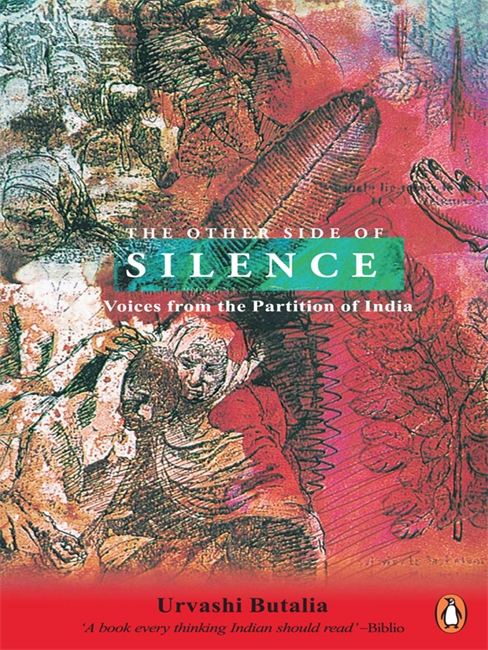
The Partition of India in 1947 caused one of the great human convulsions of history. The statistics are staggering. Twelve million people were displaced; a million died; seventy-five thousand women are said to have been abducted and raped; families were divided; properties lost; homes destroyed. In public memory, however, the violent, disturbing realities that accompanied Partition have remained blanketed in silence. And yet, in private, the voices of Partition have never been stilled and its ramifications have not yet ended. Urvashi Butalia’s remarkable book, the outcome of a decade of interviews and research, looks at what Partition was intended to achieve, and how it worked on the ground, and in people’s lives. Pieced together from oral narratives and testimonies, in many cases from women, children and dalits- marginal voices never heard before- and supplemented by documents, reports, diaries, memoirs and parliamentary records, this is a moving, personal chronicle of Partition that places people, instead of grand politics, at the centre. These are the untold stories of Partition, stories that India has not dared to confront even after fifty years of independence.

It is the murder that haunts India with the simplest of questions: Who did it? A fourteen-year-old girl is killed in her comfortable suburban home along with the family servant under puzzling circumstances. Within weeks, her dentist parents are the prime suspects; within months, they are as good as exonerated; a year and half later, they are on trial. But did they do it? From the controversial police investigation to the media frenzy surrounding the Talwars and the protracted legal battle, every layer of the Aarushi case has mystery and metaphor. Now comes the ultimate retelling of the story. Avirook Sen has followed the court case, examined all the police documents and interviewed key players among investigators, lawyers, family and Aarushi s friends. In Aarushi he draws a superb portrait of the young woman, the aftermath of her death, and tries to answer the biggest question of all. Acute, gripping and brilliantly written Aarushi is a book that will take you into the heart of the murder that has gripped the nation.
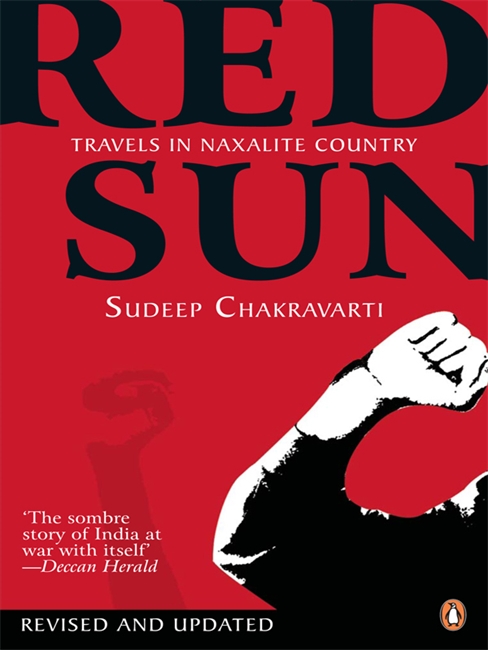
A revealing journey into the heartland of India’s insurgency problem
Spread over fifteen of the country’s twenty-eight states, India’s Maoist movement is now one of the world’s biggest and most sophisticated extreme-left movements. Hardly a week passes without people dying in strikes and counter-strikes by the Maoists-interchangeably known as the Naxalites-and the police and paramilitary forces. In this brilliant and sobering examination of the ‘Other India’, Sudeep Chakravarti combines reportage, political analysis and individual case histories as he takes us to the heart of Maoist zones in the country-areas of extreme destitution, bad governance and perpetual war.

The Shape of the Beast is our world laid bare by a mind that has consistently and unhesitatingly engaged with its changing realities and often anticipated the way things have moved in the last decade.
In the fourteen interviews collected here, conducted between January 2001 and March 2008, Arundhati Roy examines the nature of state and corporate power as it has emerged during this period, and the shape that resistance movements are taking. As she speaks about people displaced by dams and industry, the genocide in Gujarat, Maoist rebels, the war in Kashmir and the global War on Terror, she raises fundamental questions about democracy, justice and non-violent protest.
Unabashedly political, this is also a deeply personal collection that talks about the necessity of taking a stand and about the dilemma of guarding the private space necessary for writing in a world that demands urgent, unequivocal intervention.

Now with a new introduction by the author discussing the election of India’s new prime minister, Narendra Modi.
In eleven powerful, and closely argued, linked essays, Arundhati Roy takes a hard look at the underbelly of the world’s largest democracy. Beginning with the state-backed killing of Muslims in Gujarat in 2002, she writes about how ‘progress’ and genocide have historically gone hand in hand; about the murky investigations into the 2001 attack on the Indian Parliament; about the dangers of an increasingly powerful and entirely unaccountable judiciary; and about the collusion between large corporations, the government and the mainstream media. The volume ends with an account of the August 2008 uprising in Kashmir and an analysis of the November 2008 attacks on Mumbai. ‘The Briefing’, included as an appendix, is a compelling fictional text that brings together many of the issues central to the collection.

This second volume of Arundhati Roy’s collected non-fiction writing brings together fourteen essays written between June 2002 and November 2004. In these essays she draws the thread of empire through seemingly unconnected arenas, uncovering the links between America’s War on Terror, the growing threat of corporate power, the response of nation states to resistance movements, the role of NGOs, caste and communal politics in India, and the perverse machinery of an increasingly corporatized mass media. Meticulously researched and carefully argued, this is a necessary work for our times.

War has spread from India’s borders to the forests in the very heart of the country. Here are four essays by Arundhati Roy including the heatedly debated ‘Walking with the Comrades’ that combines a clear-eyed, analytical overview with extraordinary reportage from the ground of the Maoist guerrilla zone and her most recent essay, ‘Capitalism: A Ghost Story’. Broken Republic examines the nature of progress and development in the emerging global superpower, and asks some fundamental questions about the real meaning of civilization itself.

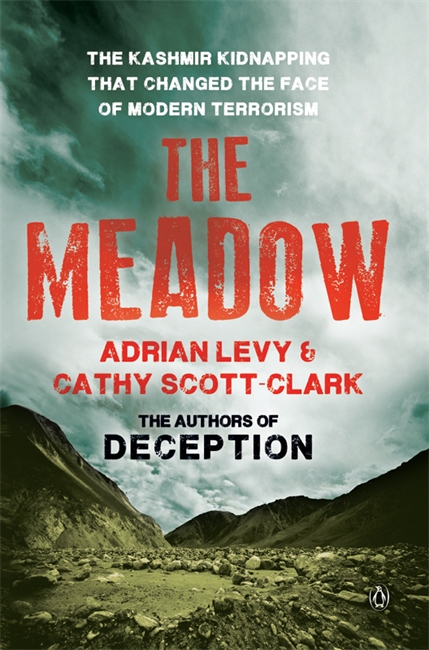
In the summer of 1995, six tourists were kidnapped in the mountains of Kashmir. The ransom note said the kidnappers were from an unheard of Islamic outfit and that they wanted the release of Pakistani militant leader Maulana Masood Azhar (later responsible for the attack on the Indian parliament). The kidnapping electrified the world and for the first time put the global spotlight on Kashmir. Within four days, one of the prisoners had made a hair-raising escape. A month on, was found, beheaded by his captors who had carved their name into his flesh. In the background, camped out in Delhi, the families of the missing struggled to keep their hopes alive, while international governments negotiated frantically with India, and the army, police and intelligence services tried to follow the trail. But the remaining four hostages were never found, their case forgotten – until now.