




S. Hussain Zaidi is India’s No. 1 crime writer. He is the author of several bestselling books, including Dongri to Dubai: Six decades of the Mumbai Mafia, Mafia Queens of Mumbai, Black Friday and My Name is Abu Salem. His latest book, Dangerous Minds was on Amazon’s ‘Best Reads’ list for November 2017. A veteran of investigative, crime and terror reporting, he has worked for the Asian Age, Mumbai Mirror, Mid-day and the Indian Express. He is also the associate producer of the HBO movie Terror in Mumbai, based on the 26/11 terror attack. He lives with his family in Mumbai.
Catagory: Crime, Thriller & Mystery
Aarushi

It is the murder that haunts India with the simplest of questions: Who did it? A fourteen-year-old girl is killed in her comfortable suburban home along with the family servant under puzzling circumstances. Within weeks, her dentist parents are the prime suspects; within months, they are as good as exonerated; a year and half later, they are on trial. But did they do it? From the controversial police investigation to the media frenzy surrounding the Talwars and the protracted legal battle, every layer of the Aarushi case has mystery and metaphor. Now comes the ultimate retelling of the story. Avirook Sen has followed the court case, examined all the police documents and interviewed key players among investigators, lawyers, family and Aarushi s friends. In Aarushi he draws a superb portrait of the young woman, the aftermath of her death, and tries to answer the biggest question of all. Acute, gripping and brilliantly written Aarushi is a book that will take you into the heart of the murder that has gripped the nation.
Bitter Chocolate
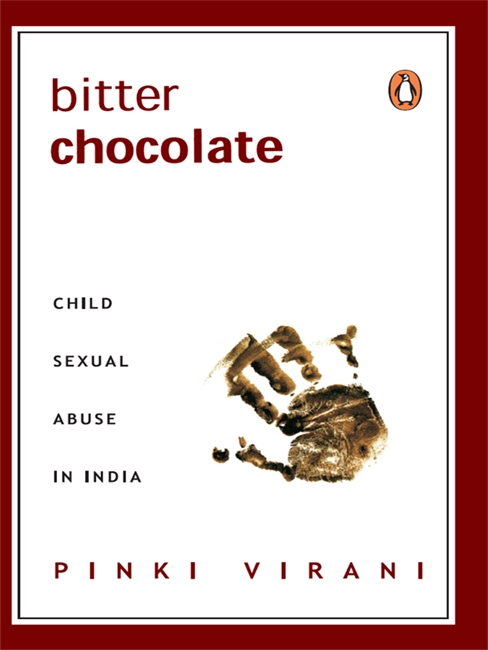
A book that challenges our notions of family honour and morality Sometime, somewhere, the conspiracy of silence around Child Sexual Abuse (CSA) in Indian homes had to be shattered. This path-breaking book”the first of its kind in the country and subcontinent”attempts to give that sexually abused child a powerful voice. It provides damning disclosures about men, and some women, in middle and upper-class families who sexually abuse their children, then silence them into submission. Based on studies, reports and investigation, this book reveals that a minimum of twenty per cent of girls and boys under the age of sixteen are regularly being sexually abused; half of them in their own homes, by adults who have the child’s trust. In Bitter Chocolate, journalist and best-selling author Pinki Virani travels across the country to record the testimonies of the police, doctors, child psychologists, mental health professionals, social workers, lawyers and the traumatized victims themselves. The book opens with an account”brave and devoid of self-pity”of the author’s own experience. Going beyond blaming, Pinki Virani then proceeds with her insightful analysis of the issue in three notebooks. The first spells out what constitutes CSA, why and how this happens, its devastating after-effects which haunt the victims as they grow into adulthood. The second notebook describes these effects through two real-life stories of women who were betrayed as children by men of their family. The third provides practical solutions on how to counter CSA, including a framework involving the law, the parent and their child. A special chapter addresses adults who have never before disclosed their sexual abuse as children. Plus: a nationally coordinated helpline. Accessible yet comprehensive, Bitter Chocolate is written for the young parent and guardian, principal and teacher, judge and police, lawyer and public prosecutor, teenager and tomorrow’s citizen.
Dera Sacha Sauda and Gurmeet Ram Rahim
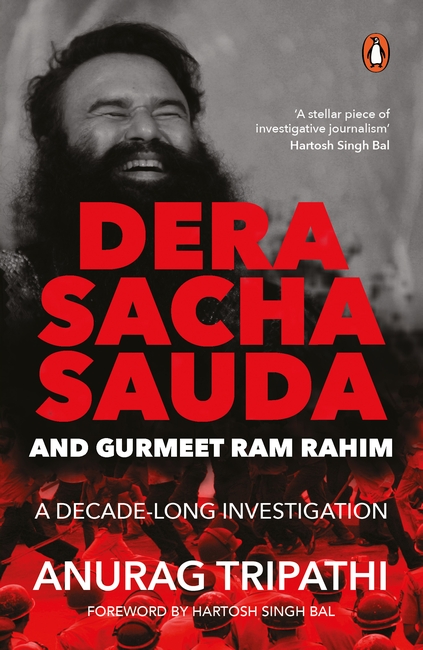
A journalist’s account of investigating Gurmeet Ram Rahim and his empire of exploitation
How did a nondescript young man from a farming family become the head of a quasi-religious sect with a million followers willing to die and kill for their ‘Pitaji’?
The story of the rise of Gurmeet Ram Rahim Singh Insan of the wildly popular Dera Sacha Sauda is anything but ordinary. It allegedly involved sexual exploitation, forced castrations, private militias, illegal trade in arms and opium, and land grab on an untold scale-until the self-styled godman was convicted for one of his many crimes in August 2017.
The book opens with an anonymous letter which led to the first-ever journalistic investigation, in 2007-Tehelka‘s Operation Jhootha Sauda-into the reported criminal activities at the Dera. In the years that followed, the author continued to document the lonely battles for justice against the influential godman who had the might of the Dera’s machinery and manpower behind him.
This book is as much about the grit and determination of ordinary citizens fighting power systems as it is about the difficulty of investigating crimes committed by the rich and powerful in India today.
Breach
A journalist accused of hacking the inbox of a billionaire
A company which fought back when its data was stolen
An entrepreneur who fought an international battle to end piracy
A hacker who decided to take a start-up hostage by stealing its data
Full of riveting stories of hackers, police and corporates, Breach reads like a thriller. The book brings to light several incidents which till now were brushed under the carpet. It has instances of piracy, data theft, phishing, among many others.
Even though he focuses on India, Nirmal John takes great pains to show links between underground international networks working to undermine data security.
Me against the Mumbai Underworld
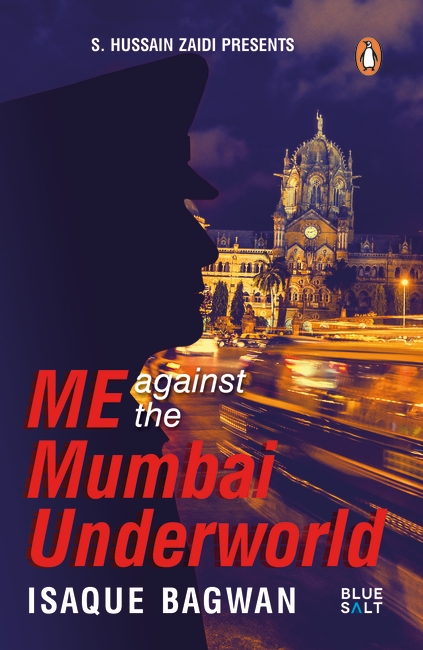
On some days, you are no less than Sherlock Holmes. But on others, you are just a regular policeman on bundobast duty.
Me against the Mumbai Underworld is the story of Isaque Bagwan, three-time recipient of the President’s Police Medal for Gallantry and a small-town boy who pursued his big-city dreams and ambitions as an upright police officer. Bagwan, who is credited with carrying out the first encounter in the history of Mumbai Police, was witness to several of the city’s defining moments-the 1980s when smuggling was at an all-time high, the blasts that tore through Bombay in the ’90s, the gang wars that marked the city, and the devastating 26/11 terror attack. His life, which has captured the imagination of many writers and filmmakers, is presented here with all its gut-wrenching details.
What We Talk about When We Talk about Rape

Sohaila Abdulali was the first Indian survivor to speak out about rape. Gang-raped as a teenager in Bombay and indignant at the deafening silence on the issue in India, she wrote an article for a woman’s magazine questioning how we perceive rape and rape victims. Thirty years later, she saw the story go viral in the wake of the fatal 2012 Delhi rape and the global outcry that followed.
Writing from the viewpoint of a survivor, writer, counsellor and activist, and drawing on three decades of grappling with the issue personally and professionally and her work with hundreds of survivors, Sohaila Abdulali looks at what we-women, men, politicians, teachers, writers, sex workers, feminists, sages, mansplainers, victims and families-think about rape and what we say.
She also explores what we don’t say. She asks pertinent questions: Is rape always a life-defining event? Does rape always symbolize something? Is rape worse than death? Is rape related to desire? Who gets raped? Is rape inevitable? Is one rape worse than the other? Who rapes? What is consent? How do you recover a sense of safety and joy? How do you raise sons? Who gets to judge?
God of Sin
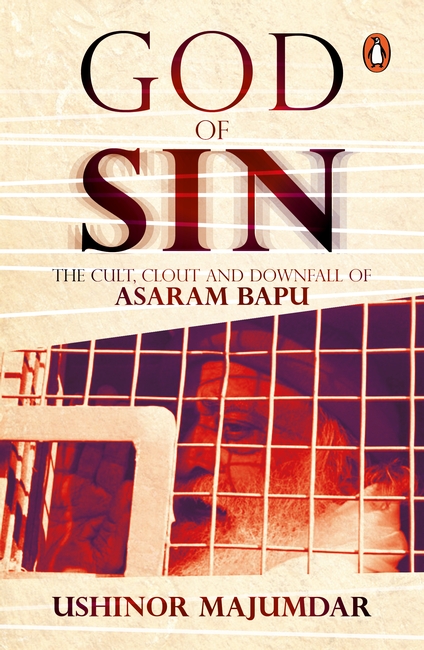
For decades, Asaram Bapu presided over a politically influential empire built on blind faith. Along with his son and heir, Narayan Sai, he has now become an example of everything that is wrong with self-styled godmen and the cults they spawn. The two stand accused of sexual assaults on vulnerable devotees, land grabbing, money laundering, intimidation, exploitative black magic rituals and the horrific murder of witnesses who testified against them. Politically, Asaram Bapu held significant boroughs of influence across north India and the Hindi belt, and there are photos of him with almost every known political leader throughout the 1990s and 2000s, till his arrest in a sexual assault case in 2013.
Asaram originated the business model of branding goods and selling them to followers, using faith as a marketing tool-which other godmen emulated to great success. His commercial empire, now being investigated by economic offences agencies, was built on unaccounted donations, loans given on hefty rates of interest, investments in dubious companies, money laundering and dodgy real estate deals.
God of Sin pieces together Asaram’s journey to spiritual godhood, his fall from grace and the long and arduous road to bring him to justice.
The Shape of the Beast
The Shape of the Beast is our world laid bare, with great courage, passion and eloquence, by a mind that has engaged unhesitatingly with its changing realities, often anticipating the way things have moved in the last decade. In the fourteen interviews collected here, conducted between January 2001 and March 2008, Arundhati Roy examines the nature of state and corporate power as it has emerged during this period, and the shape that resistance movements are taking. As she speaks, among other things, about people displaced by dams and industry, the genocide in Gujarat, Maoist rebels, the war in Kashmir and the global War on Terror, she raises fundamental questions about democracy, justice and non-violent protest. Unabashedly political, this is also a deeply personal collection. Through the conversations, Arundhati talks about the necessity of taking a stand, as also the dilemma of guarding the private space necessary for writing in a world that demands urgent, unequivocal intervention. And in the final interview, she discusses with uncommon candour her ambiguous feelings about success and both the pressures and the freedom that come with it.
The Anatomy of a Sting
Bhupen Patel has conducted many undercover operations over the course of his career. He’s exposed all sorts of rackets, from mental asylums admitting patients without proper medical examinations to discovering an illegal network of agents that arrange ‘temporary’ wives for Arab men looking to have a short fling. This book recounts in detail some of his most dramatic and hard-hitting stings.
Patel takes us through the entire process of a sting and reveals the amount of hard work it takes to not just uncover a story that requires further discreet investigation but also gather enough evidence to bring it to the notice of the public and authorities concerned. Each account will keep you on the edge of your seat and allow a glimpse into the life of an investigative journalist.