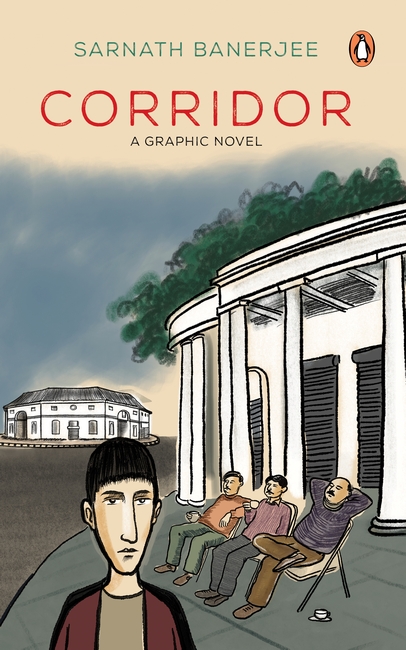
The story of Corridor revolves around an enlightened dispenser of tea, Jehangir Rangoonwalla, who has a shop in the heart of Lutyens’ Delhi, Connaught Place. He also sells second-hand books and dispenses wisdom to his customers. All of the main characters of the novel have this shop as their common local haunt and Mr Rangoonwalla interacts with these residents of Delhi when they visit his shop and at times gives them his words of wisdom. They come to him for tea, books, conversation and advice.
The story is about a plethora of characters, each from a different strata of society and different background. These customers are Brighu, passionate for obscure collectibles and a real love life, Shintu, the newly married on a quest of the ultimate aphrodisiac, and Digital Dutta, a person mostly torn between an H-1B visa and Karl Marx. Dutta is portrayed as a man who lives in his head.
Each of these characters has a story of his own and the author ties them together in a brilliant manner for his book. While narrating their stories, Banerjee subtly touches the greyer shades of their lives and presents them vividly to the reader. The entire novel has been captured in the corridors of contemporary Connaught Place in Delhi and Calcutta. Various pictures and objects have been shown in the background frame and the author ensures to refer them, thereby touching upon the different cultural references.
Sarnath Banerjee presents a different flavour to the art of storytelling by mixing various other art forms such as sketches, illustrations, and photographs. These heighten the impact on the reader in a beautiful way. The author uses an imaginative alchemy of words and images, of a script and artwork, to present the alienation and fragmented reality of the Indian urban life. Thus, the novel presents a delightful tale with interesting twists and turns.

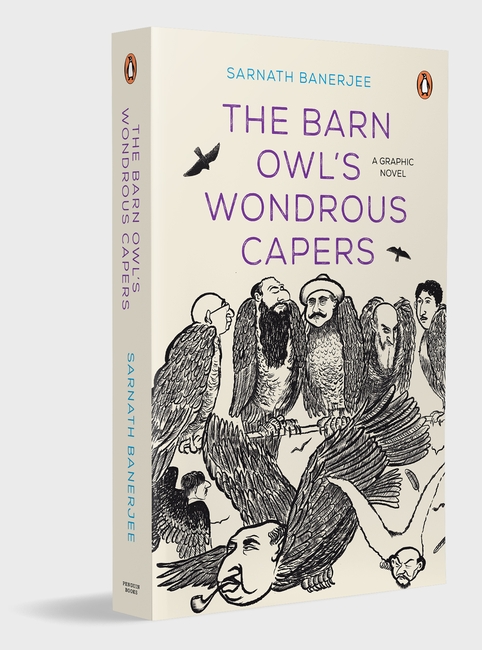
Eighteenth-century Calcutta. The second city of the Empire is teeming with scandalous gossip and rumour. Abravanel Ben Obadiah Ben Aharon Kabariti, Sephardic Jew from Syria and trader in novelties such as corsets, aphrodisiacs and zebras, befriends the British officers and the local elite by day and records their escapades by night in a leather-bound journal.
1950s Paris. A battered copy of the journal surfaces in a hole-in-the-wall antique shop in Montmartre.
London, 2002. A phone rings in the East End, late at night, announcing a death and an inheritance: a silver lighter, a vintage motorcycle, an ancient radio and The Barn Owl’s Wondrous Capers.
What follows is a bizarre chain of events involving eccentric zamindars, a decadent aristocrat with a passion for lady footballers, a psychic cartographer, a haunted office building and, at the centre of it all, Digital Dutta, neighbourhood historian and keeper of secrets.
Inspired by the legend of the Wandering Jew, this second work of fiction from India’s foremost graphic novelist is an irreverent tale of illicit sex and drunken religiosity, which unravels new riddles with each reading.

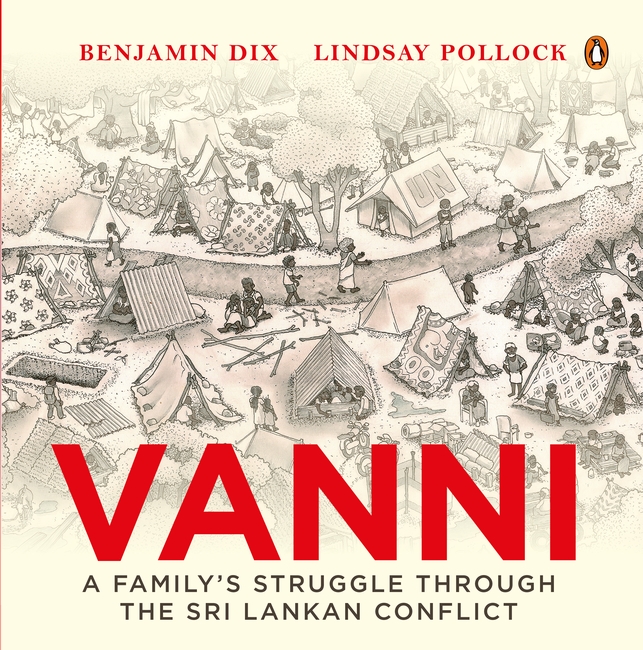
In the tradition of Maus, Persepolis, Palestine and The Breadwinner, Vanni is a graphic novel documenting the human side of the conflict between the Sri Lankan government and the ‘Tamil Tigers’. Told from the perspective of a single family, it takes readers through the otherwise unimaginable struggles, horrors, and life-changing decisions families and individuals are forced to make when caught up in someone else’s war.
Set in Vanni, the northern region of Sri Lanka that was devastated by the civil war, this graphic novel follows the Ramachandran family as they flee their home after the 2004 tsunami and move from one displacement camp to the next, seeking an ever-elusive safe haven and struggling to keep each other alive. Inspired by Benjamin Dix’s experience in working in Sri Lanka for the United Nations during the war, Vanni draws on more than four years of meticulous research, official reports, and first-hand interviews with refugees. It depicts heroic acts of kindness and horrific acts of violence, memorializing the experiences of the Tamil civilians against the forces that seek to erase their memory.
Elegantly drawn by Lindsay Pollock, this exceptionally moving graphic novel portrays the personal experiences of modern warfare, the process of forced migration and the struggles of seeking asylum in Europe.

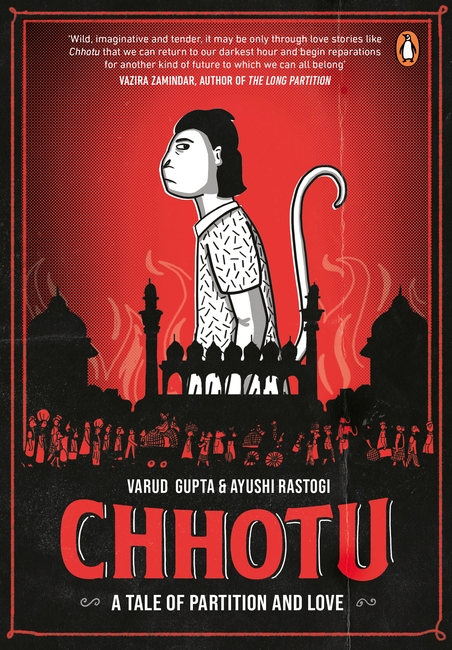
The year is 1947. The British are slowly marking their departure from the country. And while Partition looms large over India, Chhotu, a student-cum-paranthe-cook in the dusty gullies of Chandni Chowk, has other things on his mind-like feeling the first flushes of love of his crush, Heer, the new girl at school.
When he finally decides to make a move, Chhotu soon finds the town’s aloo has suddenly gone missing, reluctantly embroiling himself into the world of corruption, crime and dons. As he struggles to understand what freedom truly means, Chhotu realizes one thing is for certain-that his world, and the world of those around him, is about to change forever.
Set against the backdrop of Partition and the horrors that followed, Chhotu is a coming-of-age story of an unlikely hero and a parable of a past that doesn’t feel too removed from the present.