Publish with Us

Follow Penguin

Follow Penguinsters

Follow Penguin Swadesh

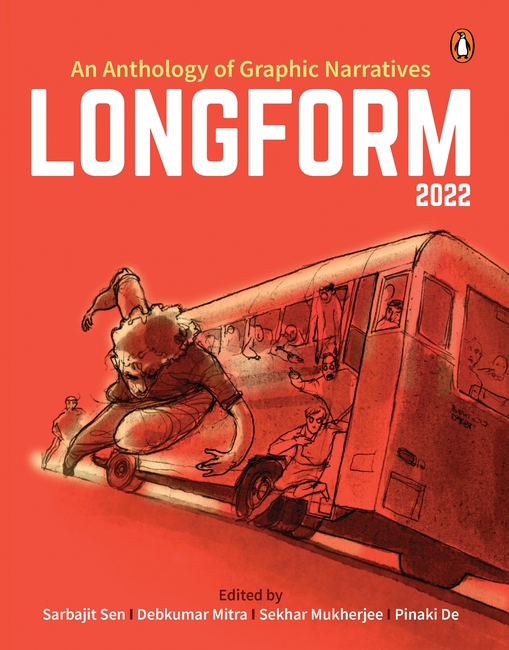
Longform 2022

An eclectic anthology of comics.

From Noah Van Sciver, Tanitoc to Jerry Antony, Sudhanya Dasgupta and Monisha Naskar, Gayatri Menon, Debjyoti Saha, Alendev Vishnu, Anirban Ghosh, Solo and Ojo, Ekta Bharti and Pavan Rujurkar, among others, Longform 2022 presents stories that subvert conventional narratives. Through stories about ordinary people, autobiographies, travel tales and more, this volume establishes comics as a permanent feature on a reader’s shelf. The anthology takes us through around-the-corner dystopias, imaginary cities and kaleidoscopic dreamscapes.

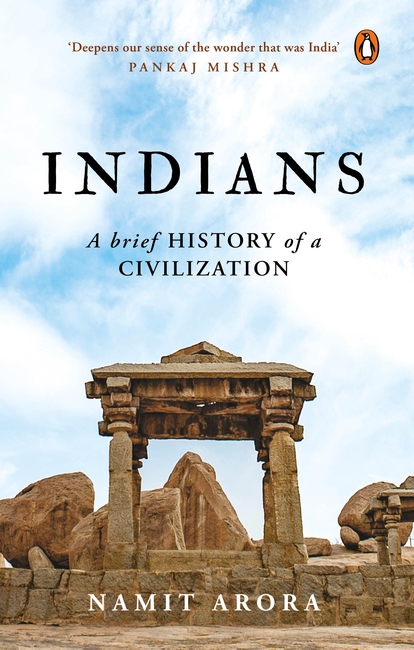
Indians

‘Deepens our sense of the wonder that was India’ ~ Pankaj Mishra

‘A gem of a book that is a joy to read . . . You can almost touch and feel the centuries and millennia as they pass by’ ~ Tony Joseph

‘Arora explores how Indians lived, ate, loved, built, fought and made sense of the material, rational and spiritual world down the ages . . . [A] mega-ambitious project’ ~ The Hindu

‘A wonderfully evocative book. Arora invites the reader to reflect on the past, without overwhelming her with dry historical facts but luring her in with vivid human stories’ ~ Prof. Mohan Rao

A BRILLIANT, ORIGINAL BOOK THAT REVEALS INDIA’S RICH AND DIVERSE HISTORIES

What do we really know about the Aryan migration theory and why is that debate so hot?
Why did the people of Khajuraho carve erotic scenes on their temple walls?
What did the monks at Nalanda eat for dinner?
Did our ideals of beauty ever prefer dark skin?

Indian civilization is an idea, a reality, an enigma. In this riveting book, Namit Arora takes us on an unforgettable journey through 5000 years of history, reimagining in rich detail the social and cultural moorings of Indians through the ages. Drawing on credible sources, he discovers what inspired and shaped them: their political upheavals and rivalries, customs and vocations, and a variety of unusual festivals. Arora makes a stop at six iconic places — the Harappan city of Dholavira, the Ikshvaku capital at Nagarjunakonda, the Buddhist centre of learning at Nalanda, enigmatic Khajuraho, Vijayanagar at Hampi, and historic Varanasi — enlivening the narrative with vivid descriptions, local stories and evocative photographs. Punctuating this are chronicles of famous travellers who visited India — including Megasthenes, Xuanzang, Alberuni and Marco Polo — whose dramatic and idiosyncratic tales conceal surprising insights about our land.

In lucid, elegant prose, Arora explores the exciting churn of ideas, beliefs and values of our ancestors through millennia — some continue to shape modern India, while others have been lost forever. An original, deeply engaging and extensively researched work, Indians illuminates a range of histories coursing through our veins.

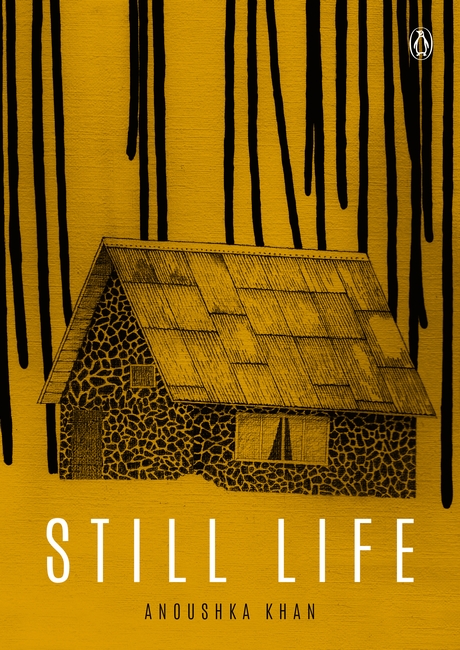
Still Life

Pinky is a recluse who rarely leaves the suburbs. When her husband, Pasha, goes missing-everyone assumes the worst, but she sets off to find him. In her search, she encounters a dream-like landscape: the ancient interior of the city she was born in; the bright farms and fields of Pasha’s childhood and the dark wilderness of the mountains, she must finally confront her fears.
Still Life is an experiment with visual storytelling, using pictures and words to create a world that is unsettling and extraordinary. Part road trip, part existential thriller, it seeks new ways to look at love, isolation, memory and loss, asking what connects us to each other and to the natural world, and how we are governed by impulses we barely understand.

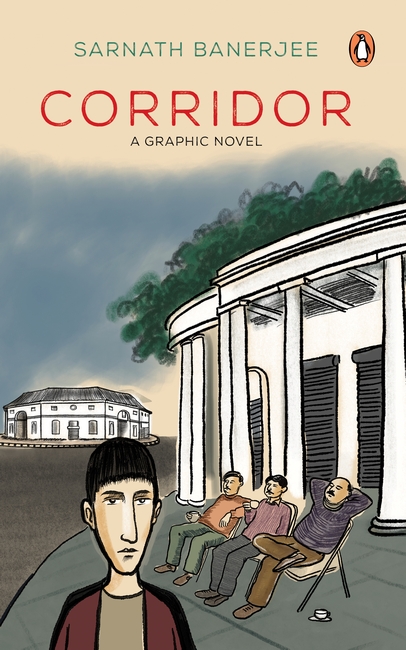
Corridor

The story of Corridor revolves around an enlightened dispenser of tea, Jehangir Rangoonwalla, who has a shop in the heart of Lutyens’ Delhi, Connaught Place. He also sells second-hand books and dispenses wisdom to his customers. All of the main characters of the novel have this shop as their common local haunt and Mr Rangoonwalla interacts with these residents of Delhi when they visit his shop and at times gives them his words of wisdom. They come to him for tea, books, conversation and advice.

The story is about a plethora of characters, each from a different strata of society and different background. These customers are Brighu, passionate for obscure collectibles and a real love life, Shintu, the newly married on a quest of the ultimate aphrodisiac, and Digital Dutta, a person mostly torn between an H-1B visa and Karl Marx. Dutta is portrayed as a man who lives in his head.

Each of these characters has a story of his own and the author ties them together in a brilliant manner for his book. While narrating their stories, Banerjee subtly touches the greyer shades of their lives and presents them vividly to the reader. The entire novel has been captured in the corridors of contemporary Connaught Place in Delhi and Calcutta. Various pictures and objects have been shown in the background frame and the author ensures to refer them, thereby touching upon the different cultural references.

Sarnath Banerjee presents a different flavour to the art of storytelling by mixing various other art forms such as sketches, illustrations, and photographs. These heighten the impact on the reader in a beautiful way. The author uses an imaginative alchemy of words and images, of a script and artwork, to present the alienation and fragmented reality of the Indian urban life. Thus, the novel presents a delightful tale with interesting twists and turns.

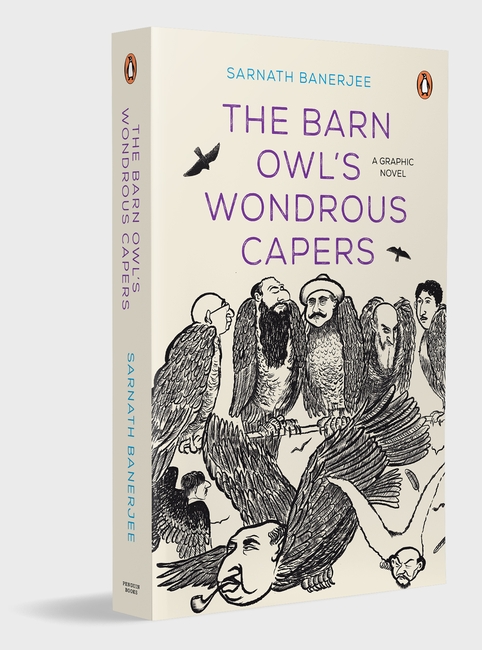
The Barn Owl’s Wondrous Capers

Eighteenth-century Calcutta. The second city of the Empire is teeming with scandalous gossip and rumour. Abravanel Ben Obadiah Ben Aharon Kabariti, Sephardic Jew from Syria and trader in novelties such as corsets, aphrodisiacs and zebras, befriends the British officers and the local elite by day and records their escapades by night in a leather-bound journal.

1950s Paris. A battered copy of the journal surfaces in a hole-in-the-wall antique shop in Montmartre.

London, 2002. A phone rings in the East End, late at night, announcing a death and an inheritance: a silver lighter, a vintage motorcycle, an ancient radio and The Barn Owl’s Wondrous Capers.

What follows is a bizarre chain of events involving eccentric zamindars, a decadent aristocrat with a passion for lady footballers, a psychic cartographer, a haunted office building and, at the centre of it all, Digital Dutta, neighbourhood historian and keeper of secrets.

Inspired by the legend of the Wandering Jew, this second work of fiction from India’s foremost graphic novelist is an irreverent tale of illicit sex and drunken religiosity, which unravels new riddles with each reading.

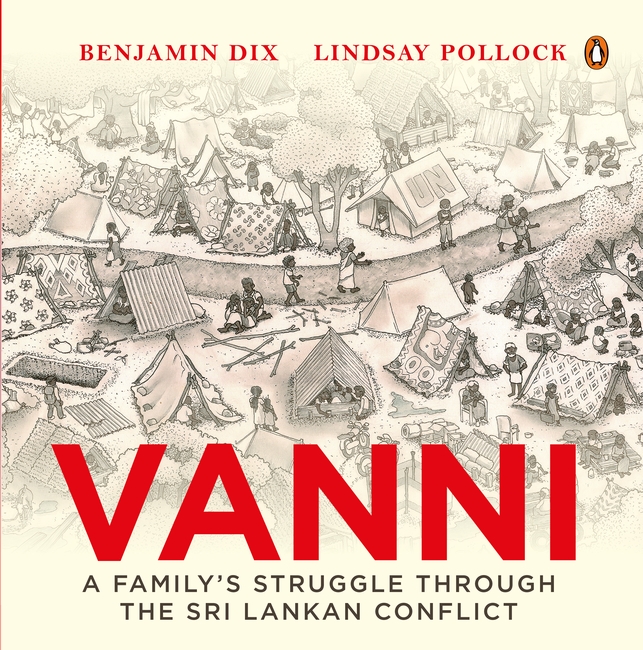
Vanni

In the tradition of Maus, Persepolis, Palestine and The Breadwinner, Vanni is a graphic novel documenting the human side of the conflict between the Sri Lankan government and the ‘Tamil Tigers’. Told from the perspective of a single family, it takes readers through the otherwise unimaginable struggles, horrors, and life-changing decisions families and individuals are forced to make when caught up in someone else’s war.

Set in Vanni, the northern region of Sri Lanka that was devastated by the civil war, this graphic novel follows the Ramachandran family as they flee their home after the 2004 tsunami and move from one displacement camp to the next, seeking an ever-elusive safe haven and struggling to keep each other alive. Inspired by Benjamin Dix’s experience in working in Sri Lanka for the United Nations during the war, Vanni draws on more than four years of meticulous research, official reports, and first-hand interviews with refugees. It depicts heroic acts of kindness and horrific acts of violence, memorializing the experiences of the Tamil civilians against the forces that seek to erase their memory.

Elegantly drawn by Lindsay Pollock, this exceptionally moving graphic novel portrays the personal experiences of modern warfare, the process of forced migration and the struggles of seeking asylum in Europe.

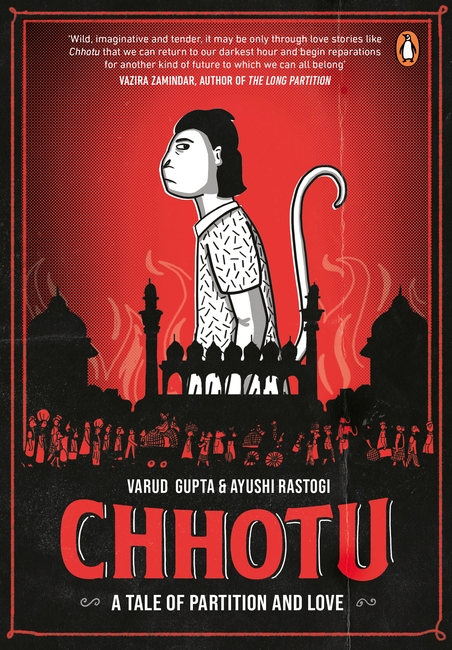
Chhotu

The year is 1947. The British are slowly marking their departure from the country. And while Partition looms large over India, Chhotu, a student-cum-paranthe-cook in the dusty gullies of Chandni Chowk, has other things on his mind-like feeling the first flushes of love of his crush, Heer, the new girl at school.

When he finally decides to make a move, Chhotu soon finds the town’s aloo has suddenly gone missing, reluctantly embroiling himself into the world of corruption, crime and dons. As he struggles to understand what freedom truly means, Chhotu realizes one thing is for certain-that his world, and the world of those around him, is about to change forever.

Set against the backdrop of Partition and the horrors that followed, Chhotu is a coming-of-age story of an unlikely hero and a parable of a past that doesn’t feel too removed from the present.

error: Content is protected !!