‘An effortless combination of empathy, moral conviction and deep cultural sensitivity’ ~ Ashis Nandy
A CHRONICLE OF LOVE’S TRIUMPH OVER ALL OBSTACLES
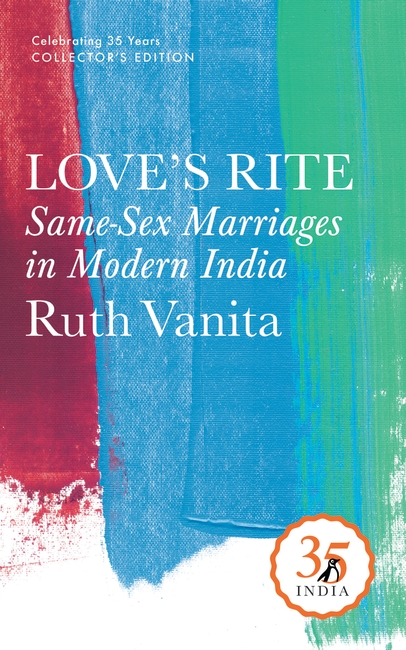
Long before the debate on marriage equality began, young, non-English speaking, low-income female couples all over India got married by religious rites or committed joint suicide, which they considered being ‘married in death’. These women had no contact with any movement and had never heard words like ‘lesbian’ or ‘gay’. While many families, in collusion with police, violently separated the couples, several families also supported their daughters.
Love’s Rite, first published in 2005, is the first and still the only book-length study of these unions, starting with one reported in 1980. The book argues that the couples asserted-and today still assert-their right to be together, using an age-old language of love understood by Indians. Vanita explores Indian religious, legal and literary traditions that provide spaces for same-sex and other socially disapproved unions.
While many recent high-profile Indian weddings have been reported as the ‘first’ of their kind, Love’s Rite celebrates the unsung pioneers and martyrs of the struggle for marriage equality.

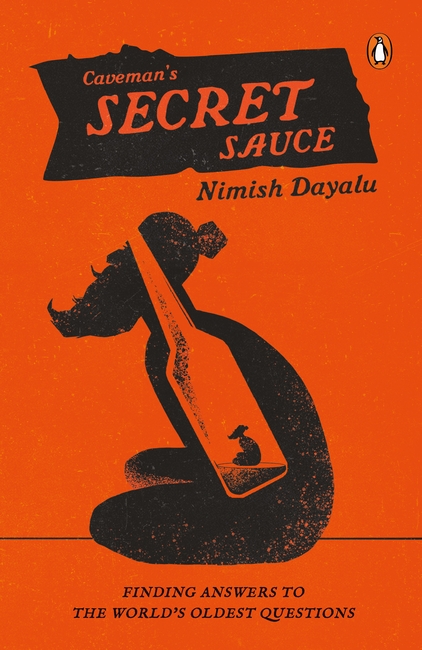
What if, one day, you find yourself in a Himalayan cave, far away from the world? For Jeet, this is a choice he made after leaving city life behind.
One evening, a strange man called Adi, who does mysterious things, makes his way into Jeet’s cave. The two develop a friendship that will help Jeet unravel the secrets of the wild. In his pursuit to grow, Jeet travels to a mountain village that has been untouched by time and then up a sacred mountain, meeting some fascinating characters along his journey. On this quest from the surreal to the supernatural, Jeet untangles some of the most complex mysteries of the world, which often kept him awake at night in the city.
Intriguing, adventurous and containing the pearls of forgotten ancient Indian myths and legends, Caveman’s Secret Sauce has the right ingredients that are missing in society today.

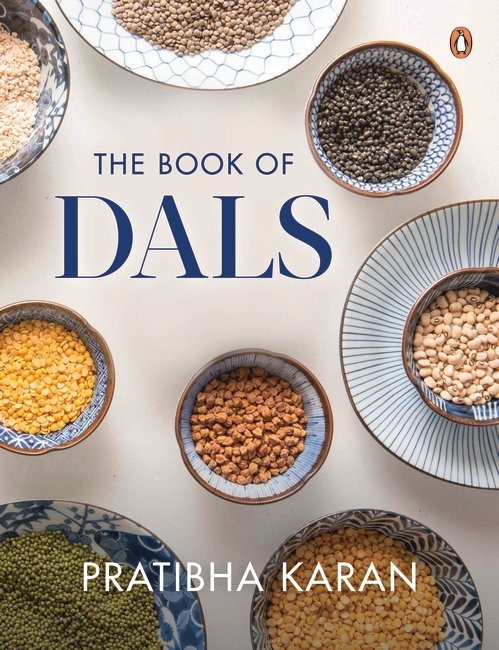
Dals have been an essential part of the human diet for centuries and they are an integral part of Indian cuisine. There are many enticing varieties of dals to choose from.
Pratibha Karan, in The Book of Dals, takes you on an incredible journey to different regions of the country and shows how locally available spices and herbs, vegetables and fruit impact the food of that region. The variety of dals and dal-based dishes that you can make with these are phenomenal and mind-boggling.
This book offers many varieties of beautiful, fragrant and beguiling dals that will have anyone savouring them in raptures. From the southern India, you will find Telangana Sambar, Khatti Dal and Dalcha with Vegetables and Meat. They are made using delicious combinations of chillies, tamarind, cloves, cardamom, pepper, coconut, curry leaves and drumsticks. It also has recipes such as Kootu from Tamil Nadu and the famous Bisi Bele Huliyana from Karnataka.
You will also find Lentils in Coconut Milk, Katachi Amti and Moong Sprouts from Maharashtra, and Dhansak, a Parsi dish, from Gujarat in western India. Dals from eastern India such as Chana Dal Bengali-style and Assamese Mati Maa are included. From the northern India, Delhi Rajma and Punjabi Dal Makhani find a place in the book.
This book is not limited by borders. It includes exotic dal recipes from the neighbouring countries like Nepal and Sri Lanka, and some delicious and wholesome dal-based soups too.

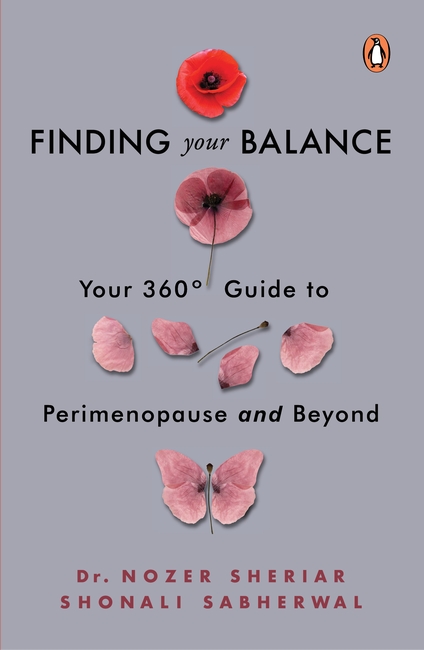
Urban myth has long made the menopause appear a scary endpoint in a woman’s life. This book debunks this misconception to reveal the menopause to be as much a journey-defined by the years leading up to and after it, known as the perimenopause-as an event.
What role do hormones play in the menopause? Do they work in isolation or are there external factors, such as your environment, your food and your mental state, that affect them? Can your concerns and symptoms only be medically addressed, or do you have a role to play?
In Finding Your Balance, gynaecologist Dr Nozer Sheriar and macrobiotic nutritionist Shonali Sabherwal combine their expertise into an empowering manual on navigating the (peri)menopause. Mixing personal journeys with professional knowledge, this book distils medical jargon into bite-sized, accessible knowledge that will enable women to make informed decisions on their health. Moreover, it guides the reader on to a holistic path that addresses how emotional states and lifestyles can influence the perimenopause.
Packed with information, Finding Your Balance is the best friend every woman needs.

Have you ever regretted a lost love?
Karan and Shruti are a happily married couple. Until Karan’s ex resurfaces into his life one day. Soon Karan finds himself getting nostalgic over matters of the heart and thinking fondly of his first romance. Will he put his steady and seemingly perfect marriage at stake for his ex-girlfriend?
Meanwhile his best friend Aditya finds his own relationship with his wife Jasmine going through an emotional turmoil. Will both friends work towards keeping their marriage afloat, or make a decision they would later regret?
Veena Iyer, aged sixty-six, got a degree in dance movement therapy. She is training to upgrade her skill and now runs various workshops.
B.R. Janardan, aged eighty-seven, started running after sixty and has sixteen full marathons under his belt.
These important stories illustrate the shifting narrative for ageing in India. They battle the ageism that is deep-rooted in Indian culture with fixed notions of ‘approved’ behaviour. Grandchildren? Yes. Pilgrimage? Yes. But companionship? Gasp! A second career? Why the need?
India will have over 300 million senior citizens by 2050. ‘Active ageing’ has become a popular topic of conversation in urban India and is the process of developing and maintaining functional activities as one gets older. Therefore, it is no longer uncommon to meet people like Janardan or Iyer in our fast-evolving society. We have an ageing society that is living longer and adapting to nuclear families, faraway kids and amorphous social support. Urban Indians are navigating health challenges, isolation and shifting social barometers to practise active ageing, the best form of preventive healthcare. This book takes a deep dive into understanding ageing, its impact on society, and how to overcome certain ‘hurdles’. Biological age no longer defines and limits us. After all, why should age prevent us from living the lives we want to?

RITUAL is a collection of practices aimed at optimizing, harmonizing and maximizing the natural energies of the day and night
Renew your mind, body and spirit with activities such as sunbaths, sound healing, cleansing kriyas, beautifying masks, massages, breathwork and navel therapy. From sunrise to sunset, nightfall to dawn, these exercises will help you find moments of clarity, relaxation and bliss.
Inspired by long-standing traditions, this book presents a system of daily rites to create a bespoke routine that works for modern living. Vasudha Rai invites you to play and experiment with old practices so that you can indulge in the magic of Ritual.

Are maestros born or made?
By making ideas mate, can you create new ones?
How do you develop a mindset that helps you thrive?
Can you nudge yourself into being more productive at work?
Is it possible for you to debunk bullshit from the clutter all around?
…
Find the answers to these questions and several more in Leapfrog
Leapfrog-in the context of thriving at work-is a scenario when a new entrant outperforms others. How do they achieve this? Are high performers born or made? Is there a way to nudge yourself into being more successful at work and also in life? With its six evidence-based insights, this book is poised to help you to advance your career at an incredible pace.
To begin with, the first step is to develop grit along with the ability to embrace boredom. The second practice, leaning on behavioral economics, focusses on nudging yourself to make better choices. The third practice is about being intellectually humble by accepting limits to what you know. The chapter on dancing with disciplines celebrates the magic of ideas colliding to create new ones. In a world full of noise and bullshit, you will need to curate choices to maintain a focus on what is relevant to you. The last practice helps you think like an entrepreneur and develop the ability to ask for what you want.
Based on their extensive experience of teaching and mentoring students, the authors have developed a framework called the Personal Journey Map (PJM), which will help you imbibe and implement the six practices by capturing your current repertoire, scanning the landscape ahead, and curating a path to a career in which you can prosper.

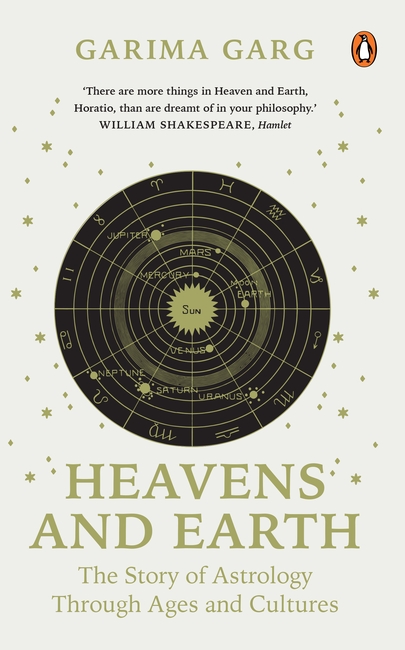
What will the future bring?
The ancient astrologer turned the impulse to answer this question into something meaningful by mapping the night skies and attempting to see in the movement of planets and stars an impact on human lives.
But did all astrologers see the same night sky? Did the observations of the Hindu astrologer match those of the Greek? How did the Egyptians and the Chinese understand the influence of the Sun and the Moon on our lives?
Over the centuries, as astrology developed and evolved, it also seeped into our philosophies, religions, literature and arts. And it grew and shape-shifted in step with the times. Whereas the ancient astrologer was as much seer as astronomer, the modern counterpart is a tech-savvy innovator.
Heavens and Earth examines the history of astrology, its many different systems and its development as a modern cultural phenomenon. Deeply researched and expertly narrated, the book contextualises the role of astrology in the ever-evolving human perspective of the cosmos and in understanding our place in it.
The intentions, thoughts and actions of the elders are caught by the hearts of the children. The children observe, learn and imbibe the teachings quickly and faithfully, and the elders have the responsibility to not only raise the children well, but nurture and guide them in a way that they can lead fulfilling lives.
Daaji in The Wisdom Bridge offers nine principles to guide you, the reader, to live a life that inspires your children and your loved ones. These principles are important references for parents, parents-to-be, grandparents and caregivers to create fulfilling and happy lives. They will not only help you enrich the lives of your children and raise responsible teenagers, but pave the way for an inspired life and resilient bonds in your family.