



Chronologically arranged for each calendar day, this book is a source of courage, compassion, wisdom and inspiration from His Holiness The Dalai Lama
Catagory: Health, Family & Personal Development
The Book Of Man; The Book of Woman
Osho’s most celebrated meditations on the human condition
For Osho, the ideal man is Zorba, the Buddha?a perfect blend of matter and soul. This seamless collection of discourses takes the reader through the various stages of man’s evolution: from Adam to Slave, Son, Homosexual, Priest and Politician, until he attains the pinnacle of his consciousness as the Rebel or Zorba. Sparkling with anecdotes and enriched with brilliant repartee, The Book of Man is a remarkable blend of wisdom and wit.
The Book of Woman describes what it means to be a woman and explores the feminine aspect of human beings. A woman, Osho says, should not imitate man: ‘Rejoice in your feminine qualities, make a poetry out of them.’ The perfect state of being, according to Osho, is a synthesis between the head and the heart, with the heart remaining the master. The rare sensitivity of Osho’s words on issues ranging from sexuality and love to work and politics, will appeal to both men and women.
The Little Book of Everything
Keep this little book by your bedside, or your desk, or on your kitchen shelf, and turn to it from time to time. It will have something comforting or helpful to say to you.
Happy For No Reason
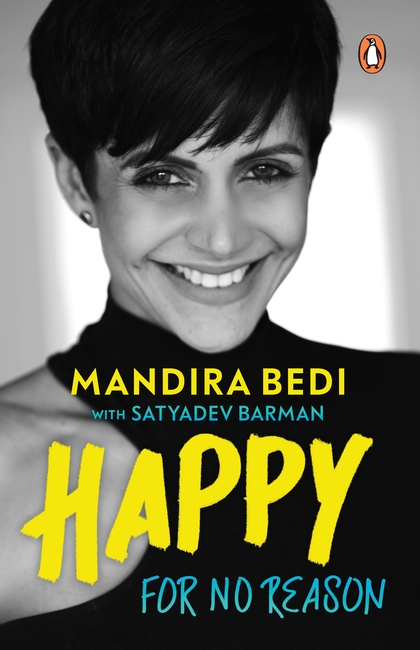
Mandira Bedi is a fitness icon.But behind the six-pack is also a snotty, complaining, can’t-get-out-of-bed-today girl who, in her own way, is still searching for true happiness. Not conditional, materialistic, transactional happiness, but just happiness. So has she cracked it yet? Mandira says ‘No’. But she genuinely believes that she’s headed in the right direction. In her own chaotic way, she seems to have discovered some kind of non-scientific, non-spiritual and as-yet-non-existent formula for finding peace in everything. Just being happy-for no reason. This book is about that.
The Joy of Vegetarian Cooking
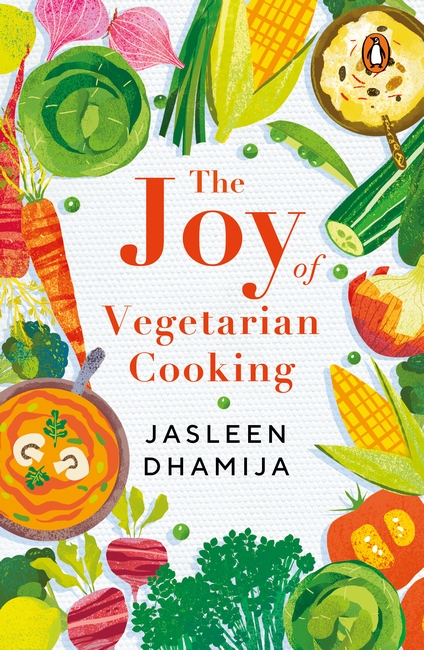
This unusual cookbook, with recipes from places as far-flung as Italy, France, Egypt and Australia, creatively brings together vegetables of every flavour and colour-from the versatile potato to the more exotic avocado, from the sensuous aubergine to the humble water chestnut.
Jasleen Dhamija, a widely travelled ethnologist, intersperses the recipes with piquant and often funny anecdotes that bring alive little traditions and stories about the cooking and serving of different kinds of vegetables around the world. Arranged alphabetically for easy use, the recipes are intended to save cooking time and energy without compromising on taste. Also provided are sample menus that illustrate the best and most nutritious ways to design a healthy, balanced diet. From delicious soups and salads to unusual sauces, from different kinds of rice and roti to mouth-watering desserts, this is innovative, exciting fare guaranteed to stimulate even the most jaded palate.
Preparing
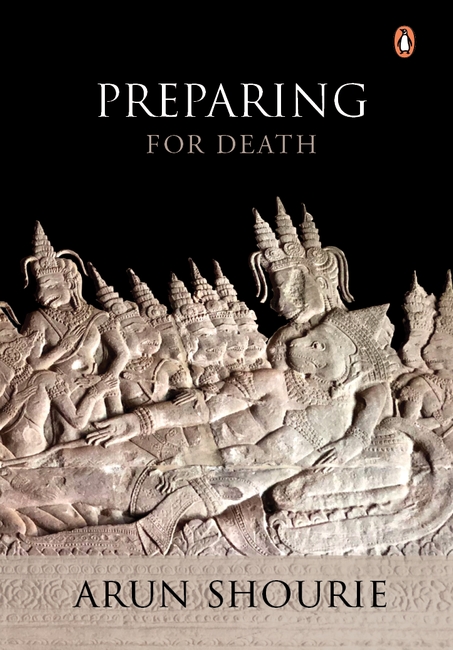
The one certainty in life, the one appointment which each of us will just have to face, is the one for which we do the least to prepare-death. From the lives and last days of the Buddha, Ramakrishna Paramahamsa, Ramana Maharshi, Gandhiji, Vinoba; from our religious texts; from the teachings of great meditation masters; from santhara to sannyas to practices by which we may tame our mind-leavening all these by his personal experiences-Arun Shourie presents clues to ensure that we face our end with equanimity.
In the process, he lays down what we must do if rituals, pilgrimages and mantras are to help us. He leads us to ask whether texts such as The Tibetan Book of the Dead are for the dead, or do they set out lessons for us, the living? He leads us to see through the sedatives that we are fed. Even as we are being frightened by accounts of ‘hell’, are we not actually being lulled to sleep? Does the fact that we will face extreme tortures in hell not mean that in some form we will survive death? To experience them, after all, we must be present.
Religions entice us into the great questions. Is there a soul that is never born and never dies? Is there life after death? Is there rebirth? Is there God? What is real and what is just maya? The greatest teachers and mystics have come up with different answers. Each of them has had direct experience of what she or he has proclaimed to be the truth. How, then, are we to proceed?
An Open Window
In the early years of the twentieth century, Sigmund Freud and Carl Gustav Jung proposed that, more often than not, dreams represent those thoughts and memories which are unbearably painful and have been relegated to the realm of the unconscious. Unlocking the meanings in these dreams can help people free their mind and feelings from irrational desires, fears and insecurities.
This brief but profound book assails the conventional understanding of dreams and their interpretation, drawing attention to a much-neglected aspect of dreams as a source of guidance for the spiritual aspirant. It uses the insights of psychology, but transcends it, to confront the inescapable questions most people should be driven by: What is the purpose of life, and does it all end with death? Laying bare dreams of childhood anxiety, traumas and sexuality – ‘cleaning the windows’ to uncover the deeply buried material that blocks our efforts on the inner path – it then invites contention from ‘materialists’ in its discussion of subjects beyond psychology, such as precognitive dreams, reincarnation, out-of-the-body experiences, death dreams, and numinous or ‘big dreams’- ‘an open window’ through which deeper, non-physical levels of reality can shine.
Drawing on examples from real life, Sri Madhava Ashish teaches the ‘language of dreams, ensuring a better understanding and awareness of the unconscious self, guiding the reader on the path to mental and spiritual freedom.
Happy Street
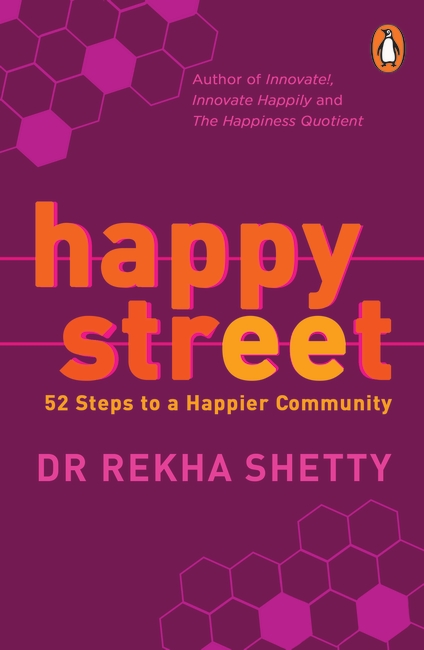
Our ceaseless toil to achieve success often assumes that our ultimate goal, happiness, lies at the end of a rainbow. But what if the key to happiness lies within each of us, and it is for us to build our own local Shangri-La, a Happy Street? Happiness guru Dr Rekha Shetty’s new book shows us how we can make every day special by following some simple mantras and doing just a little bit to make a difference to our immediate environs. Seize the day; practise acts of compassion; take a break; celebrate the little things; treat yourself to joy; leave your footprint on life; build your own sustainable environment; bring Lakshmi home.
Happy Street is your very own step-by-step guide to achieving happiness for yourself and to building a better community.
Mr And Mrs Jinnah
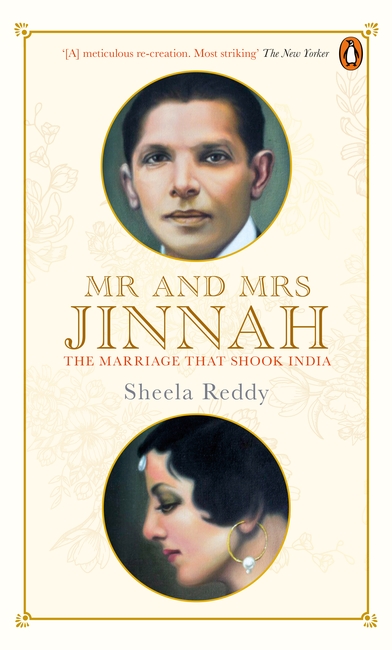
When Ruttie Petit fled from her father’s castle to wed Mohammed Ali Jinnah in 1918, their marriage outraged society at large. They were divided by community, religion and an age gap of twenty-four years. Well-known journalist Sheela Reddy uses never-before-seen personal letters and papers as well as accounts left by contemporaries and friends to portray this unusual relationship with a sympathetic, discerning eye. A product of intensive and meticulous research in Delhi, Bombay and Karachi, Reddy not only brings the solitary, misunderstood Jinnah and the lonely, wistful Ruttie to life, but also the society and politics of the times their story was set in. A must-read for all those interested in politics, history, and the power of an unforgettable love story.
Sex And Power
‘Sex underlies human existence, and if human life is sacred, how can sex not be?’
As squeamish as India is today about sex, this is also the land where queens once copulated with head horses at religious ceremonies, where the art of love-making was declared the revelation of the gods and recorded in elaborate detail in the kama sutras and prostitution was a form of sacred offering at temples adorned with erotic sculptures.
Using India as a paradigm, Rita Banerji illustrates that sexual morality is not an absolute but a facet of living that undergoes periodic upheavals. She delineates four major periods in Indian history when there were significant shifts in the collective social perception of sex and sexuality, and the associated customs and beliefs. What causes this revision in sexual ethos? To explain this, Sex and Power proposes a modified version of Nietzsche’s slave versus master morality theory. The theory, which is tested against the dynamics of each of the four defined periods, establishes that the moral overview of any given period is determined not by a set of pre-existing ethics but by the existent power structure of the period in question.
The accepted moral code actually serves the party in power. How would this theory play out in the context of India today? Banerji examines this question at length as one of extreme urgency, and concludes that the three most burning issues facing the country today-population explosion, AIDS and female genocide-are the manifestations of a collective sexual malfunctioning of society and need to be redressed in the context of an existent social and economic power hierarchy.