



In Finger Pointing to the Moon: Talks on the Adhyatma Upanishad, Osho draws on the ancient wisdom of this Upanishad to reflect on God, religion and the liberation of the self. Religion for him is not worship, devotion and prayer, but mumuksha, the deep longing for freedom from the fetters of everyday life that can lead a seeker on the path to enlightenment. When one reaches this state of kaivalya, the abode of truth and eternal bliss beyond mind and speech, one becomes unified with the God within oneself. Then one achieves true knowledge and true mastery over the self. These seventeen talks that Osho delivered at Mount Abu, Rajasthan, make this book a truly enriching guide for those seeking to look within and find answers to the enigmas of human existence.
Catagory: Health, Family & Personal Development
Tharoorosaurus
Shashi Tharoor is the wizard of words. In Tharoorosaurus, he shares fifty-three examples from his vocabulary: unusual words from every letter of the alphabet. You don’t have to be a linguaphile to enjoy the fun facts and interesting anecdotes behind the words! Be ready to impress-and say goodbye to your hippopotomonstrosesquipedaliophobia!
Vijyant at Kargil
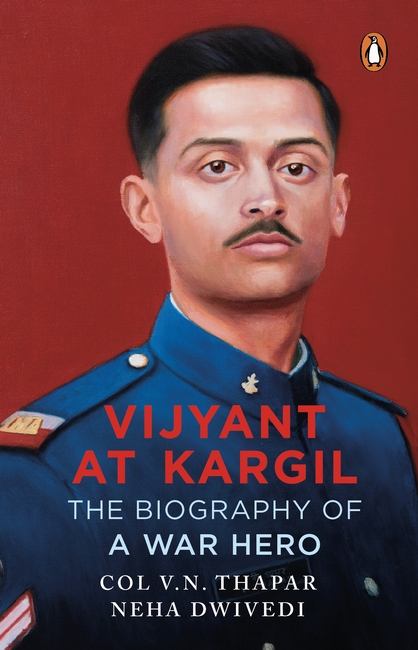
‘By the time you get this letter, I’ll be observing you all from the sky. I have no regrets, in fact even if I become a human again, I’ll join the army and fight for my nation.’
This was the last letter Captain Vijyant Thapar wrote to his family. He was twenty-two when he was martyred in the Kargil War, having fought bravely in the crucial battles of Tololing and Knoll. A fourth-generation army officer, Vijyant dreamt of serving his country even as a young boy. In this first-ever biography, we learn about his journey to join the Indian Military Academy and the experiences that shaped him into a fine officer.
Told by his father and Neha Dwivedi, a martyr’s daughter herself, the anecdotes from his family and close friends come alive, and we have a chance to know the exceptional young man that Vijyant was. His inspiring story provides a rare glimpse into the heart of a brave soldier. His legacy stays alive through these fond memories and his service to the country.
Home Remedies Vol. 4

The use of herbs from kitchens, fields and forests to alleviate pain and cure sickness has been known in India for centuries. Researched over three decades, the volumes in this series meticulously document many parallel and ancient traditions and systems, bringing together medicinal and cosmetic recipes, and the uses of individual plants to cure and comfort. Each herb is described in meticulous detail through its botanical profile, uses in particular ailments and notes on the preparation and dosage of each remedy. Forty common plants such as tea, amaltas, periwinkle, aparajita, coffee, custard apple, ash gourd, lemon grass, cotton, water lily and ashoka along with the not-so-familiar Jamaican thyme, Indian sorrel, ponnanganni and jujube are included in this book. A comprehensive bibliography of scientific articles, separate glossaries for English and non-English technical terms and detailed illustrations make it an easy-to-use reference guide for cures to common ailments. The final volume in the best-selling series.
Living in the Now
“Only one moment exists—this moment—all else is a projection of the mind.”
We live planning for a future that is never guaranteed, building towards a life that we may not even be around to enjoy. The only guarantee one gets in life is death and it is the most difficult truth of all to accept.
The first step along the path of enlightenment is mindfulness—being extremely present in the moment, living the now to its complete potential. In fact, this is usually considered the secret to a happy life. And yet, so many of us forget to live in the moment, choosing instead to live weighed down by our past while constantly worrying about the future.
Living in the Now is Osho’s eye-opening guide to living a truly happy and fulfilled life, and how to make the most of our time on earth.
What is Enlightenment?

“You are both and neither, and that is transcendence.”
The ultimate destination on a spiritual journey is enlightenment. But there’s a reason why countless people embark on this journey yet only a handful reach the destination.
Enlightenment is as much about the journey as it is about achieving the goal at the end. It is understanding and accepting different truths—some easy and some nearly impossible to handle. It is about singular focus and accepting the bigger picture at the same time. In other words, it is anything but straightforward.
However, if there’s anyone who can explain a difficult concept in the most straightforward manner, it is Osho and in What is Enlightenment?, he does exactly that. Read on.
How the Master Chooses a Disciple
When a person truly becomes a disciple, trust without any judgements is the only trait they must possess. The unknown—the knowledge a master possesses—can only be learned, not taught. And the only person who knows whether the disciple is ready is the master.
This is why, truly knowing your master is as important as becoming a true disciple. But how does one get to know their master, let alone get chosen by one?
Read on as Osho throws light on a subject that is rarely talked about in this short but eye-opening guide, How the Master Chooses a Disciple.
The Gift of Life
“When you don’t search for happiness, happiness searches for you.”
The biggest irony of life is that we end up spending a lifetime searching for our true purpose without actually living. Learning to value the life we have been given is a rare skill and sadly, one that very few possess.
There is plenty of literature out there that claim to help one achieve wealth and success and not nearly enough literature that tells you to cherish the more important things in life, like love and happiness.
In The Gift of Life, Osho analyses a short but intriguing Sufi story to talk about the real gift we have all been given: life. Read on.
Going Beyond Ignorance
“The husband of an ugly woman is best blind”
This opening to an intriguing Sufi story is the foundation to understanding ignorance and all that we forego because of it.
We live our lives according to an ambiguous ‘moral compass’ that’s justified by our conscience, not realising that every person’s moral compass aligns with a different north and they all believe, just like us, that they’re right.
There are countless opportunities to gain self-knowledge and yet, we as a species choose to remain ignorant. Do we realise what we lose when we choose ignorance over knowledge? What is stopping us from taking that leap into the unknown?
Read on as Osho throws light on these questions and many more like them in Going Beyond Ignorance.
The Mind and its Perceptions
“All knowledge is personal. No knowledge is impersonal.”
Everything that we know about the world around us, all our knowledge, is tainted by how our mind perceives it upon observation. In other words, it is entirely possible that one person’s reality is completely different from other’s.
It isn’t easy to grapple with this truth, but just as beauty lies in the eye of the beholder, you can’t fault another person for their opinions and their own reality. But that being said, does it negate the existence of an ‘absolute truth’?
Read on as Osho throws light on this strange paradox through the lens of another Sufi story in The Mind and its Perceptions.