



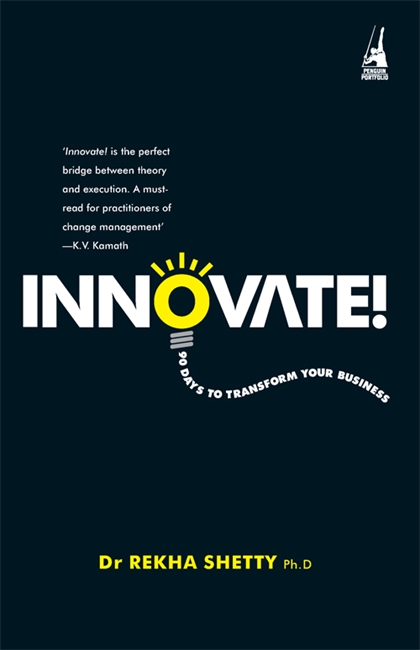
Constant and consistent innovation is the only sure-fire way to profitability; but many organizations are limited by the lack of an innovation culture. Innovate! 90 Days to Transform Your Business is the answer to this problem; allowing you to build a culture of innovation which embraces everyone from the doorman to the chairman. A daily implementation schedule, Innovate! will give you step-by-step ideas for yourself; your team; your department; and your organization. Start today and see the difference you can make.This 90-day plan will help you create a climate which empowers everyone in the company to achieve their full potential, launch an initiative which will invigorate the whole organization, build young, proactive commando teams and innovation spirals trained to think outside the box, inspire team leaders to transform their departments and the organization through their youthful proactive ideas, and develop a daily plan to institutionalize innovation and establish long-term culture change. A practical do-it-yourself toolkit, Innovate! should be required reading for everyone in your organization. Be inspired, innovate!
Catagory: Health, Family & Personal Development
Innovation Sutra
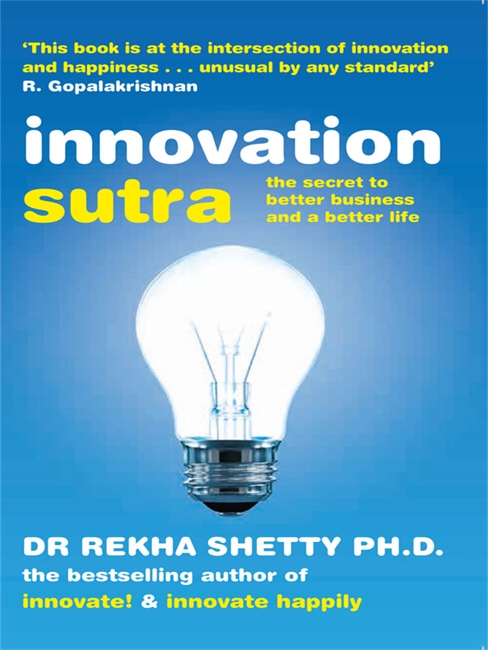
Dharam is a young, immensely successful investment banker in Manhattan. He thinks he rules the world, till one day the world comes crashing down around him. Accompanied by the enterprising Kunal (who sells fake Indian antiques to Americans) and the uncorrupted Supriya, Dharam undertakes a journey along the Buddhist pilgrim trail, from Lumbini, Kapilavastu and Bodh Gaya to Sarnath, Rajgir, Nalanda, Vaishali, Kaushambi and Kushinagar. As he absorbs timeless Buddhist teachings, he finds a new purpose to life, and develops the idea for an ethical yet profitable business: The Buddhist Footprint. Bestselling innovation guru Rekha Shetty’s new book reveals how true entrepreneurial energy can arise from a better understanding of life. Innovation Sutra is a book that will make a tangible difference to anyone who is willing to think out of the box and learn from India’s ancient secrets of work-life balance.
Step Up
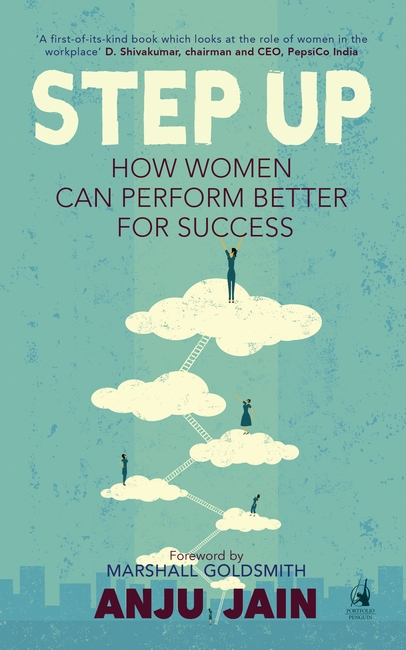
The Only Book You Need to Succeed both at Work and at Home
In this engaging, witty and conversational book, Anju Jain explains why women have been discriminated against, both at home and at work, and how this can be changed. With insights gained from extensive research and experience, she presents practical techniques in a simple matrix for women to use to become successful.
This book will help you to:
1.Increase your productivity
2. Create work-life balance
3. Get support from those who matter
4. Build your own brand at work
5. Reach your goals and succeed
There are also interviews with key leaders-both women and men-who talk about the challenges they faced, and the solutions which worked for them. Among those featured are Kiran Mazumdar Shaw (Biocon), Sonia Singh (NDTV), Devyani Rana (Caterpillar), Geetu Verma (Unilever), Ipsita Dasgupta (GE), Sunita Maheshwari (RxDx and Teleradiology Solutions), Vaishali Kasture (Deloitte Consulting), Divya Suri (Lalit Suri Resorts), Kumud Srinivasan (Intel), Gwen Ryan (EY), N.V. Tyagarajan (Genpact), Mohandas Pai (Manipal Global Education) and Raj Nayak (Colors TV). Full of interesting anecdotes and great advice, Step Up will both entertain and guide women towards personal and professional growth.
Innovate Happily
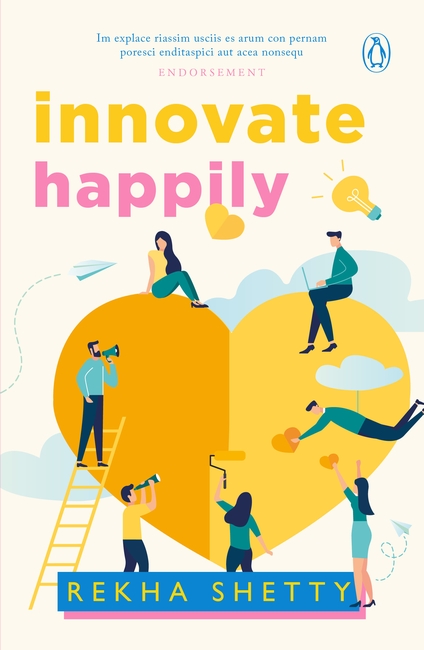
Studies show that happy people are the most innovative and more productive. The Happiness Quotient is therefore integral to a successful corporate strategy. In Innovate Happily, bestselling innovation guru Rekha Shetty’s new book, Junie, a bright young executive, meets Rags, a wise, hi-tech coach. Together they discover the secrets that create progressive and happy communities during a visit to Bhutan, the modern day Shangri-La, a land that actually measures its Gross National Happiness. Through a series of analytical and self-actualization exercises, Innovate Happily shows you innovative ways to increase your Happiness Quotient and take it to your own town and organization.
She Walks, She Leads
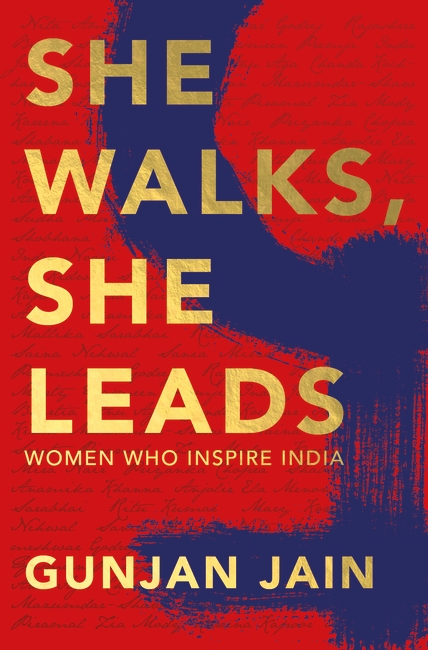
Nita Ambani launched the Indian Super League, on the lines of FIFA, to boost football in India. Sudha Murty gave her savings to her husband, Narayana Murthy, to help start Infosys. Naina Lal Kidwai was the first Indian woman to graduate from Harvard Business School. Kiran Mazumdar-Shaw started Biocon with a seed capital of Rs 10,000. At the age of sixteen, Sania Mirza became the youngest and the first Indian woman to win a Grand Slam.
These are some snippets from She Walks, She Leads which profiles twenty-six iconic women in modern India. These leaders tell their stories, up close and personal. Their relentless ambition to shatter the glass ceiling, their pursuit for excellence and the challenges that came their way, all of this is captured vividly in this exclusive anthology. Each chapter is based on extensive research and has never-seen-before photographs of these luminaries. The chapters are followed by interviews with their companions and close confidants who have seen them grow over the years. The women leaders profiled in the book come from different fields like banking, media, cinema, sports, fashion, philanthropy and industry.
Come Home to Yourself
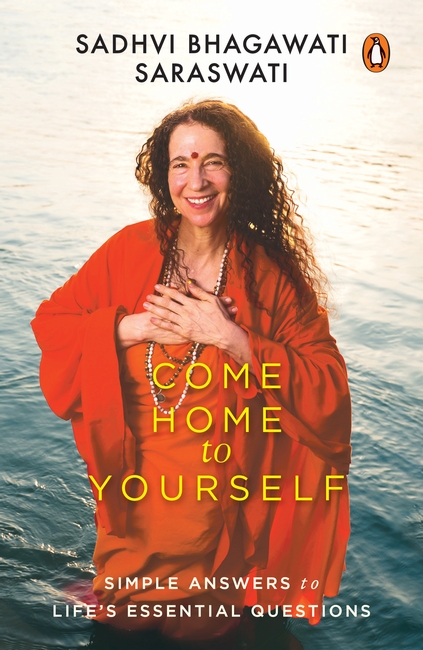
Written in a beautiful, simple and conversational style, Sadhviji covers the most pertinent issues affecting all of us-how to discover inner peace, find love, let go of anger, know your purpose, and connect with God, regardless of your religion. Born and educated in the US, Sadhviji has a PhD in psychology. She came to India approximately twenty-five years ago and has since lived at the Parmarth Niketan Ashram in Rishikesh, on the banks of the Ganga.
This book emerged from the satsangs held each evening after the sacred Ganga aarti at the Ashram, and will resonate deeply with everyone, whether you are old or young, rich or poor, religious or not, traditional or modern. It will touch you deeply, awaken your spirituality and connect you to your true self, allowing you to become the best version you can be.
Why do I think so negatively? How can I break out of negative patterns?
Negative thinking is a tragic pattern that many of us fall prey to. Sadly we do it because we’ve been programmed to do it. One part of it stems from our basic culture of education and discipline, which is a system based on punishments rather than rewards. The children who do well and behave are ignored, and the kids who cause problems are the ones who get all the attention. We constantly hear, ‘You’re stupid, you’re bad, you’re this, you’re that,’ and we internalize it.
The other part of it comes from the rest of the culture-media, politics, etc.-that is rooted in and founded upon convincing us that we are lacking something in our lives that they are going to fulfil. This is called marketing. If you already have everything, how am I going to sell you something? If you’re already satisfied, you’re not a very good customer, especially if what I’m selling is not something you need. I need you to feel that there is something missing in you, which my product is going to solve. Either you are too dark or too fair, your hair is too straight or too curly, you’re too fat or too thin, you’re wearing last year’s model of jeans. This is how advertising works…
I feel anxiety in many situations. Is anxiety a bad thing?
First of all, it’s important to remember that nothing we experience is bad. The only bad thing is thinking that what we feel is wrong, because then we end up separating ourselves from ourselves. We want to be good, we want to think and act in good ways, so the minute we label something inside of us as ‘bad’, we’ve cut ourselves off from it.
So when we examine anxiety, it is not ‘bad’ per se. However, what does it do? It makes our heart race. When we feel stressed and anxious, our heart rate rushes, our blood pressure goes up, all of our energy literally rushes to the extremities. It’s our fight-or-flight response. We are biologically primed and ready in that moment to either fight or flee.
That response would be very useful if we were living in a cave and had to protect ourselves from tigers or bears or warring tribes, but it’s not very helpful in the world we live in. We need that rush of adrenaline to be able to outrun a threat or to climb a tree. But we cannot live in a state of openness and expansion while simultaneously running or fighting. Either the world is something to be afraid of, or the world is something to be one with, but it can’t be both.
Every minute that we feel anxiety, what our body is telling us on a physiological level is that this situation is dangerous. And that’s not a healthy way to live. The question then becomes-how do we stop feeling anxious?
Every time you feel anxious, ask yourself: Is this really a situation where I want to separate myself from the world? And if not, then ask yourself how you can expand the way you think of yourself. Ground yourself in your breath. Try to experience a state of oneness with the people around you, rather than a sense of separation, because where there’s oneness, there’s no fear. Where there’s fear, you feel separation. Anxiety takes us away from the truth of who we are. And on a spiritual path, we want to be closer to who we are.
What is meditation?
Meditation is a noun, not a verb. It is more who we are than just what we do seated on a cushion for a few minutes or hours each day. It is knowing and living as the True Self. It is not a complex, esoteric skill that only experts can perform, such as feats of gymnastics or long division without using paper.
Meditation is what gets us back in touch with who we really are, but without judgement or analysis. Meditation creates stillness in the mind so that we’re able to genuinely live and experience the Truth of who we are. Our problems are not outside; they’re inside. Our minds run around and repeat stories to us-stories that we’ve taken in from our culture, our life. Stories that we’re too much of this, not enough of that, that we should be like this and not like that, and so on. It’s that judging, commentating voice. We internalize that voice, and most of us hear it all day long on repeat. If we listened to our thoughts intently, we would notice that the vast majority of them are utterly useless and make little sense.
Then there comes in thoughts about who others are, who they should be, what they’re doing, what they should be doing, and all of the judgement, yearning,longing, wishing and aversion that clog our minds. It’s not who we are, it’s just what our thinking mind has been habituated to doing mechanically.
Meditation gives us the experience of what it would be like if this weren’t going on all the time. It’s not a very complex skill, but the lack of complexity doesn’t mean it’s easy. This is because of the games that the mind plays. Don’t think that unless you’ve got lots of free time to learn meditation, you won’t succeed. If you’re able to just breathe it out as it comes-whatever ‘it’ is that comes-and bring your awareness back to the breath, you are meditating, and it will ground you back in the truth of who you are.
Meditation brings us back into a place of real awareness-awareness without judgement and analysis, open-eyed witnessing of who we are and what’s there when we remove the non-self from our identification. Through meditation, we are able to peel back layer after layer.
Ib’s Endless Search for Satisfaction
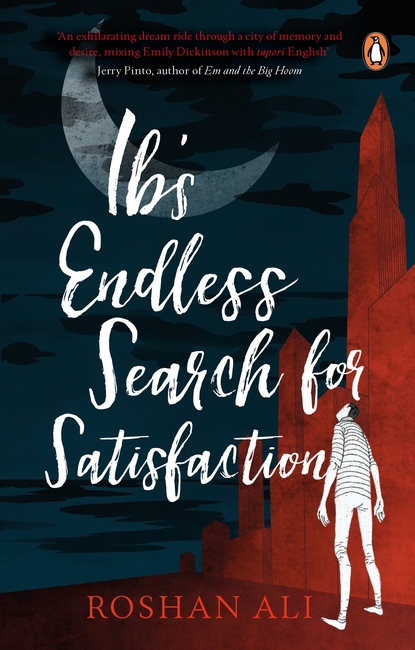
SHORTLISTED FOR THE JCB PRIZE FOR LITERATURE 2019
SHORTLISTED FOR THE SHAKTI BHATT PRIZE 2019
‘And then finally I felt sadness, aided perhaps by those futile notes, by the dust that keeps thickening, by the untouchable past, the inevitable future, and by everything else that pushes us around.’
Ib lives with his schizophrenic father and his ‘nice’ mother negotiating life, not knowing what to do, steered by uncaring winds and pushy people. From his slimy, unmiraculous birth to the tragic death of a loved one, Ib wanders the city, from one thing to another, confused, lost and alone, all the while reflecting on his predicament. He is searching for something-what he does not know-and must overcome many obstacles: family, religion, love and, finally, death. Will he be defeated by ‘this wreckage of modern life?’ Will a mysterious woman lift him out of the ‘cement’ in his soul?
In this journey of sadness and self-reflection, Ib tranforms into an ordinary man from an ordinary boy and along the way, tries to figure out life and understand himself.
In this audacious debut that is insightful, original and deeply disturbing, Roshan Ali’s play of language is nothing less than masterful.
How to Be a Likeable Bigot
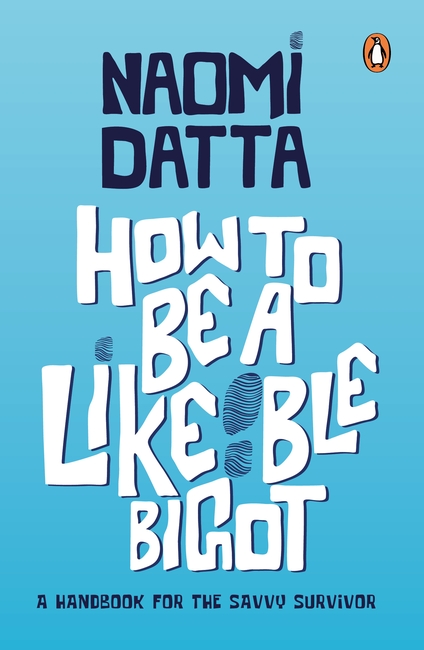
In this collection of satirical essays in her deft, inimitable style, Naomi Datta tells you how to survive various situations-from how to befriend tiger moms to how not to get a pink slip- simply by being ‘ordinary’. This is a book which celebrates conformity and tells you how to be perfectly regular, to blend in and be largely forgettable. It is a fine art-moderation. This book will hold up a mirror to all of us, and we may not like what we see.
A Treasury Of Indian Wisdom
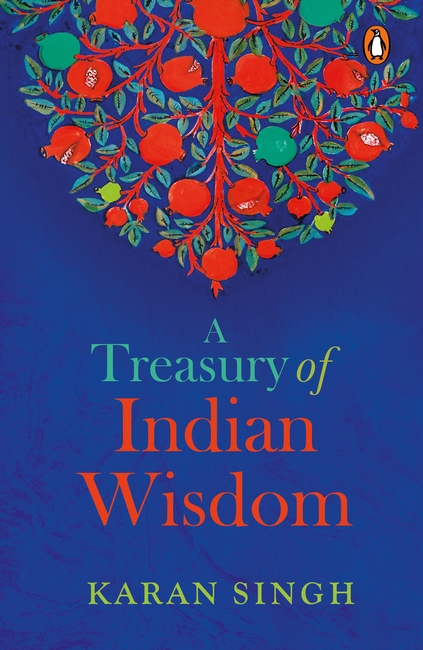
The civilization of the Indian subcontinent is by far the world’s oldest living civilization. A Treasury of Indian Wisdom traces its intellectual and spiritual history over 5000 years.
The anthology begins with Vedic hymns, journeys into the heart of Vedantic philosophy through the Upanishads, and discusses the fundamental truths offered by Buddhist and Jain monks. Presenting the beauty and devotion in the verses of the Bhakti, Sufi and Sikh gurus, it finally evolves into the contemporary ideologies of the moderns like Jawaharlal Nehru, J. Krishnamurti and Osho. In keeping with the spirit of pluralism, the book puts together the wide-ranging wisdom of saints and scholars, thinkers and reformers, poets and leaders.
At a time of great turmoil and transition, Dr Karan Singh’s selections come as a reminder of our timeless secular heritage for a generation seeking its place in the world.
The Power of Opportunity
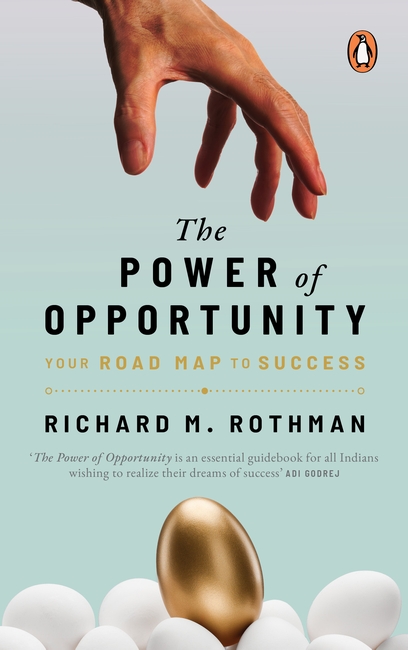
Opportunities are free, abundant, and available to all-including you. Better yet, golden opportunities are like powerful magnets that attract all the resources you need to succeed. People who started with nothing-like Dhirubhai Ambani, Steve Jobs, Jeff Bezos, Sunil Mittal and Bill Gates-all leveraged the power of golden opportunities to make it big.
But there’s a catch. Because golden opportunities are golden on the inside, not on the outside, people usually miss them. For the first time, Richard M. Rothman provides you with a simple and proven process to see and choose golden opportunities. Based on over three decades of research, The Power of Opportunity is your roadmap to achieve the kind of success that you’ve never dreamed possible.