Business and Intellectual Property reflects on the future of Intellectual Property (IP) in the age of new media and shows how—in a rapidly changing business field—managers and decision-makers need to be more perceptive, agile, and vigilant than ever before. Drawing on contemporary business affairs and strategies, it explores the nature and scope of IP and the evolution of national laws and global agreements like the TRIPs to protect it. It also explores measures (use of patents, copyright, and trademarks) used by some of the biggest brands—Coke, MGM, 20th Century Fox, Microsoft, Harrods, Maruti, Tata—to manage disputes and protect themselves. Accessible, clear, and using a wide range of case studies, Business and Intellectual Property gives an excellent overview of a subject that is becoming a key aspect of many businesses today.
The IIM Ahmedabad Business Books bring key issues in management and business to a general audience. With a wealth of information and illustrations from contemporary Indian businesses, these non-academic and user-friendly books from the faculty of IIM Ahmedabad are essential corporate reading.

Did you know that India is the world’s suicide capital with over 2.6 lakh cases reported every year?
But what we know about the causes of suicide lags far behind our knowledge of many other life-threatening illnesses, partly because the stigma surrounding suicidal behaviour has limited society’s investment in suicide research.
It is said that more than 50 per cent of all those who attempt suicide tell someone about their intention. So how do you recognize suicidal symptoms in people around you and get help?
From insights into the mind of a suicidal patient and understanding why one is driven to suicide to the right kind of intervention when suicide has been attempted, and a list of suicide hotlines, this book is an attempt to help thousands who are questioning the motive of their life. It is just as useful to anyone who has lost a loved one to suicide and is looking for a way to overcome grief.

A book that challenges our notions of family honour and morality Sometime, somewhere, the conspiracy of silence around Child Sexual Abuse (CSA) in Indian homes had to be shattered. This path-breaking book”the first of its kind in the country and subcontinent”attempts to give that sexually abused child a powerful voice. It provides damning disclosures about men, and some women, in middle and upper-class families who sexually abuse their children, then silence them into submission. Based on studies, reports and investigation, this book reveals that a minimum of twenty per cent of girls and boys under the age of sixteen are regularly being sexually abused; half of them in their own homes, by adults who have the child’s trust. In Bitter Chocolate, journalist and best-selling author Pinki Virani travels across the country to record the testimonies of the police, doctors, child psychologists, mental health professionals, social workers, lawyers and the traumatized victims themselves. The book opens with an account”brave and devoid of self-pity”of the author’s own experience. Going beyond blaming, Pinki Virani then proceeds with her insightful analysis of the issue in three notebooks. The first spells out what constitutes CSA, why and how this happens, its devastating after-effects which haunt the victims as they grow into adulthood. The second notebook describes these effects through two real-life stories of women who were betrayed as children by men of their family. The third provides practical solutions on how to counter CSA, including a framework involving the law, the parent and their child. A special chapter addresses adults who have never before disclosed their sexual abuse as children. Plus: a nationally coordinated helpline. Accessible yet comprehensive, Bitter Chocolate is written for the young parent and guardian, principal and teacher, judge and police, lawyer and public prosecutor, teenager and tomorrow’s citizen.

Shayara Bano knocked at the doors of the Supreme Court to challenge her husband’s sudden decision of ending their marriage using the three dreaded words: talaq, talaq, talaq.
A 1980s Bollywood movie sparked off a national debate on the validity of instant divorce, which even saw Dawat-a four-page daily published by the Jamaat-e-Islami Hind-talking about triple talaq as per the Quran.
For a long time, the battle against instant talaq has garnered public attention. In Till Talaq Do Us Part, Ziya Us Salam, an eminent social commentator and an associate editor at Frontline, presents a holistic view of how divorce works in Islam. Ranging from triple talaq to talaq granted over three months to khula and talaq-e-tafweez, the book also discusses other methods of divorce available to a Muslim couple which go ignored thanks to all the attention on talaq, talaq, talaq.
BBC and Google have used it in their offices
Oprah Winfrey promoted it on her show
Aamir Khan loved it on Satyamev Jayate
Mira Nair filmed a documentary, The Laughing Club of India, on itLaughter yoga is a revolutionary idea: simple and profound. A practice involving prolonged voluntary laughter, it is based on scientific studies that have concluded that such laughter offers the same physiological and psychological benefits as spontaneous laughter.
Today, laughter yoga has become popular worldwide as a complete workout. It is practised in more than 100 countries, with as many as 2.5 lakh people laughing out loud in India alone.
This comprehensive book by the founder of the laughter yoga club movement, Dr Madan Kataria, tells you what laughter yoga is, how it works, what its benefits are and how you can apply it to everyday life.

Ever wondered how Farhan Akhtar trained to play a professional athlete in Bhaag Milkha Bhaag, or what diet plan Aamir Khan followed to maintain those rock-hard abs in Dhoom 3? If yes, this is the book for you. Veteran journalists Ram Kamal Mukherjee and Devyani Ghosh interview the fitness trainers behind the amazing physiques of Hrithik Roshan, Shahid Kapoor, Aamir Khan, Bipasha Basu, Farhan Akhtar, Tiger Shroff, Priyanka Chopra, Varun Dhawan and Sonu Sood.
With detailed daily workouts, diets and plans followed by these actors for specific roles, this book will show you how to get in shape like your favourite movie star. The authors also provide a peek into each star’s fitness philosophy, along with interesting personal anecdotes and the ways in which they motivate themselves to not only achieve great bodies but also maintain them. Whether you’re just starting your fitness journey or looking to ramp it up a notch, this book is sure to help you look like a star.

Motherhood is a life-changing event in a woman’s life. Keeping in mind the fast-paced lives of nuclear families and sometimes unhealthy lifestyles, Bollywood’s most celebrated yoga expert, Payal Gidwani Tiwari, brings to fore the importance of preparing the body and soul for such a change. From pre-pregnancy to post-natal, Gidwani utilizes her age-old knowledge of yoga and provides essential advice to take care of oneself before, during and after the birth. Her workout sessions are especially designed for modern parents.

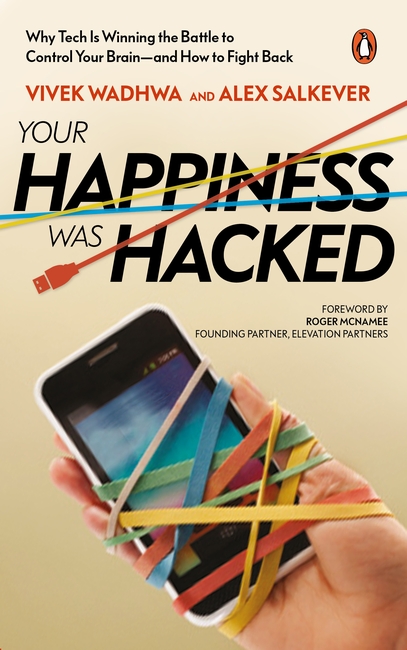
We’ve become a tribe of tech addicts, and it’s not entirely our fault.
Taking advantage of vulnerabilities in the human brain function, tech companies entice us to overdose on technology interaction. This damages our lives, work, families and friendships. Swipe-driven apps train us to evaluate people like products, diminishing our relationships. At work, we email on an average of seventy-seven times a day, ruining our concentration. At home, light from our screens contributes to epidemic sleep deprivation.
But we can reclaim our lives without dismissing technology. The authors explain how to avoid getting hooked on tech and how to define and control the roles that it plays and could play in our lives. This profound and timely book turns personal observation into a handy guide to adapting to our new reality of omnipresent technology.

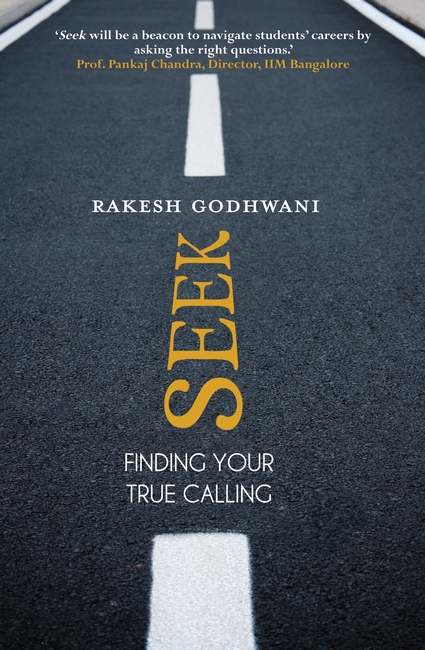
If I don’t crack this job, how will I repay my education loan?
If I join an IT company, will I be able to shift to banking after two years?
These questions seem very familiar, don’t they? Every student has similar concerns about which career path they should tread. Seek provides insights into the various fields and industries-Consulting, IT, Media, Oil and Gas, and others-by delving into stories of successful IIM-Bangalore alumni like Arun Balakrishnan, Malavika Harita, and Apurva Purohit who have made a dent in their respective professions and fields. Rakesh Godhwani offers smart, practical advice on following your passion and finding your dream job.

The spark of life, fount of emotion, house of the soul–the heart lies at the centre of every facet of our existence. It’s so bound up in our deepest feelings that it can physically change shape when we experience emotional trauma.
For centuries, the human heart seemed beyond our understanding: an inscrutable shuddering mass that was somehow the driver of emotion and the seat of the soul. As the cardiologist and bestselling author Sandeep Jauhar shows in Heart: A History, it was only recently that we demolished age-old taboos and devised the transformative procedures that have changed the way we live.
Deftly alternating between key historical episodes and his own work, combining his family’s own moving history of heart disease with gripping scenes from the operating theatre, Jauhar tells the colourful and little-known story of the doctors who risked their careers and the patients who risked their lives to know and heal our most vital organ. He introduces us to Daniel Hale Williams, the African American doctor who performed the world’s first open heart surgery in Gilded Age Chicago. We meet C. Walton Lillehei, who connected a patient’s circulatory system to a healthy donor’s, paving the way for the heart-lung machine. And we encounter Wilson Greatbatch, who saved millions by inventing the pacemaker?by accident. Jauhar deftly braids these tales of discovery, hubris, and sorrow with moving accounts of his family’s history of heart ailments and the patients he’s treated over many years. He also confronts the limits of medical technology, arguing that future progress will depend more on how we choose to live than on the devices we invent.
Affecting, engaging, and beautifully written, Heart: A History takes the full measure of the only organ that can move itself.