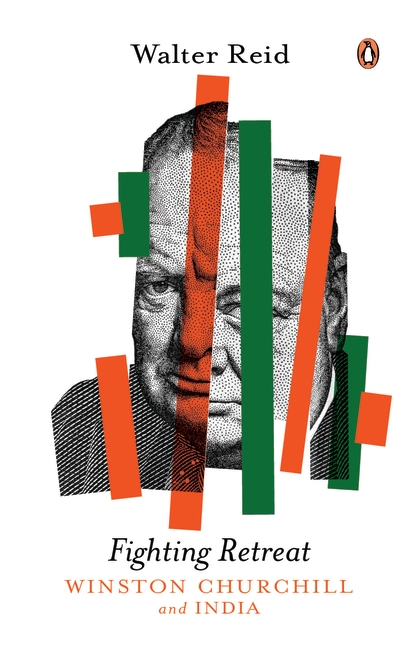
Winston Churchill was closely connected with India from 1896, when he landed in Bombay with his regiment, until 1947, when Independence was finally achieved. No other British statesman had such a long association with the subcontinent—or interfered in its politics so consistently and harmfully.
Churchill strove to sabotage any moves towards Independence, crippling the Government of India Act over five years of dogged opposition to its passage in the 1930s. As prime minister during the Second World War, Churchill frustrated the freedom struggle from behind the scenes, delaying Independence by a decade. To this day for Indians, he is the imperialist villain, held personally responsible for the Bengal Famine of 1943.
This book reveals Churchill at his worst: cruel, obstructive and selfish. However, the same man was outstandingly liberal at the Colonial Office, risking his career with his generosity to the Boers, the Irish and the Middle East. Why was he so strangely hostile towards India?

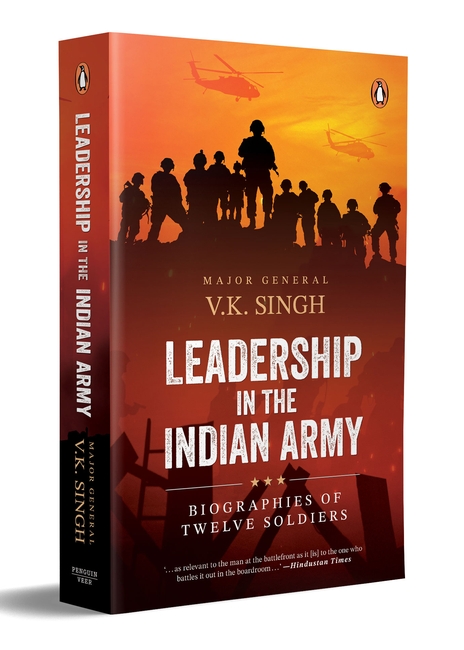
Unlike traditional biographies of combat leaders, which focus primarily on military operations or regimental histories, in this book Major General V.K. Singh concentrates on personal accounts, anecdotes and reminiscences in order to highlight these leaders’ personalities, and to draw out the human face behind the military facade. Through the stories of these twelve military leaders, the book also throws new light on several historical events and the role of political leaders during India’s fight for independence and the partitioning of the subcontinent. He gives an overview of India’s military history after independence, including major operations, and describes many hitherto unknown or little-known incidents concerning smaller operations like Nathu La in 1967 and Goa in 1962.
Written records tend to glorify the actions of battalions as well as individuals, Singh says, magnifying achievements while suppressing the mistakes and glossing over failures. Leadership in the Indian Army provides a truer picture of the strength of character and convictions of each of these leaders. A must-read for anyone interested in India’s military history.

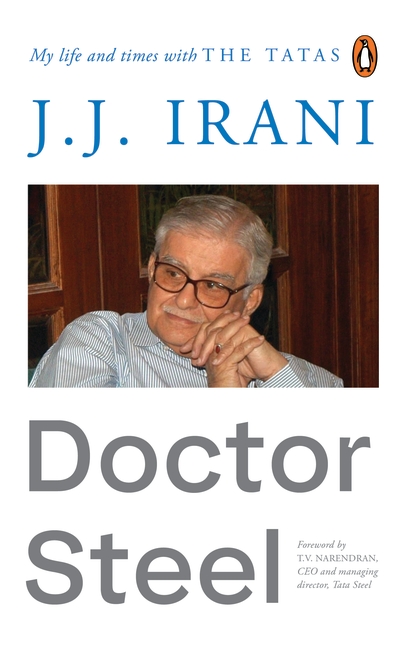
In the 1980s, the steel produced in India was not cost-effective, plagued by quality issues and unable to meet the standards required to take India a step ahead in its development goals.
Enter Jamshed Jiji Irani, fondly known as ‘Doc’ to all, whose efforts aimed at modernizing Tata Steel changed everything. Today, Tata Steel produces low-cost, high-quality metal of international standards. Under his leadership, Tata Steel ushered India into a new age of economic growth. But his story doesn’t end there. A leading industrialist, Irani was keenly involved in the 1990s economic liberalization that put India on the global map. He held positions on various Tata boards, and was part of the Confederation of Indian Industry and several other government-appointed committees. He was awarded the Padma Bhushan and an honorary knighthood by the British government for his work.
Behind his formidable exterior was a man with a big heart and a fondness for life. He was a man of integrity and conviction, devoted to Tata Steel and the people there. The chapters that make up Doctor Steel—the result of freewheeling conversations between Irani and N.K. Sharan in the months before the former’s passing—look back at this journey.
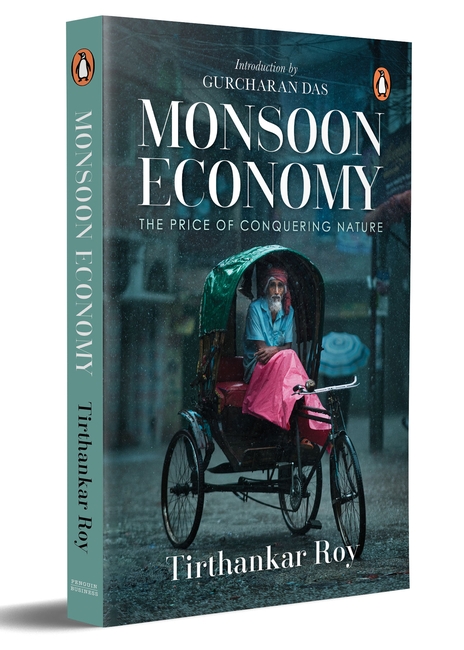
In the monsoon regions of South Asia, the rainy season sustains life but brings with it the threat of floods, followed by a long stretch when little gainful work is possible and the threat of famine looms too. Beginning in the late nineteenth century, a series of interventions by the Indian government and other actors mitigated these conditions, thus enabling agricultural growth, encouraging urbanization and bringing about a permanent decrease in death rates. But these actions—largely efforts to ensure wider access to water—came at a cost to environmental sustainability. In Monsoon Economy, Tirthankar Roy explores the interaction between the environment and the economy in the emergence of modern India.
Roy argues that the tropical monsoon climate makes economic and population growth contingent on water security. But in a water-scarce world, the means used to increase water security not only created environmental stresses but also made political conflict more likely. Highlighting the importance of water as a public good, the author critically analyses issues such as water quality in cities, the shift from impounding river water in dams and reservoirs to exploring groundwater, and the seasonality of a monsoon economy. He also draws economic lessons from India for a world facing environmental degradation.

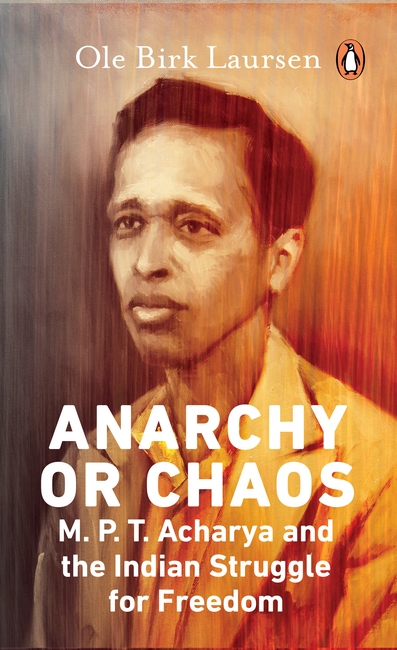
In this fascinating biography of the Indian revolutionary M. P. T. Acharya (1887–1954), Ole Birk Laursen uncovers the remarkable transnational networks, movements and activities of India’s most important anticolonial anarchist in the twentieth century.
Driven by the urge for complete freedom from colonialism, authoritarianism, fascism and militarism, which are rooted in the idea and politics of the nation-state, Acharya fought for an international vision of socialism and freedom. During the tumultuous opening decades of the 1900s—marked by the globalization of radical inter-revolutionary struggles, world wars, the rise of communism and fascism, and the growth of colonial independence movements—Acharya allied himself with pacifists, anarchists, radical socialists and anti-colonial fighters in exile, championing a future free from any form of oppression, whether by colonial rulers or native masters. Drawing on a wealth of archival material, private correspondence and other primary sources, Laursen demonstrates that, among his contemporaries, Acharya’s turn to anarchism was unique and pioneering in the struggle for Indian independence.
Anarchy or Chaos is the first comprehensive study of M. P. T. Acharya. It offers a new understanding of the global and entangled history of anarchism and anti-colonialism in the first half of the twentieth century.

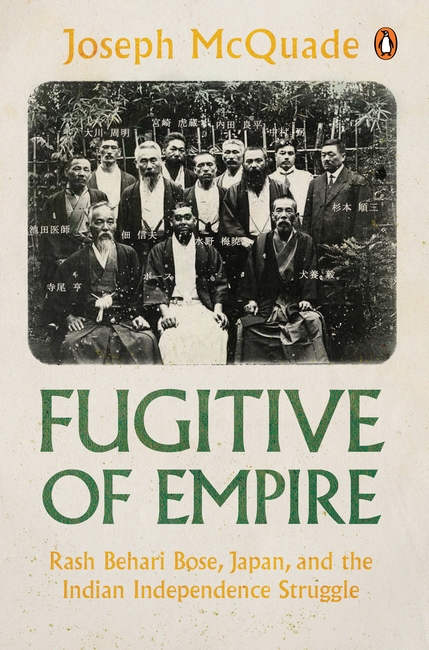
In 1912, Rash Behari Bose made his dramatic entrance into India’s anti-colonial freedom movement when he orchestrated a bomb attack against the British viceroy during a public procession in Delhi. Forced to
flee his homeland, Bose settled in Japan, becoming the most influential Indian in Tokyo and earning the affectionate title ‘Sensei’ among Japanese youth, military personnel, and far-right ultranationalists.
Throughout the 1920s and 1930s, Bose remained a perpetual thorn in the side of the British Empire as he built
and maintained a global network of anti-colonialists, radicals, smugglers, and intellectuals. After siding with Imperial Japan against his British adversaries during the Second World War, Bose died in 1945-just two years before India gained independence.
A complex, controversial, and often contradictory figure, Bose has been described as a committed democrat, an authoritarian, an advocate of religious harmony, a Hindu chauvinist, an anti-communist, a political pragmatist, an idealist, a Japanese collaborator, an anti-racist, a cultural conservative, a
Pan-Asianist, an Indian nationalist, and much more. Drawing on extensive archival research
from India, Japan, and the UK, this refreshing new biography brings to life the largely forgotten story of one of twentieth-century Asia’s most daring revolutionaries.
It contributes to current analyses of the health of liberal democracies-Rajmohan Gandhi
An impressive contribution to Gandhian studies-Bhikhu Parekh
This work merits attention-Gopal Guru
An extremely valuable and timely work-Prabhat Patnaik
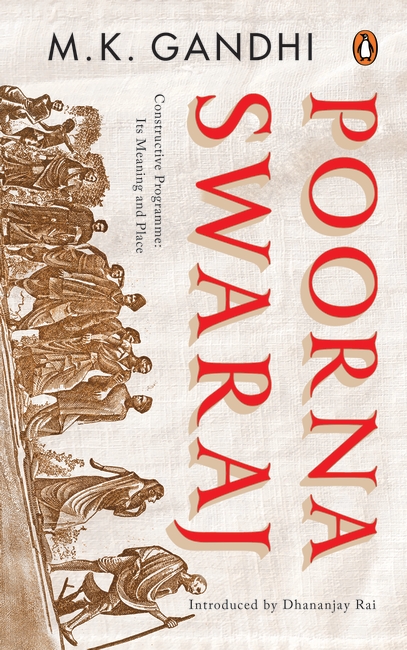
Time and again, Mahatma Gandhi’s life, work and philosophy have played pivotal roles in bringing positive change in society. Poorna Swaraj, through its reading of the Constructive Programme: Its Meaning and Place, opens a window to his vision of attaining real and complete independence or ‘swaraj’ for India. With his ideas on communal unity, prohibition, basic education, emancipation of women, advisasis’ concerns, farmers’ distress, removal of untouchability, demystification of leprosy, the role of khadi, charkha, village and small-scale industries, among others, this book brings to light Gandhi’s road map for an egalitarian society.
This first critical edition, with a comprehensive contextual introduction by Dhananjay Rai, sets the backdrop for readers to understand Gandhi’s thoughts on making an ideal society. Amazingly relevant and thought-provoking, Poorna Swaraj is a must-read for students and scholars of history, social science, politics and Gandhian studies. An invaluable companion for policymakers and general readers, this book is a treasure trove.

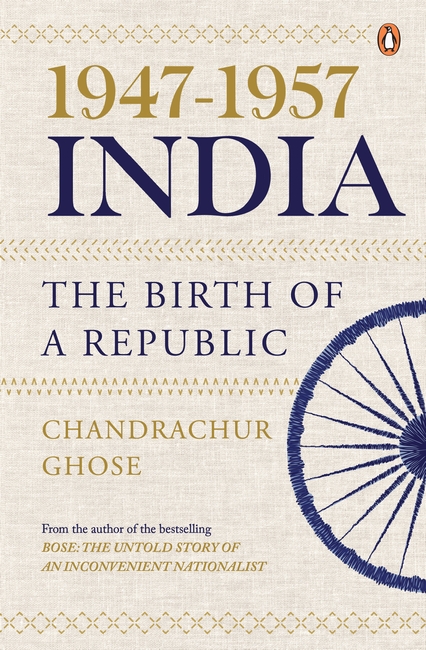
The story of a decade-1947 to 1957-that made and unmade India
The first decade after India’s independence, 1947-1957, was probably the most crucial in the nation’s history. Opening a window to this period, this book weaves a story out of the complex ideas and events that have largely remained beneath the surface of public discourse. The transfer of power, the framing of the Constitution and the formation of the governance machinery; the clash of ideas and ideologies among parties and personalities; the beginning of the disintegration of the Congress and the consolidation of political forces in the opposition; Nehru’s grappling with existential problems at home and his quest for global peace; the interplay between democratic ideals and ruthless power play-all these factors impinged on each other and shaped the new republic in its formative decade.
Thought-provoking, argumentative and unputdownable, 1947-1957, India: The Birth of a Republic is a must-read for anyone interested in Indian political history.

A prominent Viennese psychiatrist before the war, Viktor Frankl was uniquely able to observe the way that he and other inmates coped with the experience of being in Auschwitz. He noticed that it was the men who comforted others and who gave away their last piece of bread who survived the longest – and who offered proof that everything can be taken away from us except the ability to choose our attitude in any given set of circumstances.
The sort of person the prisoner became was the result of an inner decision and not of camp influences alone. Only those who allowed their inner hold on their moral and spiritual selves to subside eventually fell victim to the camp’s degenerating influence – while those who made a victory of those experiences turned them into an inner triumph.
Frankl came to believe that man’s deepest desire is to search for meaning and purpose. This outstanding work offers us all a way to transcend suffering and find significance in the art of living.

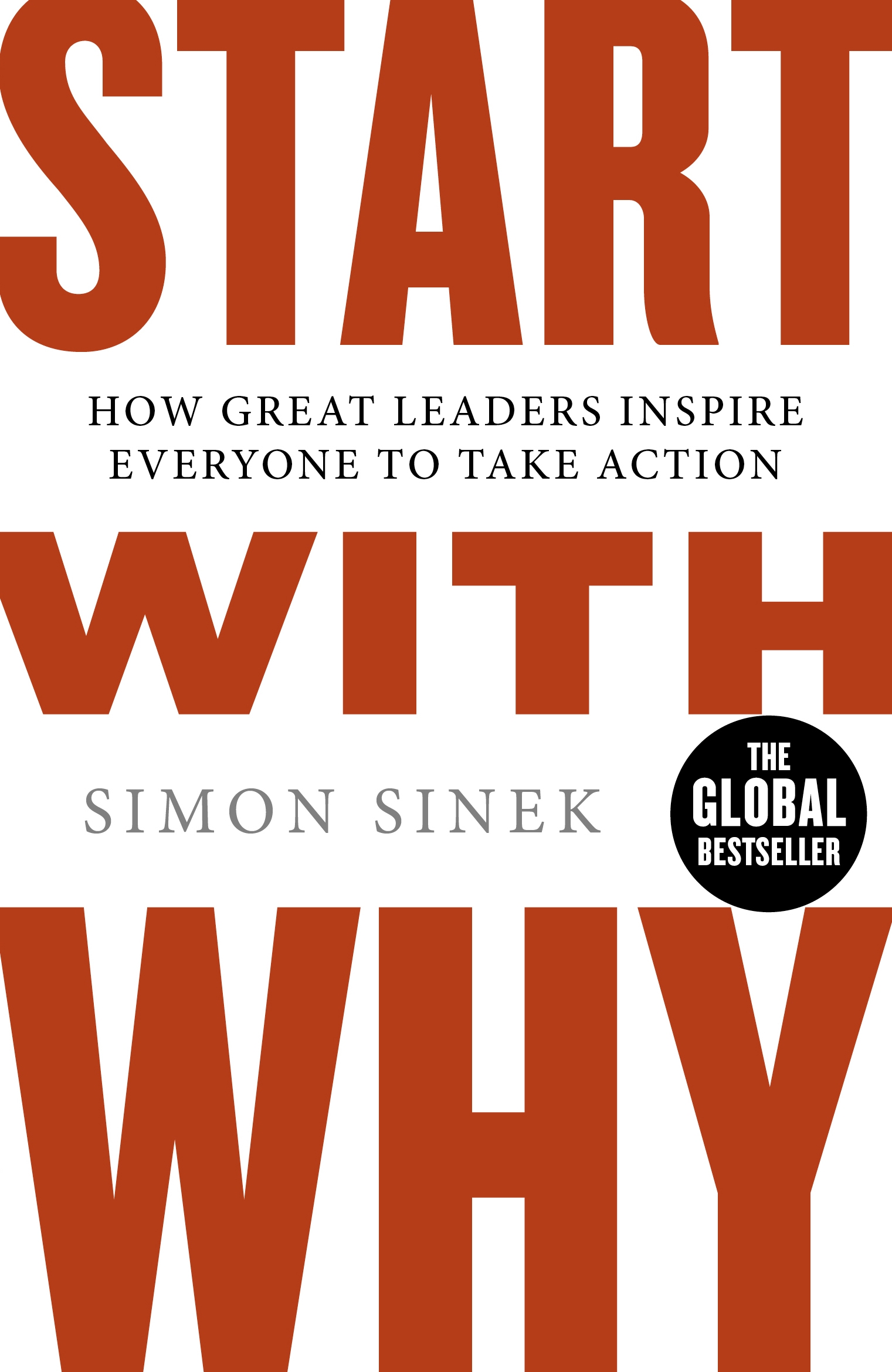
THE MILLION-COPY GLOBAL BESTSELLER – BASED ON THE LIFE-CHANGING TED TALK! DISCOVER YOUR PURPOSE WITH ONE SIMPLE QUESTION: WHY?
‘One of the most incredible thinkers of our time; someone who has influenced the way I think and act every day’ Steven Bartlett, investor, BBC Dragon and host of The Diary of a CEO podcast
*****
Why are some people more inventive, pioneering and successful than others?
And why are they able to repeat their success again and again?
Because it doesn’t matter what you do, it matters WHY you do it.
Those who have had the greatest influence in the world all think, act, and communicate in the same way – and it’s the opposite to most. In Start with Why, Simon Sinek uncovers the fundamental secret of their success. How you lead, inspire, live, it all starts with why.
WHAT READERS ARE SAYING:
‘It’s amazing how a book can change the course of your life, and this book did that.’
‘Imagine the Ted Talk expanded to 2 hours long, with more depth, intrigue and examples.’
‘What he does brilliantly is demonstrate his own why – to inspire others – throughout.’