THE MILLION-COPY GLOBAL BESTSELLER – BASED ON THE LIFE-CHANGING TED TALK! DISCOVER YOUR PURPOSE WITH ONE SIMPLE QUESTION: WHY?
‘One of the most incredible thinkers of our time; someone who has influenced the way I think and act every day’ Steven Bartlett, investor, BBC Dragon and host of The Diary of a CEO podcast
*****
Why are some people more inventive, pioneering and successful than others?
And why are they able to repeat their success again and again?
Because it doesn’t matter what you do, it matters WHY you do it.
Those who have had the greatest influence in the world all think, act, and communicate in the same way – and it’s the opposite to most. In Start with Why, Simon Sinek uncovers the fundamental secret of their success. How you lead, inspire, live, it all starts with why.
WHAT READERS ARE SAYING:
‘It’s amazing how a book can change the course of your life, and this book did that.’
‘Imagine the Ted Talk expanded to 2 hours long, with more depth, intrigue and examples.’
‘What he does brilliantly is demonstrate his own why – to inspire others – throughout.’

How can the complexities of ancient India be comprehended?
This book draws on a vast array of texts, inscriptions, archaeology, archival sources and art to delve into themes such as the history of regions and religions, archaeologists and the modern histories of ancient sites, the interface between political ideas and practice, violence and resistance, and the interactions between the Indian subcontinent and the wider world. It highlights recent approaches and challenges in reconstructing South Asia’s early history, and in doing so, brings out the exciting complexities of ancient India.
Authoritative and incisive, this revised Penguin edition-with two new chapters-is essential reading for students and scholars of ancient Indian history and for all those interested in India’s past.

THE NEW YORK TIMES BESTSELLER AND SUNDAY TIMES, OBSERVER AND BBC HISTORY BOOK OF THE YEAR
FINALIST FOR THE ORWELL PRIZE FOR POLITICAL WRITING 2022
‘Pacey and potentially revolutionary’ Sunday Times
‘Iconoclastic and irreverent … an exhilarating read’ The Guardian
For generations, our remote ancestors have been cast as primitive and childlike – either free and equal, or thuggish and warlike. Civilization, we are told, could be achieved only by sacrificing those original freedoms or, alternatively, by taming our baser instincts. David Graeber and David Wengrow show how such theories first emerged in the eighteenth century as a reaction to indigenous critiques of European society, and why they are wrong. In doing so, they overturn our view of human history, including the origins of farming, property, cities, democracy, slavery and civilization itself.
Drawing on path-breaking research in archaeology and anthropology, the authors show how history becomes a far more interesting place once we begin to see what’s really there. If humans did not spend 95 per cent of their evolutionary past in tiny bands of hunter-gatherers, what were they doing all that time? If agriculture, and cities, did not mean a plunge into hierarchy and domination, then what kinds of social and economic organization did they lead to? The answers are often unexpected, and suggest that the course of history may be less set in stone, and more full of playful possibilities than we tend to assume.
The Dawn of Everything fundamentally transforms our understanding of the human past and offers a path toward imagining new forms of freedom, new ways of organizing society. This is a monumental book of formidable intellectual range, animated by curiosity, moral vision and faith in the power of direct action.
‘This is not a book. This is an intellectual feast’ Nassim Nicholas Taleb
‘The most profound and exciting book I’ve read in thirty years’ Robin D. G. Kelley

‘Interesting and provocative… It gives you a sense of how briefly we’ve been on this Earth’ Barack Obama
What makes us brilliant? What makes us deadly? What makes us Sapiens?
One of the world’s preeminent historians and thinkers, Yuval Noah Harari challenges everything we know about being human.
Earth is 4.5 billion years old. In just a fraction of that time, one species among countless others has conquered it: us.
In this bold and provocative book, Yuval Noah Harari explores who we are, how we got here and where we’re going.
**ONE OF THE GUARDIAN’S 100 BEST BOOKS OF THE 21st CENTURY**
PRAISE FOR SAPIENS:
‘Jaw-dropping from the first word to the last… It may be the best book I’ve ever read’ Chris Evans
‘Startling… It changes the way you look at the world’ Simon Mayo
‘I would recommend Sapiens to anyone who’s interested in the history and future of our species’ Bill Gates

The subject of the liberation of Goa in 1961 and its integration into the Indian Union in 1962 is sparsely understood at best and misunderstood at worst. What were the events that led to the thirty-six-hour military operation-possibly the first since Independence that occurred entirely at India’s initiative? What was the political climate within Goa? What role did Goans themselves play?
In this gripping account, former journalist Valmiki Faleiro covers a wide canvas in detail, including the entire story of Operation Vijay, the events that preceded it and those that followed. The diplomatic efforts, the arguments, the run-up, the build-up, the actual ops and their aftermath in Goa, within India and internationally-all of it is vividly related in this nuanced telling. Faleiro lucidly outlines the prevailing political atmosphere and its changing character, the part played by indigenous independence movements and freedom fighters leading to the liberation of Goa, and the impact of its consequent assimilation into India.
Extensively researched and extremely well-written, Goa, 1961 is a seminal book on an important subject and a must-read for anyone interested in Indian history.

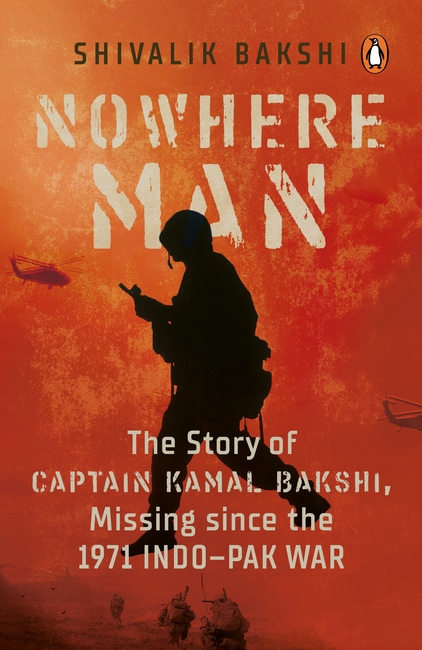
Capt. Kamal Bakshi fought in the 1971 Indo-Pak War and went missing after the Battle of Chhamb–the bloodiest battle of 1971. Although no one from his battalion had seen him get killed, no one had been able to locate his body. And so, the military declared him ‘Missing, Believed Killed’–the ambiguous status assigned to soldiers when their death cannot be confirmed.
However, six years after the war, the Indian government changed its mind. The Ministry of External Affairs announced in Parliament that Indian intelligence agencies have reason to believe that Pakistan had not been truthful when it handed over the list of Indian POWs in its custody. It went on to state the names of at least forty Indian soldiers still believed to be in Pakistani custody and one of the names was Kamal Bakshi’s.
This book has been written by his nephew Shivalik Bakshi. It is his story, recreated from his letters, diaries, recollections of those who crossed paths with him and published accounts of the Battle of Chhamb.
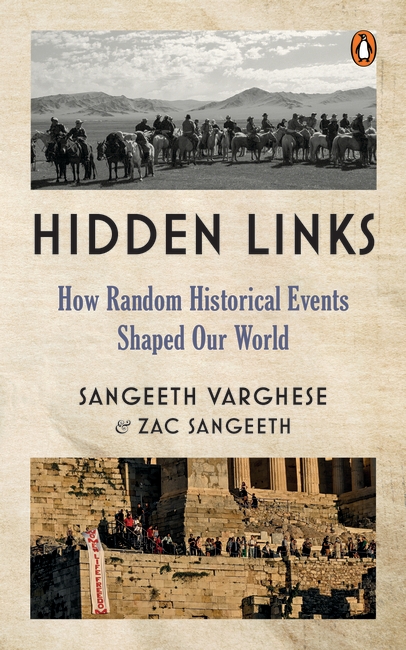
Will climate change wipe out and reset our world, as it did in 1700 BCE?
How are the Rajputs of India related to the Kims of Korea?
What startling parallels unveiled in China during the Mahabharata war?
How was misogyny injected into our DNAs by a band of nomads?
Uncover shocking secrets – as history meets suspense – in this mind bending book that will make you doubt everything from the past you thought you knew.
Unravelling thread by thread, this book investigates the disproportional effect of historically unconnected and random events like climate changes, imperial pursuits, pandemics, and nomadic migrations on our modern lives in the most unbelievable ways.

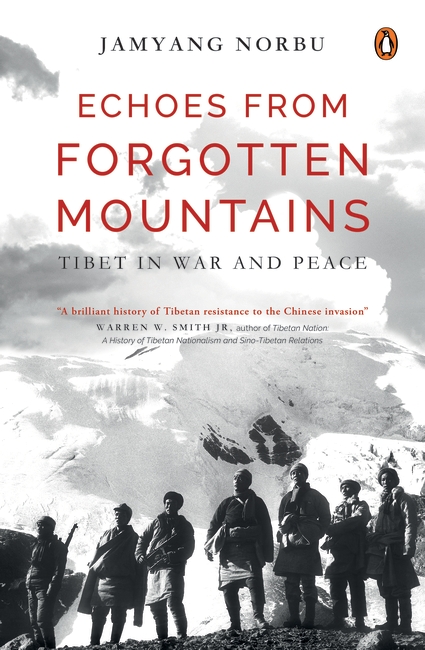
Jamyang Norbu has taken the stories of ‘forgotten’ Tibetans–resistance fighters, secret agents, soldiers, peasants, merchants, even street beggars–and skillfully worked their myriad accounts into a single glorious ‘memory history’ of the Tibetan struggle. He uses recollections from his own childhood to ease the reader into an immersive understanding of the complexity of Tibet’s modern history: the Chinese invasion, the uprisings in Kham and Amdo, the formation of the Four Rivers Six Ranges Resistance Force, the March ’59 Lhasa Uprising, the CIA supported Air Operations, the Nyemo peasant Uprising of 68/69 and the Mustang Guerilla Force in northern Nepal, where Norbu later served.
He writes of leaving home to drive tractors at refugee settlements, educate refugee children, produce plays at the Tibetan Institute of Performing Arts, and collect intelligence for the Tibetan Office of Research and Analysis (TORA) and for France’s External Intelligence Agency (SDECE). He uses these anecdotes not so much as autobiography but as a framing device to recount the lives, deeds and, too often, tragedies of the many Tibetans he encountered and befriended throughout his life–nearly all of whom played vital roles in shaping the recent history of their country but whose contributions are still unsung and forgotten. Jamyang Norbu’s lifelong commitment to collecting and orchestrating the ‘echoes’ of these many forgotten voices from the past has resulted in a lyrical, learned and compassionate book that could well be described as the prose epic of the Tibetan freedom struggle.
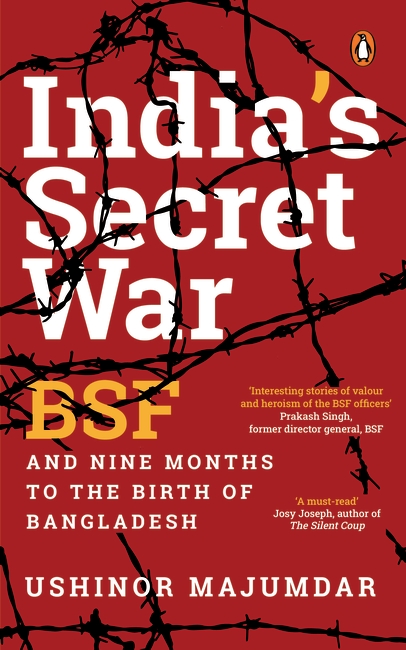
Triggered by the US-backed Pakistani junta’s brutal measures against the Bengalis, Sheikh Mujibur Rahman proclaimed the independence of East Pakistan on 26 March 1971. They needed the world’s support, and India was their first ally.
The Border Security Force (BSF), an elite Indian force, was only five years old at the time and became central to India’s sustained military response in East Pakistan for nine months, until the alliance of Indian and Bangladeshi forces won Dacca. The BSF’s founding chief, K.F. Rustamji, and his men went beyond their charter of policing borders to respond to one of the world’s worst humanitarian crises that was unfolding right next door to India. For nine months, till the 1971 India-Pakistan war, they covertly gave support to the forces of resistance, through clandestine missions and black ops deep in East Pakistan, while diplomats and politicians primed the world for the war. They welcomed democratically elected politicians and helped establish them as the government-in-exile, installed a clandestine radio station, triggered the defections of East Pakistani diplomats and foiled the Pakistan Army’s tactical trump card to damage the Indian Air Force bases.
With access to classified records and through exhaustive interviews with surviving veterans, award-winning investigative reporter Ushinor Majumdar has crafted this first comprehensive historical account of the BSF’s role in the Bangladesh liberation war, which changed the course of South Asian history.

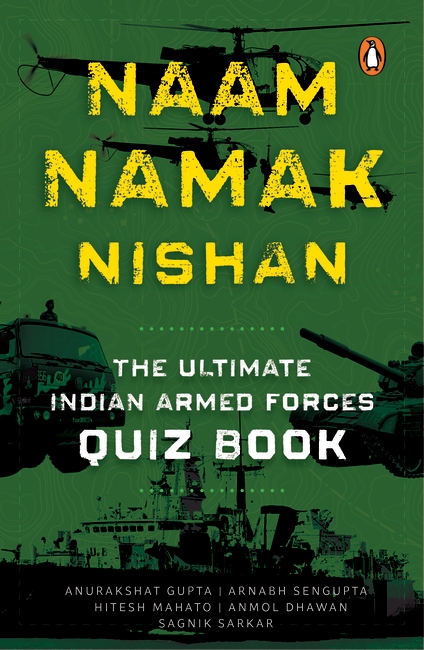
Do you know why the Indian Navy counts ‘One, Two, Six’ instead of ‘One, Two, Three’ while doing group tasks?
Or that the Intelligence Bureau was set up in response to an assassination?
Or that a Frenchman who had served three nations before turning thirty eventually rose to become the most powerful general of the Marathas?
Or that an army man gave his name to the highest mountain without ever having set foot on it?
Find out the answers to these and more as a team of quizzer-doctors from the Armed Forces Medical College (AFMC) Pune takes you on a journey across 250 questions, exploring trivia that connects the Indian Armed Forces to topics ranging from mythology, history and art to geography, fashion and sport.
This and more in a quiz book that will help you see the Indian Armed Forces through a lens you might never have seen before.
Happy exploring!