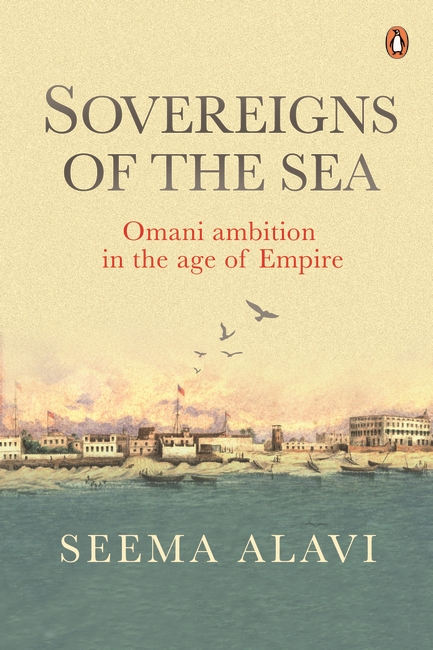
This definitive book on the Sultans of Oman is a thrilling historical account of their action-packed battles, daring expeditions, epic triumphs and ingenious politics in the long nineteenth century. It puts the optic of ‘micro-history’ on their fascinating lives as they navigated the geopolitics of their time and propelled the politics of the Western Indian Ocean. It offers a comprehensive and in-depth examination of the ambitions of the Omani patriarch Sultan Sayyid Said and his four sons and shows how integral they were to the political culture of the region.
Keeping a sensitive finger on the specific temporal and spatial moments in the maritime space that they navigated, it explores their key role in shaping the politics of the Ocean and nurturing the Omani Sultanate on their terms. The groundbreaking narrative sheds light on the role of the Sultans as agents of change, challenging the Eurocentric narrative that views the Indian Ocean as framed in the history of western imperialism and capitalism alone.
In addition to its academic rigour, the book is easy to read and engaging, making it an ideal resource for students, scholars and anyone with an interest in the history of the Indian Ocean, the Middle East and South Asia. Its fresh perspective and insightful analysis make it an invaluable contribution to the fast-growing field of Indian Ocean Studies.

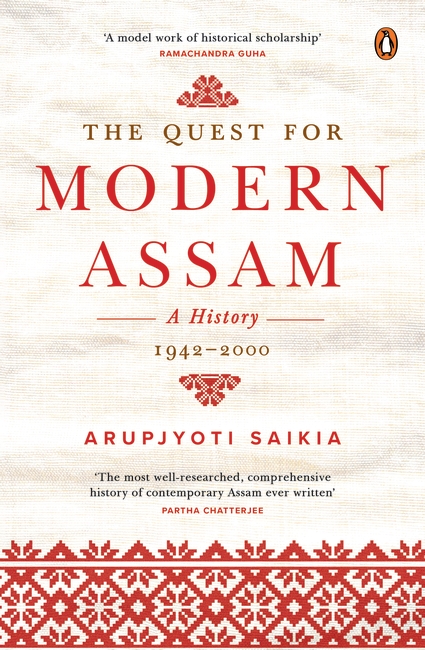
‘A model work of historical scholarship’-Ramachandra Guha
‘The most well-researched, comprehensive history of contemporary Assam ever written’-Partha Chatterjee
The crucial battles of World War II fought in India’s north-east-followed soon after by Independence and Partition-had a critical impact on the making of modern Assam. In the three decades following 1947, the state of Assam underwent massive political turmoil, geographical instability, and social and demographic upheaval, among others. Later, the truncated state suffered widespread unrest as various groups believed their cultural identity and political leverage were under threat. New social energies and political forces were unleashed and came to the fore.
Definitive, comprehensive and unputdownable, The Quest for Modern Assam explores the interconnected layers of political, environmental, economic and cultural processes that shaped the development of Assam since the 1940s. It offers an authoritative account that sets new standards in the writing of regional political history. Not to be missed by any one keen on Assam, India, Asia or world history in the twentieth century.

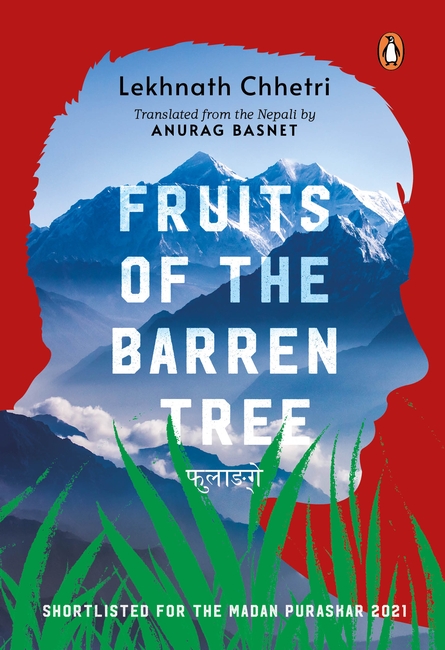
Darjeeling, late 1980s. The demand for a separate state of Gorkhaland has taken a violent turn. The Green Party is at war with the Red Party-and with the state’s security forces. Murder, loot, terror and arson beset the Himalayan foothills.
Fruits of the Barren Tree is a story of that time, and of Relling, a small village near Darjeeling. In Relling there’s Basnet, the village shaman, and his wife; there’s Jhuppay, their son-incorrigible thief, truant and amateur drunk; and also Nimma, Jhuppay’s great love, whose only desire in life is that he take the path of virtue. There’s Chyaatar too, former army man, now a militia commander in the Green Party, who rules the village with an iron hand. Ever the miscreant, nothing Jhuppay does can win Nimma’s heart. But when the Red Party hires his loudspeaker for a meeting-the first innocent, honest job of his life-it sets Jhuppay, Nimma and Chyaatar on a murderous course that fate itself cannot derail.
Originally published in Nepali as Phoolange, this sharp, evocative novel is the story of a failed movement and a cautionary tale of how easily the contagion of violence can infect a community. Intensely visual and imbued with a strong sense of place, it is equally a compelling portrait of Darjeeling away from the brochures and the postcards.

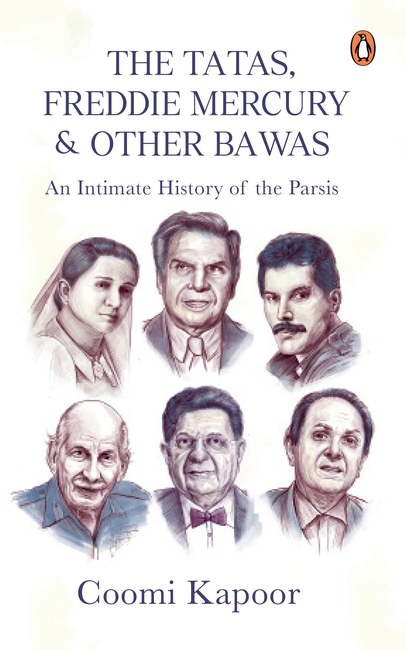
The Parsis are fast disappearing. There are now only around 50,000 members of the community in all of India. But since their arrival here from Central Asia, somewhere between the eighth and tenth centuries, the Parsis’ contribution to their adopted home has been extraordinary. The history of India over the last century or so is filigreed with such contributions in every field, from nuclear physics to rock and roll, by names such as Dadabhai Naoroji, Dinshaw Petit, Homi Bhabha, Sam Manekshaw, Jamsetji Tata, Ardeshir Godrej, Cyrus Poonawalla, Zubin Mehta and Farrokh Bulsara (aka Freddie Mercury). This is a revised and updated new edition – engaging and accessible – making it as the most intimate history of the Parsis by senior journalist and columnist Coomi Kapoor, herself a Parsi. The book pores through the names, stories, achievements and the continuing success of this tiny but extraordinary minority. She delves deep into both the question of what it means to be Parsi in India, as well as how the community’s contributions-from tanchoi silk to chikoos-became integral to what it meant to be Indian. In Kapoor’s hands, the story of the Parsis becomes a rip-roaring, incident-filled adventure: from dominating the trade with China to being synonymous with Bombay, once, arguably, a city defined by its Parsis; from the business success of the Tatas, the Mistrys, the Godrejs and the Wadias, to such current contributions as the manufacturing of COVID-19 vaccines by the Parsi-founded Serum Institute of India.

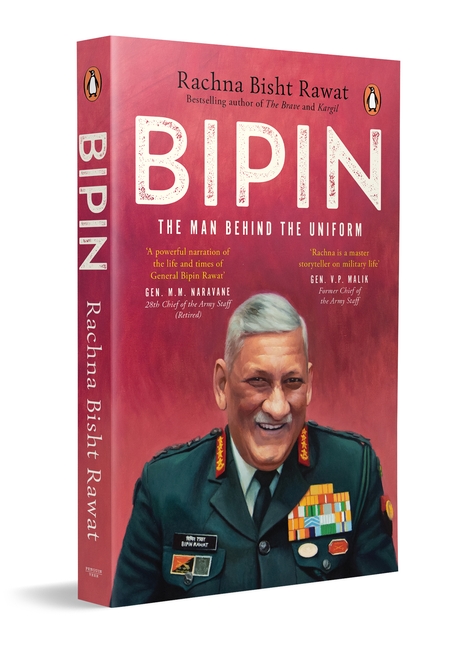
On the morning of 8 December 2021, India’s Chief of Defence Staff, General Bipin Rawat, and his wife, Madhulika, said goodbye to their daughter, Tarini, and dogs, and left their Delhi home to board a flight for Sulur in Tamil Nadu. Around 11.48 a.m., they boarded an Mi-17 V5 helicopter that took off from Sulur to Wellington, where Gen. Rawat was to deliver a lecture at the Defence Services Staff College. Just a few minutes away from its destination, the chopper crashed, and all fourteen passengers onboard eventually perished. It was a sudden and shocking end to the life of a man who had risen like a meteor in the defence forces.
Bipin: The Man behind the Uniform is the story of the NDA cadet who was relegated in the third term for not being able to do a mandatory jump into the swimming pool; of the young Second Lieutenant who was tricked into losing his ID card at the Amritsar railway station by a 5/11 Gorkha Rifles officer posing as his sahayak; of the Major with a leg in plaster who was carried up to his company post on the Pakistan border because he insisted on joining his men for Dusshera celebrations under direct enemy observation; of the Army Chief who decided India would retaliate immediately and openly to every act of cross-border terrorism; of the Chief of Defence Staff who was happiest dancing the jhamre with his Gorkha troops.
Written by bestselling author Rachna Bisht Rawat and featuring in-depth interviews with Bipin Rawat’s friends, family members and comrades, this book is a befitting tribute to one of India’s greatest and most controversial Generals.

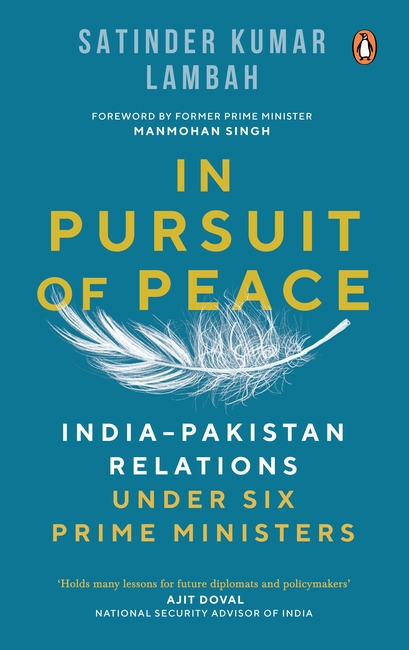
No relationship has been as complex and so difficult to manage as India’s relations with Pakistan. Four wars, cross-border terrorism, and Pakistan’s persistent hostility and relentless campaign on “Kashmir issue” have been a source of strategic challenge for every Indian leader. Yet, each has pursued peace in the interest of India’s progress and security with differing strategies, but with the same result.
As a diplomat who served around the world and in Pakistan, the late Satinder Kumar Lambah’s unique position helps tell an insider’s story of the turbulent history between India and Pakistan. He writes of his personal experiences of India-Pakistan relations having served six Indian Prime Ministers, whom he worked directly with and offered counsel. This includes his role as Prime Minister’s Special Envoy for back-channel talks under PM Manmohan Singh and India’s quick diplomatic moves in the post-Taliban Afghanistan. With insight, he also traces the roots of Pakistan’s evolution since its birth and the challenges its army-driven polity poses for India and reflects on the way forward in dealing with Pakistan to secure peace in the region.
Lieutenant General K.J.S. ‘Tiny’ Dhillon, an Infantry veteran from the Rajputana Rifles with about four decades of military service, has served multiple tenures in Kashmir.
In this book, ‘Tiny’ Dhillon opens a hitherto-closed window, not only to his life but also to Kashmir. He recounts fascinating tales about the toughest challenges he encountered, from age three right up to those from his multiple tenures in Kashmir from 1988 to 2020, where it was his responsibility to maintain a balance between counter-terrorism operations on the one hand and to use military soft power on the other. Dhillon retraces his entire journey, from being a young boy to becoming the Commander of the Chinar Corps, with Kashmir as an inseparable part of this story.
As a first-hand account, the book touches on and demystifies the myths, half-truths, whats, ifs and whys of the exodus of the Kashmiri Pandits; the barbarous attack on an Indian security convoy in Pulwama district, in which forty CRPF personnel were killed; the Balakot air strikes; and the abrogation of Article 370 and its impact on the socio-political, economic and law-and-order situation, among other incidents. It takes us behind the scenes to bring out the nuances of various intriguing developments at a critical juncture in the history of J&K.
Anecdotal, candid and evocative, Kitne Ghazi Aaye, Kitne Ghazi Gaye brings to light the true stories from this Army veteran’s life. It focuses on the personal, professional and, most importantly, family life of a soldier in the Army, and will not only provide an insight into the trials and tribulations he faced but will also inspire a wide spectrum of readers, especially young defence aspirants.
Find Tiny Dhillon online:
Twitter: @Tiny_Dhillon
Instagram: @tinydhillon
Facebook: @TinyDhillon

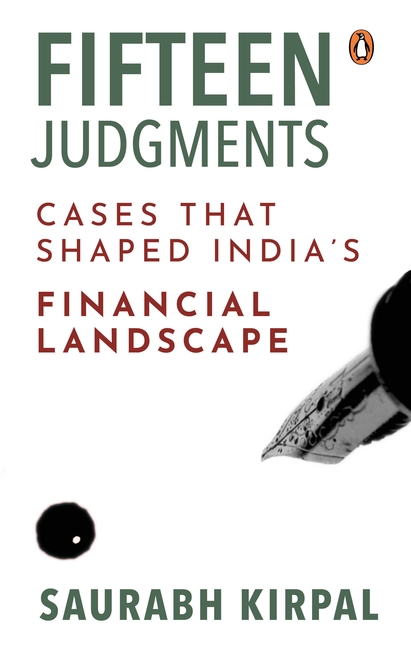
This book examines fifteen judgments that have influenced the financial destiny of India. With significant macroeconomic dimensions, these judgments, when explored, show a long-term impact on the economy. In doing so, judgments from different times of history have been examined to give the reader a flavour of the jurisprudential philosophies at different times in the country since Independence.

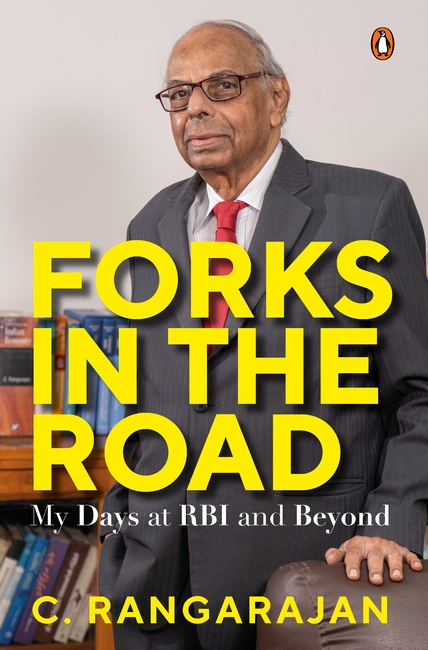
‘One doesn’t plan one’s life fully. Some of it is planned, but some of it is purely accidental. Much of my life is a matter of circumstance,’ says C. Rangarajan.
In this book, the veteran economist and policymaker provides a captivating account of his professional journey, starting with his purely accidental entry into the RBI in 1982. Rangarajan, regarded as one of the tallest figures in the history of India’s economic reforms, provides crucial insights into the role he played as part of the team which initiated far-reaching reforms in India’s economy in the early 1990s. The path-breaking reforms that he implemented during his tenure as governor of RBI included deregulation of interest rates, strengthening of the banking system by a gradual tightening of prudential norms, creation and nurturing of financial markets, giving them depth and vibrancy, shifting to market-determined exchange rates, making the rupee convertible on the current account and the cessation of automatic monetization of budget deficit.
Rangarajan describes the key events between 1982 and 2014, particularly in the areas of money and finance, explaining not only what happened but also the motivations and processes behind them. As a public figure and an architect of economic change in India, he also ruminates about his interactions with both political and economic actors. Forks in the Road is not only a memoir of a man who shaped India’s economy and positively impacted the lives of many, but also a fascinating account of India’s growth story. It is a description of what we did and what we did not, and where we succeeded and where we failed.