



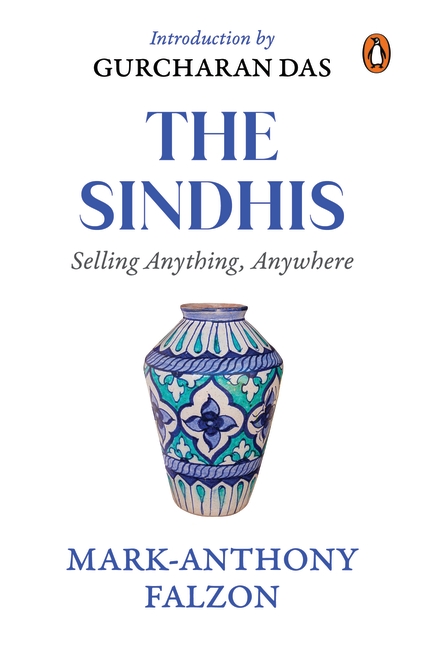
This book examines the social and cultural infrastructure that sustains Sindhi business and its trade networks. It provides a rich historical context to the narrative by tracing the origin of Sindhi Trade to the annexation of Sindh in 1843, when it was incorporated into an expanding global economy. The book also locates Sindhi business within the dynamics of the contemporary Indian diaspora and features several success stories both from India and outside. The book emphasizes the commercial inventiveness, spatial mobility, and adaptability of Sindhis—-the qualities crucial to building successful cosmopolitan businesses.
Catagory: History
Bhagat Singh
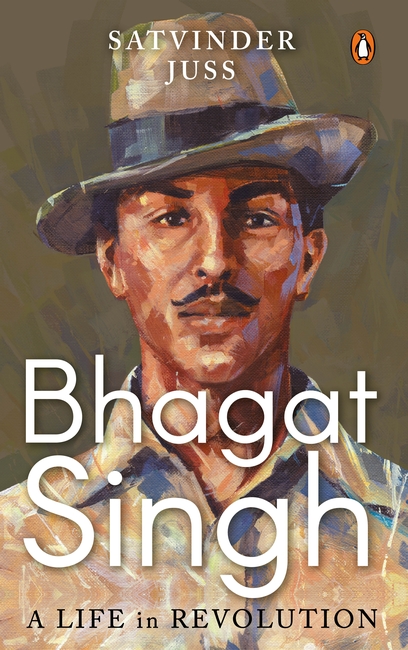
The continual tussles over Bhagat Singh’s identity, even more amplified of late, are a testament to the heroic status the man continues to hold in the annals of the Indian freedom struggle. Despite him having addressed his views on religion, politics and activism, there are many willing to forge completely new narratives of his life, and many more willing to believe them.
A timely antidote, this meticulously researched biography is an expansive foray into the life of Bhagat Singh. The volume deliberates upon his family from before when he was born, examining along the way the role that various episodes, policies and people played in shaping the identity of a legendary revolutionary, while also delving into his opinions on important questions of the time. It shines a bright light on the oft-ignored personal influences that made Singh who he was, along with the issue of his contested identity in today’s politics. This is the definitive Bhagat Singh biography of our times.
Phantom Plague

The definitive social history of tuberculosis, from its origins as a haunting mystery to its modern reemergence that now threatens populations around the world.
It killed novelist George Orwell, Eleanor Roosevelt, and millions of others-rich and poor. Desmond Tutu, Amitabh Bachchan, and Nelson Mandela survived it, just. For centuries, tuberculosis has ravaged cities and plagued the human body.
In Phantom Plague, Vidya Krishnan, traces the history of tuberculosis from the slums of 19th-century New York to modern Mumbai. In a narrative spanning century, Krishnan shows how superstition and folk-remedies, made way for scientific understanding of TB, such that it was controlled and cured in the West.
The cure was never available to black and brown nations. And the tuberculosis bacillus showed a remarkable ability to adapt-so that at the very moment it could have been extinguished as a threat to humanity, it found a way back, aided by authoritarian government, toxic kindness of philanthropists, science denialism and medical apartheid.
Krishnan’s original reporting paints a granular portrait of the post-antibiotic era as a new, aggressive, drug resistant strain of TB takes over. Phantom Plague is an urgent, riveting and fascinating narrative that deftly exposes the weakest links in our battle against this ancient foe.
Diary of a Young Girl (PREMIUM PAPERBACK, PENGUIN INDIA)
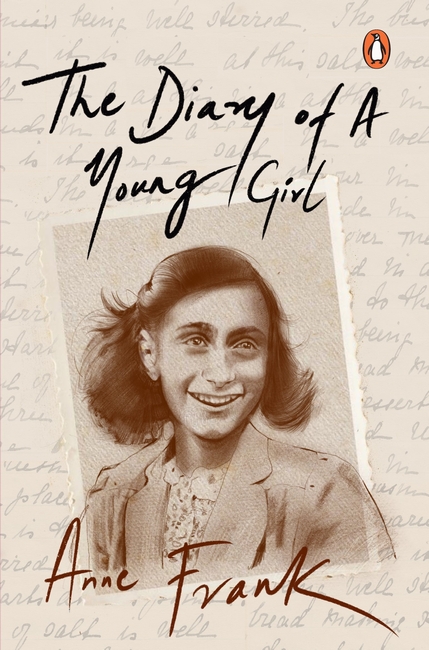
In the summer of 1942, thirteen-year-old Anne Frank found herself hiding with her family in the cramped attic of an old office building in Amsterdam. Outside, Jews all over Europe were being thrown into concentration camps.
Exiled from the outside world, the Frankfurt family battled hunger, boredom, confinement, and the ever-looming threat of discovery and death. As the second World War continued to rage, Anne turned to her diary and documented everything. The diary was accidentally discovered in the attic shortly after the family was arrested. In 1947, it was formally published in Dutch.
Since then, Anne Frank’s phenomenal diary has become a world classic, offering a terrifying glimpse of what it was like being a Jew in a war-ridden Europe. Honest, vulnerable, and tragic, Anne Frank’s story serves as a powerful reminder of the horrors of war, and as an eloquent testament to the indestructible nature of human spirit.
The Complete History Of Ancient And Medieval India
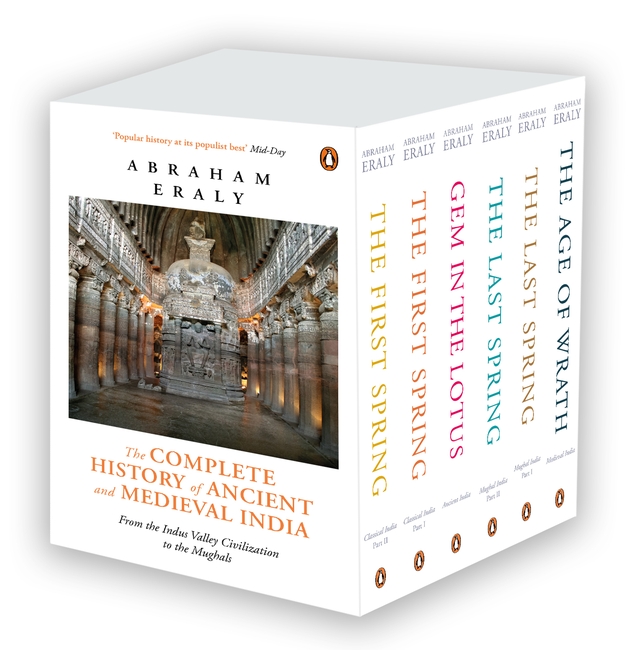
In this enthralling account, historian Abraham Eraly conjures a vivid picture of ancient, classical and medieval India-from the foundational seed of the Indus Valley Civilization in 2500 BCE to the grand saga of the Mughal Empire. This box set comprises the acclaimed books Gem in the Lotus, The First Spring (Part 1), The First Spring (Part 2), The Age of Wrath, The Last Spring (Part 1) and The Last Spring (Part 2).
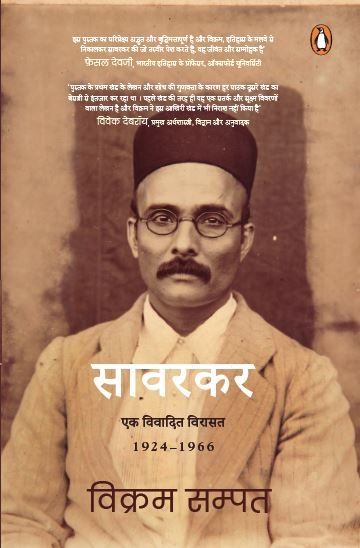
Savarkar
Was Savarkar really a co-conspirator in the Gandhi murder?
Was there a pogrom against a particular community after Gandhi’s assassination?
Decades after his death, Vinayak Damodar Savarkar continues to uniquely influence India’s political scenario. An optimistic advocate of Hindu-Muslim unity in his treatise on the 1857 War of Independence, what was it that transformed him into a proponent of ‘Hindutva’? A former president of the All-India Hindu Mahasabha, Savarkar was a severe critic of the Congress’s appeasement politics. After Gandhi’s murder, Savarkar was charged as a co-conspirator in the assassination. While he was acquitted by the court, Savarkar is still alleged to have played a role in Gandhi’s assassination, a topic that is often discussed and debated.
In this concluding volume of the Savarkar series, exploring a vast range of original archival documents from across India and outside it, in English and several Indian languages, historian Vikram Sampath brings to light the life and works of Vinayak Damodar Savarkar, one of the most contentious political thinkers and leaders of the twentieth century.
Against All Odds
Against All Odds: The IT Story of India is an insider’s account and an anecdote-rich history of Indian IT over the last six decades. It taps into the first-hand experiences of Kris Gopalakrishnan and fifty other stalwarts
who built and shaped the IT industry. This is a tale of persistence and resilience, of foresight, of planning and being ready when luck knocks on the door, of a spirit of adventure and, above all, of an abiding sense of faith in technology and the belief that it would do good for India. It is a tale of triumph, and the best is yet to come!
Soli Sorabjee
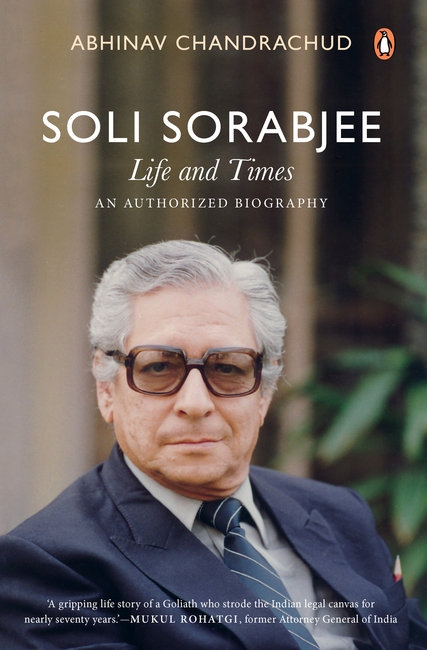
The first authorized biography of Soli Sorabjee
‘A gripping life story of a Goliath who strode the Indian legal canvass for nearly seventy years.’ – Mukul Rohatgi, former Attorney General of India
‘Superbly researched, this book by Abhinav Chandrachud is a must read. ‘ – Madhavi Goradia Divan, Additional Solicitor General in the Supreme Court of India
How does a Parsi lawyer, deeply influenced by the principles of Roman Catholicism, fall in love with a Bahá’í and go on to become the Attorney General of India for a Hindu nationalist BJP government? How does a boy with a broken leg, who studied in a Gujarati-medium school, and lost his father at the age of nineteen, go on to mount a heroic defense of the Janata government’s decision to dissolve Congress state legislatures (in 1977) in the Supreme Court? How does a newspaper columnist who admires Nehru, who criticizes the BJP for being ‘obsessed’ with ‘demolishing mosques’ and advises them to replace ‘Hindutva’ with ‘Bharatva’ or ‘Indianness’, get chosen by Prime Minister Vajpayee to represent the government in the Supreme Court in many cases, including the Ayodhya case? How does a lawyer with a humdrum customs and excise law practice, whose grandfather sold horsedrawn carriages in Bombay, become a U.N. human rights rapporteur, and repeatedly defend the fundamental right to free speech and expression in the Supreme Court of India?
Definitive, comprehensive and absolutely unputdownable, this first biography of Soli Sorabjee opens a window into the life and times of one of India’s foremost constitutional experts.
Planning Democracy
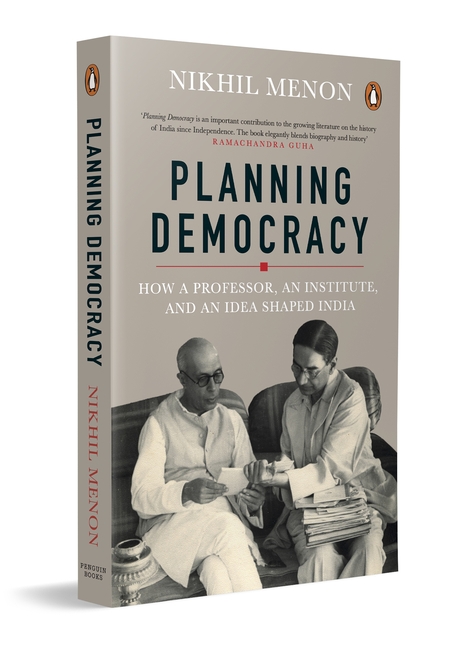
India’s Five-Year Plans were one of the developing world’s most ambitious experiments. After nearly two centuries of colonial rule, planning the economy was meant to be independent India’s route from poverty to prosperity. Planning Democracy explores how India married liberal democracy to a socialist economy. Planning not only built India’s data systems, it even shaped the nature of its democracy. The Five-Year Plans loomed so large that they linked surprisingly far-flung contexts-from computers to Bollywood to Hindutva.
In this compelling history, Nikhil Menon brings the world of planning to life through the intriguing story of a gifted scientist known as the Professor, a trail-blazing research institute in Calcutta, and the alluring idea of ‘democratic planning’. Set amidst global conflicts and international debates, Menon reveals how India walked a tightrope between capitalism and communism. Planning Democracy recasts our understanding of the Indian republic, uncovering how planning came to define the nation and revealing the ways in which it continues to shape our world today
The Rise of the BJP
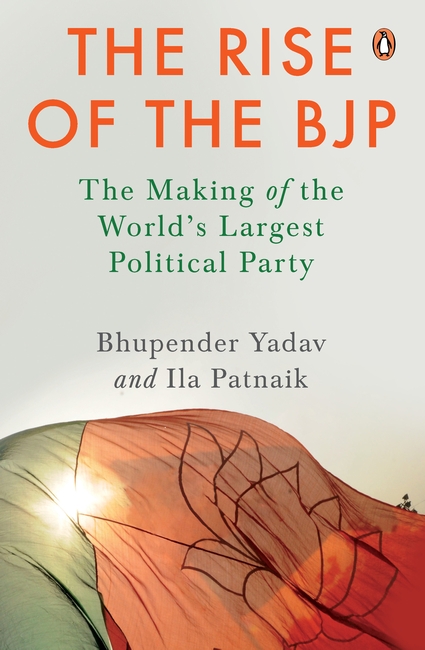
The Bharatiya Janata Party is an idea that was seeded into the minds of nationalist Jana Sangh leaders when they began to envision India after Independence. Much like the very core the freedom struggle was built on, they saw India as a demographically, culturally and historically cohesive and unified nation – as Bharat.
In this book, senior BJP leader and cabinet minister Bhupender Yadav and leading economist Ila Patnaik come together to trace the BJP’s journey from its humble roots, through ups and downs and to eventually getting 303 seats in Lok Sabha in 2019 and becoming the world’s largest political party. While focusing on the larger economics and political story, the book encapsulates many smaller, yet hugely significant stories of individuals and incidents, which brought the BJP to where it stands now.
For the first time ever, The Rise of the BJP, tells us the inside story of how one of the most powerful political parties makes decisions, implements ideas and executes policy. Meticulously researched and immensely readable, the book shows us how the BJP fought competing ideologies, political assaults and catapulted to the centre stage of national politics.