‘Dhirendra K. Jha has anatomized, with calm resourcefulness, the politics and psychology of a fanatic. He has also written a secret and sinister history of modern India—the one we need to understand our ruinous present’—PANKAJ MISHRA
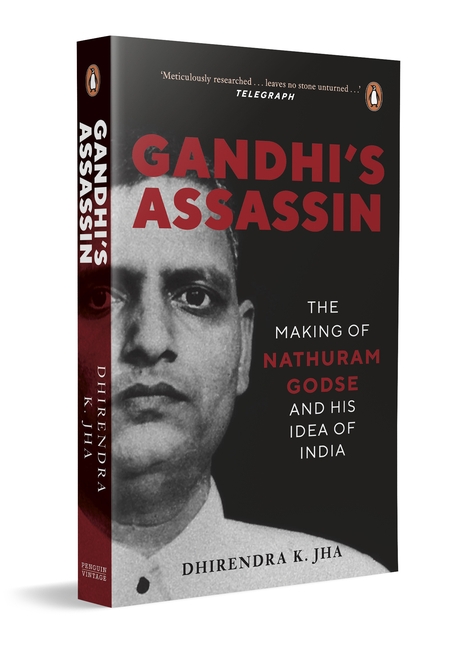
A confirmed bigot and an oddball, the man who became Gandhi’s assassin was something of a miracle baby. Born to Brahmin parents after several stillbirths, Nathuram Godse started off as a child mystic. However, success in everything serious—studies or work—eluded him. The expectations and frustrations that mark the path of young men who cannot cope with the changing tides form the basis of Dhirendra K. Jha’s spectacular study of this disaffected youth. Godse was one of hundreds, and later thousands, of young Indian men to be steered into the sheltering fold of early Hindutva. As disruptions to history evolved new social structures, these men were caught by ideologues, cocooned in a community and coached and readied for action.
Gandhi’s Assassin: The Making of Nathuram Godse and His Idea of India lays bare Godse’s relationship with the organizations that influenced his world view and gave him a sense of purpose. The book draws out the gradual hardening of Godse’s resolve, and the fateful decisions and intrigue that eventually led to, in the chaotic aftermath of India’s independence in 1947, Mahatma Gandhi’s assassination. On a wintry Delhi evening on 30 January 1948, Godse shot Gandhi at point-blank range, forever silencing the great man. Godse’s journey to this moment of international notoriety from small towns in western India is, by turns, both riveting and wrenching.
Drawing from previously unpublished archival material, Jha challenges the sanitization of Gandhi’s assassination, and offers a stunning view on the making of independent India.

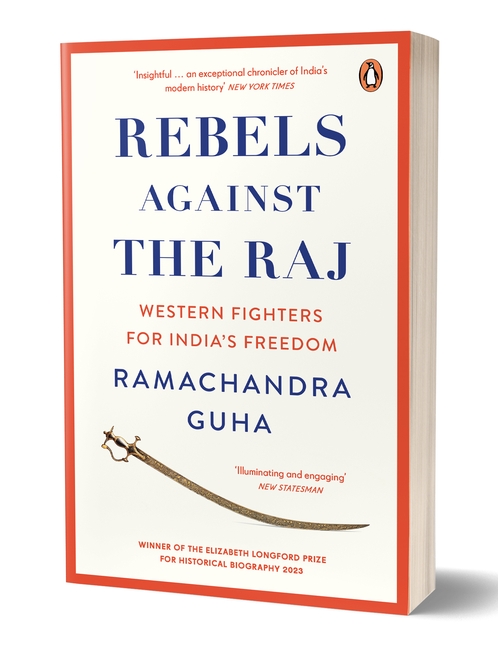
Rebels Against the Raj tells the story of seven people who chose to struggle for a country other than their own: foreigners to India who across the late 19th to late 20th century arrived to join the freedom movement fighting for independence from British colonial rule.
Of the seven, four were British, two American, and one Irish. Four men, three women. Before and after being jailed or deported they did remarkable and pioneering work in a variety of fields: journalism, social reform, education, the emancipation of women, environmentalism.
This book narrates their stories, each renegade motivated by idealism and genuine sacrifice; each connected to Gandhi, though some as acolytes where others were often infuriated by his views
; each understanding they would likely face prison sentences for their resistance, and likely live and die in India; each one leaving a profound impact on the region in which they worked, their legacies continuing through the institutions they founded and the generations and individuals they inspired.
Through these entwined lives, wonderfully told by one of the world’s finest historians, we reach deep insights into relations between India and the West, and India’s story as a country searching for its identity and liberty beyond British colonial rule.

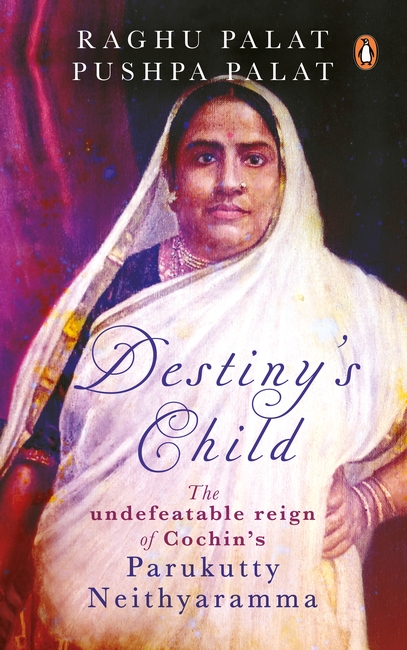
This is an intimate account of the extraordinary life of Parukutty Nethyaramma, who went on to become one of the most powerful rulers of the Kingdom of Cochin.
At the tender age of fourteen, her marriage thrust her into a hostile world. Taking on her detractors, Parukutty stubbornly and fearlessly forged ahead to become a voice none could gainsay. Despite a seventeen-year age gap, she had built a special, unshakable bond with her husband. When he was crowned the sovereign ruler of Cochin, she vowed to support and protect his position throughout her life. Theirs was an enviable partnership of two incredible equals who together went on to break many traditional norms. At a time when women were relegated to the shadows, Parukutty travelled with her husband, participated in important discussions, and even went on to rule as his proxy. She became a force to be reckoned with in her own right.
Unafraid to break norms, she often floated radical reforms that, though lauded by the citizens, riled the conservative and powerful elite. Parukutty deployed her sharp wit, acumen and diplomacy to stand up to a host of adversaries and naysayers, including the British, who choreographed intricate manoeuvres to overthrow the royal family.
Narrated by Parukutty’s own great-grandson and his wife, Raghu and Pushpa Palat, this deeply personal chronicle paints a vivid picture of a woefully understated icon from the twentieth century.

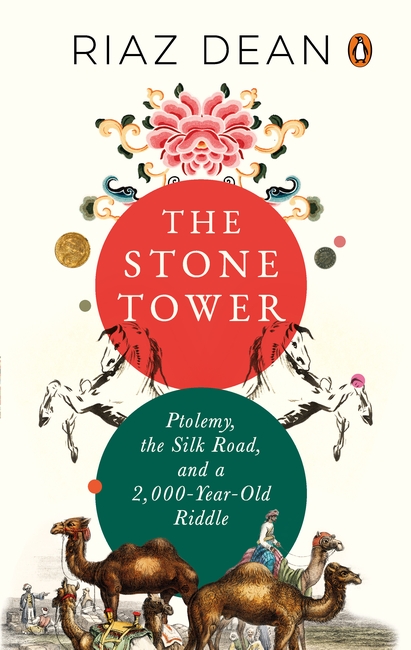
A path traversed by caravans laden with silk, spices and much more besides, the old Silk Road influenced trade, religions, cultures and economies across Europe, Asia and far beyond.
In his latest book, Riaz Dean blends the best of this region’s history and geography with ancient cartography to solve a 2,000-year-old riddle that has perplexed scholars for centuries: Where was the Stone Tower that the great geographer Claudius Ptolemy had written about? This highly significant but now-lost landmark represented the midpoint and thumping heart of the Silk Road, as merchant caravans plied their wares between the Occident and the Orient.
From the significance of the Heavenly Horses to the intrigues of geopolitics and war between clans and kingdoms, Dean brings to life the legendary Silk Road even as his evocative narrative and meticulous research pinpoints the Stone Tower’s probable location somewhere by the so-called Roof of the World.

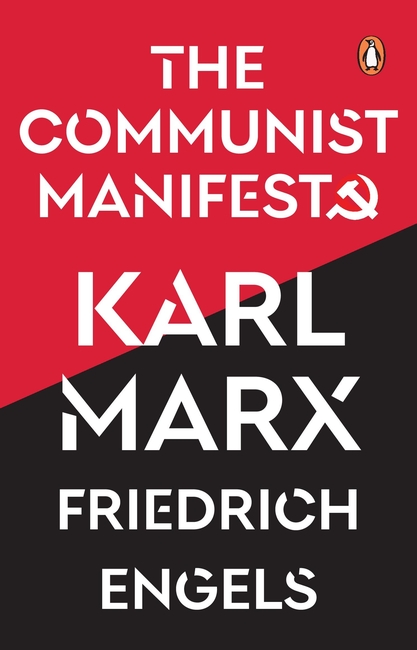
One of the most influential and widely read political documents, The Communist Manifesto deep dives into the nature and politics of society. History is nothing but a series of class struggles between the haves (the bourgeoisie) and the have-nots (the proletariats). Envisioning a revolution by the ‘workers of the world’ that will overthrow Capitalism, it speaks of a society free of private ownership and control, where everyone is free.
Now with seven rarely published prefaces, this edition of The Communist Manifesto encapsulates the theory of Marxism, as penned by German philosophers and political theorists, Karl Marx and Friedrich Engels. Lucid, potent, and above all eye-opening, The Communist Manifesto will change the way you see and understand the world.

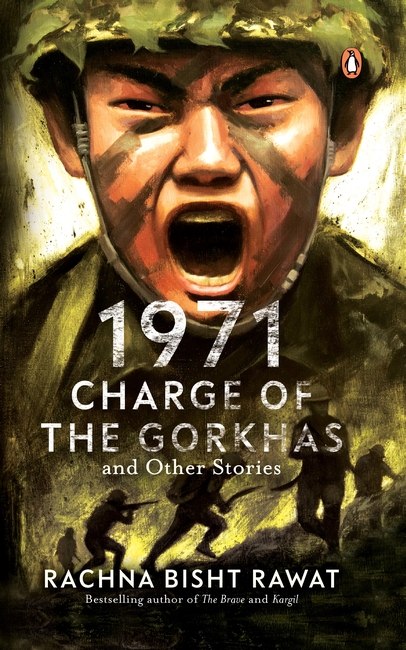
On the fiftieth anniversary of the 1971 Indo-Pak war, revisit its battlefields through stories of bravehearts from the army, navy and air force who fought for a cause that meant more to them than their own lives
Why do the Gorkha soldiers of 4/5 GR attack a heavily defended enemy post with just naked khukris in their hands?
Does Pakistan find out the real identity of the young pilot who, after having ejected from a burning plane, calls himself Flt Lt Mansoor Ali Khan?
What awaits the naval diver who cuts made-in-India labels off his clothes and crosses into East Pakistan with a machine gun slung across his back?
Why is a twenty-one-year-old Sikh paratrooper being taught to jump off a stool in a deserted hangar at Dum Dum airport with a Packet aircraft waiting nearby?
1971 is a deeply researched collection of true stories of extraordinary human grit and courage that shows you a side to war that few military histories do.

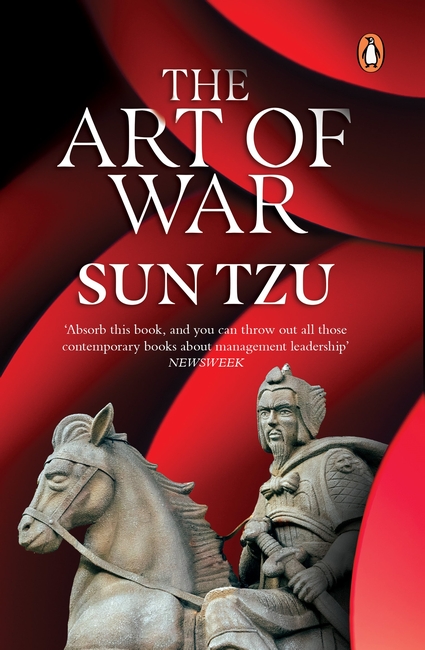
Written over 2500 years ago by Chinese general Sun Tzu, The Art of War is one of the most influential and renowned treatises on military strategy. But its knowledge transcends warfare, finding practical uses in all areas of contemporary life.
Be it at work, with friends and family, or within ourselves-conflict is an inevitable part of one’s journey. But the tools you need to battle these conflicts rest within you. This book will teach you how you can overcome the roadblocks that are stopping you from living your best life and reaching your highest self. Master your emotions, anticipate life’s many challenges, adopt discipline, and become an adept leader.
Perceptive and powerful, The Art of War is a must-read for anyone who wants to take charge of their life and succeed in all their endeavours.
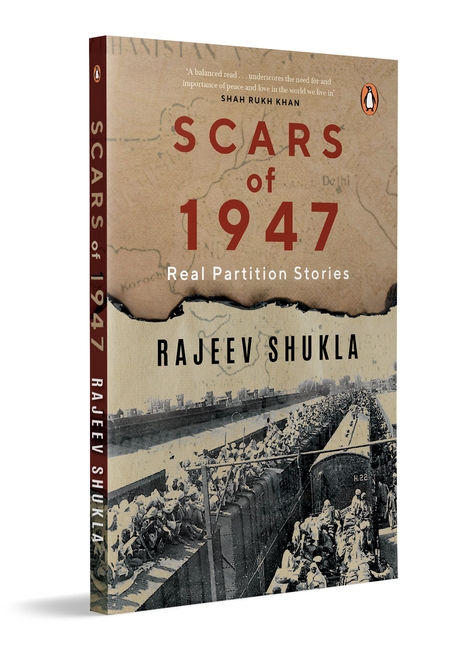
More than seven decades after the Partition of India in 1947, the burden of grief in the hearts and minds of those affected still bears heavy. With a mere stroke of ink on a map, a nation was divided into two, affecting families from one generation to the next, the resultant wounds of which run painfully deep even today.
People on either side of the dreaded Radcliffe line that divided India and Pakistan experienced unimaginable trauma. The horrific events which led to the displacement of millions of people is forever etched in the memories of those who survived this nightmare. Yet, despite the widespread devastation, there were also some uplifting stories of humanity, grit and determination, along with the memories of all that was lost and those who were lost. Through these real stories of Partition, Rajeev Shukla has captured inspiring tales of love, kindness and perseverance of the human spirit.
There are stories from people who went on to become prime ministers, presidents, industrialists, medical researchers and more. In the decades following Partition, these stories of how families rebuilt their lives from scratch are worth remembering.
From the stories of figures like Manmohan Singh and Muhammad Ali Jinnah, to Gauri Khan’s grandmother and Avtar Narain Gujral, Scars of 1947 is a moving and nostalgic collection of a journey back in time, of an unforgettable period that left two nations scarred forever.

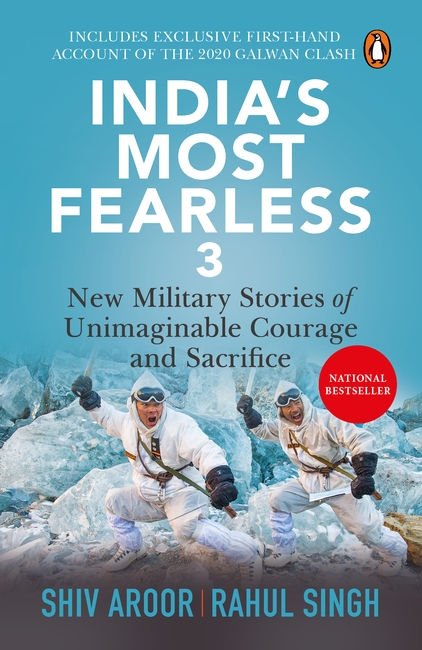
Includes exclusive first-hand account of the 2020 Galwan clash
An army medic who went beyond the call of duty amid a frenzy of treacherous bloodletting in Ladakh’s Galwan while his fellow soldiers fought the Chinese to death; the crew of an Indian Navy destroyer that put everything on the line to rescue hundreds from Cyclone Tauktae in the Arabian Sea; an Indian Air Force pilot who ejected from his doomed fighter less than two seconds before it hit the ground, only to find he was missing a leg.
This book presents their accounts, or of those who were with them in their final moments. India’s Most Fearless 3 features ten true stories of extraordinary courage and fearlessness, providing glimpses of the heroism Indian soldiers have displayed in unthinkably hostile conditions and under grave provocation.

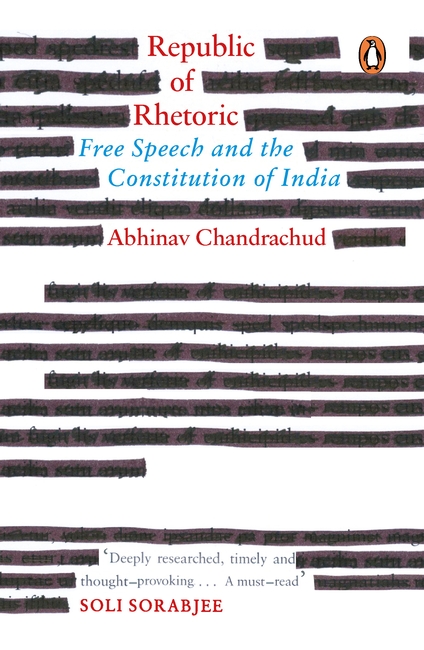
Exploring the legal and political history of India, from the British period to the present, Republic of Rhetoric examines the right to free speech and it argues that the enactment of the Constitution in 1950 did not make a significant difference to the freedom of expression in India. Abhinav Chandrachud suggests that colonial-era restrictions on free speech, like sedition, obscenity, contempt of court, defamation and hate speech, were not merely retained but also strengthened in independent India. Authoritative and compelling, this book offers lucid and cogent arguments that have not been substantially advanced before by any of the leading thinkers on the right of free speech in India.