



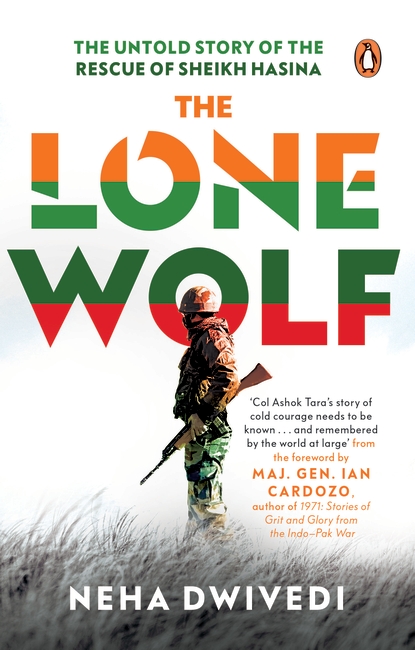
The Bangladesh Liberation War was nearing its bloody end when Colonel Ashok Tara, then a twenty-nine-year-old major, was assigned the task of rescuing Bangabandhu Sheikh Mujibur Rahman’s family which was being held hostage by the Pakistani Army. Ashok Tara, unarmed, entered the lion’s den, and negotiated with the hostile soldiers for the release of Bangladesh’s Father of the Nation and his family that included a young Sheikh Hasina.
The Lone Wolf is Ashok Tara’s story, charting the course of his celebrated yet quiet life as a member of the armed forces. Neha Dwivedi’s writing expertly captures our hero’s humble beginnings, his life-altering experiences, and offers a blow-by-blow account of a seminal event in South-east Asian history. As much as it is the story of Colonel Ashok Tara’s bravery, it is also the story of a bleak-yet-victorious period of Bangladesh’s quest for freedom.
Catagory: History
A Venetian at the Mughal Court
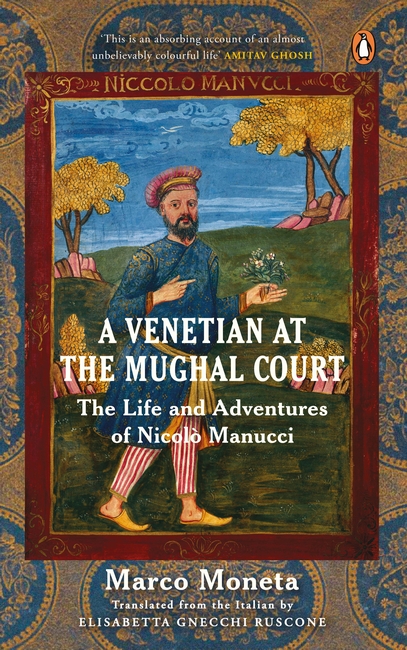
‘An absorbing account of an almost unbelievably colourful life . . .’ AMITAV GHOSH, AUTHOR
‘An extraordinary character leaps off the pages of Marco Moneta’s book . . . ‘ MARIKA SARDAR, CURATOR, AGA KHAN MUSEUM, TORONTO
‘. . . irresistible . . . ‘ GIORGIO RIELLO, HISTORIAN
‘. . . rich and accessible . . .’ AMIN JAFFER, CURATOR AND AUTHOR
The man who witnessed India’s history in the making
Venetian Nicolò Manucci’s story is distinct from those of other European travellers and adventurers who documented their stay in India. The young teenager, who arrived on Indian shores with little education and few connections, lived here till his death at the age of eighty-two. He was witness to some of the most dramatic events in the subcontinent’s history.
Living by his wits, he started his career as chief artilleryman in Dara Shukoh’s fratricidal battle against Aurangzeb for the Mughal throne. Thereafter, Manucci joined Rajput general Jai Singh in his campaign to subdue the Maratha leader Shivaji.
However, Manucci had no stomach for a prolonged military career. With a great capacity for learning and immense good fortune, he made his way into the Mughal court, incredibly, as a court physician to Aurangzeb’s son Shah Alam. In service of the future Mughal emperor, Manucci was to head back to the Deccan once again to meet the challenge posed by Shivaji’s son Sambhaji. Manucci would spend the rest of his life within European settlements in Madras and Pondicherry. And his in-depth knowledge of the Mughal court would prove useful in negotiations between the Europeans and the Mughal authorities.
Marco Moneta tells the gripping story of a man who was witness to the intrigues and rivalries in Mughal and European territories, and who not just survived but rose to a position of influence and respect in a hostile and alien world.
Women of the records
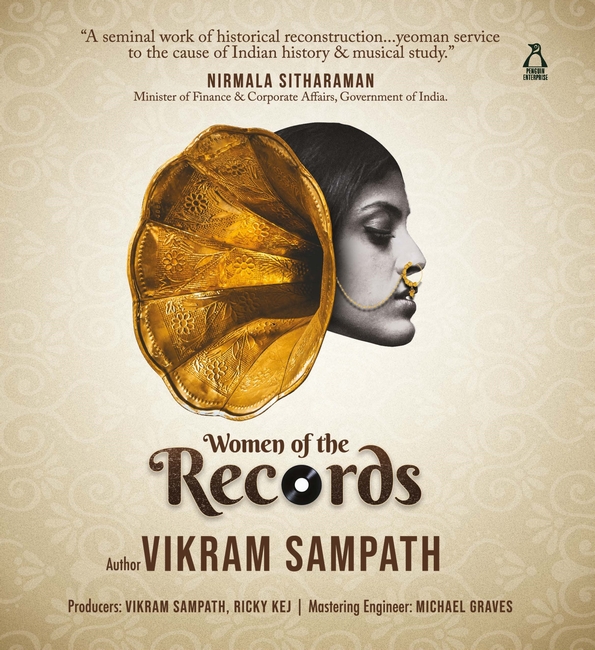
Across India women, mostly from the courtesan community, were the stellar pioneers of recording technology in the early twentieth-century.
Yet, their stories have been completely lost in the sands of time.
This book revisits their lives & features the indefatigable saga of 25 inspiring Indian women musicians from across the country, from 1902 to 1947.
Also, hear their original voices that have been restored & reconstructed in the accompanying CD.
The Penguin History of Early India
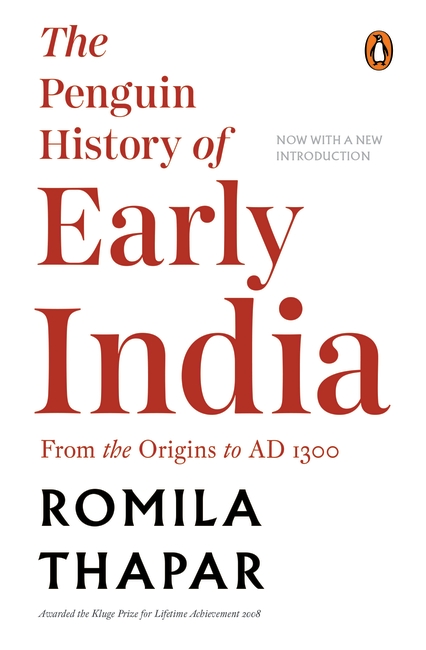
BY THE WINNER OF THE KLUGE PRIZE FOR LIFETIME ACHIEVEMENT 2008
A definitive account and ready reference of ancient Indian history
The Penguin History of Early India–a complete rewrite of Romila Thapar’s A History of India (Vol. 1)–brings to life thousands of years of India’s precolonial history: its prehistoric beginnings; the great cities of the Indus civilization; the emergence of mighty dynasties such as the Mauryas, Guptas and Cholas; the teachings of the Buddha; the creation of the Mahabharata and the Ramayana; and the evolution of regional cultures.
In exploring subjects as diverse as marriage, class, art, erotica and astronomy, Thapar provides an incomparably vivid and nuanced picture of India, creating a rich mosaic of diverse kingdoms, landscapes, languages and beliefs. As she explains how the interpretations of early Indian history have changed in the last half-century, Thapar offers fresh readings and raises new questions.
Sita
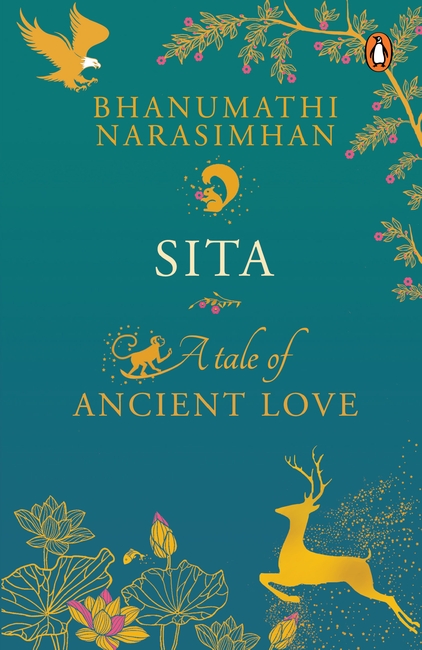
The vibration of the sacred sound of her beloved’s name, ‘Ram’, filled her mind as it emanated from the tiny Vanara. ‘His being is filled with Rama,’ she pondered, ‘but does he know me?’
Sita, the beloved princess of Mithila, is one of the most revered women in Indian history; so well known, yet probably the least understood. At every crossroad of her life, she chose acceptance and grace over self-pity. Her life was filled with sacrifice yet wherever she was, there was abundance. It was as if she was carved out of an intense longing for Rama, yet she had infinite patience. In every situation she reflected his light and he reflected her love.
In her, we find someone who is so divine yet so human.
In this poignant narration, Bhanumathi shows us the world through the eyes of Sita. We think what Sita thinks, we feel what she feels, and for these few special moments, we become a part of her. And perhaps, through this perspective, and Sita’s immortal story, we will discover the true strength of a woman.
Defeat Is an Orphan
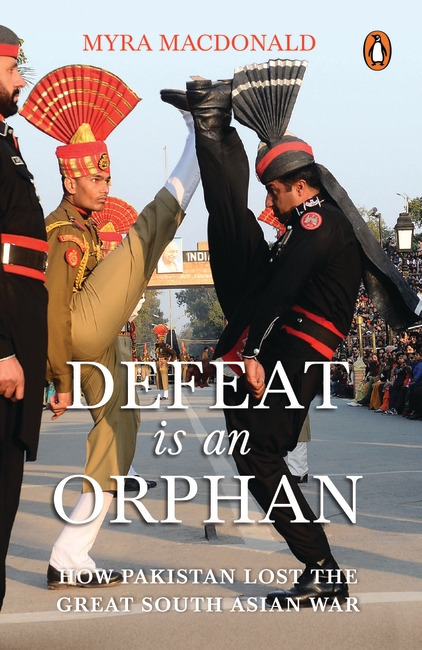
When India and Pakistan held nuclear tests in 1998, they restarted the clock on a competition that had begun half a century earlier. Nuclear weapons restored strategic parity, erasing the advantage of India’s much larger size and conventional military superiority. Yet, in the years that followed, Pakistan went on to lose decisively to India. It lost any ability to stake a serious claim to Kashmir, a region it called its jugular vein. Its ability to influence events in Afghanistan diminished. While India’s growing economy won it recognition as a rising world power, Pakistan became known as a failing state. Pakistan had lost to India before but the setbacks since 1998 made this defeat irreversible.
Defeat Is an Orphan follows the roller-coaster ride through post-nuclear India-Pakistan, from bitter conflict in the mountains to military confrontation in the plains, from the hijacking of an Indian plane to the assault on Mumbai. Nuclear weapons proved to be Pakistan’s undoing. They encouraged a reckless reliance on militant proxies even as the jihadis spun out of control outside and inside Pakistan. By shielding it from retaliation, the nuclear weapons also sealed it into its own dysfunction-so much so that the Great South Asian War, fought on-and-off since 1947, was not so much won by India as lost by Pakistan.
The Fractured Himalaya
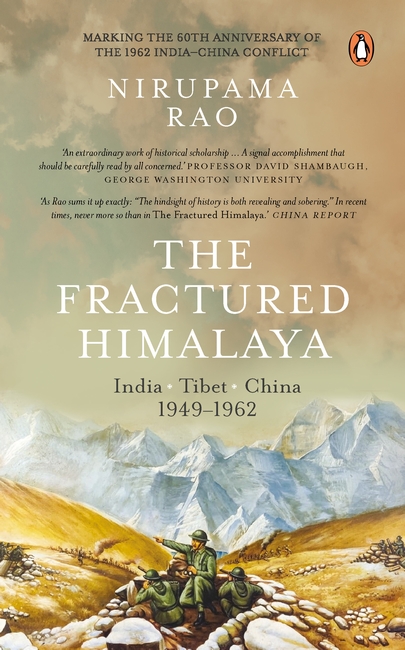
A deep dive into understanding India-China relations
Why did India and China go to war in 1962? What propelled Jawaharlal Nehru’s ‘vision’ of China? Why is it necessary to understand the trans-Himalayan power play of India and China in the formative period
of their nationhoods? The past shadows the present in this relationship and shapes current policy options, strongly influencing public debate in India to this day.
Nirupama Rao, a former Foreign Secretary of India, unknots this intensely complex saga of the early years of the India-China relationship. As a diplomat-practitioner, Rao’s telling is based not only on archival material from India, China, Britain and the United States, but also on a deep personal knowledge of China, where she served as India’s Ambassador. In addition, she brings a practitioner’s keen eye to the labyrinth of negotiations and official interactions that took place between the two countries from 1949 to 1962.
The Fractured Himalaya looks at the inflection points when the trajectory of diplomacy between these two nations could have course-corrected but did not. Importantly, it dwells on the strategic dilemma posed by Tibet in relations between India and China-a dilemma that is far from being resolved. The question of Tibet is closely interwoven into the fabric of this history. It also turns the searchlight on the key personalities involved-Jawaharlal Nehru, Mao Zedong, Zhou Enlai and the 14th Dalai Lama-and their interactions as the tournament of those years was played out, moving step by closer step to the conflict of 1962.
The Origin Story of India’s States
DO YOU KNOW THE STORY OF YOUR STATE?
You were born in an Indian state.
You went to school in an Indian state.
You live and work in an Indian state.
You, like every other Indian, call at least one state home.
Your state is a big part of your identity.
And yet, do you know the story of how your state was created?
The Origin Story of India’s States is a fascinating and illuminative account of the genesis of India’s states. It presents the incredible origin stories of each of India’s twenty-eight states and eight union territories, spanning from Independence until today.
The state that wasn’t even a part of India until 1975; the union territory that had a prime minister for a single day; the state that has not one or two but three capitals; and the union territory that has beaches on both coasts-this book looks into such unique aspects of Indian history and adds to our understanding of how our nation has been built.
Whose Samosa is it Anyway?
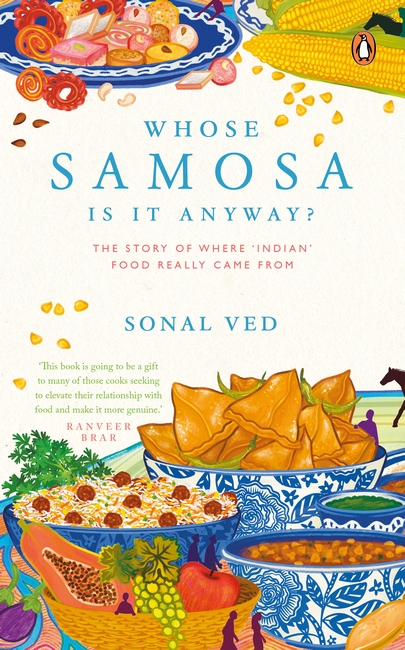
In this book, accompany Sonal Ved on a journey of taste through the various timelines across the Indian subcontinent. We go from the banks of the Indus in 1900 bc to the great kingdoms of the north many centuries later; from the time of the Mauryans to when the Mughal Sultanate reigned supreme. Meet the Europeans merchants desperate to trade in Indian treasures, be it the deep-blue indigo or the pricey pepper. On this trip discover answers to such questions as What are the origins of chutney or of the fruit punch, and how are they connected to India? Who taught us how to make ladi pav and kebabs, and how did the Burmese khow suey land up on the wedding menus of Marwaris? The author takes us through the food history and traditions from the mountains in Kashmir to the backwaters of Kanyakumari; from the ports of the Bay of Bengal to the shores of the Arabian Sea, where traders and travellers arrived from the world over. And, finally, we find out whose samosa it truly is . . .
Economist Gandhi
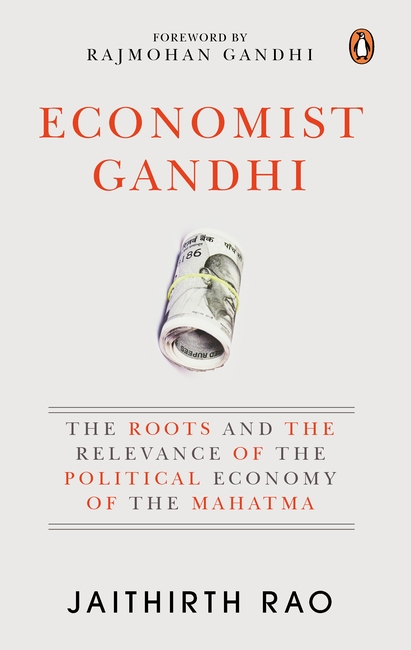
Examining Mahatma Gandhi through an unconventional lens, this book is an original and thought-provoking contribution to Gandhian literature. A refreshing take on the Mahatma’s economic philosophy, Economist Gandhi tells us why we need to look at him as an unlikely management guru and an original thinker who enriched the discourse around market capitalism. The book explains Gandhi’s positive approach towards business: even though he greatly reduced his individual wants, he was against poverty and wanted every Indian to enjoy a materially comfortable life.
Economist Gandhi is probably the first book on Gandhi that claims that he was not against business and capitalists. It not only provides insights into a hidden facet of Gandhi’s personality-his thoughts on economics and capitalism-but also enlightens the reader about some of Gandhi’s views on religion, ethics, human nature, education and society. The book unveils a Gandhi who is brilliant, daring and, most importantly, distinctive.