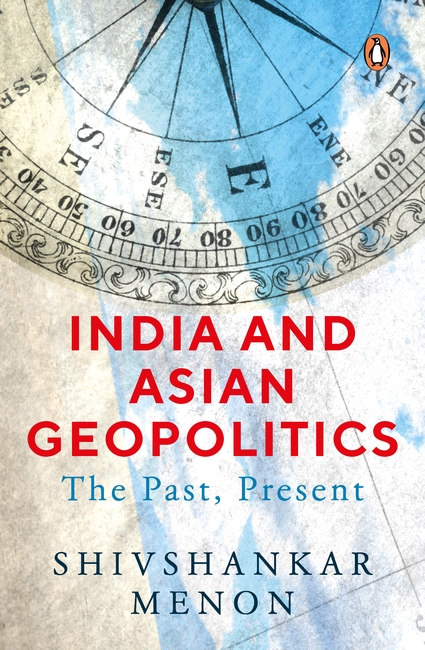
Tracing India’s approach to the shifting regional landscape since its independence in 1947 to the Modi era, Shivshankar Menon addresses the many questions, which perplex India as the nation seeks to find its way in the increasingly complex world of Asian geopolitics. From its leading role in the ‘nonaligned’ movement during the Cold War to its current status as a perceived counterweight to China, India often has been an after-thought for global leaders-until they realize how much they needed it.
Examining India’s own policy choices throughout its history, Menon focuses in particular on its responses to the rise of China, as well as other regional powers. He also looks to the future and analyses how India’s policies are likely to evolve in response to current and new challenges. As India gains new stature across the globe, both its domestic preoccupations and international choices become more significant.
Authoritative, comprehensive and deeply engaging, in India and Asian Geopolitics Menon makes a powerful geopolitical case for an India increasingly and positively engaged in Asia and the broader world in pursuit of a pluralistic, open, and inclusive world order.
The book is a must have for the students and scholars of international relations, India and Asian geopolitics, Indian history and political science. Besides, it will attract policymakers, diplomats, politicians and general readers.
(Pages 23, 93 and 95 intentionally left blank)

“Unconstrained, unlike a historian, the fiction writer Khan Mahboob Tarzi invents a moment in the history of 1857 and imbues it with high romance and action.”-Rita Kothari, translator, writer, and professor of English, Ashoka University
“[The 1857] rebellion has been the subject of scholarly attention and debate, but the events have not drawn too much literary attention in terms of novels, plays, etc. It is thus good to read this novel and to have it in translation.”-Rudrangshu Mukherjee, chancellor and professor of history, Ashoka University
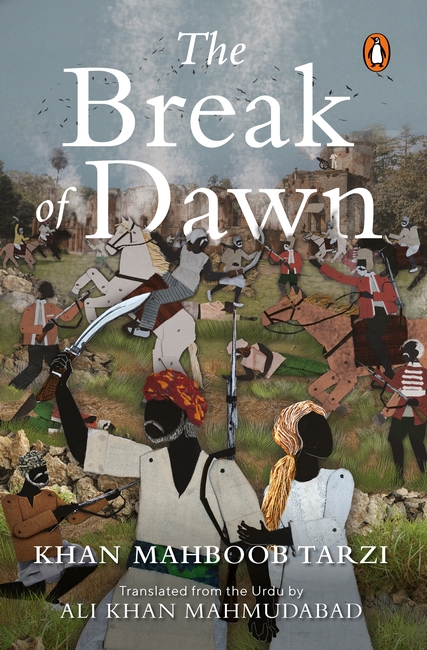
-A thriller and romance set amidst the raging battle to free India of the British in 1857.
-Brings into focus the lesser-known popular literature in Urdu around the 1857 mutiny.
-The translator, Prof. Ali Khan Mahmudabad, was led to the book out of personal interest, as it includes an account of the erstwhile Mahmudabad royal family’s role in the 1857 revolt.
-Introduces readers to Khan Mahboob Tarzi, a prolific author who wrote over a hundred novels on history, politics, science-fiction, romance and erotica.
It is the searing month of June. The rebellion against the British has just begun and Awadh is up in flames. Hindus and Muslims have joined hands to overthrow the foreign rulers and set India free. Some Indian rulers have started to enter into alliances to fight the firangis, while others have thrown in their lot with the foreigners. Amid all this, Riyaz Khan, a young soldier from the army of the Raja of Mahmudabad, saves a group of Britishers from fellow ‘mutineers’ and escorts them to the safety of Lucknow. In this group is Alice, who falls in love with Riyaz and eventually becomes an informer for the rebels.
The Break of Dawn, originally published in Urdu under the title Aghaaz-e-Sahar, is a thrilling page-turner and a reminder of a time when Indians of all classes and creeds came together to fight for the honour and freedom of their homeland.

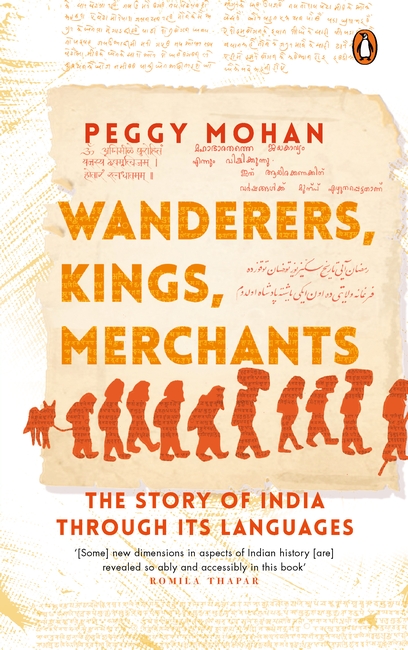
One of India’s most incredible and enviable cultural aspects is that every Indian is bilingual, if not multilingual. Delving into the fascinating early history of South Asia, this original book reveals how migration, both external and internal, has shaped all Indians from ancient times. Through a first-of-its-kind and incisive study of languages, such as the story of early Sanskrit, the rise of Urdu, language formation in the North-east, it presents the astounding argument that all Indians are of mixed origins.It explores the surprising rise of English after Independence and how it may be endangering India’s native languages.

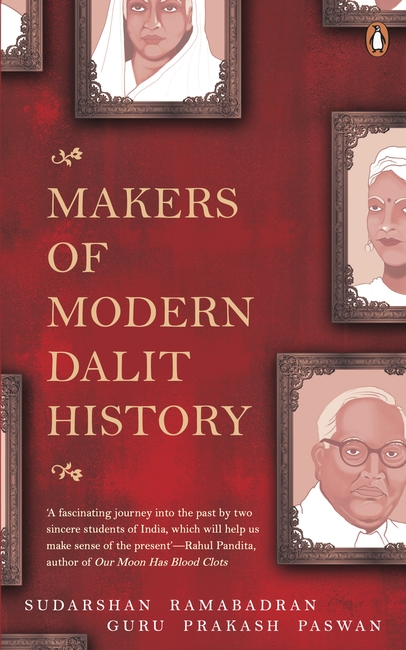
In late-nineteenth-century Kerala, a man flamboyantly rode a villuvandi (bullock cart) along a road. What might sound like a mundane act was, at that time, a defiant form of protest. Riding animal-pulled vehicles was a privilege enjoyed only by the upper castes. This man, hailing from the untouchable Pulaya community, was attacking caste-based discrimination through his act. He was none other than Ayyankali, a social reformer and activist.
Featuring several such inspiring accounts of individuals who tirelessly battled divisive forces all their lives, this book seeks to enhance present-day India’s imagination and shape its perception of
the Dalit community. Based on original research on historical and contemporary figures such as
B.R. Ambedkar, Babu Jagjivan Ram, Gurram Jashuva, K.R. Narayanan, Soyarabai and Rani Jhalkaribai, among many others, Makers of Modern Dalit History will be a significant addition to the Dalit discourse. This definitive volume on some of the foremost Dalit thinkers, both past and present, promises to initiate a much-needed conversation around Dalit identity, history and politics.

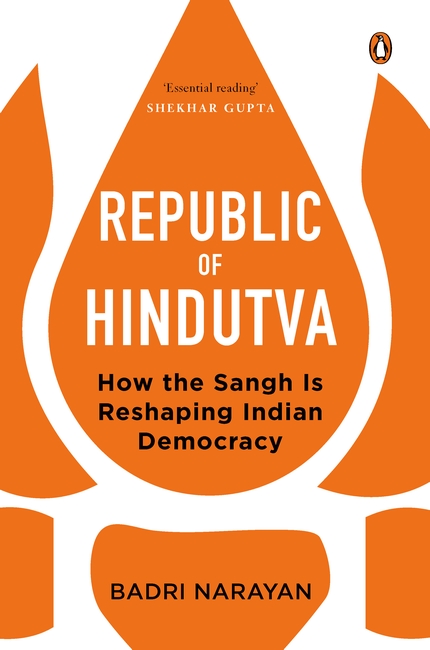
‘Essential reading’ ~ Shekhar Gupta
‘A handy insight into the activities, reach and influence of the RSS’ ~ Indian Express
‘[Yields] insights for students of Indian democracy’ ~ The Hindu
‘Very insightful and is recommended reading for both critics as well as admirers of the RSS’ ~ Financial Express
AN EXPLOSIVE ACCOUNT OF HOW THE RSS HELPS THE BJP WIN ELECTIONS
The RSS is like the tip of an iceberg, exerting its influence much beyond what is visible. Beginning with the choice of Narendra Modi as the forerunner for the 2014 general election up to the campaign for the 2019 election, RSS cadres have been a formidable force behind the staggering rise of the BJP in national politics.
In this eye-opening, necessary book, Badri Narayan offers an intimate glimpse of how the Sangh and its vast network of educational, cultural and social outfits have been digging deep roots in the Indian psyche. By refashioning its modes of mobilization as well as assimilating Dalits, OBCs, tribals and other marginalized communities, the RSS has made the Hindutva metanarrative appealing to a large section of Indians. During elections, the BJP-instead of wiping out caste from electoral politics-reaps rich political dividends from this social appropriation.
Drawing on extensive field research in the heartland of India and interviews with RSS volunteers, Narayan reveals how a new public is being forged at the grassroots, which will determine the course of Indian democracy.
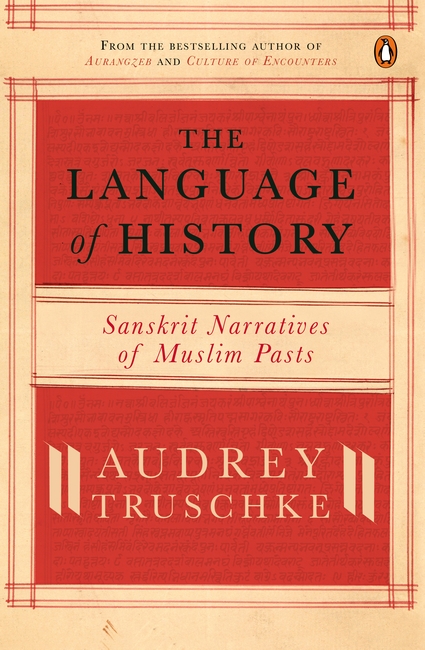
The Language of History analyses a hitherto overlooked group of histories on Indo-Muslim or Indo-Persian political events, namely a few dozen Sanskrit texts that date from the 1190s until 1721. As soon as Muslim political figures established themselves in northern India in the 1190s-when the Ghurids overthrew the Chauhan kingdom and ruled part of northern India from Delhi-Indian intellectuals wrote about that political development in Sanskrit. Indian men (and at least one woman) produced dozens of Sanskrit texts on Muslim-initiated political events. These works span Delhi Sultanate and Mughal rule, including texts that deal with Deccan sultanates and Muslim-led polities in the subcontinent’s deep south. India’s premodern learned elite only ceased to write on Indo-Muslim political power in Sanskrit when the Mughal Empire began to fracture beyond repair in the early eighteenth century. In other words, Sanskrit writers produced histories of Indo-Persian rule throughout nearly the entire time span of that political experience. This book seeks, for the first time, to collect, analyse, and theorize Sanskrit histories of Muslim-led and, later, as Muslims became an integral part of Indian cultural and political worlds, Indo-Muslim rule as a body of historical materials. This archive lends insight into formulations and expressions of premodern political, social, cultural and religious identities. Given the current political climate in India, where nationalist claims are often grounded on fabricated visions of India’s premodernity, this book also contributes to ongoing debates in the Indian public sphere.

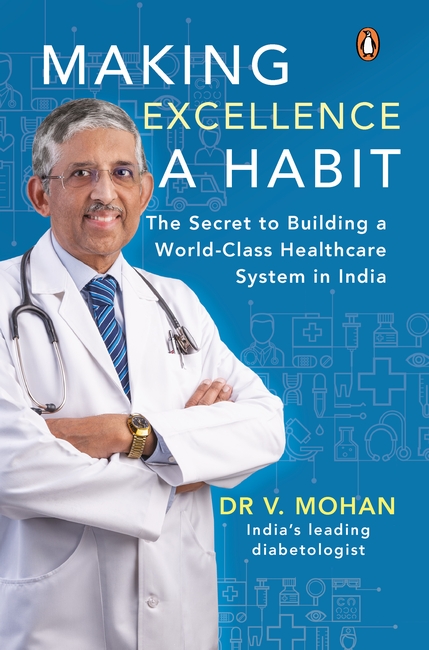
One of the few practising doctors in India who contributed to research, education and charity in such a large measure, the book documents the fundamentals of what makes a person achieve meaningful success. While hard work, passion and focus emerge as winning lessons, delicate and tender learnings from Dr Mohan’s life, such as empathy or spirituality, are not forgotten.
Written in Dr Mohan’s sagacious and affable voice, and peppered with examples of his bold and unusual ideas such as planning a diabetes expo or conducting a country-wide diabetes study, this book is a behind-the-scenes account of a person honoured internationally for delivering path-breaking care to hundreds of thousands of people with diabetes.
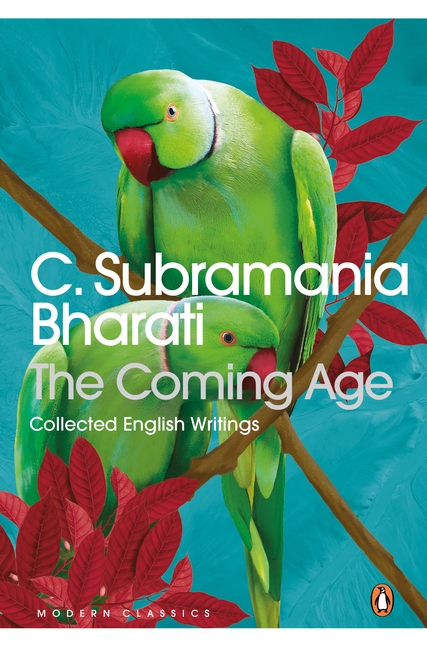
C. Subramania Bharati (1882-1921) has an unrivalled reputation in twentieth-century Tamil literature and has come to be known as the Tamil ‘Mahakavi’, meaning ‘Supreme Poet’. His work as a poet and prose-writer ignited a Renaissance in modern Tamil writing. However, he also wrote and published regularly in English.
The Coming Age brings together Bharati’s important English writings in an authoritative and reliable edition presented by his great-granddaughter. The pieces in this volume reveal a well informed and cosmopolitan writer, engaging with the world around him, passionately sharing his opinions.
Exploring Indian history and culture, offering a shattering contemporary view of the colonial experience, commenting on political events, advocating for women’s rights and caste equality, and sharing his deep knowledge of the Tamil language and literary tradition, these pieces present Bharati in a new light for a new generation.

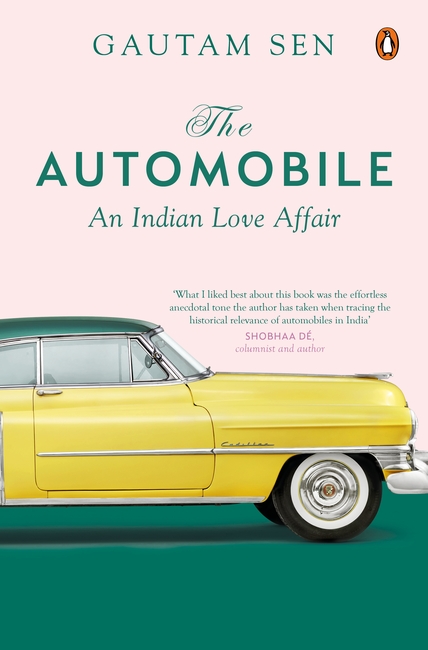
What started as a love affair for Indian royalty is now the mainstay of Indian roads. Since Independence, the automobile has played an important role in India’s industrial growth, as well as been the hero in many Bollywood movies. It has changed our cities and the way our houses and apartment blocks are configured, as well as transformed the countryside, connecting the remotest corners of our vast nation and providing jobs to millions. It has also empowered women in many parts of the nation, enabling them to attend schools and universities and commute to work and the marketplace. For thousands of Indians, the automobile has been, and remains, an object of pleasure, pride, status, excitement, emotion and passion.
In The Automobile, Gautam Sen has not only traced the history of the automobile in India and the way it has shaped society for over a century but has also delved into the fascination Indians have for all matters automotive, such as motor racing, bikes, road movies and historical vehicle shows.
A riveting story told in the most fascinating anecdotal tone, this book is filled with well-researched facts and beautiful pictures for lovers of automobiles.
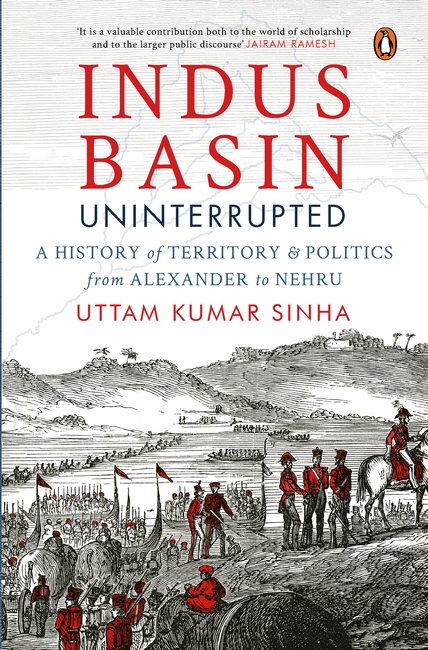
‘ . . . a valuable contribution both to the world of scholarship and to the larger public discourse’ – JAIRAM RAMESH
Indus Basin Uninterrupted, with an easy narration and rich archival material, brings alive a meandering journey of peace, conflict and commerce on the Indus basin. The Indus system of rivers, as a powerful symbol of the passage of time, represents not only the interdependence and interpenetration of land and water, but equally the unfolding of political identities, social churning and economic returns. From Alexander’s campaign to Muhammad-bin-Qásim crossing the Indus and laying the foundation of Muslim rule in India; from the foreign invaders and their ‘loot and scoot’ to the Mughal rulers’ perspective on hydrology and water use; from the British ‘great game’ on the Indus basin to the bitter and bloody Partition; and finally, as a historical pause, the signing of the Indus Waters Treaty-this book is a spectrum of spectacular events, turning points, and of personalities and characters and their actions that were full of marvel.