



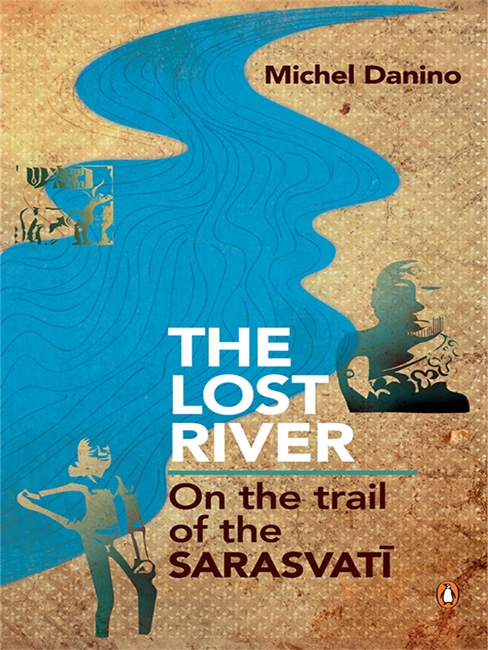
The Indian subcontinent was the scene of dramatic upheavals a few thousand years ago. The Northwest region entered an arid phase, and erosion coupled with tectonic events played havoc with river courses. One of them disappeared. Celebrated as -Sarasvati’ in the Rig Veda and the Mahabharata, this river was rediscovered in the early nineteenth century through topographic explorations by British officials. Recently, geological and climatological studies have probed its evolution and disappearance, while satellite imagery has traced the river’s buried courses and isotope analyses have dated ancient waters still stored under the Thar Desert. In the same Northwest, the subcontinent’s first urban society”the Indus civilization”flourished and declined. But it was not watered by the Indus alone: since Aurel Stein’s expedition in the 1940s, hundreds of Harappan sites have been identified in the now dry Sarasvati’s basin. The rich Harappan legacy in technologies, arts and culture sowed the seeds of Indian civilization as we know it now. Drawing from recent research in a wide range of disciplines, this book discusses differing viewpoints and proposes a harmonious synthesis”a fascinating tale of exploration that brings to life the vital role the -lost river of the Indian desert’ played before its waters gurgled to a stop.
Catagory: History
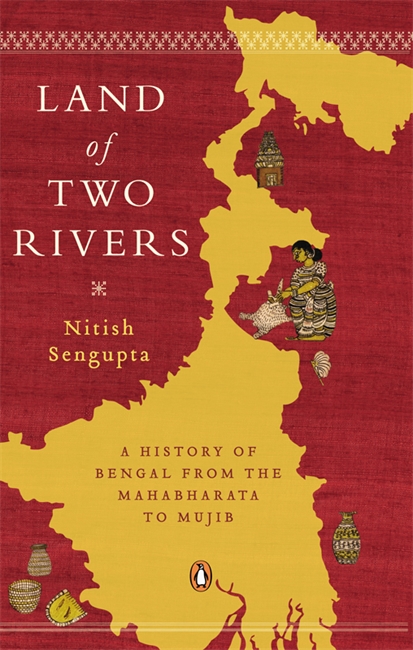
Land Of Two Rivers
Extreme Money
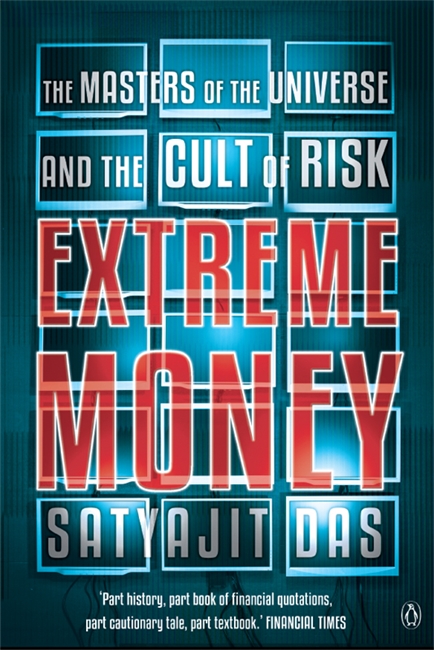
The human race created money and finance. But our inventions re-create us. Mankind mistook money-a lubricant of society and human well-being-for an end in itself. Finance, the monetary shadow of real things, came to dominate human reality. Extreme Money tells the story of how this happened. In so doing; it also tells the story of the modern world. Bestselling author Satyajit Das draws on thirty-three years of personal experience at the heart of modern global finance to narrate this story. Das reveals the spectacular, dangerous money games that have generated increasingly massive bubbles of fake growth, Ponzi prosperity, sophistication and wealth, while endangering the jobs, possessions and futures of virtually everyone outside the financial industry. You’ll learn how everything from home mortgages to climate change has become financialized, as vast fortunes are generated by individuals who build nothing of lasting value. Das shows how ‘extreme money’ has become even more unreal; how ‘voodoo banking’ continues to generate massive phony profits even now; and how a new generation of ‘Masters of the Universe’ has come to dominate the world.
Culture Of The Sepulchre
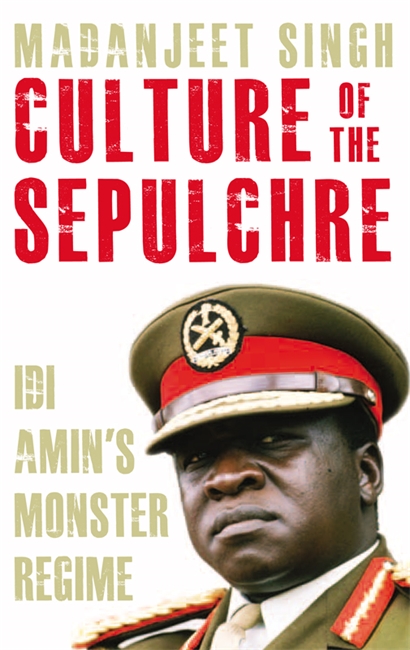
Culture of the Sepulchre is not only a retelling of Idi Amin’s brutality and buffoonery, which unfolded in the seventies, it is also a heart-rending saga of the forced evacuation of the Indian diaspora from Uganda and their trials against the backdrop of a fierce internal armed conflict.
Madanjeet Singh, the Indian High Commissioner to Uganda at the time, gives a first-hand account of the unimaginable violence and savagery unleashed by a man who designated himself ‘His Excellency President for Life, Field Marshal Al Hadji Doctor Idi Amin, VC, DSO, MC, Lord of All the Beasts of the Earth and Fishes of the Sea, and Conqueror of the British Empire in Africa in General and Uganda in Particular’ (and by some accounts even appointed himself the King of Scotland), as well as the ghastly and macabre events that followed Amin’s defeat by the rebel forces led by Museveni.
This is also an account of the extraordinary courage demonstrated by Madanjeet at a time of great personal turmoil—his sister died under mysterious circumstances and his trusted servant turned criminal—and the great risks he took to evacuate hundreds of families desperate to escape the murderous environment
Makers Of Modern India
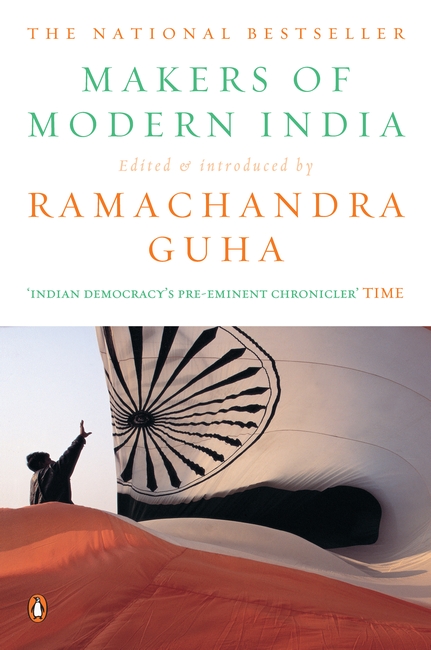
Ramachandra Guha, author of the internationally acclaimed India After Gandhi, profiles nineteen Indians whose ideas had a defining impact on the formation and evolution of our republic and presents rare and compelling excerpts from their writings and speeches. These men and women were not only influential political activists-they also wrote with eloquence, authority and deliberation as they reflected on what Guha describes in his illuminating prologue as ‘the most contentious times in the most interesting country in the world’. Their writings take us from the subcontinent’s first engagement with modernity in the nineteenth century, through the successive phases of the freedom movement, on through the decades after Independence. This book highlights little-known aspects of major figures in Indian history like Tagore and Nehru; it also rehabilitates thinkers who have been unjustly forgotten, such as Tarabai Shinde and Hamid Dalwai. These makers of modern India did not speak in one voice: their perspectives are sometimes complementary, at other times contradictory. The topics they explore and analyse include religion, caste, gender, language, nationalism, colonialism, democracy, secularism and the economy-that is to say, all that is significant in the human condition. These issues have a resonance in our own times, not just in India but everywhere in the world as well.
A Great Clamour

‘Thoughtful, intelligent, rigorous and deeply insightful’-TimeOut
Full of unexpected ideas and fresh insights, A Great Clamour is an extraordinary account of contemporary Asia from one of our finest essayists. Journeying through China, Tibet, Mongolia, Taiwan, Indonesia, Malaysia, and Japan, Mishra explores the contradictions and dynamism of modern-day China, simultaneously drawing a vivid portrait of its neighbours, and the shadow the restless giant casts over its stage.
‘Intriguing vignettes of [China’s] transformation’-Business World
Jungle Trees Of Central India
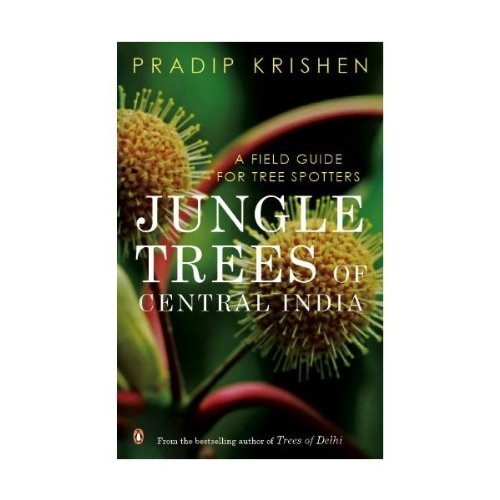
Covering an area larger than France, and including five of India’s most-visited tiger reserves, the forests of central India are one of the country’s most spectacular landscapes. Jungle Trees of Central India is the perfect guide to every tree you are likely to come across in this region. A culmination of over four years of research, the book has over 2000 photographs, and thumbnail keys to all the barks, flowers, fruit and leaves. An ideal companion for your explorations, it will turn you into an expert tree-spotter and take your enjoyment of wild places to another level.
The Marwaris
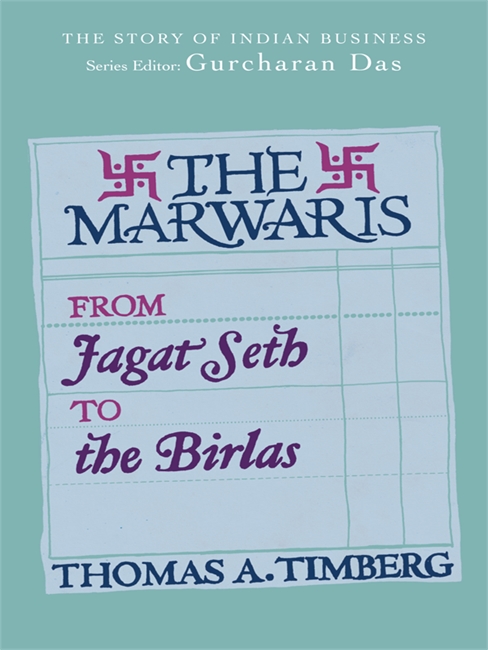
In the nineteenth century, a tiny community from the deserts of Rajasthan spread out to every corner of India. The Marwaris controlled much of the country’s inland trade by the time of the First World War. They then turned their hand to industry and, by the 1970s, owned most of India’s private industrial assets. Today, Marwari businessmen account for a quarter of the Indian names on the Forbes billionaires list.// What makes the Marwaris so successful? Is it their indomitable enterprise, or their incredible appetite for risk? In this new book, Thomas Timberg shows how the Marwaris rely on a centuries-old system for conserving and growing capital which has stood them in good stead, alongside a strong sense of business ethics which has earned them respect.// Family businesses in general and the Marwaris in particular might have a vital role to play in shaping India’s economic future.
Mahabharata
The Mahabharata is one of the greatest stories ever told. Though the basic plot is widely known, there is much more to the epic than the dispute between the Kouravas and Pandavas that led to the battle in Kurukshetra. It has innumerable sub-plots that accommodate fascinating meanderings and digressions, and it has rarely been translated in full, given its formidable length of 80,000 shlokas or couplets. This magnificent 10- volume unabridged translation of the epic is based on the Critical Edition compiled at the Bhandarkar Oriental Research Institute. Volume 1 consists of most of Adi Parva, in which much happens before the Kouravas and the Pandavas actually arrive on the scene. This volume covers the origins of the Kuru clan; the stories of Poushya, Poulama and Astika; the births of the Kouravas and the Pandavas; the house of lac; the slaying of Hidimba and Baka; Droupadi’s marriage; and ends with the Pandavas obtaining their share of the kingdom. Every conceivable human emotion figures in the Mahabharata, the reason why the epic continues to hold sway over our imagination. In this lucid, nuanced and confident translation, Bibek Debroy makes the Mahabharata marvellouly accessible to contemporary readers.
Mahabharata

This definitive and magnificent 10-volume unabridged translation is one of the rare English translations of full of the epic. Bibek Debroy makes the Mahabharata marvelously accessible to contemporary readers. Dispute over land and kingdom may lie at the heart of this story of war between cousins-the Pandavas and the Kouravas-but the Mahabharata is about conflicts of dharma. These conflicts are immense and various, singular and commonplace. Throughout the epic, characters face them with no clear indications of what is right and what is wrong; there are no absolute answers. Thus every possible human emotion features in the Mahabharata, the reason the epic continues to hold sway over our imagination.
In this superb and widely acclaimed translation of the complete Mahabharata, Bibek Debroy takes on a great journey with incredible ease. This is the second volume in the series.