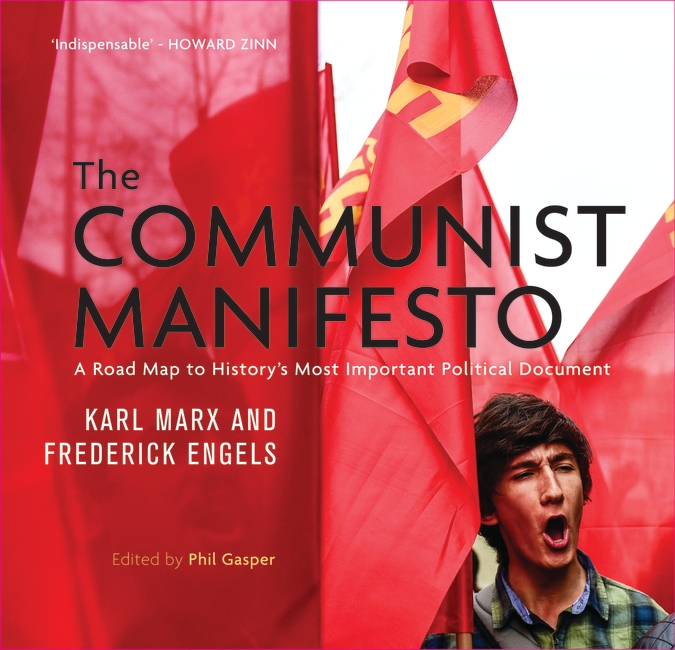
On the occasion of Karl Marx’s 200th birth anniversary, here is an authoritative edition of The Communist Manifesto
‘Apart from Charles Darwin’s Origin of Species,’ notes the Los Angeles Times, The Communist Manifesto ‘is arguably the most important work of nonfiction written in the 19th century.’ The Washington Post calls Marx ‘an astute critic of capitalism.’ Writing in The New York Times, Columbia University Professor Steven Marcus describes the Manifesto as a ‘masterpiece’ with ‘enduring insights into social existence.’
Since it was first written in 1848, the Manifesto by Marx and Engels has been translated into more languages than any other modern text. It has been banned, censored, burned and declared ‘dead’. But year after year, the text only grows more influential and more relevant, and is required reading in courses on philosophy, politics, economics and history.
In this extensively researched edition, renowned Marxist scholar Phil Gasper provides an authoritative introduction to history’s most important political document, with the full text of the Manifesto. Thoughtfully presented in a reader-friendly format, it is fully annotated, with clear historical references and explanations, additional related texts, and a glossary that will bring the text to life for students as well as the general reader.
The New Yorker recently described Karl Marx as ‘The Next Thinker’ for our era. This book shows readers why.

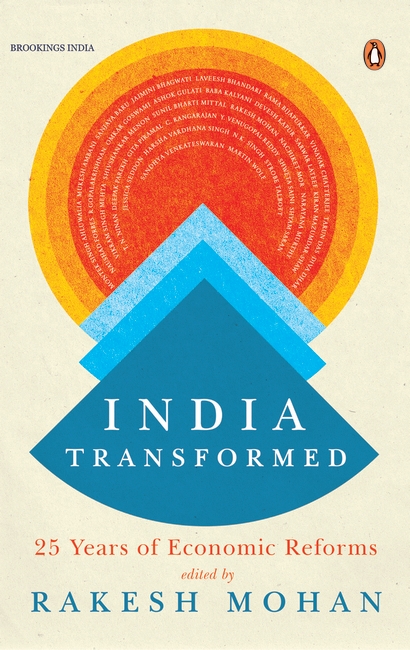
In this commemorative volume, India’s top economic luminaries and business leaders come together to provide a balanced picture of the economic reform process initiated in 1991 and its consequences. They ask themselves some imperative questions: What were the reforms? What were they intended for? How have they affected the overall functioning of the economy?
Covering the impact of the reforms on the evolution of India businesses, India’s foreign and security policy, the changing face of Indian governance and sectoral and human developments, among other themes, India Transformed delves deep into the life of liberalized India through the eyes of the people who helped transform it.

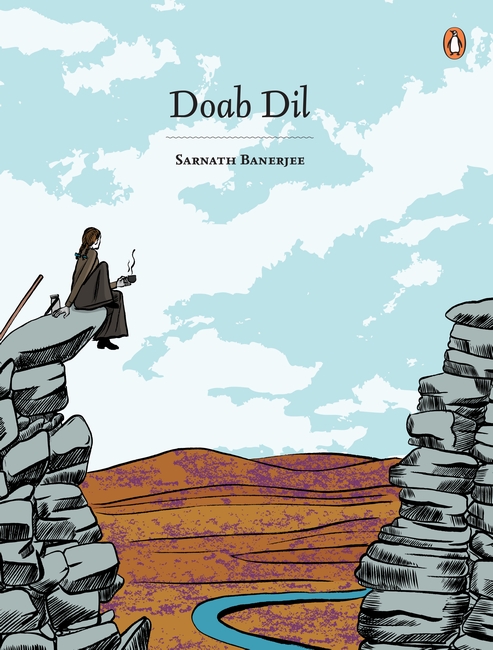
Why was the appreciation of gardens considered a symbol of Victorian aristocracy? Why do the Japanese find it easy to power-nap in public spaces? Why did Charles Baudelaire ascribe Samuel Taylor Coleridge’s restless nocturnal wanderings to a pathological dread of returning home? Why is a tense Gurgaon CEO hitting anxiety-laden golf balls into the night? Why was an obscure ninth-century Arab scholar’s library confiscated? And what do any of these mean for the average person immersed in the ‘daily decathlon’ of life?
Employing a philosopher’s mind and an artist’s eye, Banerjee takes us to still places in a moving world, the place where two rivers (do ab) meet and forests write themselves into history.

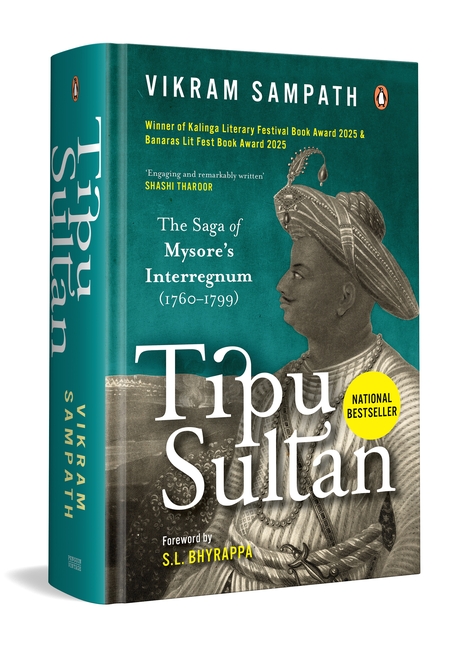
Over two centuries have passed since his death on 4 May 1799, yet Tipu Sultan’s contested legacy continues to perplex India and her contemporary politics. A fascinating and enigmatic figure in India’s military past, he remains a modern historian’s biggest puzzle as he simultaneously means different things to different people, depending on how one chooses to look at his life and its events.
Tipu’s ascent to power was accidental. His father Haidar Ali was a beneficiary of the benevolence of the Maharaja of Mysore. But in a series of fascinating events, the Machiavellian Haidar ran with the hare and hunted with the hounds; he ended up overthrowing his own benefactor and usurping the throne of Mysore from the Wodeyars in 1761. In a war-scarred life, father and son led Mysore through four momentous battles against the British, termed the Anglo-Mysore Wars. The first two, led by Haidar, brought the English East India Company to its knees. Chasing the enemy to the very gates of Madras, Haidar made the British sign such humiliating terms of treaties that sent shockwaves back in London.
In the hubris of this success, Tipu obtained the kingdom on a platter, unlike his father, who worked up the ranks to achieve glory. In a diabolical war thirst, Tipu launched lethal attacks on Malabar, Mangalore, Travancore, Coorg, and left behind a trail of death, destruction and worse, mass-conversions and the desecration of religious places of worship. While he was an astute administrator and a brave soldier, the strategic tact with opponents and the diplomatic balance that Haidar had sought to maintain with the Hindu majority were both dangerously upset by Tipu’s foolhardiness on matters of faith. The social report card of this eighteenth-century ruler was anything but clean. And yet, one simply cannot deny his position as a renowned military warrior and one of the most powerful rulers of Southern India.
Meticulously researched, authoritative and unputdownable, Tipu Sultan: The Saga of Mysore’s Interregnum (1760–1799) opens a window to the life and times of one of the most debated figures from India’s history.

An enthralling retelling of India’s greatest epic, the Mahabharata, Jaya seamlessly weaves into a single narrative plots from the Sanskrit classic as well as its many folk and regional variants. With clarity and simplicity, the tales in this elegant volume reveal the eternal relevance of the Mahabharata and the complex and disturbing meditation on the human condition that has shaped Indian thought for over 3000 years.
Sita approaches Ram and the Ramayana by speculating on the titular character: her childhood with her father, Janaka, who hosted sages mentioned in the Upanishads; her stay in the forest with her husband, who had to be a celibate ascetic while she was in the prime of her youth; her interactions with the women of Lanka, recipes she exchanged, the emotions they shared; her role as a goddess, the untamed Kali as well as the demure Gauri, in transforming the stoic prince of Ayodhya into God.
The Bhagavata is the story of Krishna, known as Shyam to those who find beauty, wisdom and love in his dark complexion. Shyam tells the story of Krishna’s birth and his death, bringing together the fragments of this great epic composed over thousands of years, first as the Harivamsa, then as the Bhagavata Purana, and finally as the passionate songs of poet-sages in various regional languages.

W.H. Auden and Stephen Spender were the cutting-edge English poets of their generation, influential inter-war figures on the cusp of culture and politics, of imperialism and anti-imperialism. By a curious quirk of history, both their older brothers were mountain explorers – John Bicknell Auden was a pioneering geologist of the Himalayas, while Michael Spender was the first to draw a detailed map of the north face of the Everest. While their younger brothers achieved literary fame, John Auden and Michael Spender vied to be included in the expedition that would deliver an Englishman to the summit of Everest, a quest that became a metaphor for Britain to maintain power over India. To this rivalry was added another: both men fell in love with the same vivacious woman, the painter Nancy Sharp. Her choice would determine where each man’s wartime fate and loyalties would lie, with England and its unraveling empire, or elsewhere.
Set in Calcutta, London, in the glacier-locked wilds of the Karakoram, and on Mount Everest itself, The Last Englishmen is also the story of a generation. The cast of characters in Deborah Baker’s exhilarating drama includes Indian and English writers and artists, explorers and Communist spies, imperial ‘Die Hards’ and Indian nationalists, political chancers and police informers. Key among them is a highborn Bengali poet named Sudhindranath Datta, a melancholy soul torn like others of his generation between a hatred of the British empire and a deep love of European literature, and whose way of life would be upended by the arrival of the Second World War on his Calcutta doorstep.Dense with romance and intrigue, and of startling relevance to the cross-cultural debates and great power games of our own day, The Last Englishmen is an engrossing and masterful story that traces the end of empire and the stirring of a new world order.

When India became independent in 1947, the general view, which has prevailed until now, is that Britain had been steadily working for an amicable transfer of power for decades. In this book, Walter Reid argues that nothing could be further from the truth. Referring to a vast amount of documentary material, from private letters to public records and state papers, he shows how Britain held back political progress in India for as long as possible-a policy which led to unimaginable chaos and suffering when independence was granted, and which created a legacy of hatred and distrust that continues to this day.

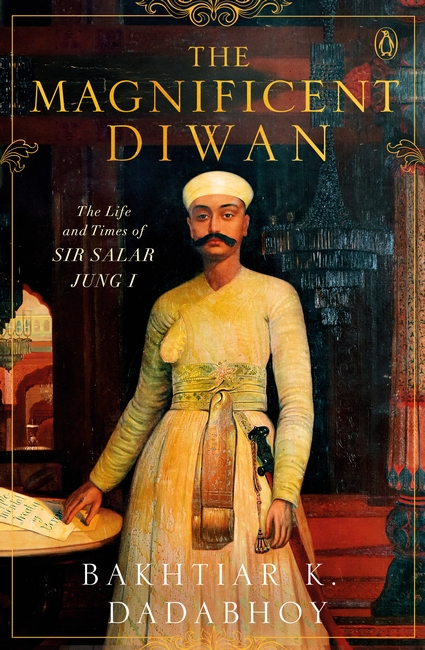
The Magnificent Diwan is the definitive biography of arguably India’s most influential and powerful statesman of the nineteenth century. Drawing on extensive archival material, this is a compelling account of the life and times of a remarkable Indian who, as diwan or prime minister, decisively shaped Hyderabad’s political and economic history for nearly three decades in the second half of the nineteenth century. It was Salar Jung who, by his reforms of the medieval oligarchy that was Hyderabad, ushered the state into the modern era. This account is not merely a chronicle of his life but also a history of Hyderabad-both social and governmental-and gives the reader an encompassing view of the man who has been called the founder of modern Hyderabad. Meticulously researched and engagingly written, this biography introduces Sir Salar Jung I to a new generation, even as it rekindles the memory of a man who has become the victim of collective amnesia.
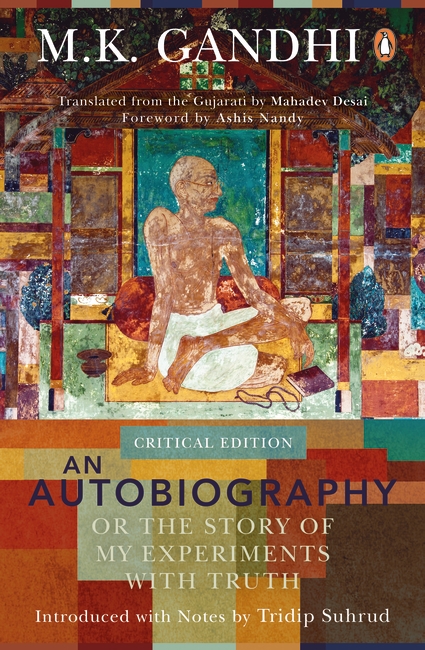
Mohandas Karamchand Gandhi is among the most enigmatic, charismatic, deeply revered and equally reviled figures of the twentieth century. His Autobiography, one of the most widely read and translated Indian books of all time, is a classic that allows us to glimpse the transformation of a well-meaning lawyer into a Satyagrahi and an ashramite.
In this first-ever Critical Edition, eminent scholar Tridip Suhrud shines new light on Gandhi’s life and thought. The deeply researched notes elucidate the contexts and characters of the Autobiography, while the alternative translations capture the flavour, cadence and quirkiness of the Gujarati. In the original and insightful introduction, Suhrud traces Gandhi’s evolution into a seeker of Truth as God, and explores possible modes of reading the Autobiography.
This Critical Edition of the Autobiography is an absorbing, illuminating text about the life-affirming journey of the most public and most complex figure of Indian history.

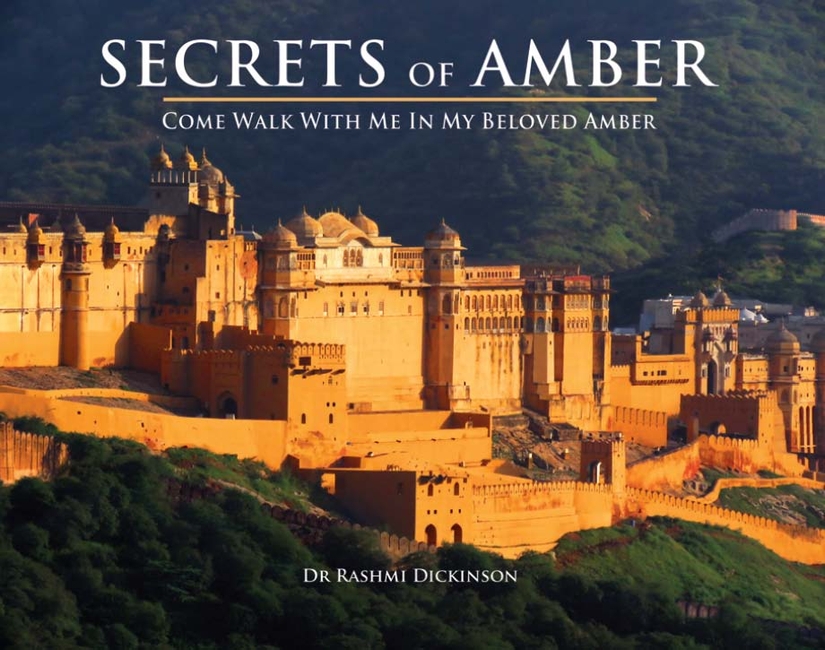
Secrets of Amber is a voyage of discovery to Amber, the royal walled city of Rajasthan, through twelve walks in and around the heritage heart of the town. Away from the unusual crowded tourist trail, delight in the magical dialogue with the landscape and the living heritage while scaling a soaring battlement wall, strolling through a medieval lane or exploring the wooded royal hunting grounds. This intimate visual anthem to one of India’s greatest historical landscapes will lead you to unearth an unprecedented treasure trove of delights and vistas.