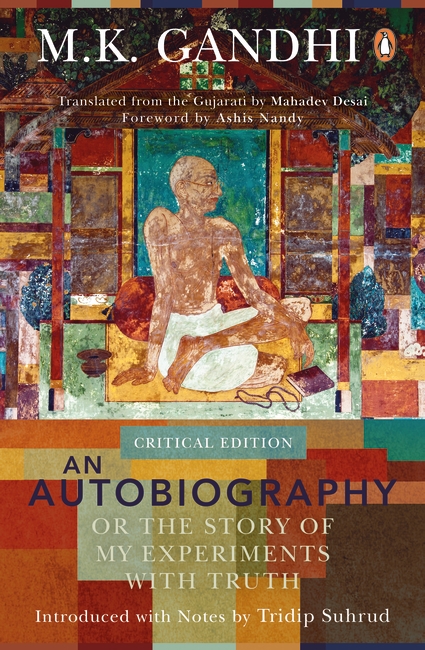
Mohandas Karamchand Gandhi is among the most enigmatic, charismatic, deeply revered and equally reviled figures of the twentieth century. His Autobiography, one of the most widely read and translated Indian books of all time, is a classic that allows us to glimpse the transformation of a well-meaning lawyer into a Satyagrahi and an ashramite.
In this first-ever Critical Edition, eminent scholar Tridip Suhrud shines new light on Gandhi’s life and thought. The deeply researched notes elucidate the contexts and characters of the Autobiography, while the alternative translations capture the flavour, cadence and quirkiness of the Gujarati. In the original and insightful introduction, Suhrud traces Gandhi’s evolution into a seeker of Truth as God, and explores possible modes of reading the Autobiography.
This Critical Edition of the Autobiography is an absorbing, illuminating text about the life-affirming journey of the most public and most complex figure of Indian history.

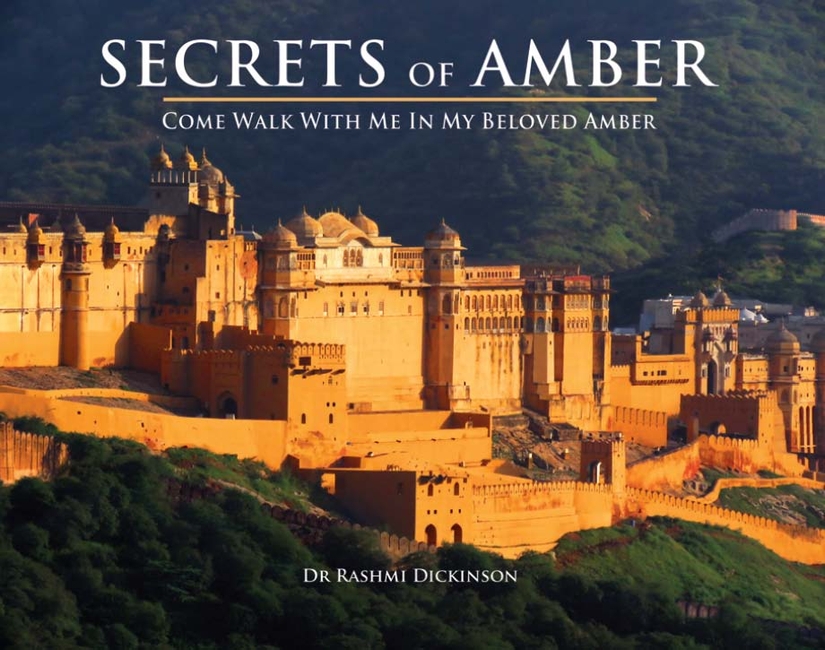
Secrets of Amber is a voyage of discovery to Amber, the royal walled city of Rajasthan, through twelve walks in and around the heritage heart of the town. Away from the unusual crowded tourist trail, delight in the magical dialogue with the landscape and the living heritage while scaling a soaring battlement wall, strolling through a medieval lane or exploring the wooded royal hunting grounds. This intimate visual anthem to one of India’s greatest historical landscapes will lead you to unearth an unprecedented treasure trove of delights and vistas.

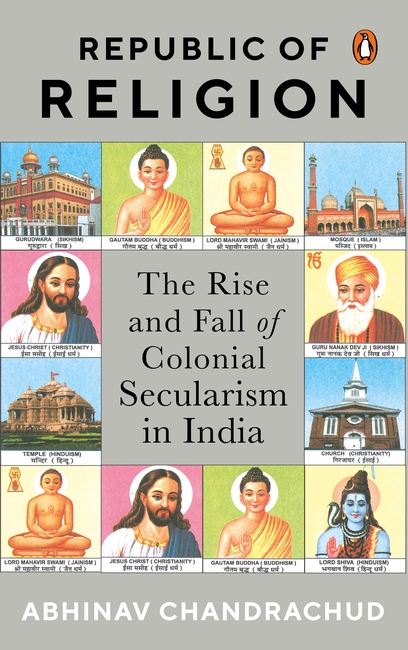
How did India aspire to become a secular country? Given our colonial past, we derive many of our laws and institutions from England. We have a parliamentary democracy with a Westminster model of government. Our courts routinely use catchphrases like ‘rule of law’ or ‘natural justice’, which have their roots in London. However, during the period of colonial rule in India, and even thereafter, England was not a ‘secular’ country. The king or queen of England must mandatorily be a Protestant. The archbishop of Canterbury is still appointed by the government. Senior bishops still sit, by virtue of their office, in the House of Lords.
Thought-provoking and impeccably argued, Republic of Religion reasons that the secular structure of the colonial state in India was imposed by a colonial power on a conquered people. It was an unnatural foreign imposition, perhaps one that was bound, in some measure, to come apart once colonialism ended, given colonial secularism’s dubious origins.

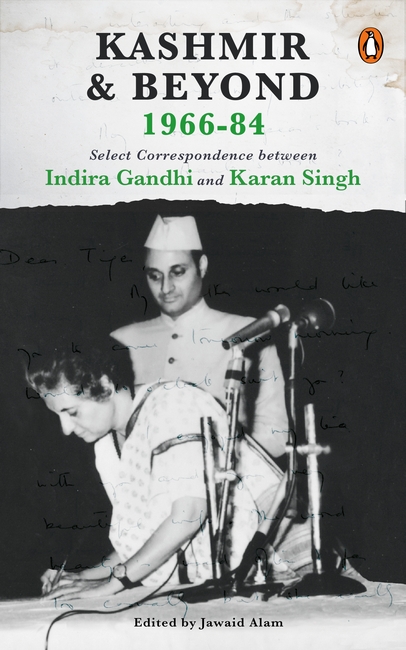
Dr Karan Singh became a member of Prime Minister Indira Gandhi’s Cabinet as minister for tourism and civil aviation, and worked closely with Gandhi for almost the entire duration of her tenure. They held each other in high esteem, shared great rapport as Cabinet colleagues and had mutual regard on a personal level as well.
Bringing together over 300 letters exchanged between Mrs Gandhi and Dr Singh, Kashmir and Beyond provides valuable insights into such historic events as the signing of the Tashkent Declaration, the Emergency and Operation Bluestar. Even as these letters map the important landmarks of recent Indian history, they also provide a fascinating glimpse into the inner workings of the government and the magnitude of the effort of running a country that houses ‘one-seventh of the human race’.
Kashmir and Beyond is an immensely important book for anyone who wants to make sense of the knotty issues that confront contemporary India.
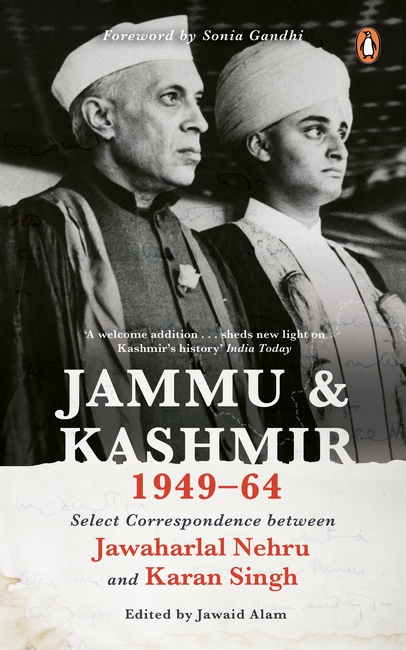
In 1949, Dr Karan Singh had just turned eighteen when he was appointed regent of Jammu and Kashmir, two years after his father, Maharaja Hari Singh, signed the Instrument of Accession merging the then independent state with India. Under the mentorship of Pandit Jawaharlal Nehru, Dr Singh was at the helm of affairs in the state for eighteen years, successively as regent, Sadar-i-Riyasat and governor.
This carefully conceived selection of over 200 letters exchanged between Dr Singh and Pandit Nehru sheds light on significant issues and events, including the teething problems of a fledgling country and a newly grafted state, the emerging conflicts between Pakistan and India, and the Chinese aggression of 1962. In addition to valuable insights into the political situation of the period, these letters also provide rare glimpses into the personal lives and thoughts of Pandit Nehru and Dr Singh. The memorandum submitted by Maharaja Hari Singh to President Rajendra Prasad in August 1952 is published in full, revealing how the identity and future of Kashmir were shaped.
A rare collection, Jammu and Kashmir offers an unmatched ringside view of the momentous events in Kashmir and the rest of India after Independence.
A key question today is whether India and the United States can or should develop ever-closer ties as a way of countering China’s desire to be the dominant power in the broader Asian region. In Fateful Triangle, Tanvi Madan argues that history shows that such a partnership is neither inevitable nor impossible.
Drawing on documents from India and the US, Fateful Triangle contends that China’s influence on the US-India relationship is not a recent phenomenon. It demonstrates that US and Indian perceptions of and their policies towards China shaped US-India relations in three crucial decades, from 1949 to 1979, in significant and complex ways.
Fateful Triangle updates our understanding of the diplomatic history of US-India relations, highlighting China’s central role in it, reassesses the origins and practice of Indian foreign policy and non-alignment, and provides historical context to the interactions between the three countries.

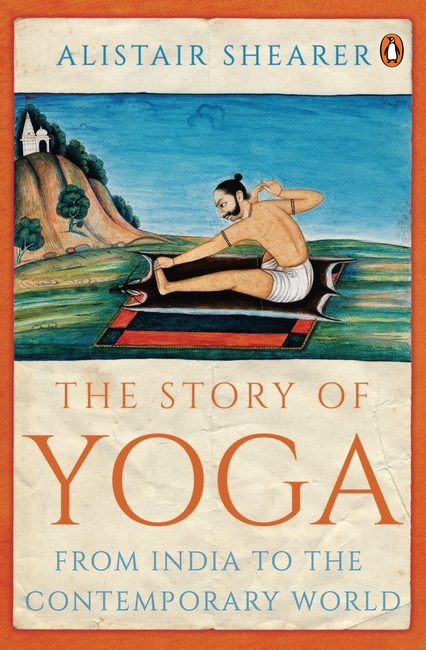
How did an ancient Indian spiritual discipline turn into a GBP 20 billion-a-year mainstay of the global wellness industry?
This comprehensive history sets yoga in its global cultural context for the first time. From arcane religious rituals and medieval body-magic, through muscular Christianity and the British Raj, to the Indian nationalist movement and the arrival of yoga in the twentieth-century West, we discover how the practice reached its present-day ubiquity and how it became embedded in powerful social currents shaping the world’s future, such as digital media, celebrity culture, the stress pandemic and the quest for an authentic identity in the face of unprecedented change.
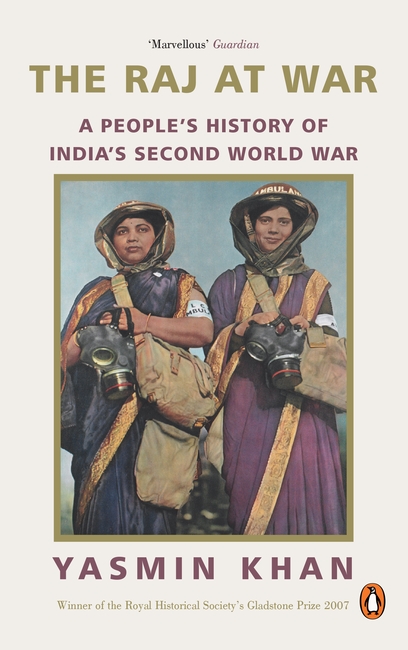
Two and a half million Indians volunteered in the Second World War. Their stories had been lost and silenced, until now.
Award-winning historian Yasmin Khan marshals interviews, newspaper reports and unseen archival material to tell the forgotten story of India’s role in the Second World War. We meet soldiers, sailors and non-combatants prostitutes, nurses, cooks, peasants—whose lives were upended by a war far, far away. From a small Muslim boy arrested for singing anti-recruitment songs, to cooks preparing chapattis on army boats, to a family listening to illicit German radio broadcasts, and a love letter from the first Indian soldier to receive the Victoria Cross, Khan makes us feel and hear the lost voices of a people involved in a war that wasn’t of their choosing.
Dramatizing a cataclysm that transformed the subcontinent and led to its independence, The Raj at War undeniably inserts South Asia back into WWII history and confirms that the Empire—and all its subjects—formed both the heart and limbs of Britain’s war effort and eventual victory.

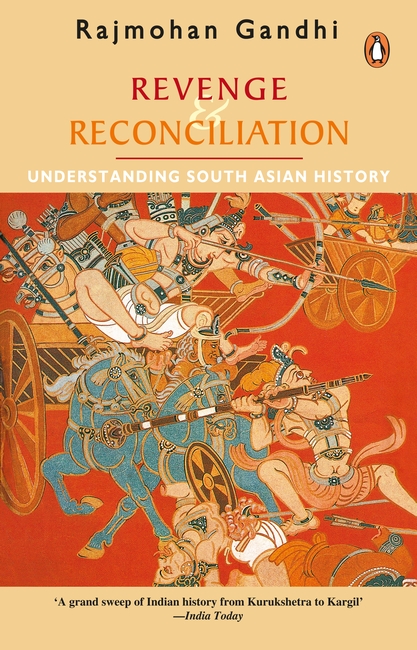
In this remarkable study, well-known biographer Rajmohan Gandhi, underscoring the prominence in the Mahabharata of the revenge impulse, follows its trajectory in South Asian history. Side by side, he traces the role played by reconcilers up to present times, beginning with the Buddha, Mahavira and Asoka. His explanation of the 1947 division of India identifies the role of the 1857 Rebellion in shaping Gandhi’s thinking and strategy, and reflects on the wounds of Partition. The survey of post-Independence India, Pakistan, Bangladesh and Sri Lanka also touches upon the tragic bereavements of six of their women leaders.