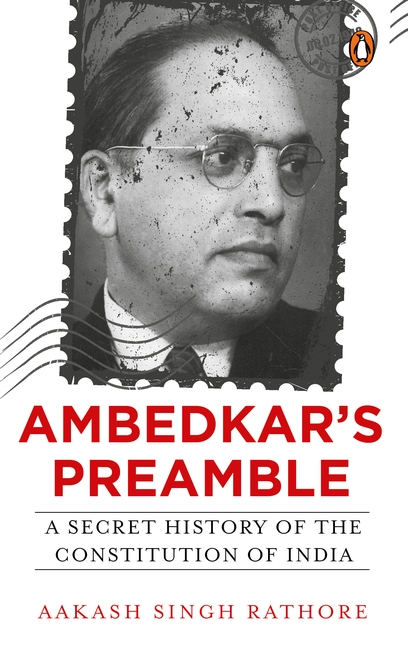
On 26 January 1950, the Constitution of India was formally adopted and came into effect. Its Preamble set out in brief the enlightened values it enshrined and hoped to engender. In a radical shift from mainstream constitutional history, this book establishes B.R. Ambedkar’s irrefutable authorship of the Preamble by uncovering the intellectual origins of its six most central concepts-justice, liberty, equality, fraternity, dignity and nation.
Although Ambedkar is universally regarded as the chief architect of the Constitution, the specifics of his role as chairman of the drafting committee are not widely discussed. Totally neglected is his almost single-handed authorship of the Constitution’s Preamble, which is frequently and mistakenly attributed to Jawaharlal Nehru rather than to Ambedkar. This book establishes how and why the Preamble to the Constitution of India is essentially an Ambedkarite Preamble. It is clear that its central concepts have their provenance in Ambedkar’s writings and speeches.
Through six eponymous chapters, this book unfolds the story of the six constitutional concepts. In doing so, it spotlights fundamental facts about modern Indian history, as well as Ambedkar’s revolutionary political thought, hitherto ignored in conventional accounts.
Catagory: History
Anatomy of an Abduction
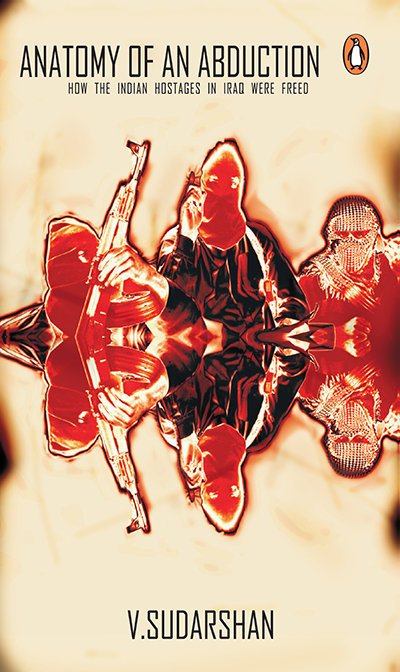
‘It was a bizarre situation. The negotiators were in position in Iraq. The kidnappers and the kidnapped were in Iraq. At the crucial moment, the transport company in Kuwait expressed reservations about the ransom.’
In July 2004, a convoy of KGL trucks drove into Iraq from Kuwait carrying electronic equipment for the American occupiers, when the worst happened-three Indian drivers, three Kenyans and an Egyptian were ambushed, detained by unknown Iraqi dissidents and accused of collaborating with the Americans. A deadline was set for their execution. The countdown had begun.
The abduction drama that ensued had all the ingredients of a thriller: nail-biting suspense, high profile media coverage, international outrage at the plight of these humble workers, and political tightrope-walking. This gripping behind-the-scenes narration recounts what really happened in Baghdad when a team of negotiators was sent there and entered into secret talks through an intermediary whose very existence was not in public domain.
Anatomy of Abduction reveals for the first time the Indian crisis management team’s handling of the situation over forty-four days in occupied, lawless Iraq. The book gives an insight into the pressures that governments have to face as more and more innocent people become pawns in global chess games.
The Modern Monk
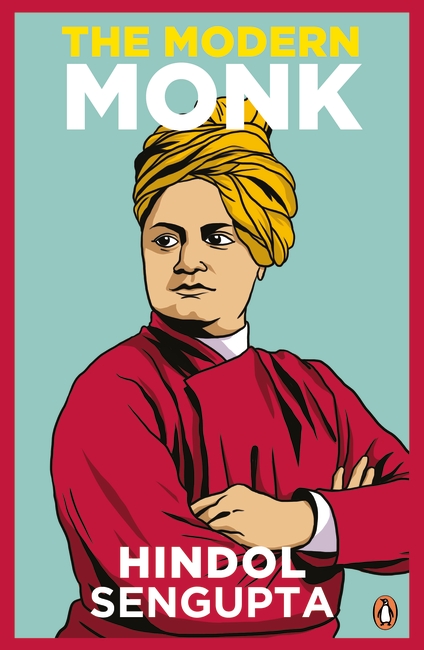
He loved French cookbooks, invented a new way of making khichdi, was interested in the engineering behind ship-building and the technology that makes ammunition. More than 100 years after his death, do we really know or understand the bewildering, fascinating, complex man Swami Vivekananda was? From his speech in Chicago that mesmerised America to his voluminous writings and speeches that redefined the idea of India, Vivekananda was much more than a monk. His work sweeps through Indian politics, economics, sociology, arts and culture, and of course religion. So ubiquitous are his sayings that they pop everywhere from the speeches of politicians to t-shirts and mugs. It may perhaps be said about Vivekananda that he rarely had a boring idea – and even when he did, he never expressed it boringly! We see and hear so much about Vivekananda that we have almost forgotten how critical he is to our understanding of ourselves as Indians, and indeed, as human beings. Vivekananda is one of the most important figures in the modern imagination of India. He is also an utterly modern man, consistently challenging his own views, and embracing diverse, even conflicting arguments. It is his modernity that appeals to us today. He is unlike any monk we have known. He is confined neither by history nor by ritual, and is constantly questioning everything around him, including himself. It is in Vivekananda’s contradictions, his doubts, his fears and his failings that he recognize his profoundly compelling divinity – he teaches us that to try and understand God, first one must truly comprehend one’s own self. This book is an argument that it is not just because he is close to God but also because he is so tantalizingly immersed in being human that keeps us returning to Vivekananda and his immortal wisdom.
Super Power?
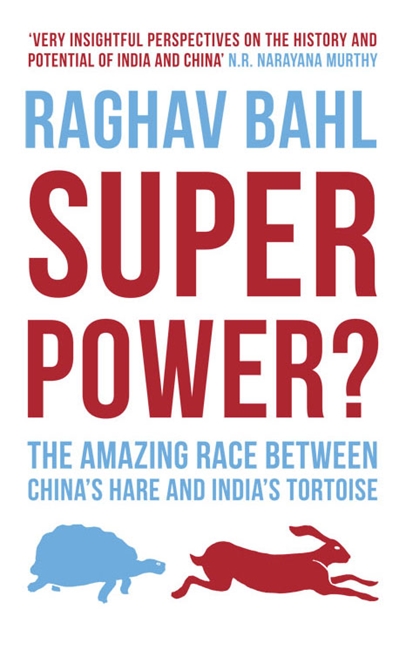
In his career as a journalist and one of India’s top entrepreneurs, Raghav Bahl has often faced a barrage of questions from visiting businesspeople bewildered by India: Why are Indian regulations so weak and confusing? Why is your foreign investment policy so restrictive? How is it that you speak such good English? Inevitably, the questions are followed by the observation: But, you know, that’s not the way it is in China.
Indeed, even as the two economies are together projected to dominate the world, there is a palpable difference in the way China and India work on the ground. China is spectacularly effective in building infrastructure and is currently investing almost half its GDP. Meanwhile, India is a ‘promising’ economy: more than half its GDP is consumed by its billionplus population; half its population is younger than twenty-five, giving it a unique demographic advantage; 350 million Indians understand English, making it the largest English-using country in the world
In the race to superpower status, who is likely to breast the tape-China’s hare or India’s tortoise? For anyone looking to understand China and India and the ways in which these two nations are about to change the history of the world, this is the book to read.
Three Merchants Of Bombay
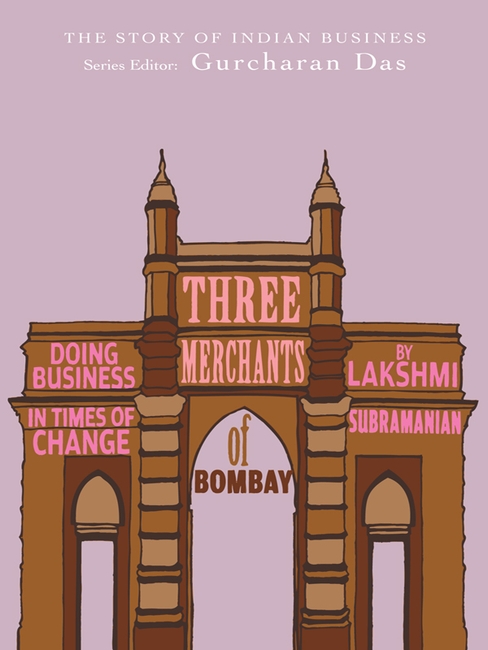
Three Merchants of Bombay is the story of three intrepid merchants-Trawadi Arjunji Nathji, Jamsetjee Jeejeebhoy and Premchand Roychand-who traded out of Bombay in the nineteenth century, founding pioneering business empires.Trailblazing in their enterprise, these adventurers possessed the unique ability to find and then exploit the big opportunities that came their way. It was a time of transition, and they prospered because they thought big and took risks. Set against the backdrop of global and local economies undergoing rapid and unforeseen change, the story of these three unique men stands as a proud milestone in the history of indigenous capitalism in India.In this lucid and very readable account, Lakshmi Subramanian traces that history and locates it in the greater narrative of the history of economic development in South Asia.
Caravans
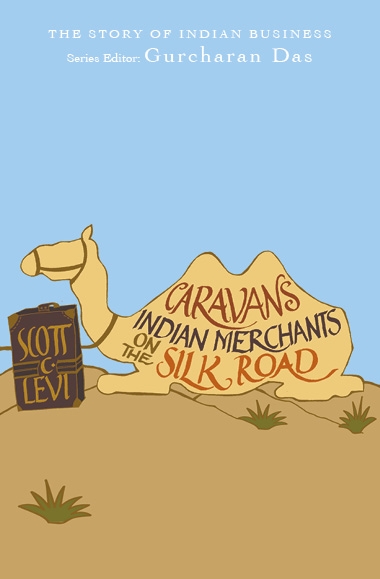
Caravans tells the fascinating story of tens of thousands of intrepid Multani and Shikarpuri merchants who risked everything to travel great distances and spend years of their lives pursuing their fortunes in foreign lands. From the sixteenth through the nineteenth centuries, these merchants lived as ‘guests’ in cities and villages across Afghanistan, Central Asia, Iran and Russia. Setting aside beliefs that caravan traders were simple peddlers, Scott Levi examines the sophisticated techniques these merchants used to convert a modest amount of merchandise into vast portfolios of trade and moneylending ventures.
Caravans also challenges the notion that the rising tide of European trade in the Indian Ocean usurped the overland ‘Silk Road’ trade and pushed Central Asia into economic isolation. In fact, as Levi shows, it was at precisely the same historical moment that thousands of Multanis began making their way to Central Asia, linking the early modern Indian and Central Asian economies closer together than ever before.
Orbit Shifting Innovation
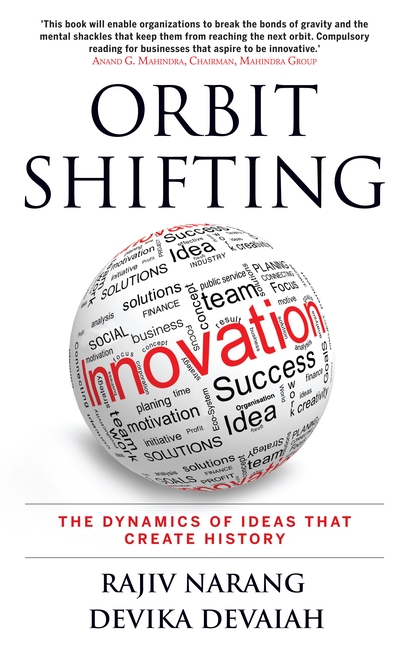
Orbit-shifting innovation happens when an area that needs transformation meets an innovator with the will and the desire to create, and not follow history. At the heart of the orbit-shifting innovation is the breakthrough that creates a new orbit and achieves a transformative impact.
Businesses, social enterprises and even governments need orbit-shifting ideas to create a transformative impact. But how does that groundbreaking idea come about, and what translates it into actuality? Charting the vast landscape of orbit-shifting innovation and innovators across countries, cultures and industries, the book brings to the fore the moving force that drives orbit-shifters to take on a transformative challenge and to navigate the pitfalls and obstacles in making it happen.
The Raisina Model
Meghnad Desai reflects on Indian democracy as it completes seventy years of colourful, eventful and energetic parliamentary existence. Pulling no punches, Desai looks at the history and evolution of Indian democratic institutions, pinpointing their achievements, but also their repeated failure to live up to the standards envisaged by the nation’s founders. Drawing on his own career as a Labour peer in Britain’s House of Lords, Desai has the rare understanding and familiarity with the process of politics, and is able therefore to identify its universal features and zoom in on its uniquely Indian aspects. This is a candid, reflective and unsparing view of the precepts and practice of Indian politics. It traces at the evolution and growth of identity politics, coalition governments and single-party rule and the differing political narratives of the north and the south. The Raisina Model is a critical and frequently uncomfortable meditation on India’s contemporary political culture.
The Tip of the Iceberg
A wave of entrepreneurship has been sweeping across India. The success of start-ups like Flipkart, Snapdeal, Paytm, Ola and others has veered the discourse towards high valuations.
But what we mostly see is very much the tip of the iceberg. Behind every high valuation of today is a story of blood, sweat, toil and tears. For every entrepreneur who has an amazing success story to tell, there are countless others who have fallen by the wayside. The going has often been a far cry from the presumed romance of breaking the mould, disrupting the order and changing the world.
It is a desire to change the world that drives successful entrepreneurs, for they alone have the blind passion that is often the difference between success and failure, and they are the ones who love the journey more than the destination.
Today, when questions are being asked whether the start-up party is nearing its end, whether we will soon see a rerun of the dot-com bust of the early noughties, it is time to remember India’s start-up warriors.
This is the story of their remarkable journeys. Some found their destination. Some did not.