



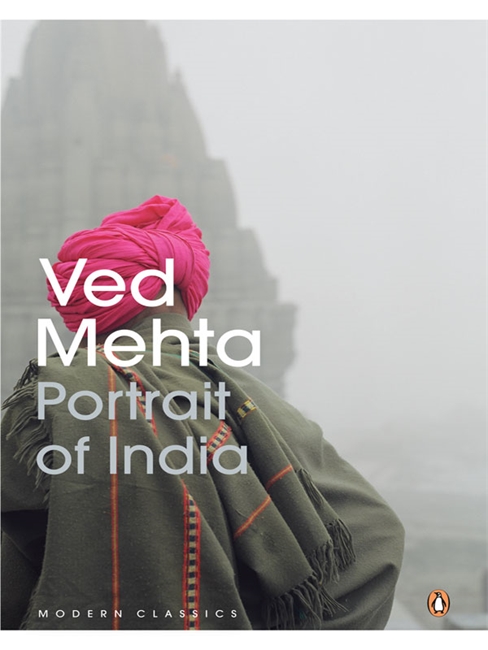
Portrait of India (1970) is a vivid account of 60s’ India and some of its most interesting figures – Indira Gandhi, Jaya Prakash Narayan and Satyajit Ray, among others. Travelling across the country from the Himalayas to Kerala, through its villages and cities, Ved Mehta’s observations of and insights into India remain relevant and thought provoking even today.
Catagory: History
The Essential Ved Mehta
The Essential Ved Mehta is the definitive collection of the author’s work, containing excerpts from nearly all his writings, many of which first appeared in William Shawn’s New Yorker. It begins with his first book, the classic autobiography highlighting his blindness, Face to Face and goes on to feature, among others, his iconic books about India and his great family saga Continents of Exile. Each entry comes with a reflection by Mehta. Authoritative and illuminating, The Essential Ved Mehta is not just an introduction to this seminal writer but also a passionate record of a writer looking back upon his own work.
Ramakrishna Paramahamsa
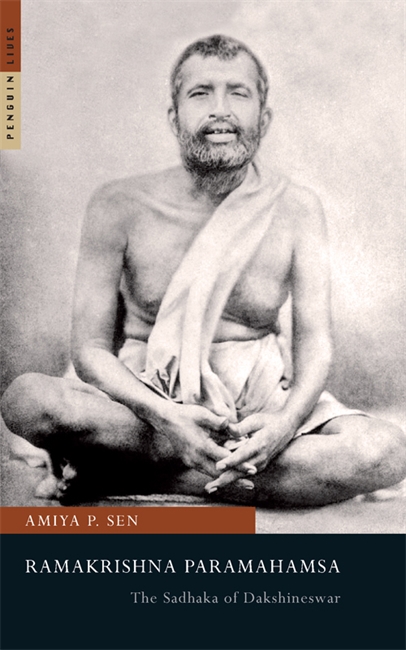
While Ramakrishna Paramhamsa has been the subject of innumerable volumes devoted to his life and teachings over the past century and a half, Ramakrishna Paramhamsa: The Sadhaka of Dakshineswar illuminates this enigmatic religious figure and stands out amidst the multitude of voices that crowd his story. It traces the several contradictions of nineteenth-century Bengal that the man embodied: between his Vaishnav roots and Sakti worship; between bhakti and gyan; and between a guru and sadhaka (spiritual practitioner).
Amiya P. Sen situates Sri Ramakrishna within the emerging social and cultural anxieties of the time as also the larger Hindu-Brahminical world that he was born into. This book also carries a brief but critical introduction to the moral and philosophical underpinnings of Ramakrishna’s vibrant theology that will be of interest to lay readers as well as those especially interested in the cultural and religious history of modern Bengal.
See also Amiya Sen’s His Words: The Preaching and Parables of Ramakrishna Paramahamsa
His Words
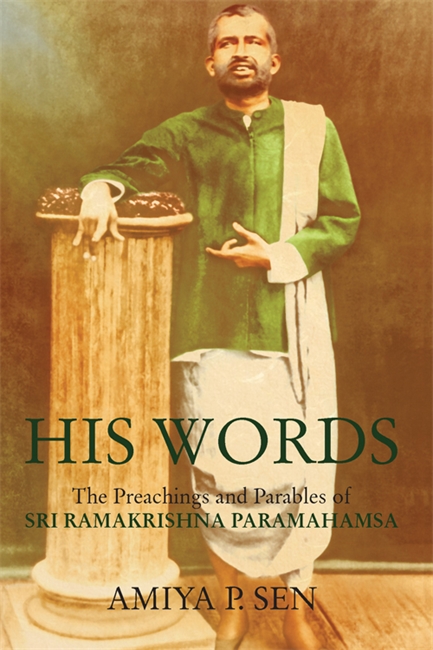
‘I found that I had begun to take a great liking for the man . . . Oddly, this did not grow out of any feeling of veneration . . . for that would have implied my being overawed and somewhat fearful in the presence of someone vastly superior. Rather, my feelings grew spontaneously and from the very depths of my heart. I simply revelled in the man’s company.’-Mahendra Nath Dutta (Swami Vivekananda’s brother) on Ramakrishna
Press reports in the 1870s Calcutta marvelled at the way ‘highly educated’, ‘civilized’ and ‘reasoning’ men, like Mahendra Nath Dutta, were drawn to the ‘ill clad’, ‘illiterate’, ‘friendless’ and ‘unpolished’ Ramakrishna. The progressive press, which had first brought Ramakrishna to public attention, scoffed at his use of ‘vulgar’ speech, while acknowledging its effectiveness in religious communication. Despite these critiques, Ramakrishna came to occupy an important place in the cultural life of late-nineteenth-century Bengal.
Amiya P. Sen’s lucid introductions and fluent translations of the interactions between Ramakrishna and his followers in His Words make for an engaging and illuminating account of Ramakrishna’s teachings. Compiled from a variety of contemporary and near-contemporary sources, this book brings out the dramatic simplicity of Ramakrishna’s incisive commentaries on profound religious ideas.
See also by Amiya Sen Ramakrishna Paramahamsa: The Sadhaka of Dakshineswar
Rammohun Roy
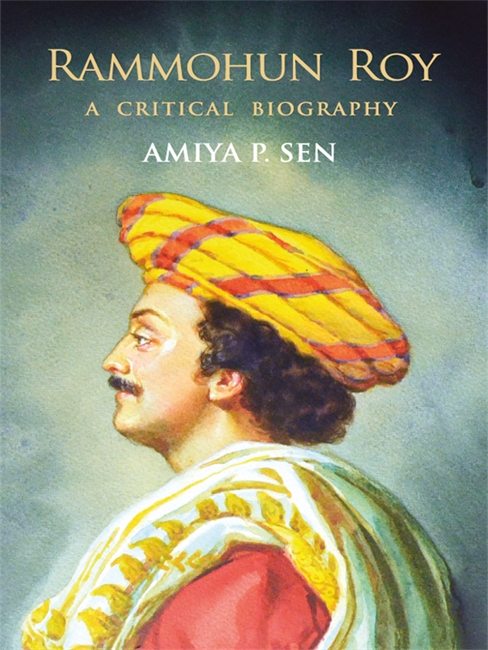
Raja Rammohun Roy (1774—1833) was a great champion of liberty and civil rights in colonial India. He was also a true cosmopolitan who envisioned a world without borders. A tireless crusader for religious and social reform, Rammohun attempted a progressive reinterpretation of Hinduism and tried to improve the lot of socially marginalized groups such as women.
Yet, in spite of his lofty public presence, Rammohun was a hugely controversial figure. He shocked the Hindu orthodoxy by his support to the abolition of Sati, offended evangelists by separating the moral message of Christ from the purely theological, and was often dragged into legal disputes over family property. By the time of his death in Bristol, he was as much resented as respected, both at home and abroad.
Using relatively unexplored sources, this elegant and accessible new biography by Amiya P. Sen paints a fascinating portrait of one of the legendary makers of modern India.
India Since Independence
The story of the forging of India, the world’s largest democracy, is a rich and inspiring one. This volume, a sequel to the best-selling India’s Struggle for Independence, analyses the challenges India has faced and the successes it has achieved in the light of its colonial legacy and century-long struggle for freedom. It covers the framing of the Constitution and the evolution of the Nehruvian political and economic agenda and basics of foreign policy; the consolidation of the nation and contentious issues like party politics in the Centre and the states, the Punjab problem, and anti-caste politics and untouchability. These, along with objective assessments of Jawaharlal Nehru, Indira Gandhi, Jayaprakash Narayan, Lal Bahadur Shastri, Rajiv Gandhi, Vishwanath Pratap Singh, Atal Bihari Vajpayee and Manmohan Singh, constitute a remarkable overview of a nation on the move.
The Discovery Of India
The Discovery of India has acquired the status of a classic since it was first published in 1946. Nehru’s brilliant intellect, deep humanity, and lucid style make ‘The Discovery of India’ essential reading for anyone interested in India, both its past and its present.
Written over five months when Jawaharlal Nehru was imprisoned in the Ahmadnagar Fort, The Discovery of India has acquired the status of a classic since it was first published in 1946.
In this work of prodigious scope and scholarship, one of the greatest figures of Indian history unfolds the panorama of the country’s rich and complex past, from prehistory to the last years of British colonial rule. Analysing texts like the Vedas and the Arthashastra, and personalities like the Buddha and Mahatma Gandhi, Nehru brings alive an ancient culture that has seen the flowering of the world’s great traditions of philosophy, science and art, and almost al its major religions.
Nehru’s brilliant intellect, deep humanity and lucid style make The Discovery of India essential reading for anyone interested in India, both its past and its present.
Nehru
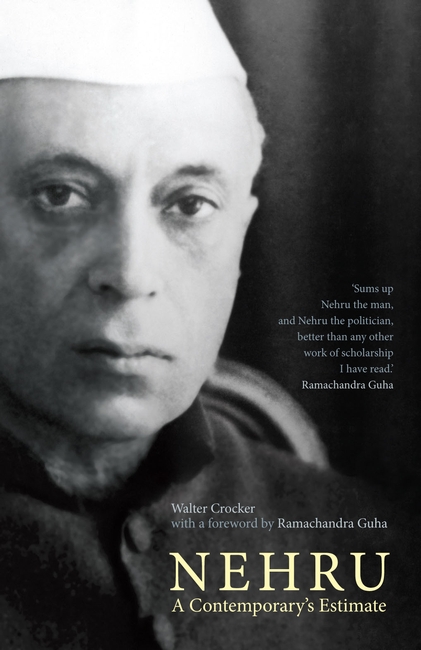
Elegant, perceptive, and startlingly prophetic, Nehru: A Contemporary’s Estimate is one of the finest accounts of Nehru ever written. Walter Crocker, the Australian high commissioner to India, admired Nehru the man—his grace, style, intelligence and energy—and was deeply critical of many of his political decisions—the invasion of Goa, India’s Kashmir policy, the Five Year Plans. This book, written shortly after Nehru’s death, is full of invaluable first hand observations about the man and his politics. Many of Crocker’s points, too—especially the implications of the Five Year Plans and of the introduction of democracy to India—are particularly relevant today. Out of print for many years, this classic biography has been reissued with an authoritative foreword by Ramachandra Guha.
Macaulay
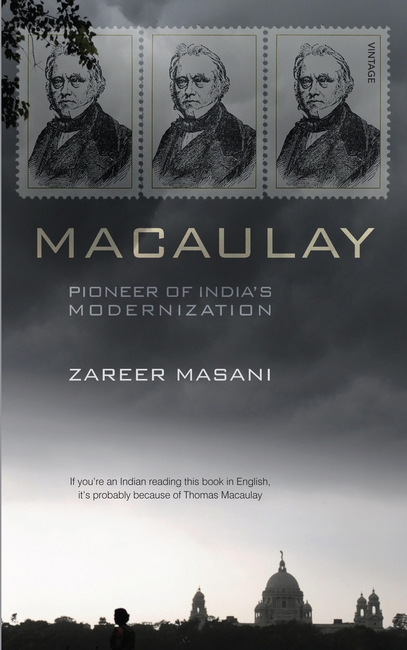
Thomas Macaulay is most famous for having introduced the English language as a medium for learning in India, creating a class of westernized Indians who are sometimes derisively referred to as ‘Macaulay’s children’. Was this an act of cultural imperialism or a modernizing move far before its time?
Macaulay has always inspired both admiration and hostility in India. Ever since he served on the Supreme Council of India in the 1830s, his thinking and policies have had a profound, transformative impact on the subcontinent. Today, some Dalit activists even celebrate him as their liberator from caste tyranny.
Macaulay is the first biography of this vastly influential figure for the general reader, giving a vivid sense of a brilliant, eccentric, contradictory man and his complex times. In a portrait that is as elegant as it is intriguing, Zareer Masani traces Macaulay’s fascinating journey from child prodigy, historian and parliamentary orator in London to imperial administrator in India, and then a revered elder statesman back in Britain. The reader is allowed a glimpse into what it felt like to be at the centre of power in a global empire, ruling over hundreds of millions of Indian subjects and shaping the destiny of a subcontinent.
Culture of Encounters
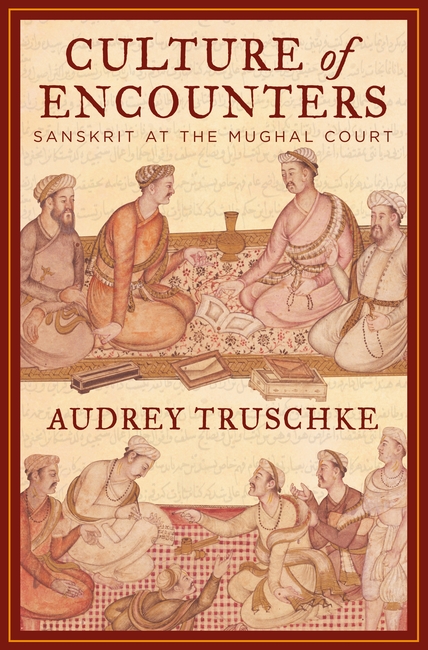
Told by the authority on the subject, Culture of Encounters gives us insight into how and why the Mughals-one of the most powerful imperial powers-poured immense energy into drawing Sanskrit thinkers to their courts, adopted and adapted Sanskrit-based practices, translated dozens of Sanskrit texts into Persian, and composed Persian accounts of Indian philosophy. Beginning with the invitation of Brahman and Jain intellectuals to King Akbar’s court, this incisive work details the numerous, Mughal-backed texts they produced under emperors Akbar, Jahangir, and Shah Jahan.
These cross-cultural encounters created a dynamic idea of Mughal rule essential to the empire’s survival. Many works, including Sanskrit epics and historical texts, were translated into Persian, elevating the political position of Brahmans and Jains and cultivating a voracious appetite for Indian writings throughout the Mughal world.
The first book to read these Sanskrit and Persian works in tandem, Culture of Encounters recasts the Mughal Empire as a multi-lingual state that collaborated with its Indian subjects to establish its role as an Indian empire. Revisiting a forgotten part of India’s history, Audrey Truschke certifies the critical role of the sociology of empire in building the Mughal polity, which came to shape the literary and ruling cultures of early modern India forever.