‘India is more than the sum of its contradictions. She is a myth and an idea, a dream and a vision, and yet very real and present and pervasive.’
No other country in the world embraces the extraordinary mixture of ethnic groups, the profusion of mutually incomprehensible languages, the varieties of topography and climate, the diversity of religions and cultural practices, and the range of levels of economic development quite like India does.
It truly is a wonder how India has not only managed to survive but thrive in this manner. The country is far from gaining the efficiency of a well-oiled machine, and yet, things always seem to be making some kind of headway. So how does it all work?
Read on as Shashi Tharoor, one of India’s most prolific writers, attempts to answer that question in ‘What is India?’
One minute before midnight on 1 January 1949, Nehru’s long battle with Jinnah ended. However, the rivalry they had bequeathed to their nations, and the world, had barely begun.
Even as Gandhi went on a fast until communal violence ended, Nehru and Jinnah were fighting their own battles on behalf of their countries, facing problems they hadn’t anticipated. Meanwhile, Kashmir was – and still remains – the roadblock to better relations between India and Pakistan. With Gandhi’s subsequent demise being projected as the death of a martyr, things were far from improving.
In this brilliantly detailed essay, Nisid Hajari explores the extent to which India’s and Pakistan’s early leadership defined the futures the two nations would eventually live through.
With talk of Partition emerged the most violent and horrific riots in the history of the subcontinent. From Calcutta to Bihar and Punjab, a crazy frenzy was taking over both Hindus and Muslims of a country that was still under British rule.
A situation that was quickly getting out of hand saw the leaders of the hour neither condemning nor making any attempts to stop the violence. Were these the leaders that would eventually lead India and Pakistan towards Independence? Did they know they were leaving behind a bloody legacy that would come to haunt generations of Indians and Pakistanis?
Read on to get an insight into the darkest time of India’s history just as she was getting ready for a new identity in the world.
Until the early 1900s, Hindus and Muslims of the subcontinent were united in their fight against the British, fighting for Independence. Eventually, with the formation of the Muslim League, and the leaderships of Jinnah and Nehru not quite in agreement with each other, it increasingly became evident that independence would come with the formation of two separate states: India and Pakistan.
Could the partition – an event that led to countless horrors – be pegged to two people, influential leaders in their own right? Or were there other factors, like the inability to imagine a populace so hungry for a bloodbath?
Read on to find out what led to Jinnah and Nehru becoming the faces of two nations that would emerge out of the struggle for Independence.

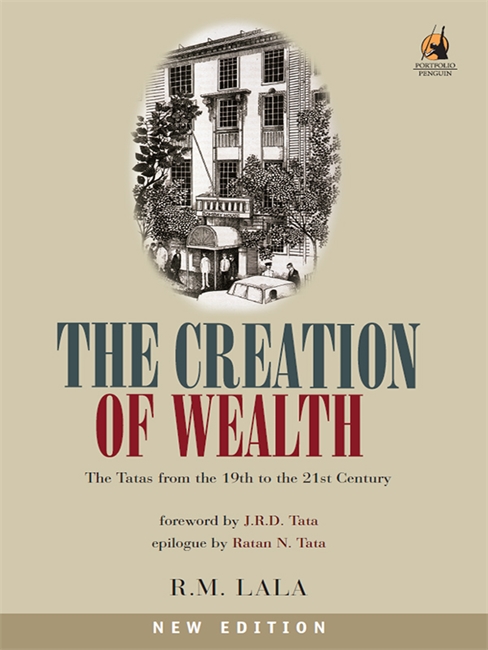
When Jamsetji Tat started a trading firm in 1868, few could have guessed that he was also starting an important chapter in the making of modern India. Jamsetji saw that the three keys to India’s industrial development were steel, hydroelectric power, and technical education and research. A century and a half later, the Tatas can claim with justice to have lined up to the vision of their founder.
This edition includes the story of how the Tatas, with Ratan Tata at the helm, have had to grapple with change in the post-1992 era of economic reforms, when the opening up of India to the world came as both a challenge and a blessing. In a frank epilogue, Ratan Tata talks about the difficulties he faced in implementing change, including resistance from his colleagues. This new edition also has a postscript on the Nano, which has given the most global prominence to the Tata brand.
The Creation of Wealth is R.M. Lala’s bestselling account of how the Tatas have been at the forefront in the making of the Indian nation-not just by their phenomenal achievements as industrialists and entrepreneurs but also by their significant contributions in areas like factory reforms, labour and social welfare, medical research, higher education, culture and arts, and rural development.

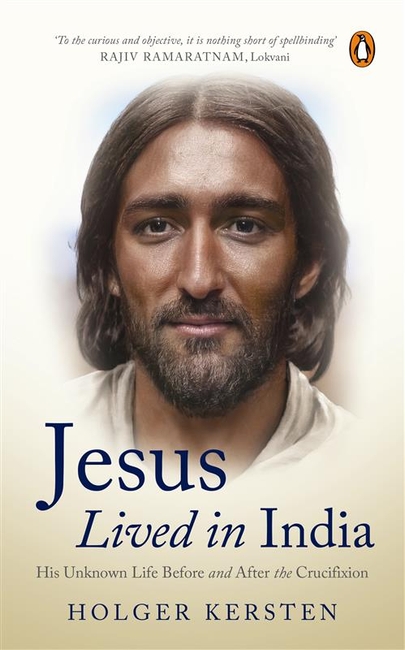
Is there any truth to the numerous claims that Jesus spent a large part of his life in India? Why has Christianity chosen to ignore its connections with the religions of the East? In this compelling work of investigative research, theologian Holger Kersten presents overwhelming evidence that provides answers to these intriguing questions.
Exploring the historical sites connected with Jesus in Israel, the Middle East, Afghanistan and India, Kersten’s detailed study discloses age-old links between the Israelites and the East and presents some startling revelations, including how Jesus survived the Crucifixion and, after the Resurrection, returned to Srinagar, India to die in old age, where he continues to be revered as a saintly man.
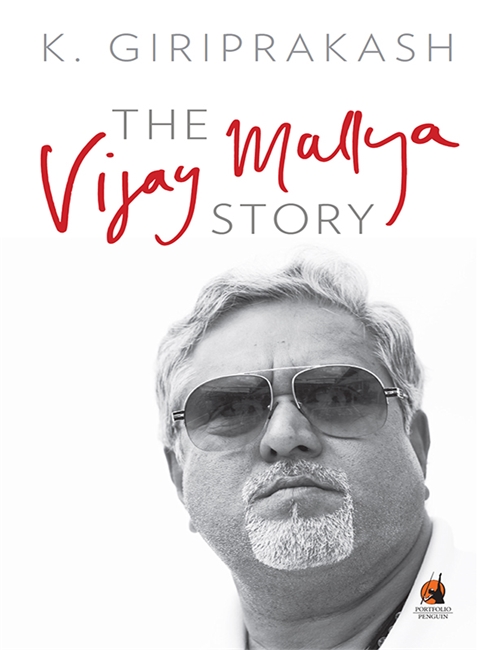
The Vijay Mallya Story is an extraordinarily detailed and lively chronicle of the life of one of India’s most celebrated and reviled businessmen, Vijay Mallya. His extraordinary career spans three decades and is spread across multiple industries. The book covers Mallya’s childhood, his relationship with his father and his inherent deal-making abilities. It tracks his meteoric rise with Kingfisher and how the airline led to his downfall.

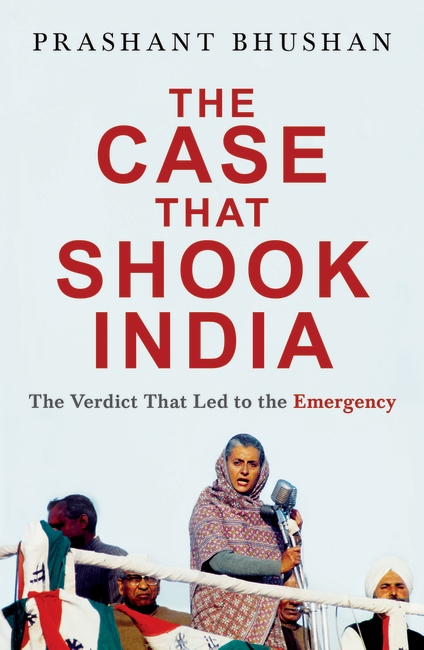
On 12 June 1975, for the first time in independent India’s history, the election of a Prime Minister was set aside by a High Court judgment. The watershed case, Indira Gandhi v. Raj Narain, acted as the catalyst for the imposition of the Emergency. Based on detailed notes of the court proceedings, The Case That Shook India is both a legal and a historical document of a case that decisively shaped India’s political destiny.
The author, advocate Prashant Bhushan, sets out to reveal the goings-on inside the court as well as the manoeuvrings outside it, including threats, bribes and deceit. Providing a blow-by-blow account, he vividly recreates courtroom scenes. As the case goes to the Supreme Court, we see how a ruling government can misuse legislative power to save the PM’s election.
Through his forceful and gripping narrative, Bhushan offers the reader a front-row seat to watch one of India’s most important legal dramas unfold.

The Greatest Story Ever Told
Dispute over land and kingdom may lie at the heart of this story of war between cousins-the Pandavas and the Kouravas-but the Mahabharata is about conflicts of dharma. These conflicts are immense and various, singular and commonplace. Throughout the epic, characters face them with no clear indications of what is right and what is wrong; there are no absolute answers. Thus every possible human emotion features in the Mahabharata, the reason the epic continues to hold sway over our imagination.
In this superb and widely acclaimed translation of the complete Mahabharata, Bibek Debroy takes us on a great journey with incredible ease.

The Mahabharata is one of the greatest stories ever told. Dispute over land and kingdom may lie at the heart of this story of war between cousins-the Kouravas and Pandavas-but the Mahabharata is about conflicts of dharma. These conflicts are immense and various, singular and commonplace. Throughout the epic, characters face them with no clear indications of what is right and what is wrong; there are no absolute answers. Thus every possible human emotion features in the Mahabharata, the reason the epic continues to hold sway over our imagination. In this superb and widely acclaimed translation of the complete Mahabharata. Bibek Debroy takes us on a great journey with incredible ease.