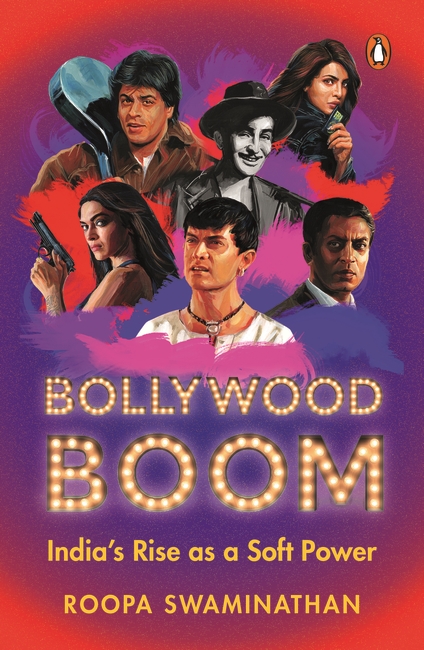
The world is feeling the impact of Bollywood like never before. From the Oscar-nominated Lagaan to Bajrangi Bhaijaan to Ae Dil Hai Mushkil, Bollywood has come a long way since the watershed Dilwale Dulhaniya Le Jayenge and the UK Top Ten debut of Kuch Kuch Hota Hai. Where earlier it was in Russia, East Europe and Africa where Raj Kapoor and Amitabh Bachchan enjoyed a devoted fan base, today the entire world is as entertained by the three
Khans as by the international stars Irrfan, Priyanka and Deepika.
In Bollywood Boom, National Award-winner Roopa Swaminathan opens a window to the spectacular success of Bollywood in the twenty-first century and its direct contribution to India’s rising soft power and influence. Using extensive research, a compelling argument and fun anecdotes, Roopa shows how Bollywood not only brings to the country real income through trade and tourism, but also enhances its global standing.

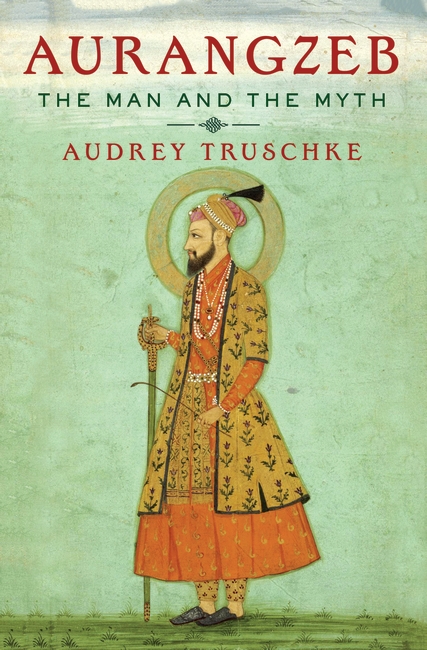
Aurangzeb Alamgir (r. 1658-1707), the sixth Mughal emperor, is widely reviled in India today. Hindu hater, murderer and religious zealot are just a handful of the modern caricatures of this maligned ruler. While many continue to accept the storyline peddled by colonial-era thinkers-that Aurangzeb, a Muslim, was a Hindu-loathing bigot-there is an untold side to him as a man who strove to be a just, worthy Indian king.
In this bold and captivating biography, Audrey Truschke enters the public debate with a fresh look at the controversial Mughal emperor.

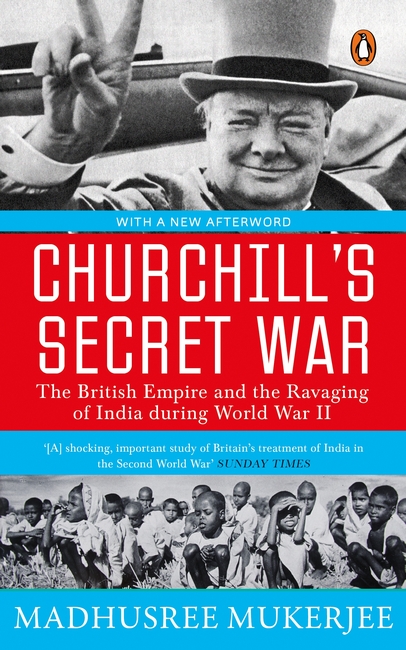
WITH A NEW AFTERWORD
Winston Churchill has been venerated as a resolute statesman and one of the great political minds of the last century. But, as Madhusree Mukerjee reveals in this groundbreaking historical investigation, his deep-seated bias against Indians precipitated one of the world’s greatest man-made disasters — the Bengal Famine of 1943 — resulting in the deaths of over four million Indians. Combining meticulous research with a vivid narrative, Churchill’s Secret War places this overlooked tragedy into the larger context of World War II, India’s freedom struggle and Churchill’s legacy.

The courts in India are struggling with a huge backlog of cases. As of 2016, there are 27 million pending cases and close to 90 million people are still waiting for justice.
To the common man, this is just a number. But some cases have impacted the collective conscious of the entire nation. These include the trial of Afzal Guru, the Nirbhaya case, the criminalization of homosexuality, the Parliament attack case, the Babri Masjid demolition and the 26/11 Mumbai attacks.
There was a lot that happened inside the courts during these trials which has remained hidden from public view. The Dramatic Decade is a collection of these stories. The book gives the reader a ringside view of what happened both inside and outside the courts. What were the arguments made, which lawyers fought the cases, what was the court’s judgment and how did it affect the common man are some of the many questions answered here.

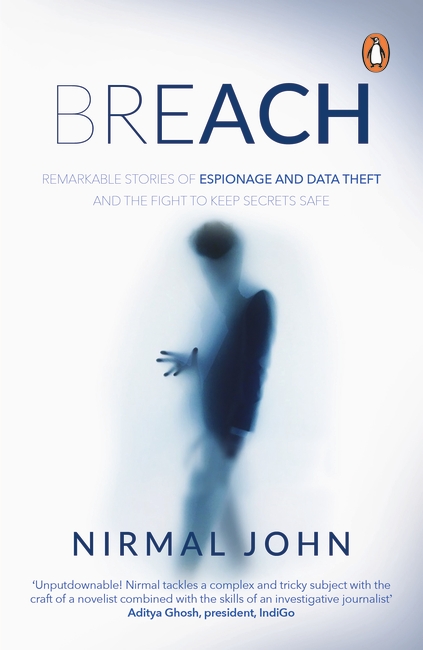
A journalist accused of hacking the inbox of a billionaire
A company which fought back when its data was stolen
An entrepreneur who fought an international battle to end piracy
A hacker who decided to take a start-up hostage by stealing its data
Full of riveting stories of hackers, police and corporates, Breach reads like a thriller. The book brings to light several incidents which till now were brushed under the carpet. It has instances of piracy, data theft, phishing, among many others.
Even though he focuses on India, Nirmal John takes great pains to show links between underground international networks working to undermine data security.

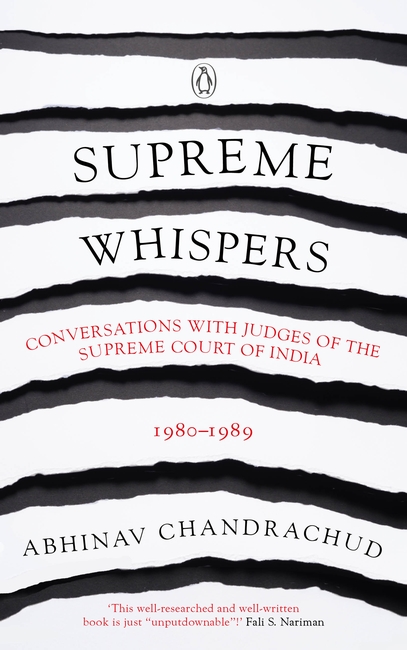
In 1980, a brilliant young American scholar, George H. Gadbois, Jr., met five judges of the Supreme Court of India. The judges gave him astonishing details: about what they actually thought of their colleagues, about the inner workings and politics of the court, their interactions with the government and the judicial appointments process, among many other things. This was only the beginning. Over the course of that decade, Gadbois visited India on two more occasions and conducted over 116 interviews with more than sixty-six judges of the Supreme Court of India (nineteen of whom held the post of chief justice of India),
and others such as senior lawyers, politicians, relatives of deceased judges, and court staff. During each meeting, Gadbois diligently took down handwritten notes, which he later typed up on his typewriter, recording nearly every detail of what the judges had told him, sometimes to a fault.
Relying on these typewritten interviews, Abhinav Chandrachud sheds light on a decade of politics, decision-making and legal culture in the Supreme Court of India. This book yields a fascinating glimpse into the secluded world of the judges of the Supreme Court in the 1980s and earlier.
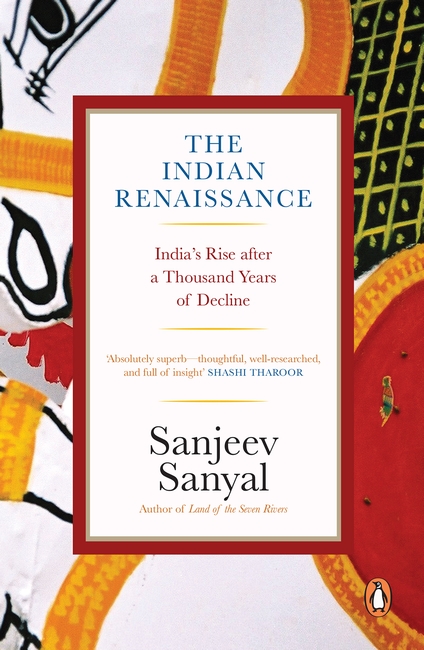
One thousand years ago, India was at the height of its power, influencing the world with its ideas and trade. Now, ten centuries later, India’s recent economic performance is once again attracting world attention as the country re-awakens not just as an economy but as a civilization.
In The Indian Renaissance: India’s Rise after a Thousand Years of Decline, Sanjeev Sanyal looks at the processes that led to ten centuries of decline. He also examines the powerful economic and social forces that are working together to transform India beyond recognition. These range from demographic shifts to rising literacy levels and, the most important revolution, the opening of minds and changed attitude towards innovation and risk-fundamental, if India is to take advantage of the twenty-first century.
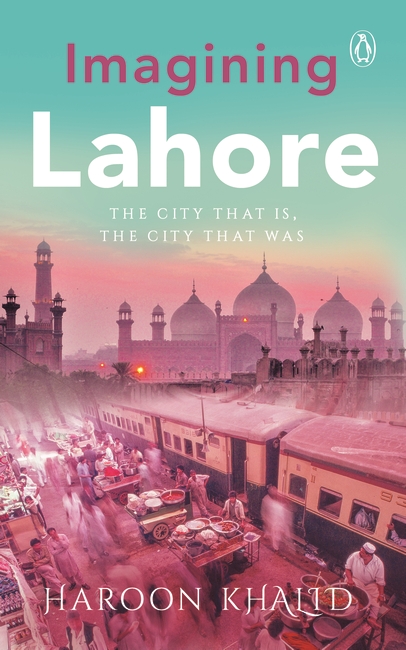
An anecdotal travelogue about Lahore – which begins in the present and travels through time to the mythological origins of the city attributed to Ram’s son, Lav. Through the city’s present – its people, communities, monuments, parks and institutions – the author paints a vivid picture of the city’s past. From its emergence under Mahmud Ghaznavi to the Mughal centuries where several succession intrigues unfolded on its soil, its recasting as the capital of Maharaja Ranjit Singh’s Khalsa Empire, the role it played in preserving the British Raj, to acting as an incubator of revolutionaries and people’s movements, Lahore influenced the subcontinent’s political trajectory time and again.
Today, too, Lahore often determines which way the wind will blow on Pakistan’s political landscape. The Lahore Resolution of 1940, which laid the blueprint for the creation of the country, was signed here. The city saw the birth of Zulfikar Ali Bhutto’s PPP, as well as his downfall. It was to Lahore that Benazir Bhutto returned to combat a military dictator, and where Imran Khan heralded his arrival as a main contender on the political battlefield. As the capital of Punjab, Lahore continues to cast a long shadow over the federal state.
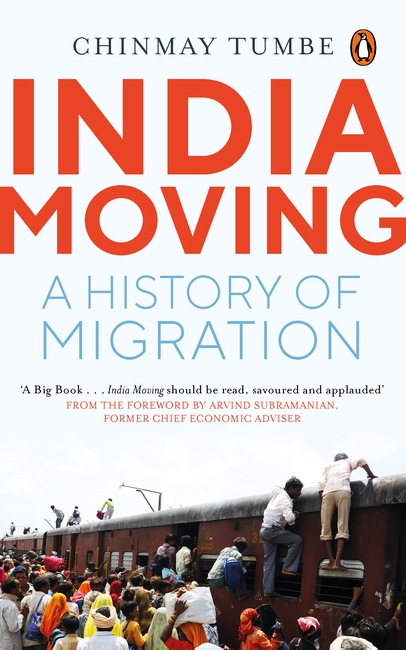
From adventure to indenture, martyrs to merchants, Partition to plantation, from Kashmir to Kerala, Japan to Jamaica and beyond,
the many facets of the great migrations of India and the world are mapped in India Moving, the first book
of its kind.
To understand how millions of people have moved-from, to and within India-the book embarks on a journey laced with evidence, argument and wit, providing insights into topics like the slave trade and migration of workers, travelling business communities such as the Marwaris, Gujaratis and Chettiars, refugee crises and the roots of contemporary mass migration from Bihar and Kerala, covering terrain that often includes diverse items such as mangoes, dosas and pressure cookers.
India Moving shows the scale and variety of Indian migration and argues that greater mobility is a prerequisite for maintaining the country’s pluralistic traditions.

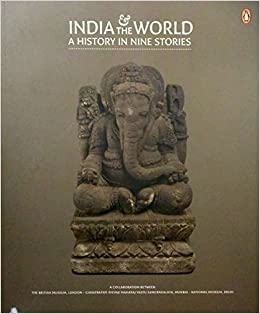
What is the earliest evidence of human history in India and how does that compare with other parts of the world? What was happening in India when the pyramids were being built in Egypt? What was different about Ashoka’s inscriptions when compared with the public inscriptions of other emperors? How have different civilizations pictured the divine? How did rulers promote themselves through grand court art and aesthetics? What have been the routes of civilizational exchange over land and sea that make India a part of the world? And have those exchanges always been peaceful? How have different countries and communities articulated their quest for freedom in recent history? Does everyone in the world perceive history and time in the same way?
Objects-be they coins, sculptures, documents or paintings-tell rich stories. India & the World accompanies a collaborative exhibition that creates dialogues between the world and India through a fascinating array of artefacts. On the one hand they reveal how different people have responded to situations in their own way, and on the other, they provide an understanding of the complex panorama of a deeply interconnected global history.