In the early years of the 21st century, China and India have emerged as world powers. In many respects, this is a return to the historical norm for both countries. For much of the early modern period, China and India were global leaders in a variety of ways. In this book, prominent scholars seek to understand modern China and India through an unprecedented comparative analysis of their long histories.
Using new sources, making new connections, and re-examining old assumptions, noted scholars of China and India pair up in each chapter to tackle major questions by combining their expertise. What China and India Once Were details how these two cultural giants arrived at their present state, considers their commonalities and divergences, assesses what is at stake in their comparison and, more widely, questions whether European modernity provides useful contrasts. In jointly composed chapters, contributors explore ecology, polity, gender relations, religion, literature, science and technology, and more, to provide the richest comparative account ever offered of China and India before the modern era. What China and India Once Were establishes innovative frameworks for understanding the historical and cultural roots of East and South Asia in the global context, drawing on the variety of Asian pasts to offer new ways of thinking about Asian presents.
It was in 1973 that G.B.S. Sidhu, a young official with the newly set-up Research and Analysis Wing (R&AW), took charge of the field office in Gangtok in 1973. With an insider’s view of the events that led to the Chogyal’s ouster, he presents a first-hand account of the fledgling democracy movement and the struggle for reforms led by Kazi Lhendup Dorji in a society that was struggling to come to terms with the modern world.
In his fast-paced, clear-sighted narrative, Sidhu tracks the reasons behind New Delhi’s shift from a long-standing pro-Chogyal stand to a pro-democracy position and maps the political alignments on the ground in Sikkim. He outlines the interplay of personalities-Indira Gandhi, the Chogyal, the Kazi, and the Indian officials and intelligence agencies involved-to reveal the chain of events that led to the merger of the Himalayan kingdom with India.

Queen Victoria was at the head of the Raj, Britain’s Indian empire, for much of her long reign. Passionately involved, she intervened in Indian politics, commissioned artists and photographers to record a landscape and people that she never saw herself, sent her sons as ambassadors to the subcontinent, and surrounded herself with the trappings of the Indian conquest, from the Koh-i-Noor diamond to her own Indian troop escort and servants.
Indian politics and society were in turn fundamentally reshaped by her influence: maharajas vied for her favour, missionaries used her as a tool for conversion and Indian reformers turned to her as a symbol of justice and equality. She also became an object of fascination and veneration: hundreds of popular biographies and tributes emerged from the vernacular printing presses, and her two jubilees of 1887 and 1897 were celebrated with unprecedented gusto.
In this new and original account, Miles Taylor charts the remarkable effects India had on the queen as well as the pivotal role she played in India. Drawing on official papers and an abundance of poems, songs, diaries and photographs, Taylor challenges the notion that Victoria enjoyed only ceremonial power and that India’s loyalty to her was without popular support. On the contrary, the rule of the queen-empress penetrated deep into Indian life and contributed significantly to the country’s modernisation, both political and economic.
In this subtle portrayal of Victoria’s India, Taylor suggests that the Raj was one of her greatest successes.

The stamping out of difference, the quelling of diversity and the burial of argument is, in fact, most un-Indian. Anyone who seeks to end that dialogue process is ignoring Indianness and patriotism. The liberal Indian argues for the rights of the marginalized in the tradition of Gandhi for trust, mutual understanding and bridge-building. Real patriotism lies in old-fashioned ideas of accommodation, friendship and generosity; not in force, muscle flexing and dominance. Why I Am a Liberal is Sagarika Ghose’s impassioned meditation on why India needs to be liberal.

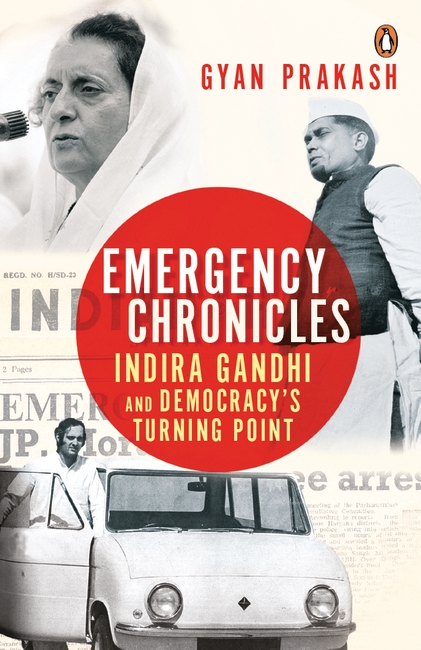
As the world once again confronts an eruption of authoritarianism, Gyan Prakash’s Emergency Chronicles takes us back to the moment of India’s independence to offer a comprehensive historical account of Indira Gandhi’s Emergency of 1975-77. Stripping away the myth that this was a sudden event brought on solely by the Prime Minister’s desire to cling to power, it argues that the Emergency was as much Indira’s doing as it was the product of Indian democracy’s troubled relationship with popular politics, and a turning point in its history.
Prakash delves into the chronicles of the preceding years to reveal how the fine balance between state power and civil rights was upset by the unfulfilled promise of democratic transformation. He explains how growing popular unrest disturbed Indira’s regime, prompting her to take recourse to the law to suspend lawful rights, wounding the political system further and opening the door for caste politics and Hindu nationalism.

A major new collection of essays by Ramachandra Guha, Democrats and Dissenters is a work of rigorous scholarship on topics of compelling contemporary interest, written with elegance and wit.
The book covers a wide range of themes: from the varying national projects of India’s neighbours to political debates within India itself, from the responsibilities of writers to the complex relationship between democracy and violence. It has essays critically assessing the work of Amartya Sen and Eric Hobsbawm, commentaries on the tragic predicament of tribals in India–who are, as Guha demonstrates, far worse off than Dalits or Muslims, yet get a fraction of the attention–and on the peculiar absence of a tradition of conservative intellectuals in India.
Each essay takes up an important topic or an influential intellectual, as a window to explore major political and cultural debates in India and the world. Democrats and Dissenters is a book that is widely read, and even more widely discussed.

Gandhi lived one of the great 20th-century lives. He inspired and enraged, challenged and delighted millions of men and women around the world. He lived almost entirely in the shadow of the British Raj, which for much of his life seemed a permanent fact, but which he did more than anyone else to bring down. In a world defined by violence and warfare and by fascist and communist dictatorships, he was armed with nothing more than his arguments and example. While fighting for national freedom, he also attacked caste and gender hierarchies, and fought (and died) for inter-religious harmony.
This magnificent book tells the story of Gandhi’s life from his departure from South Africa to his dramatic assassination in 1948. It has a Tolstoyan sweep, showing us Gandhi as he was understood by his contemporaries, with new readings of his arguments with (among others) Ambedkar, Jinnah, and Churchill, and new insights on our freedom movement and its many strands. Drawing on never-before-seen sources and animated by its author’s wonderful sense of drama and politics, Gandhi: The Years That Changed the World is the most ambitious book on the father of the nation.

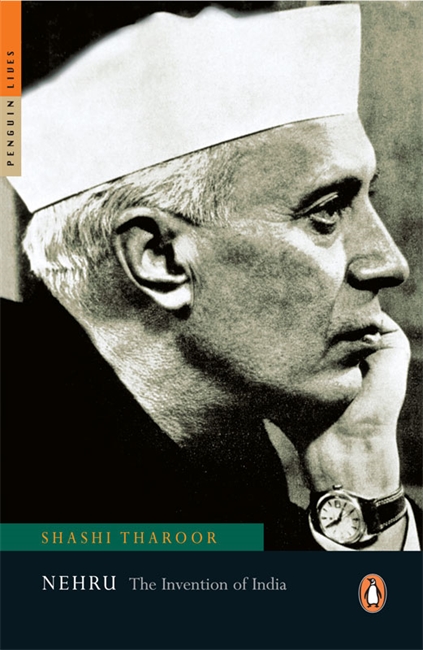
The author of India: From Midnight to the Millennium provides a close-up portrait of Jawaharlal Nehru, India’s first prime minister, the influential politician who led his newly independent nation from colonialism into the modern world, and his lasting legacy in terms of India’s history and world.

What happens to a highbrow literary culture when its fault lines-along caste, class and gender-are brutally exposed? What happens to the young iconoclasts who dare to speak and write about these issues openly? Is there such a thing as a happy ending for revolutionaries? Or are they doomed to be forever relegated to the footnotes of history?
This is the never-before-told true story of the Hungry Generation (or ‘the Hungryalists’)-a group of barnstorming, anti-establishment poets, writers and artists in Bengal in the 1960s. Braving social boycott, ridicule and arrests, the Hungryalists changed the literary landscape of Bengal (and many South Asian countries) forever. Along the way, they also influenced iconic poets, such as Allen Ginsberg, who struck up a lifelong friendship with the Hungryalists.

Champaran, 1845. Drawn to the rich, fertile land to farm Blue Gold, indigo, Alfred Augustus Tripe settles by the river Baghmati. A whole village of workers emerges nearby as Tripe starts a family with an Indian heiress. Nearly a century later, Tripe’s sprawling home and most of his family are destroyed in the devastating Bihar earthquake of 1934. Now his only granddaughter, Gladys, must find a way to stop her unscrupulous cousin Harry from usurping her entire inheritance and turning her young children destitute. A formidable dacoit leader miraculously comes to her rescue, India gains independence, and the flying foxes, the bearers of good fortune, disappear.
In sparkling, lyrical prose, Sylvia Dyer, Gladys’s daughter, brings to life a world of picturesque beauty, love and hope intertwined with social ills, and a time when the passionate freedom struggle threatened the very existence of Anglo-Indians in India.