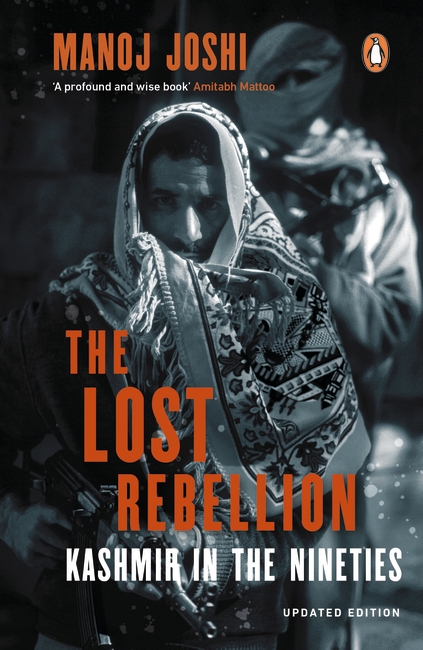
The Lost Rebellion is an acclaimed classic on the rise of Kashmir militancy, which chronicles how a simple call for azadi by bands of disgruntled youth was transformed within a year into a full-scale jihad against India. It dwells at length on Pakistan’s proxy war against India, exposes the US position on Kashmir and unsparingly critiques the political bungling and bureaucratic ineptitude that hamstrung the fight against insurgency.
This updated edition includes an insightful foreword by Amitabh Mattoo, a new introduction and a detailed aftermath chapter on what has transpired in the new millennium. Manoj Joshi reveals that although violence has come down drastically, there has been no closure to the nearly three-decade-old conflict. The alienation of the Kashmiris has, if anything, grown and is now manifesting itself in violent civil protest.
Raw, compelling and meticulously researched, The Lost Rebellion is a riveting account of the human drama that lies at the heart of the crisis that is Kashmir.
‘In its sheer wealth of detail it far surpasses anything that has been written so far’-Prem Shankar Jha
‘A compelling and breathtaking account’-Sumit Ganguly
‘The best book on the Kashmir militancy’-Ashok Banker

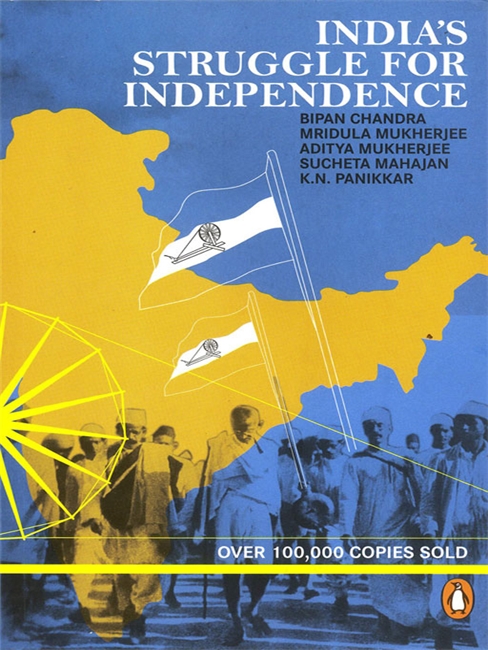
The definitive book on the Indian struggle for freedom by some of the most authoritative historians of modern India by best-selling author Bipin Chandra. Over 3,50,000 copies sold.
“Indispensable for students and for all those who want to know our past in order to understand the present” – Indian Express
India’s Struggle for Independence is the first and most reliable study of India’s epic struggle for freedom. This classic work begins with the abortive revolt against the British in 1857 and culminates in Indian Independence in 1947. Based on years of research as well as personal interviews with hundreds of freedom fighters, it presents a lucid and enduring view of the history of the period.

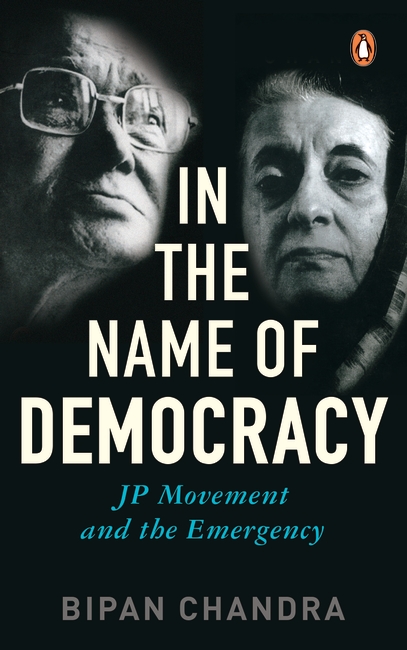
An unusual and insightful perspective of Indian democracy’s dark hour
‘When Jayaprakash Narayan, the leader of the JP movement in north India, pressed for the resignation of Prime Minister Indira Gandhi, it prompted her to impose internal Emergency. In this fascinating account, Bipan Chandra traces the events that led up to this moment and makes some startling revelations. He finds that there was a real danger of the JP movement turning fascist, given the fuzzy ideology of Total Revolution, its confused leadership and dependence on the RSS for its organization. At the same time, despite the authoritarianism inherent in the Emergency, particularly with the rising power of Sanjay Gandhi and his Youth Congress brigade, Indira Gandhi did end it and call for elections.
Finely argued, incisive and original, this book offers significant insight into those turbulent years and joins the ever-relevant debate on the acceptable limits of popular protest in a democracy.

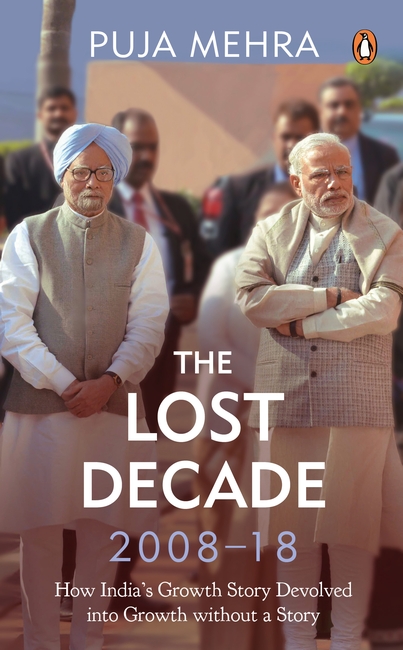
Before the global financial meltdown of 2008, India’s economy was thriving and its
GDP growth was cruising at an impressive 8.8 per cent. The economic boom impacted
a large section of Indians, even if unequally. With sustained high growth over an extended
period, India could have achieved what economists call a ‘take-off’ (rapid and
self-sustained GDP growth). The global financial meltdown disrupted this
momentum in 2008.
In the decade that followed, each time the country’s economy came close to returning
to that growth trajectory, political events knocked it off course.
In 2019, India’s GDP is growing at the rate of 7 per cent, making it the fastest-growing
major economy in the world, but little on the ground suggests that Indians are actually
better off. Economic discontent and insecurity are on the rise, farmers are restive and
land-owning classes are demanding quotas in government jobs. The middle
class is palpably disaffected, the informal economy is struggling and big businesses
are no longer expanding aggressively.
India is not the star it was in 2008 and in effect, the ‘India growth story’ has devolved
into ‘growth without a story’. The Lost Decade tells the story of the slide
and examines the political context in which the Indian economy failed to recover
lost momentum.

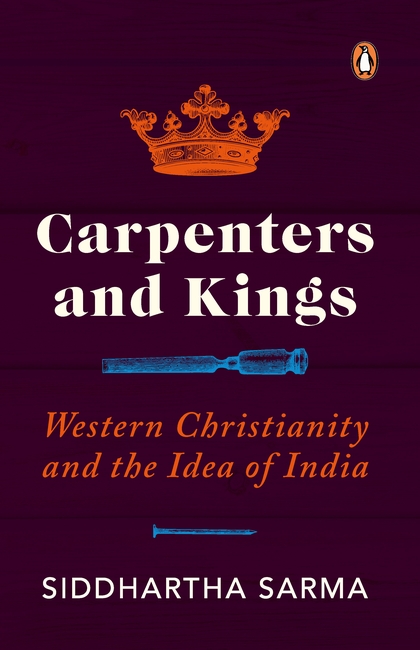
Jordanus Catalani, the first bishop of the Church of Rome in India, introduced the northern part of the subcontinent to his readers in fourteenth-century Europe in this manner. Two hundred years before the advent of Vasco da Gama, Western Christianity-which comprises the Catholic Church, the Anglican Communion and Protestant denominations today-had already arrived in India, finding among its diverse people and faiths the Church of the East already at home since the beginning of Christianity.
This is an account of how global events, including the Crusades and the Mongol conquests, came together to bring Western Christianity to India.
A gripping narrative of two diagonally opposite impulses in Christianity: of humble scholars trying to live the Christian ideal, and of ambitious ecclesiastical empire-builders with more earthly goals.
Carpenters and Kings is a tale of Christianity, and, equally, a glimpse of the India which has always existed: a multicultural land where every faith has found a home through the centuries.

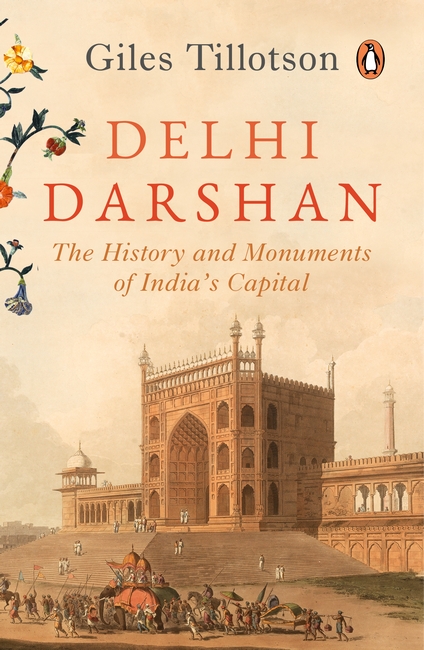
Giles Tillotson provides a fascinating account of Delhi’s built heritage, from the traces of the earliest settlements at Indraprastha, through the grand legacies of the Delhi Sultans and the great Mughals to the ordered symmetries of Lutyens’ Delhi and the towering skyscrapers of Gurgaon. Filled with quirky details and original insights, as well as a section on important monuments, this is a lively and informed account of the many fascinating twists and turns in the national capital’s built history and an original reflection on the many transformations of its urban landscape.
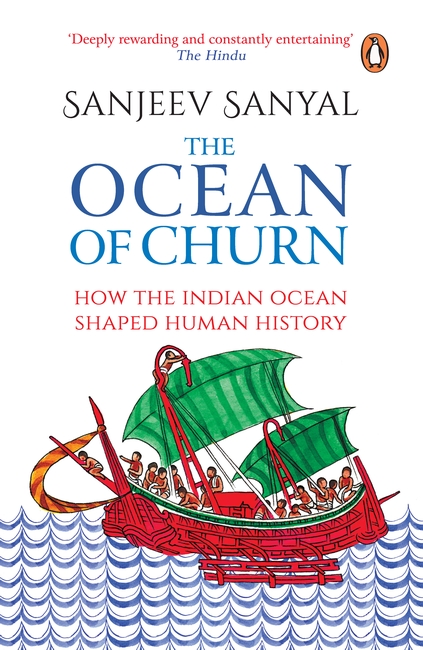
In this ambitious book, bestselling author Sanjeev Sanyal chronicles the grand sweep of history from East Africa to Australia, conjuring the great cities of Angkor and Vijayanagar, medieval Arab empires and Chinese ‘treasure fleets’ in rich, vivid detail. He explores remote archaeological sites, maritime trading networks and half-forgotten oral tales to challenge established historical narratives with fresh evidence. Shining new light on medieval geopolitics and long-lost cities, The Ocean of Churn is a mesmerizing journey into the heart of a vibrant civilization.

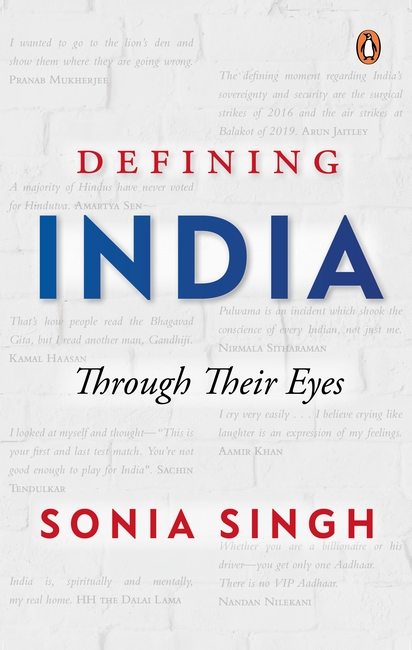
From Amartya Sen to Aamir Khan, Raghuram Rajan, Sachin Tendulkar, His Holiness the Dalai Lama, Pranab Mukherjee, Arun Jaitley, Nirmala Sitharaman and Sania Mirza among others, in this book eminent journalist Sonia Singh opens a window to the myriad worlds of these stalwarts, who share their idea of India in freewheeling conversations. Chatty, candid and amazingly gripping these 15 interviews uncover the pivotal moments in their lives that have become defining moments in the history of the nation.

Learn all about an exceptional way of life
The book aims to introduce teenagers to the armed forces, unveiling both the perils-the rigours and the challenges-and the perks-the thrill and the adventure-of a career in uniform. Ballroom dancing, flying fighter planes, detonating bombs, skinning and eating snakes in times of dire need and everything else in between-there’s nothing our officers can’t do!
Read twenty-one nail-biting stories of daring. Hear from some amazing men and women about what the forces have taught them-and decide if the olive-green uniform is what you want to wear too.

1965: Stories from the Second Indo-Pakistan War
On 1 September 1965, Pakistan invaded the Chamb district in Jammu and Kashmir, triggering a series of tank battles, operations and counter-operations. It was only the bravery and well-executed strategic decisions of the soldiers of the Indian Army that countered the very real threat of losing Kashmir to Pakistan. Recounting the battles fought by five different regiments, the narrative reconstructs the events of the 1965 Indo-Pakistan war, outlining details never revealed before, and remembers its unsung heroes.
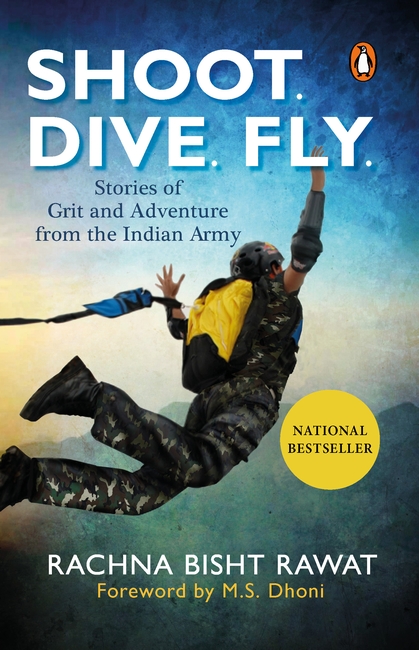
Shoot, Dive, Fly: Stories of Grit and Adventure from the Indian Army
SHOOT, DIVE, FLY aims to introduce teenagers to the armed forces and tell them about the perils-the rigours and the challenges-and perks-the thrill and the adventure-of a career in uniform. Ballroom dancing, flying fighter planes, detonating bombs, skinning and eating snakes in times of dire need, and everything else in between-there’s nothing our officers can’t do!. Read twenty-one nail-biting stories of daring. Hear from some amazing men and women about what the forces have taught them-and decide if the olivegreen uniform is what you want to wear too.
The Brave: Param Vir Chakra Stories
Twenty-one riveting stories about how India’s highest military honor was won. Talking to parents, siblings, children and comrades-in-arms to paint the most vivid character-portraits of these men and their conduct in battle and getting unprecedented access to the Indian Army, Rachna Bisht Rawat takes us to the heart of war, chronicling the tales of twenty-one of India’s bravest soldiers.