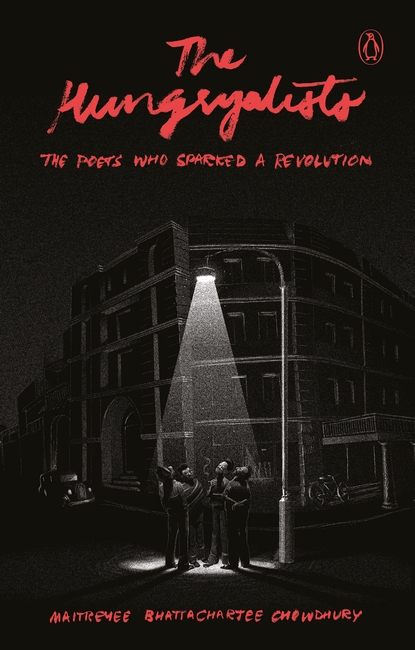
What happens to a highbrow literary culture when its fault lines-along caste, class and gender-are brutally exposed? What happens to the young iconoclasts who dare to speak and write about these issues openly? Is there such a thing as a happy ending for revolutionaries? Or are they doomed to be forever relegated to the footnotes of history?
This is the never-before-told true story of the Hungry Generation (or ‘the Hungryalists’)-a group of barnstorming, anti-establishment poets, writers and artists in Bengal in the 1960s. Braving social boycott, ridicule and arrests, the Hungryalists changed the literary landscape of Bengal (and many South Asian countries) forever. Along the way, they also influenced iconic poets, such as Allen Ginsberg, who struck up a lifelong friendship with the Hungryalists.

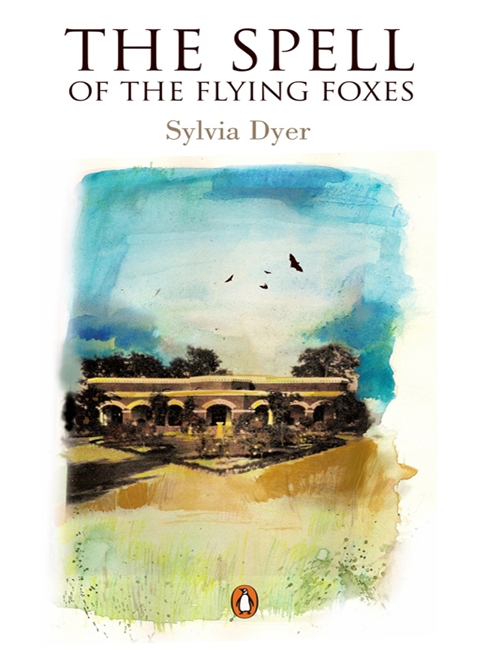
Champaran, 1845. Drawn to the rich, fertile land to farm Blue Gold, indigo, Alfred Augustus Tripe settles by the river Baghmati. A whole village of workers emerges nearby as Tripe starts a family with an Indian heiress. Nearly a century later, Tripe’s sprawling home and most of his family are destroyed in the devastating Bihar earthquake of 1934. Now his only granddaughter, Gladys, must find a way to stop her unscrupulous cousin Harry from usurping her entire inheritance and turning her young children destitute. A formidable dacoit leader miraculously comes to her rescue, India gains independence, and the flying foxes, the bearers of good fortune, disappear.
In sparkling, lyrical prose, Sylvia Dyer, Gladys’s daughter, brings to life a world of picturesque beauty, love and hope intertwined with social ills, and a time when the passionate freedom struggle threatened the very existence of Anglo-Indians in India.

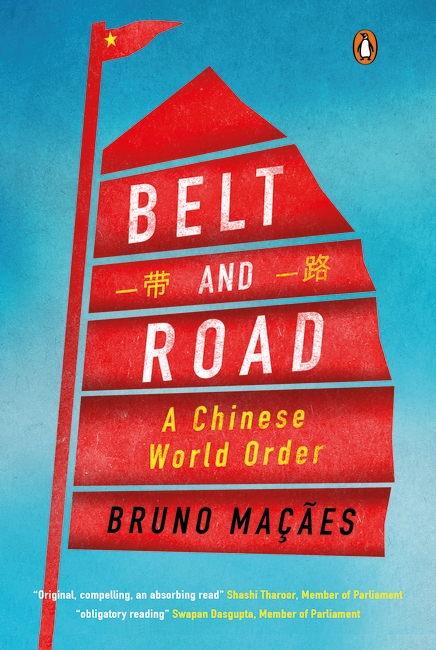
China’s Belt and Road strategy is acknowledged to be the most ambitious geopolitical initiative of the age. Covering almost seventy countries by land and sea, it will affect every element of global society from shipping to agriculture, digital economy to tourism and politics to culture. Most importantly, it symbolizes a new phase in China’s ambitions as a superpower: to remake the world economy and crown Beijing as the new centre of capitalism and globalization.
Bruno Macaes traces this extraordinary initiative’s history, highlighting its achievements to date and its staggering complexity. He asks whether Belt and Road is about more than power projection and profit. Will it herald a new set of universal political values, to rival those of the West? Is it, in fact, the story of the century?

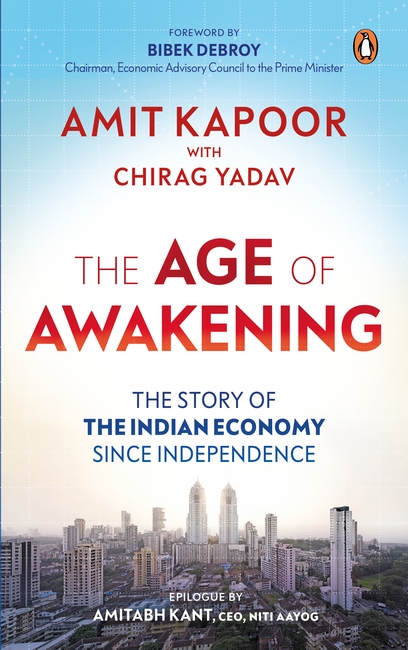
Indian leaders at the time of Independence had their tasks cut out. The nation that was marred by an ugly Partition, had to be prevented from coming apart at the seams. A Constitution had to be framed for a complex society. An election system had to be designed for an electorate that was mostly illiterate. An economic policy had to be shaped for a widely impoverished population.
Among these aspects, the success of India’s economic policy has been debatable. The economic path that India chose at that time is often questioned and criticised. It led to lacklustre growth outcomes which eventually ended in a full-blown crisis in 1991. Since then India has shifted gears. The economy has become more welcoming of the outside world and grown at a pace that has never been witnessed in its history.
But why did India make these choices? What was the role of our political leaders? Where did they falter and where did they succeed?
The Age of Awakening tells India’s economic story since the country gained independence. It unfolds a tale of titanic figures, colossal failures, triumphant breakthroughs and great moral shortcomings. Weaving together vivid history and economic analysis, this book makes for a gripping narrative.

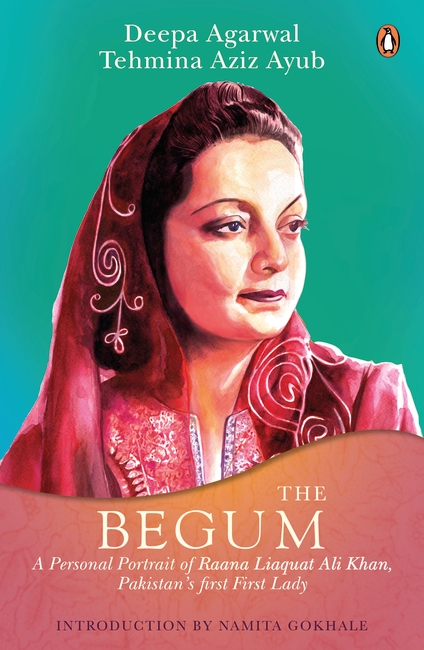
Begum Ra’ana Liaquat Ali Khan was the wife of Pakistan’s first prime minister. She was born
Irene Margaret Pant in Kumaon in the early twentieth century. A generation earlier, her family
had converted to Christianity, and Irene grew up in the shadow of the Brahmin community’s still
active outrage. Always intelligent, outgoing and independent, she was teaching economics in a
Delhi college when she met the dashing Nawazada Liaquat Ali Khan, a rising politician in the Muslim
League and an ardent champion of the cause for Pakistan.
She was immediately inspired by both the man and the idea; they married in 1933 and Irene Pant
became Ra’ana Liaquat Ali Khan. In August 1947 they left for Pakistan-led by Liaquat’s mentor
and friend, Mohammad Ali Jinnah. Ra’ana threw herself into the work of nation building, but in
1951 Liaquat Ali Khan was assassinated, and the reasons for his murder are still shrouded in mystery.
Ra’ana continued to be active in public life-and her contribution to women’s empowerment in
Pakistan is felt to this day.
Ra’ana’s life story embodies all the major tropes of the Indian subcontinent’s recent history.
Three religions-Hinduism, Christianity and Islam-had an immense impact on her life,
and she participated actively in all the major movements of her time-the freedom struggle,
the Pakistani movement and the fight for women’s empowerment. She could see clearly what went
wrong after 1947 and wasn’t afraid to say so. She spoke out openly against the rise of religious
conservatism in Pakistan and the growing role of corruption. She occasionally met with opposition,
but she never gave up. It is this spirit that The Begum captures.

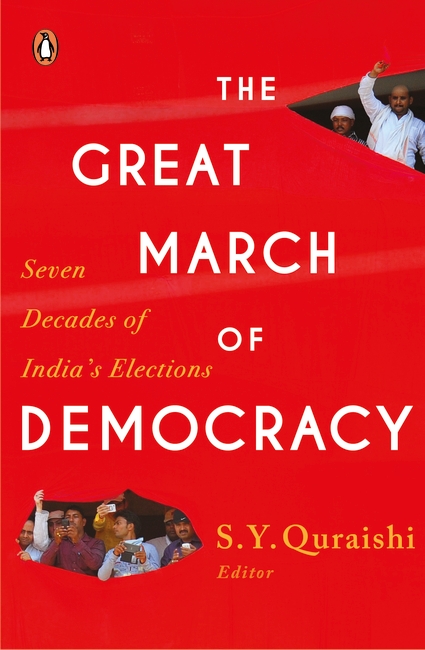
As India gears for its seventeenth Lok Sabha elections in 2019, the Election Commission of India, guardian of the world’s grandest electoral experiment, marks the beginning of its seventieth year. This book celebrates seven decades of India’s vibrant democracy and the Election Commission’s excellence and rigour, with a remarkable collection of essays written by those who have studied India’s unique experiment in electoral democracy, as well as analysts, politicians, social workers, activists, businesspersons and public servants.
The essays in this book cover a range of subjects, from the evolution of the Election Commission, the exciting story of the first electoral roll, election laws, the deepening of democratic institutions over the decades to the participation revolution ushered in by the Election Commission’s untiring and targeted efforts at voter education. Contemporary issues, such as the corrupting influence of money and the creeping criminalization in politics, have been addressed, as have been the electoral reforms proposed by experts on these subjects. There is a peek into how India’s experience with elections has inspired its neighbours Nepal and Bhutan and impacted observers who have had a chance to witness, first-hand, the mammoth exercise held in the largest democracy on the planet.
The diversity of perspectives from keen observers of India’s democracy makes this volume an enthralling read.

India may widely be acknowledged as one of the fastest-growing major economies in the world, but how can this vast, diverse and heavily populated nation sustain growth prospects? Game India offers a decisive answer.
Through chapters, at once ambitious and engaging, it outlines seven key unrealized opportunities India can pursue to remain a leading player on the world economic superhighway: solar power; an enviable coastline and waterways; milk; agriculture; a huge population that, among other things, can yield methane; innovation; and unleashing human potential through education, justice and health.
In studying these seven strategic advantages, the book explores what has been done (or not done) thus far to exploit them, what potential they hold out for people, and how they could redefine the game for this country.
Weaving together industry lore, keenly analyzed data, and one-on-one interviews with corporate moguls-from Verghese Kurien and the Pais of Manipal to Gautam Adani and Brij Mohan Munjal-Game India is essential reading for every Indian looking ahead.
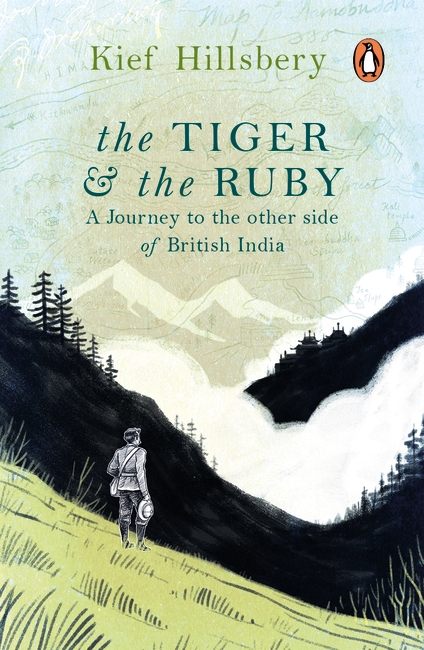
In 1841, Nigel Halleck left Britain as a clerk in the East India Company. He served in the colonial administration for eight years before leaving his post, eventually disappearing in the mountain kingdom of Nepal, never to be heard from again.
A century-and-a-half later, Kief Hillsbery, Nigel’s nephew many times removed, sets out to unravel the mystery. Tracing his ancestor’s journey across the subcontinent, his quest takes him from Lahore to Calcutta, and finally to the palaces of Kathmandu. What emerges is an unexpected personal chapter in the history of the British Empire in India.
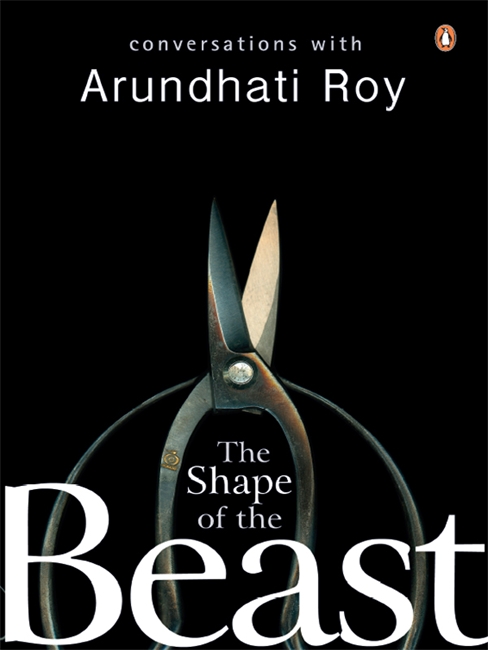
The Shape of the Beast is our world laid bare, with great courage, passion and eloquence, by a mind that has engaged unhesitatingly with its changing realities, often anticipating the way things have moved in the last decade. In the fourteen interviews collected here, conducted between January 2001 and March 2008, Arundhati Roy examines the nature of state and corporate power as it has emerged during this period, and the shape that resistance movements are taking. As she speaks, among other things, about people displaced by dams and industry, the genocide in Gujarat, Maoist rebels, the war in Kashmir and the global War on Terror, she raises fundamental questions about democracy, justice and non-violent protest. Unabashedly political, this is also a deeply personal collection. Through the conversations, Arundhati talks about the necessity of taking a stand, as also the dilemma of guarding the private space necessary for writing in a world that demands urgent, unequivocal intervention. And in the final interview, she discusses with uncommon candour her ambiguous feelings about success and both the pressures and the freedom that come with it.

‘The terse, typewritten note slipped under my door in a sealed envelope confirmed my appointment with “India’s single biggest internal security challenge”. I’d been waiting for months to hear from them…’ In early 2010, Arundhati Roy travelled into the forests of Central India, homeland to millions of indigenous people, dreamland to some of the world’s biggest mining corporations. The result is this powerful and unprecedented report from the heart of an unfolding revolution.