



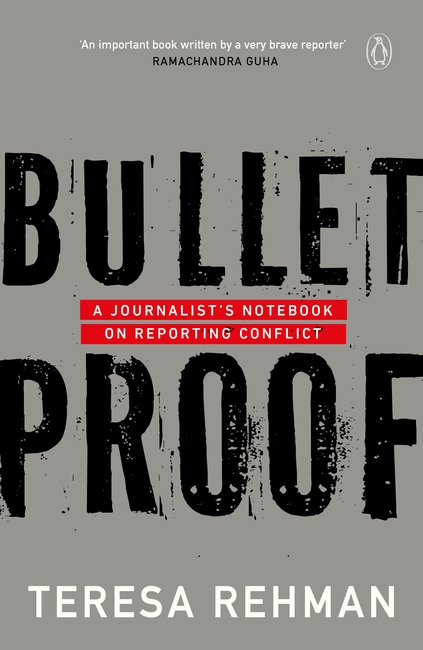
A first-of-its-kind account, Bulletproof is the story of a female combat journalist and her encounters with insurgency from north-east India. Going beyond mere statistics, of deaths and arms recovered, and other documentary evidence, it shows us how conflict impacts women, children, health, environment, sanitation, wildlife and society. This book is a collection of rare human stories from one of the most under-reported regions in the world.
Catagory: History
Trial by Fire (Hindi):Agnipareeksha
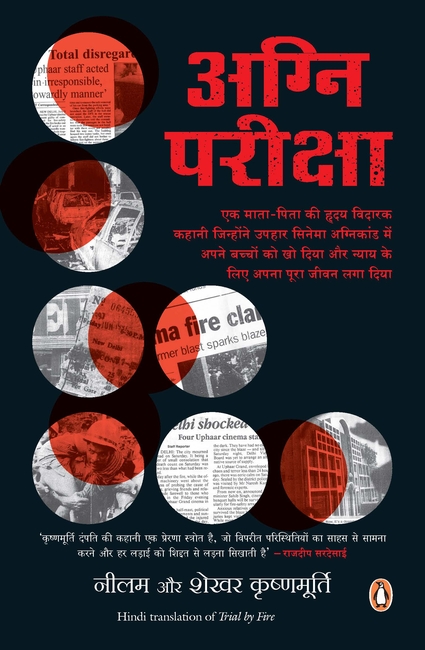
At 4:55 p.m., a swirling mass of thick, smoke engulfed the balcony section a well-known cinema hall in posh south Delhi. In the absence of fire exits and ushers to help the patrons, the people seated on the balcony found themselves trapped. By 7 p.m., fifty-nine people had died.
Among these were Unnati and Ujjwal. Their parents, Neelam and Shekhar, decided to fight the prolonged battle to ensure their kids get justice, for they saw no other reason to live. It’s been twenty-one years now, since the fire. But their fight with justice, for justice continues. This is their story.
The Rise of Goliath
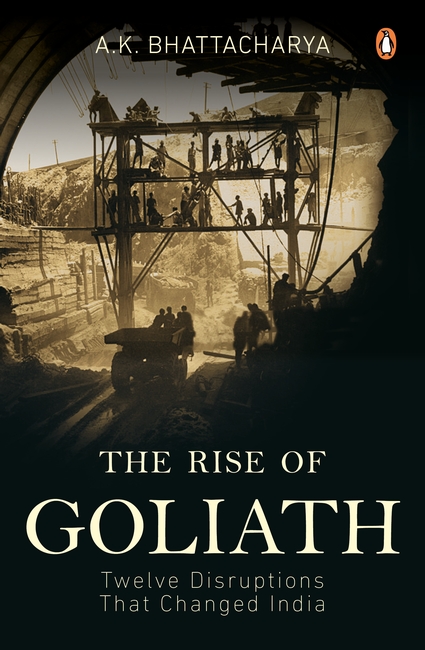
What can best illustrate India’s journey in the last seven decades? Disruptions.
Almost every decade of India’s history since Independence has been marked by major disruptions.
India became independent through an act of disruption-Partition-that killed millions in communal violence and turned many more into refugees. The turn towards a model of state-led economic development delivered as big a shock to the economy as did the food crisis or the spike in crude oil price. If the Emergency in 1975 shook the foundations of India’s democracy, the unprecedented balance-of-payments crisis of 1990 turned India towards a path of economic reforms. Just as the reservation of jobs for backward castes changed the idiom of India’s politics, the movement for building a temple for Ram drove India closer to becoming a majoritarian state. No less disruptive have been the telecom revolution, the banking crisis, demonetization and the launch of the goods and services tax.
How did these disruptions impact India? How did they influence the rise of this Goliath?
This is the story of twelve disruptions that changed India. The book also provides a peek into the kind of disruptions India could face in the coming years.
India and the Cold War
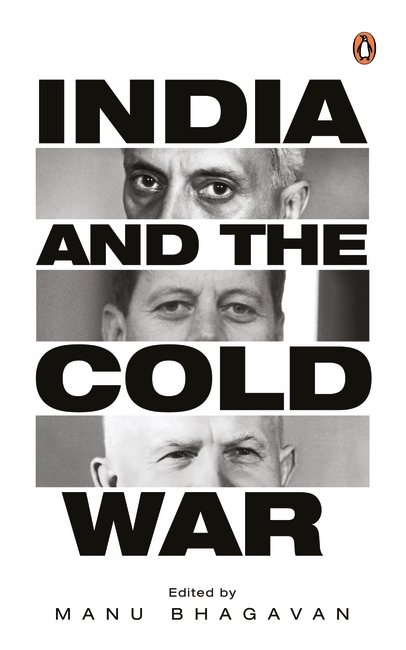
Contributors draw on a wide array of new material, from recently opened archival sources to literature and film, and meld approaches from diplomatic history to development studies to explain the choices India made and to frame the decisions by its policymakers. Together, the essays demonstrate how India became a powerful symbol of decolonization and an advocate of non-alignment, disarmament and global governance as it stood between the United States and the Soviet Union, actively fostering dialogue and attempting to forge friendships without entering into formal alliances. Sweeping in its scope yet nuanced in its analysis, this is the authoritative account of India and the Cold War.
River of Smoke: From bestselling author and winner of the 2018 Jnanpith Award
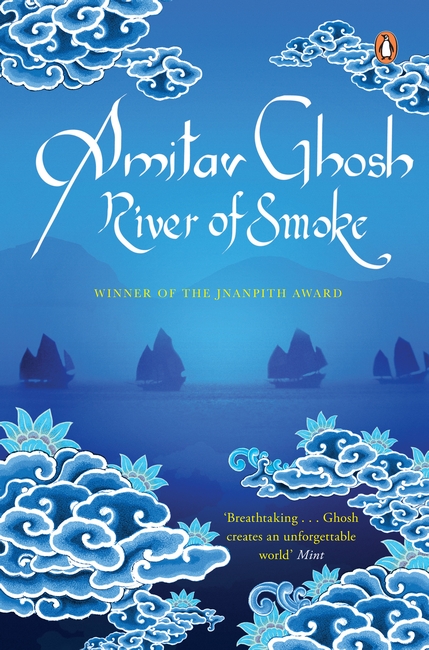
September 1838. A storm blows up on the Indian Ocean and three ships–the Ibis, the Anahita and the Redruth–and those aboard are caught in the whirlwind.
River of Smoke follows the fortunes of these men and women to the crowded harbours of China where they struggle to cope with their losses–and, for a few, unimaginable freedoms–in the alleys and teeming waterways of nineteenth-century Canton.
Written on the grand scale of a historical epic, River of Smoke, book two in the Ibis trilogy, will be heralded as a masterpiece of twenty-first-century literature.
Sea Of Poppies: From bestselling author and winner of the 2018 Jnanpith Award
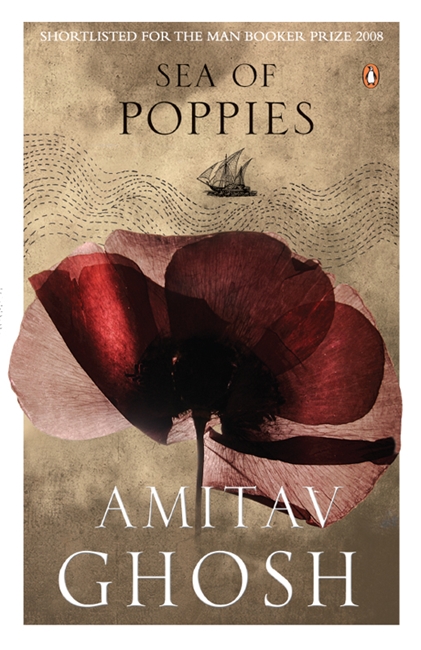
A motley array of sailors and stowaways, coolies and convicts is sailing down the Hooghly aboard the Ibis on its way to Mauritius. As they journey across the Indian Ocean old family ties are washed away, and they begin to view themselves as jahaj-bhais or ship brothers who will build new lives for themselves in the remote islands where they are
being taken. A stunningly vibrant and intensely human work, Sea of Poppies, the first book in the Ibis trilogy, confirms Amitav Ghosh’s reputation as a master storyteller.
Democracy, Interrupted
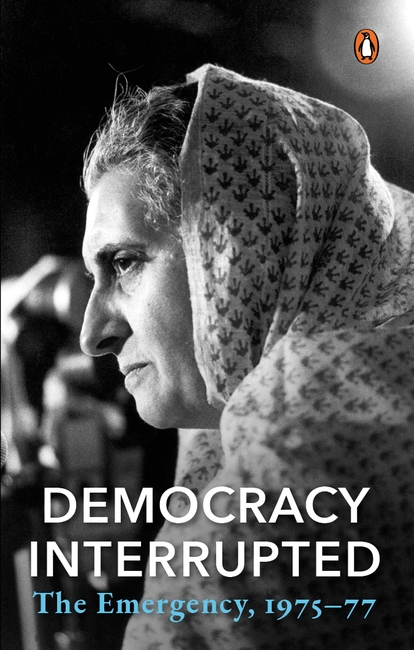
The imposition of the Emergency was a turning point in independent India’s history. Democracy was directly challenged as fundamental liberties of citizens were suspended, press was gagged and political opponents hounded by the state machinery.
In this compelling volume, five experts bring together diverse perspectives-legal, political, historical, personal, social-to shed light on the cause and aftermath of this catastrophic decision. Prashant Bhushan vividly recreates the watershed case of Indira Gandhi vs Raj Narain that led to the Emergency; Gyan Prakash offers a comprehensive historical account of the growing popular unrest that disturbed Indira’s regime; Coomi Kapoor details how she personally experienced the full fury of the establishment as her husband was arrested over a trifle; and Ajoy Bose and John Dayal, both staff reporters at the time, provide first-hand evidence of the destruction unleashed in the bylanes of Delhi.
In his illuminating introduction, Sanjaya Baru describes how the Emergency exposed the weak links in the constitutional armour-it now serves as a constant reminder to each generation to keep a constant vigil over its freedoms.
The Tata Saga
How did Jamsetji Tata win over British resistance to start Tata Steel?
How did JRD lose control of Air India?
Why did Ratan Tata face opposition to become the chairman of Tata Sons?
What happened inside the Taj Hotel on 26/11?
The Tata Saga is a collection of handpicked stories published on India’s most iconic business group. The anthology features snippets from the lives of various business leaders of the company: Ratan Tata, J.R.D. Tata, Jamsetji Tata, Xerxes Desai, Sumant Moolgaokar, F.C. Kohli, among others. There are tales of outstanding successes, crushing failures and extraordinary challenges that faced the Tata Group.
These riveting business stories, by some of India’s top writers on the subject, bear testament to the ruthless persistence and grit of the Tata Group and make for an incredible collector’s edition.
The Great Repression
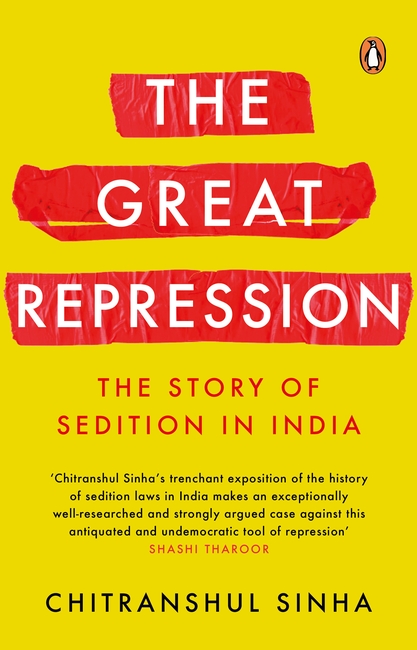
The Indian Penal Code was formulated in 1860, three years after the first Indian revolt for independence. It was the country’s first-ever codification of offences and penalties. But it was only in 1870 that Section 124A was slipped into Chapter VI (‘Of Offences against the State’), defining the offence of ‘Sedition’ in a statute for the first time in the history of common law.
When India became independent in 1947, the Constituent Assembly expressed strong reservations against sedition as a restriction on free speech as it had been used as a weapon against freedom fighters, many of whom were a part of the Assembly. Nehru vocally opposed it. And yet, not only has Section 124A survived, it has been widely used against popular movements and individuals speaking up against the establishment.
Where did this law come from? How did it evolve? And what place does it have in a mature democracy? Concise, incisive and thoughtful, The Great Repression by Chitranshul Sinha, an advocate on record of the Supreme Court of India, tells the story of this outdated colonial-era law.
Assam
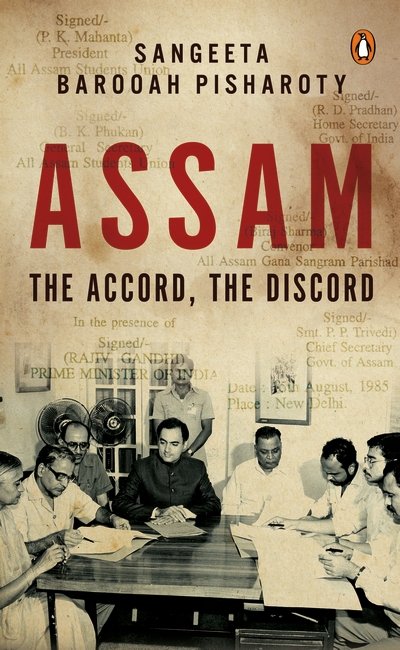
The Assam Accord, which sought to end a six-year-long agitation against illegal immigrants in Assam, was signed between members of the All Assam Students Union (AASU), and state and central governments just a few hours before Rajiv Gandhi was to deliver the Independence Day address in 1985. Immediately afterwards, the student leaders were catapulted from their hostel rooms into the corridors of power. Their party, the Asom Gana Parishad (AGP), was voted to power the same year, with Prafulla Kumar Mahanta becoming the youngest ever chief minister of an Indian state.
Key clauses of the Assam Accord remained unimplemented during Mahanta’s often controversial tenures (1985-1990, 1996-2001), and through three terms of Congress rule, which ended with the BJP’s victory in the state in 2016. Central to the Accord was deportation of those who could not prove their roots in India prior to 24 March 1971. In 2015, the process of updating the National Register of Citizens (NRC) based on the 1971 cut-off of the Accord began. The first list was released in December 2017, and did not include 14 million names.
Assam: The Accord, The Discord looks at the making of the Assam Accord and its long shadow on the state, through political gamesmanship between principle players, periods of ULFA and Bodo militancies, and right-wing propaganda that has split the state along communal lines.