



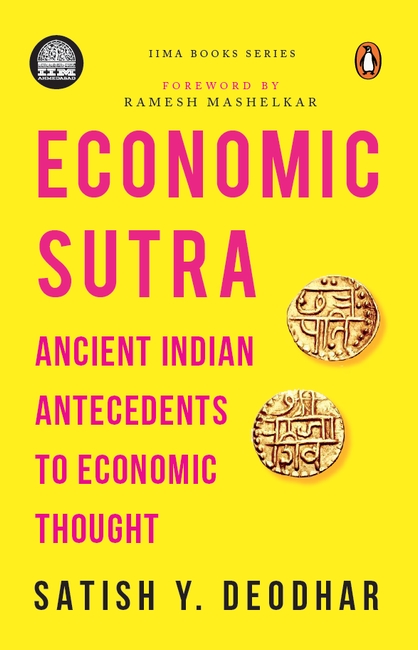
A general perception exists that ancient Indian literature on economic matters is fatalistic and an admixture of sacred and secular thoughts. Economic Sutra provides a comprehensive perspective on the elements of Indian economic thought leading up to and after the Arthashastra. Economic Sutra is a perception-correction initiative to distil the Indian mind in the realm of economic thoughts and behaviour as brought out by the ancient Indian authors. It highlights the broader spread of economic ideas both prior to and sometime after Kautilya, giving insights into the purpose, actions and vision of our forefathers.
Catagory: History
Savarkar (Part 1)
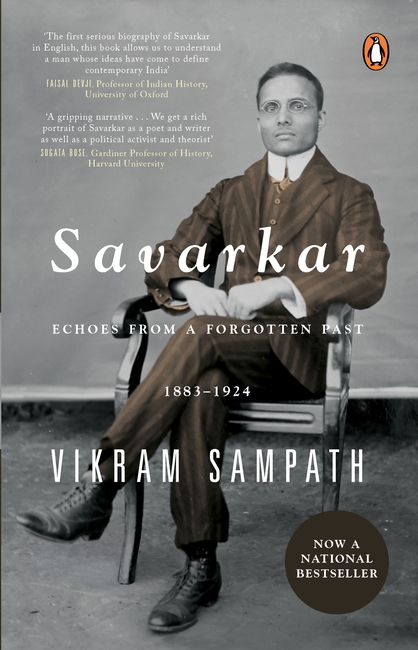
As the intellectual fountainhead of the ideology of Hindutva, which is in political ascendancy in India today, Vinayak Damodar Savarkar is undoubtedly one of the most contentious political thinkers and leaders of the twentieth century. Accounts of his eventful and stormy life have oscillated from eulogizing hagiographies to disparaging demonization. The truth, as always, lies somewhere in between and has unfortunately never been brought to light. Savarkar and his ideology stood as one of the strongest and most virulent opponents of Gandhi, his pacifist philosophy and the Indian National Congress.
An alleged atheist and a staunch rationalist who opposed orthodox Hindu beliefs, encouraged inter-caste marriage and dining, and dismissed cow worship as mere superstition, Savarkar was, arguably, the most vocal political voice for the Hindu community through the entire course of India’s freedom struggle. From the heady days of revolution and generating international support for the cause of India’s freedom as a law student in London, Savarkar found himself arrested, unfairly tried for sedition, transported and incarcerated at the Cellular Jail, in the Andamans, for over a decade, where he underwent unimaginable torture.
From being an optimistic advocate of Hindu-Muslim unity in his treatise on the 1857 War of Independence, what was it that transformed him in the Cellular Jail to a proponent of ‘Hindutva’, which viewed Muslims with suspicion?
Drawing from a vast range of original archival documents across India and abroad, this biography in two parts-the first focusing on the years leading up to his incarceration and eventual release from the Kalapani-puts Savarkar, his life and philosophy in a new perspective and looks at the man with all his achievements and failings.
The Strangers Of The Mist
A classic on the festering issues in the North-east
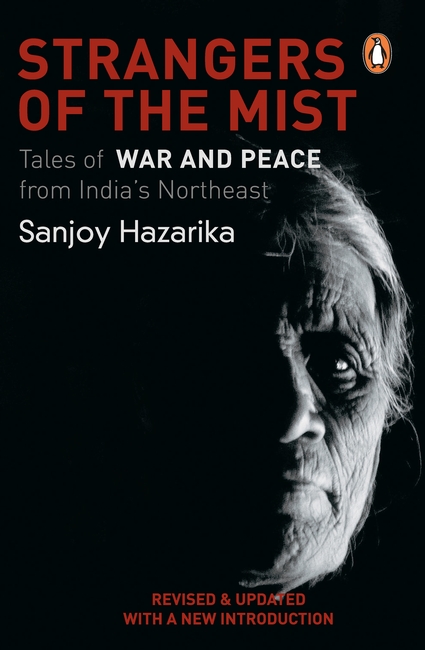
In this insightful book, Hazarika systematically presents the developments in Assam and the neighbouring regions, from post-Independence onwards to the present day. He sheds light on possible causes and factors behind ethnic clashes, separatist outbreaks and political unrest, that this region has come to be known for. He candidly discusses the issue of migrating refugees from nearby countries to the north-eastern states, which has caused tension between the many ethnicities in these states. With a balanced and clear-eyed view, Hazarika urges the reader to take heed of the urgent situation in the region. Strangers of the Mist is considered a classic on the issues facing the North-east.
India Unbound
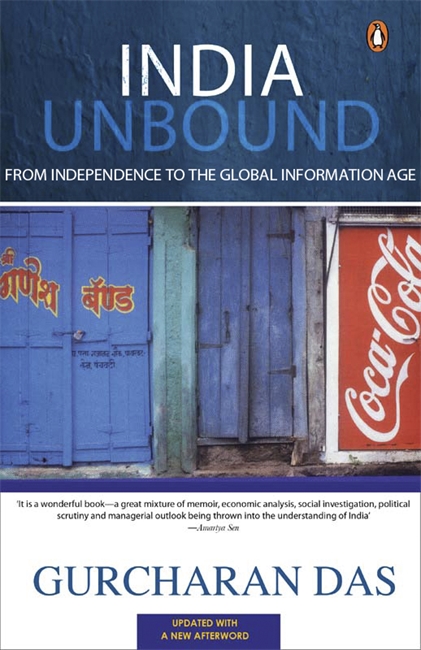
India Unbound is the riveting story of a nation’s rise from poverty to prosperity and the clash of ideas that occurred along the way. Gurcharan Das examines the highs and lows of independent India through the prism of history, his own experiences and those of numerous others he has met-from young people in sleepy UP villages to chiefs of software companies in Bangalore. Defining and exploring the new mindset of the nation, India Unbound is the perfect introduction to contemporary India.
The Great Game in the Buddhist Himalayas
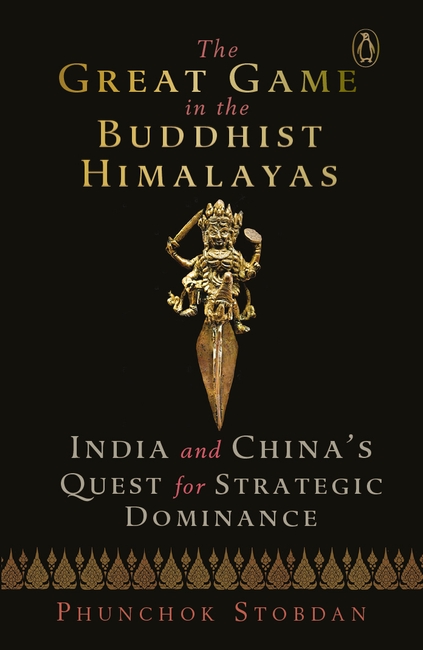
There is a new ‘great game’ being played in the Buddhist Himalayas between India, China and Tibet, which makes for a crucial third player. Together, they are leveraging their influence with the Buddhist communities to create strategic dominance, with varying degrees of success.
China’s ‘Buddhist diplomacy’ has focused on Nepal and Bhutan, and the Indian Himalayan regions of Ladakh, Arunachal Pradesh and Sikkim, which have sizeable Buddhist populations and are vulnerable to this influence. The crisis in Doklam brought into focus what will be one of the most difficult issues to unfold in the Himalayas in future: India’s insufficient ability to deal with China only through the prism of military power.
If Xi Jinping, who is known to be working towards a resolution of the Tibet question, succeeds, and the Dalai Lama does indeed return to Tibet, how will it impact Indian interests in the Buddhist Himalayas? If the Tibet issue remains unresolved, how will India and China deal with and leverage the sectarian strife that is likely to intensify in a post-Dalai Lama world?
The Great Game in the Buddhist Himalayas includes several unknown insights into the India-China, India-Tibet and China-Tibet relationships. It reads like a geopolitical thriller, taking the reader through the intricacies of reincarnation politics, competing spheres of sacred influence, and monastic and sectarian allegiances that will keep the Himalayas on edge for years to come.
Dharma
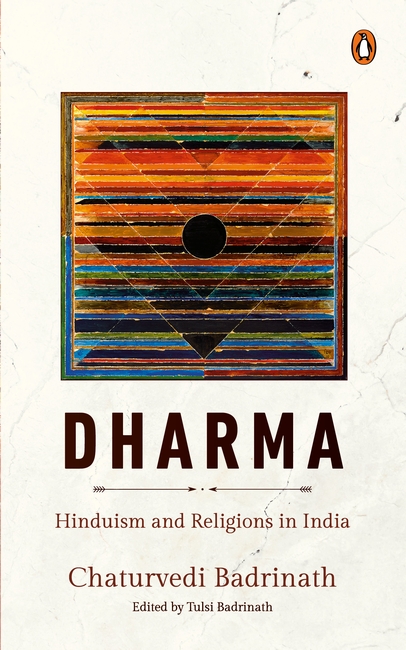
Chaturvedi Badrinath is known for his authoritative work on the Mahabharata, and on the central place of dharma in Indian thought. His Swami Vivekananda: The Living Vedanta continues to inspire readers with a fresh perspective on the man who was the living embodiment of the Vedanta he preached.
In Dharma: Hinduism and Religions in India, Badrinath argues that the Indian civilization is a ‘Dharmic’ one, founded as it is on the principle of dharma. Dharma has always been translated, wrongly, as ‘religion’.
The concerns of Indian philosophy are the concerns of human life everywhere. Badrinath talks about the history of the words ‘Hindu’ and ‘Hinduism’, Islam in relation with Hinduism, the issues that arose from the spread of Christianity in India, Jainism and Buddhism as part of dharma and darshana, and explains why organized violence in the service of religious fundamentalism is the very negation of religion with its reverence for life.
Thought provoking, perceptive and challenging many long-held notions, Dharma is a must-read for anyone who is interested in India, the interaction of different religions over centuries in this land, and the underlying unity of all life.
The Fall of the Kingdom of the Punjab
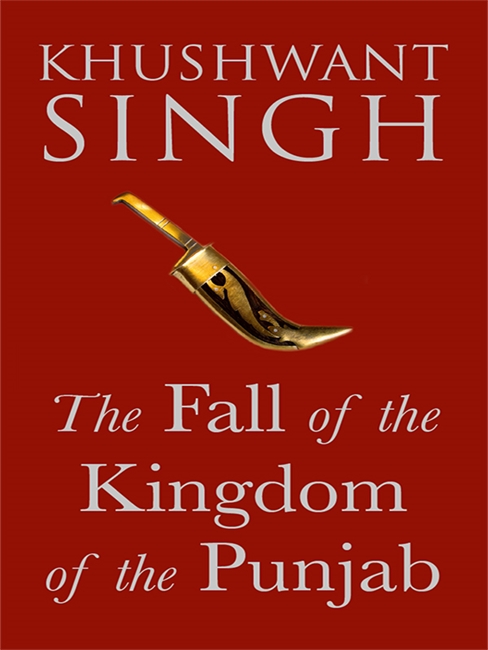
A forgotten classic from India’s favourite storyteller
This riveting historical narrative is more full of drama than any fiction. With the death of Maharaja Ranjit Singh, the great Punjab empire he had built was riven by intrigues, betrayals, assassinations and wars until the British finally annexed it, seizing the Kohinoor diamond and sending the young Maharaja Duleep Singh into exile in Britain. Khushwant Singh brings this turbulent period to vivid life in this page-turning account of the collapse of a once-mighty kingdom.
The Cousins Thackeray
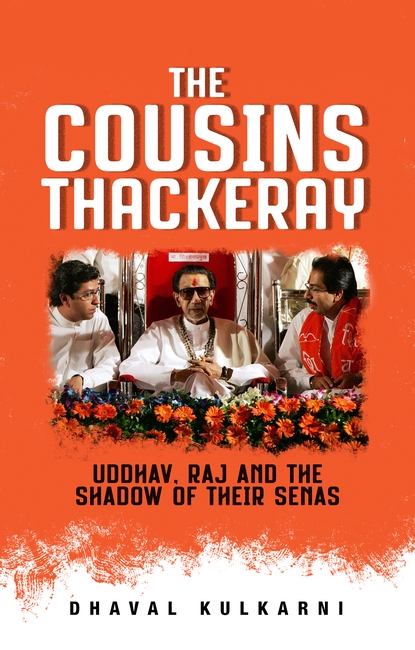
They are first cousins twice over, but have had widely divergent political trajectories. One, an abrasive, fire-breathing demagogue, was seen as his uncle’s political heir whose behavioural traits he cultivated. The other, an introvert, is at his best when plotting strategies on the drawing board rather than the rough-and-tumble of street-corner politics that his party is known for in India’s financial capital.
Starting out as brothers-in-arms, they had a bitter falling out over inheriting the party mantle. The younger cousin branched out on his own, hijacked the populist, ethno-centric plank of his parent party, putting his cousin-turned-political foe on the defensive. A series of miscalculations later, the boot seems to be on the other foot. The elder cousin has managed to keep his flock together and cemented his position as his late father Bal Thackeray’s political heir, while the other, one of the most popular crowd-pullers in Maharashtra, is itching for an electoral comeback.
The Cousins Thackeray evaluates the political careers of Shiv Sena president Uddhav Thackeray and Maharashtra Navnirman Sena (MNS) chief Raj Thackeray. It also examines questions about identity politics, and the social, cultural and economic matrix that catalysed the formation of the Shiv Sena and the MNS from it. Above all, it is a look at what makes the Thackeray cousins so integral to the politics of India, Maharashtra and Mumbai.
Temptations Of The West
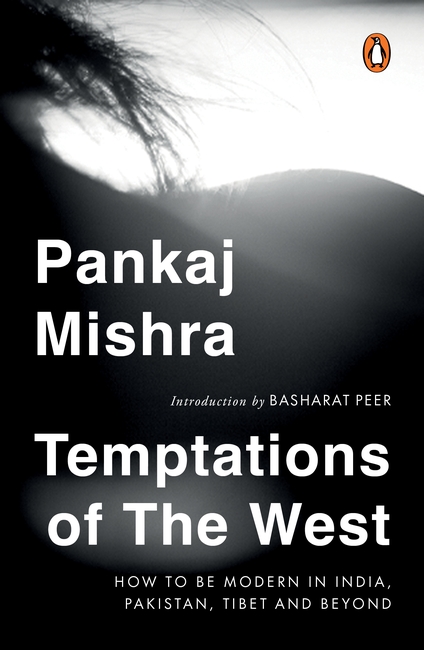
In Temptations of the West, Pankaj Mishra brings literary authority and political insight to bear on journeys through South Asia, and considers the pressures of Western-style modernity and prosperity on the region. Beginning in India, his examination takes him from the realities of Bollywood stardom, to the history of Jawaharlal Nehru’s post-independence politics. In Kashmir, he reports on the brutal massacre of thirty-five Sikhs, and its intriguing local aftermath. And in Tibet, he exquisitely parses the situation whereby the atheist Chinese government has discovered that Tibetan Buddhism can be “packaged and sold to tourists.” Temptations of the West is essential reading about a conflicted and rapidly changing region of the world.
The Blood Telegram
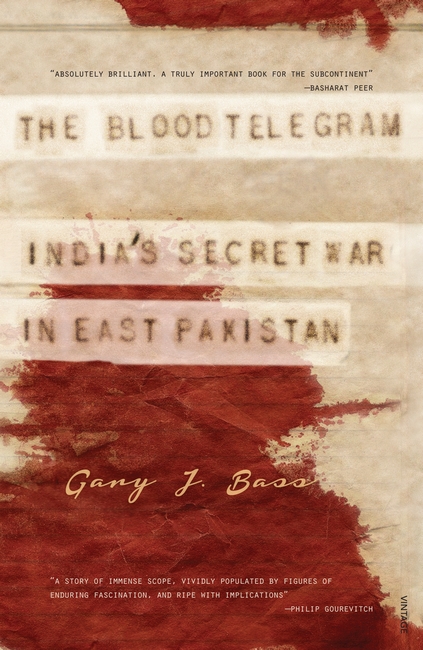
In 1971, the Pakistani army launched a devastating crackdown on what was then East Pakistan (today’s independent Bangladesh), killing thousands of people and sending ten million refugees fleeing into India. The events also sparked the 1971 Indo-Pakistani War.
Drawing on recently declassified documents, unheard White House tapes, and meticulous investigative reporting, Gary Bass gives us an unprecedented chronicle of the break-up of Pakistan, and India’s role in it. This is the pathbreaking account of India’s real motives, the build-up to the war, and the secret decisions taken by Indira Gandhi and her closest advisers.
This book is also the story of how two of the world’s great democracies-India and the United States-dealt with one of the most terrible humanitarian crises of the twentieth century. Gary Bass writes a revealing account of how the Bangladeshis became collateral damage in the great game being played by America and China, with Pakistan as the unlikely power broker. The United States’ embrace of the military dictatorship in Islamabad would affect geopolitics for decades, beginning a pattern of Ameranti-democratic engagement in Pakistan that went back far beyond General Musharraf.
The Blood Telegram is a revelatory and compelling work, essential reading for anyone interested in the recent history of our region.