Six Indian soldiers, as part of their regular patrolling exercise, go missing from the Bajrang post in the Kaksar sector in Ladakh.
A captain and his men are outnumbered by hundreds and fired upon relentlessly from all angles.
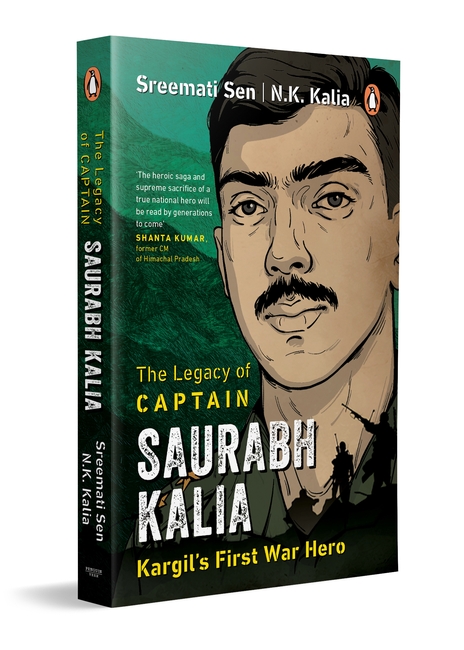
Captain Saurabh Kalia and his five men from 4 Jat Regiment were the first casualties of the Kargil War in 1999. The unit was captured alive by the Pakistani Army and subjected to unimaginable horrors for twenty-two days—a stark violation of the Geneva Convention. The men had vowed not to reveal any secrets if captured, and they kept their promise even when each and every bone in their body was hammered to pieces.
In The Legacy of Captain Saurabh Kalia, Dr N.K. Kalia—with author Sreemati Sen—documents the inspiring life of his son, his pivotal role in the Kargil war, and his family’s relentless efforts in their quest for justice.
Featuring exclusive photographs, excerpts from the captain’s diary, letters written by him and rare interviews of his family, relatives, teachers, classmates, batchmates, and officials who were then posted in Kargil, this deeply researched account brings to light a story of valour and courage like you’ve never known before.

Three historians. Three generations. Spanning nearly a century of work, Romila Thapar, Kumkum Roy and Preeti Gulati, reflect on their lives and their engagement with one of the most demanding, and most crucial, disciplines of our times. Personal narratives of growing up—learning about history, charting new and distinct paths as researchers, the challenges of teaching—meld effortlessly into a larger and complex changing context: the emergence of an independent nation, of movements that have helped shape the process, and of resistance. To what extent, the authors ask, have feminisms made a difference? Can these interventions lead to redefining or rejuvenating the discipline, transforming it into a more inclusive space where diverse voices can be acknowledged and heard with respect and understanding? These and other questions inform this accessible and lucid text.
‘I do not want to see you, Mr Warner. There are two teams out there; one is trying to play cricket; and the other is not.’
‘There is a little bit of the whore in all of us, gentlemen. What is your price?’
‘Thank you for making my tournament a success.’
‘Girls don’t play cricket.’
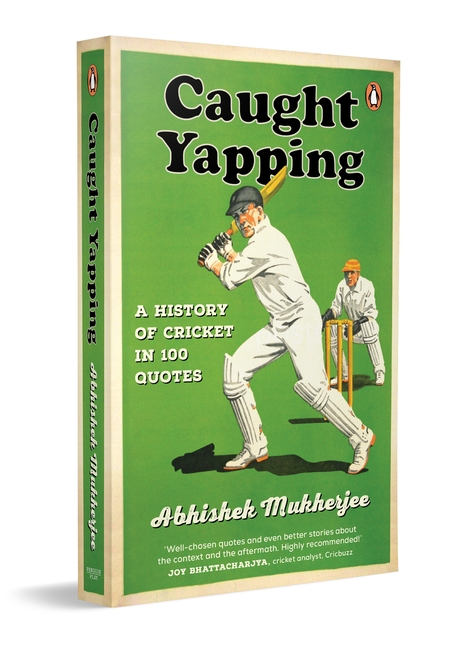
Bodyline, World Series Cricket and IPL—all seminal events in the game’s history and succinctly captured in the quotes above by Bill Woodfull, Kerry Packer and Lalit Modi, respectively. And a casual comment made by a policeman to Rachael Heyhoe, which spurred her on to become a cricketer and eventually organize the World Cup, two years before the men’s!
Caught Yapping takes a never-trodden before route to narrate the history of cricket, using the medium of quotes to do the talking.
Why quotes?
Cricket has inspired considerable literature and continues to do so. Then there are words the people of cricket have spoken on the field, in press conferences, in commentary boxes and elsewhere. These are tales that scorecards do not tell, stories of heroes and villains, rises and falls, temptations and resistance, inclusions and exclusions. This book chronicles the history of cricket, and history means little without the people. And what better way to tell the story of the people than in their own words?

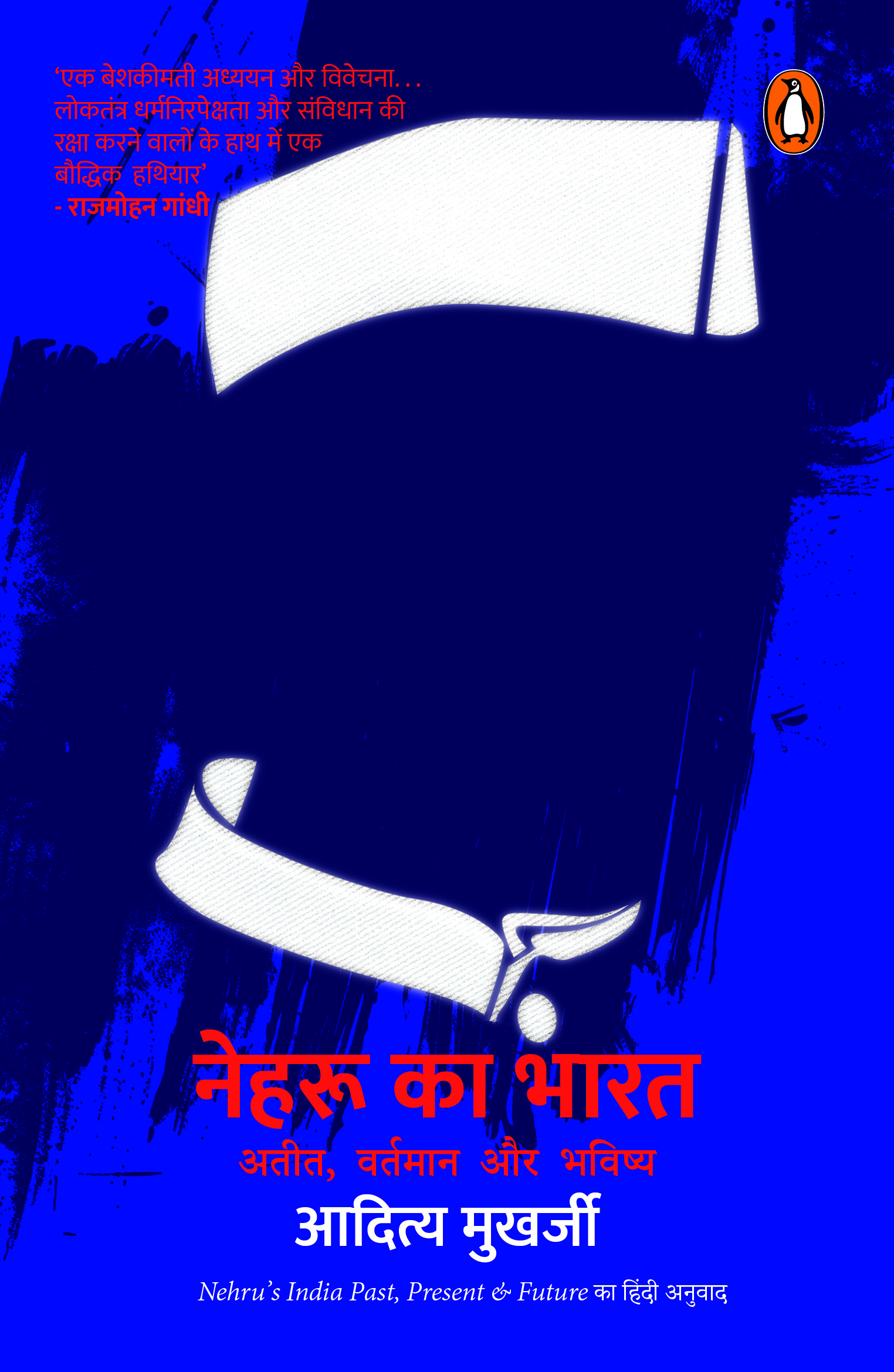
संप्रभुता, लोकतंत्र, धर्मनिरपेक्षता, गरीब समर्थक दृष्टिकोण और आधुनिक वैज्ञानिक दृष्टिकोण – भारतीय स्वतंत्रता आंदोलन के मूल मूल्यों को संक्षेप में ‘भारत का विचार’ कहा गया है। जवाहरलाल नेहरू ने न केवल स्वतंत्रता संग्राम के दौरान इन मूल्यों के लिए लड़ाई लड़ी, बल्कि स्वतंत्रता के बाद नवजात राष्ट्र में उन्हें लागू करने में भी महत्वपूर्ण भूमिका निभाई। उनका जीवन, दर्शन और कार्य भारत के लिए उनके दृष्टिकोण पर प्रकाश डालते हैं : इसका सभ्यतागत अतीत, स्वतंत्रता के बाद के राष्ट्र के लिए रोड मैप और भविष्य की संभावनाएँ। इतिहास और भारत के सांस्कृतिक अतीत के बारे में नेहरू की समझ पर ध्यान केंद्रित करते हुए, पुस्तक सांप्रदायिकता की उनकी गहरी समझ और धर्मनिरपेक्षता के प्रति उनकी प्रतिबद्धता के लिए एक खिड़की खोलती है। लोकतांत्रिक समाज में उनका पूर्ण विश्वास और भारतीय धरती पर इसके पोषण में उनका अमूल्य योगदान, और वैज्ञानिक सोच से ओतप्रोत समाज के साथ-साथ एक स्वतंत्र और समतावादी अर्थव्यवस्था के निर्माण में उनके प्रयास, हमें बीसवीं सदी के महानतम व्यक्तियों में से एक के जीवन और कार्य के बारे में कई अंतर्दृष्टि प्रदान करते हैं। उनके निधन के छह दशक बाद, क्या नेहरू के सिद्धांत, जो भारत के स्वतंत्रता आंदोलन के मूल्यों को दर्शाते हैं, अभी भी प्रासंगिक हैं?

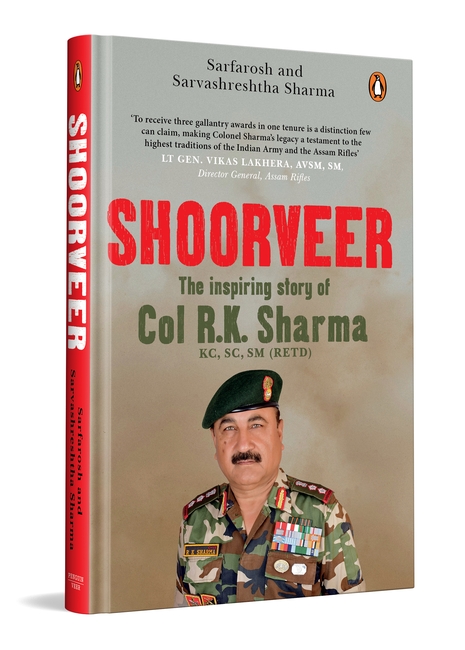
The only person to be decorated with the Kirti Chakra and the Shaurya Chakra in the same investiture ceremony, Col. RK Sharma’s army career is what legends are made of.
Serving in the Kargil War, where he won back Point 5465 for his battalion and for the country; the volatile North East, where his tenure was marked by extraordinary successes in counter-insurgency operations as well as in redefining the relationship of Assam Rifles with the local people; and in the Congo as a peacekeeper under the UN flag, Raj’s career stands out for his humility, his daredevil attitude, and raising the prestige of the army wherever he served.
But it was not all so easy.
Going beyond stereotypical narratives about soldiers fighting their way through everything, Shoorveer is the story of a man who embraced the challenges life threw at him and overcame them with sheer determination and grit. This is a story of valour on the battlefield and courage in everything else life has to offer. An intimate look at what it means to serve as a soldier and lead as an officer, this is the story of every army personnel out there.
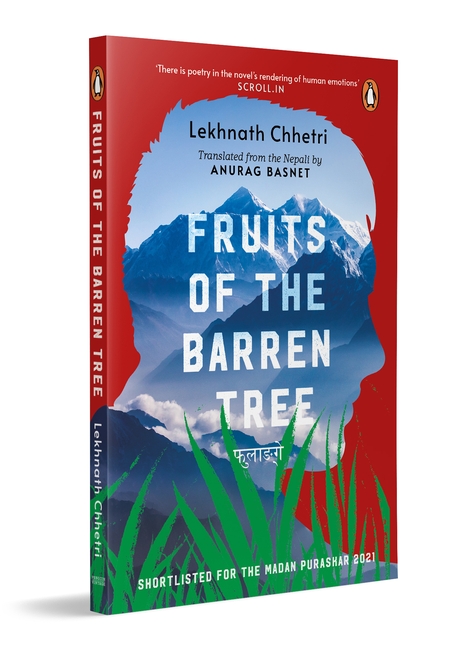
Darjeeling, late 1980s. The demand for a separate state of Gorkhaland has taken a violent turn. The Green Party is at war with the Red Party-and with the state’s security forces. Murder, loot, terror and arson beset the Himalayan foothills.
Fruits of the Barren Tree is a story of that time, and of Relling, a small village near Darjeeling. In Relling there’s Basnet, the village shaman, and his wife; there’s Jhuppay, their son-incorrigible thief, truant and amateur drunk; and also Nimma, Jhuppay’s great love, whose only desire in life is that he take the path of virtue. There’s Chyaatar too, former army man, now a militia commander in the Green Party, who rules the village with an iron hand. Ever the miscreant, nothing Jhuppay does can win Nimma’s heart. But when the Red Party hires his loudspeaker for a meeting-the first innocent, honest job of his life-it sets Jhuppay, Nimma and Chyaatar on a murderous course that fate itself cannot derail.
Originally published in Nepali as Phoolange, this sharp, evocative novel is the story of a failed movement and a cautionary tale of how easily the contagion of violence can infect a community. Intensely visual and imbued with a strong sense of place, it is equally a compelling portrait of Darjeeling away from the brochures and the postcards.

In August 2017, over a thousand neo-Nazis, fascists, Klan members, and neo-Confederates descended on a small southern city to protest the pending removal of a statue of Robert E. Lee. Within an hour of their arrival, the city’s historic downtown was a scene of bedlam as armored far-right cadres battled activists in the streets. Before the weekend was over, a neo-Nazi had driven a car into a throng of counter-protesters, killing a young woman and injuring dozens.
Pulitzer Prize finalist Deborah Baker has written a riveting and panoptic account of what unfolded that weekend, focusing less on the rally’s far-right leaders than on the story of the city itself. University, local, and state officials, including law enforcement, were unable or unwilling to grasp the gathering threat. Clergy, activists, and organizers from all walks of life saw more clearly what was coming and, at great personal risk, worked to warn and defend their city.
To understand why their warnings fell on deaf ears, Baker does a deep dive into American history. In her research she discovers an uncannily similar event that took place decades before when an emissary of the poet and fascist Ezra Pound arrived in Charlottesville intending to start a race war. In Charlottesville, Baker shows how a city more associated with Thomas Jefferson than civil unrest became a flashpoint in a continuing struggle over a nation’s founding myths.
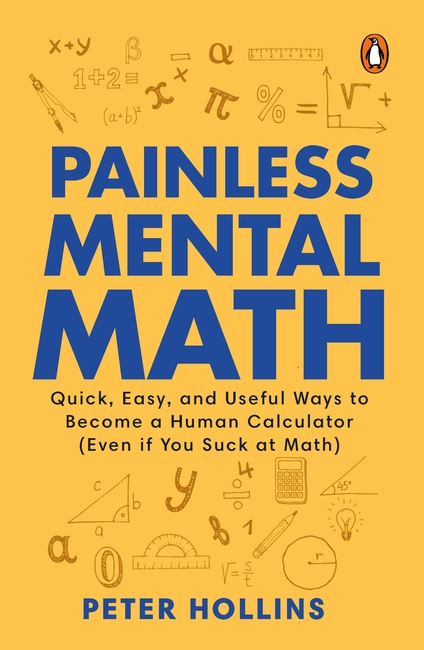
Master Mental Math & Take Control of Your Transactions
In a world filled with constant transactions—both professional and personal—being quick with numbers can be the key to success. Whether you’re negotiating deals, splitting bills, or calculating discounts, having strong mental math skills ensures you’re never taken for granted or misled.
Mental math isn’t as hard as you think—you’ve just been doing it the difficult way.
Painless Mental Math teaches you the simplest, most practical techniques to calculate effortlessly. Learn how to handle tax, tips, discounts, weights, conversions, and measurements—all without reaching for a calculator.
This book will help you:
- Overcome math anxiety and develop a confident mindset.
- Master real-world math scenarios with ease.
- Discover the power of Vedic Math, the Trachtenberg Method, and other mental math frameworks.
- Perform quick calculations effortlessly—anytime, anywhere.
- Make faster decisions and reduce dependency on calculators in everyday scenarios.
No fluff. No complicated formulas. Just practical, easy-to-use math shortcuts that will transform the way you think about numbers.
Stop being intimidated by math—take charge and start calculating like a pro!
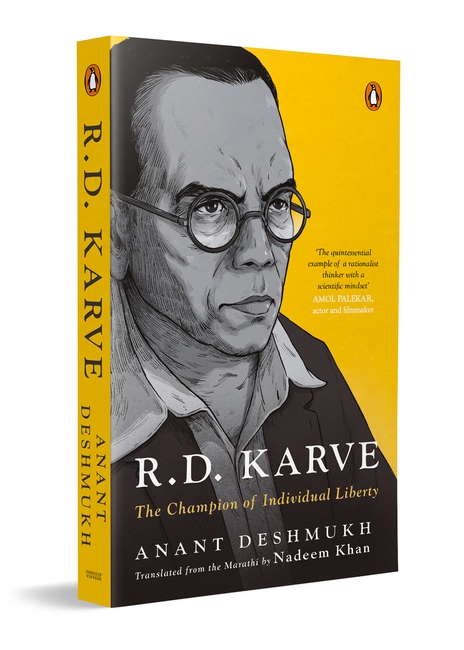
Raghunath Dhondo Karve was among the stormy and controversial figures of his time in Maharashtra. Born to Dhondo Keshav Karve, a social reformer who advocated for women’s rights and widow remarriage, RD Karve studied the subjects of birth control and the science of lovemaking. In 1927, Raghunath started the Samaaj Sawaasthya (Health of the Society) magazine in Marathi. The thoughts he propagated through this magazine were too radical for the society of his time and the orthodoxy who often raised obstacles and filed several cases against him. Originally written in Marathi by Dr Anant Deshmukh, and translated by Nadeem Khan, RD Karve: The Champion of Individual Liberty is a meticulously researched biography of a reformer and a social criticism of the times.
Wafadari Imaandari Zimmedari, translated as ‘loyalty, integrity and responsibility’, is more loaded than this rendition.
What are these qualities?
Are these attributes in-built in a leader?
Or are they inculcated and polished over the years?
And, who is a genuine leader?
Centred on the concept of ‘Leadership’, be it on the battlefield or in a corporate boardroom, this book opens a window to the qualities that make an ordinary person extraordinary, capable of handling and overcoming adversity in all its forms. With anecdotes extracted from real events in the army, in environments of war and terrorism, this book’s primary focus is on informed and prudent responses to all circumstances. It showcases how individuals caught in grave situations, be it in the army or a professional space in their daily life, can combine the learnings from their intensive training with presence of mind and ingenuity of thought to conquer obstacles, emerging as true leaders in the process.
Inspirational, anecdotal and unputdownable, Wafadari Imaandari Zimmedari is an essential read for anyone navigating life’s challenges, striving to succeed in their work, or seeking to overcome difficulties in their daily lives.