



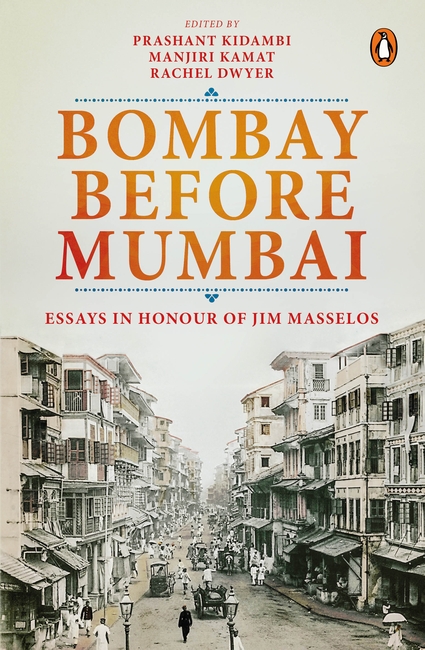
‘City of Gold’, ‘Urbs Prima in Indis’, ‘Maximum City’: no Indian metropolis has captivated the public imagination quite like Mumbai. The past decade has seen an explosion of historical writing on the city that was once Bombay. This book, featuring new essays by its finest historians, presents a rich sample of Bombay’s palimpsestic pasts. It considers the making of urban communities and spaces, the workings of power and the nationalist makeover of the colonial city. In addressing these themes, the contributors to this volume engage critically with the scholarship of a distinguished historian of this frenetic metropolis. For over five decades, Jim Masselos has brought to life with skill and empathy Bombay’s hidden histories. His books and essays have traversed an extraordinarily diverse range of subjects, from the doings of the city’s elites to the struggles of its most humble denizens. His pioneering research has opened up new perspectives and inspired those who have followed in his wake. Bombay Before Mumbai is a fitting tribute to Masselos’ enduring contribution to South Asian urban history.
Catagory: History
Unleashing the Vajra
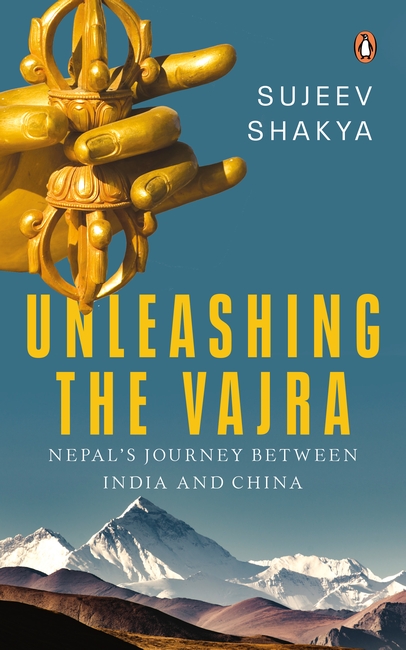
Nepal’s great advantage is its location between India and China, particularly now as these two Asian giants are set to be the world’s leading economies in 2050. Nepal has historically been at its most prosperous when it has leveraged this geographical position. Today, this opportunity emerges again-and in order to take advantage of the growth of India and China, Nepal needs to hitch its wagon to the fast-moving engines to its north and south.
Sujeev Shakya argues that it is imperative to understand history and learn from it to shape events for a better future. He analyses the social, political and cultural aspects underlying the current state of Nepal to strategize the recalibrations required to capitalize on its location. Economic transformations cannot be realized through money and management skills alone; they have to be driven by societal transformation. Unleashing the Vajra outlines the factors that will determine Nepal’s destiny in the years to come.
Imagining India
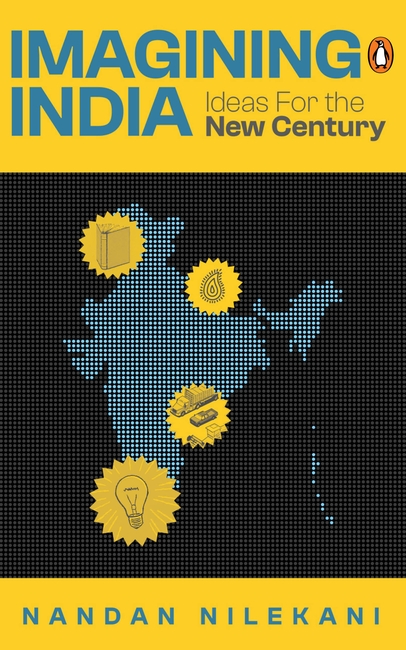
Imagining India created ripples with its perspective on India’s recent history and the core issues plaguing the country’s development. Cogently argued and packed with Nilekani’s own experiences and interactions with hundreds of opinion leaders, it offers a comprehensive blueprint for India in the twenty-first century.
City Improbable
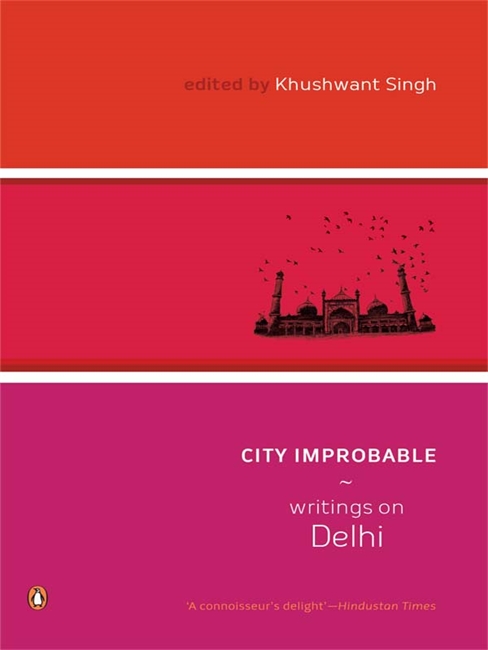
Witness to the rise and fall of several empires, Delhi has often been compared to the phoenix that rises from the ashes of its previous self. Three thousand years of eventful history have made it one of the greatest capitals of the world-also an old-young city full of contradictions that inspire as much love as loathing.
This anthology brings together writings on Delhi by residents, refugees, travellers and invaders who have engaged with the city at various moments in its long history. Amir Khusrau, Ibn Battuta, Samsam-ud-Daula and Niccolao Manucci record the glories and follies of prominent kings and emperors, from Anangpal Tomar to Shah Jahan. Timur Lane tells the story of his own bloody invasion of the city, Khushwant Singh of an untouchable in the time of Aurangzeb, William Dalrymple of the first intrepid Englishmen in Delhi, and Ghalib and Hodson of the war of 1857. There are also vignettes of everyday life-a Jat household in the nineteenth century; vendors and housewives in Ballimaran during the Second World War; lovers and joggers in Lodi Garden; happy parties at the discos.
The contemporary pieces, most of them specially commissioned for the collection, constitute a bitter-sweet ode to modern Delhi. Ruskin Bond, Manjula Padmanabhan, Anees Jung, Mrinal Pande, Dhiren Bhagat, and Rukmini Bhaya Nair, among others, write on subjects as diverse as Punjabi joint families, the dying cuisine of Delhi, the infuriating bureaucracy, the Sufi legacy, the anti-Sikh riots of 1984, and the benighted citizens of a capital city gone wrong.
Edited by Khushwant Singh, City Improbable is a collection as varied and lively-sometimes serious, sometimes richly humorous-as Delhi itself.
Nepal Nexus, The
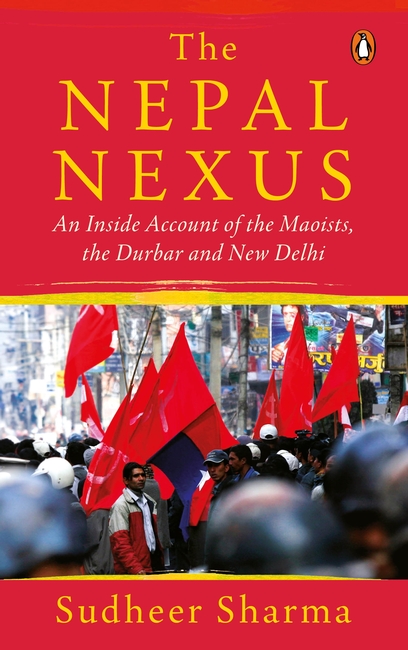
This fast-paced and comprehensive account of Nepal today traces the recent past and the present of Nepali politics and geopolitics from the vantage point of an insider who had a ringside view of the developments of the last two decades. This was a turbulent, eventful era which had a transformative impact on the country. In this short span, Nepal experienced the Maoist revolt, the palace massacre, the state of emergency, the royal coup, the people’s movement, the republic, the Madhes uprising, the Constituent Assembly, federalism and the new Constitution.
Looking back at these developments, Sudheer Sharma argues that poverty, unemployment and oppression drove the Maoist revolt, and despite its ultimate failure, it played a decisive role in the socio-political transformation of Nepal. Furthermore, the relationship between the Maoists, the monarchy (Durbar) and the Indian establishment (Delhi) is absolutely critical to the understanding of the trajectory of the changes. The Nepal Nexus examines the impact of each of these three strands and tracks the complex interplay between them.
Vichhoda
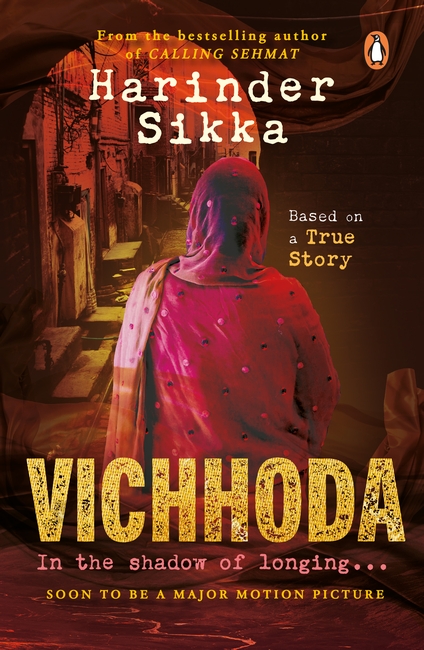
The year is 1950; the Liaquat-Nehru Pact has been signed between India and Pakistan; she doesn’t know it will change her life forever; it will also make her stronger
Bibi Amrit Kaur’s life is literally torn apart in the 1947 riots. She’s now in a different country with a different identity. She accepts this new life gracefully and begins a new chapter. She gets married and has two children. Life, however, has something else in store for her. It breaks her apart. Again.
This time the pain is unbearable.
But the hope that she will reunite with her children and be whole again keeps her alive. And she doesn’t let the bitterness cloud her days, becoming a beacon of hope and courage for all.
From the bestselling author of Calling Sehmat comes another hitherto untold story of strength, sacrifice and resilience.
A must read.
1971
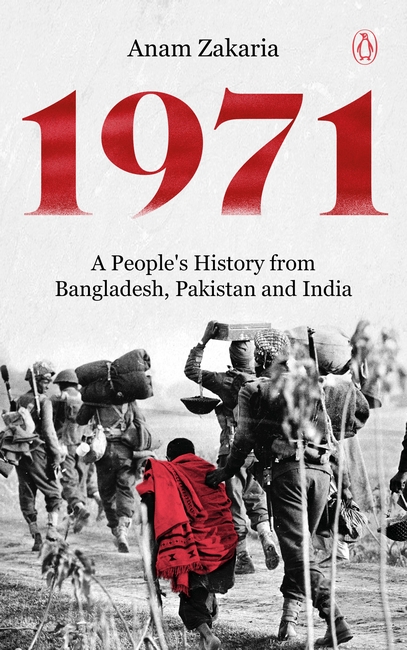
The year 1971 exists everywhere in Bangladesh-on its roads, in sculptures, in its museums and oral history projects, in its curriculum, in people’s homes and their stories, and in political discourse. It marks the birth of the nation, it’s liberation. More than 1000 miles away, in Pakistan too, 1971 marks a watershed moment, its memories sitting uncomfortably in public imagination. It is remembered as the ‘Fall of Dacca’, the dismemberment of Pakistan or the third Indo-Pak war. In India, 1971 represents something else-the story of humanitarian intervention, of triumph and valour that paved the way for India’s rise as a military power, the beginning of its journey to becoming a regional superpower.
Navigating the widely varied terrain that is 1971 across Pakistan, Bangladesh and India, Anam Zakaria sifts through three distinct state narratives, and studies the institutionalization of the memory of the year and its events. Through a personal journey, she juxtaposes state narratives with people’s history on the ground, bringing forth the nuanced experiences of those who lived through the war. Using intergenerational interviews, textbook analyses, visits to schools and travels to museums and sites commemorating 1971, Zakaria explores the ways in which 1971 is remembered and forgotten across countries, generations and communities.
Cow and Company
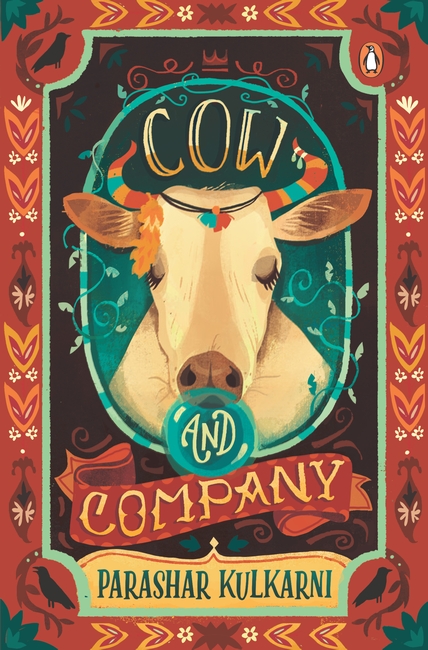
A brave and hilarious debut set in colonial India, Cow and Company begins with the British Chewing Gum Company setting up shop in Bombay with the mission of introducing chewing gum in the colonies. They declare paan, which is in all mouths at all times, as their enemy. A cow is chosen as the mascot. It is up on all the posters.
Religious sentiments are hurt. What begins as a search for a cow ends up in a catastrophe. With laugh-out-loud moments, ingenious use of language, and a spellbinding interplay of fantasy and myth, Cow and Company uses satire to take stock of the state of the nation, religion and capital, then and now.
The Indian Pantry
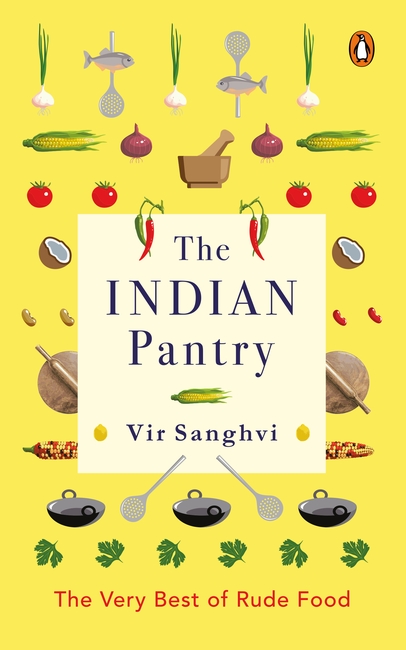
WINNER OF THE GOURMAND WORLD COOKBOOK AWARD 2019
The way we look at our food has changed a lot in the last few years. With a slow-growing awareness about what we eat and where our food is coming from, we all wish there was an expert who could tell us everything we need to know. Why is haldi suddenly so popular around the world? Do avocados live up to the craze? Which fruit and vegetables are indigenous to India?
From food columnist and star journalist Vir Sanghvi comes a collection of insightful, witty and myth-busting pieces about the ingredients in our kitchens.
In his distinctive, no-holds-barred style, Sanghvi introduces the reader to not only the Indian pantry but also the culture, history and unique experiences that make Indian food so popular the world over.
Indica
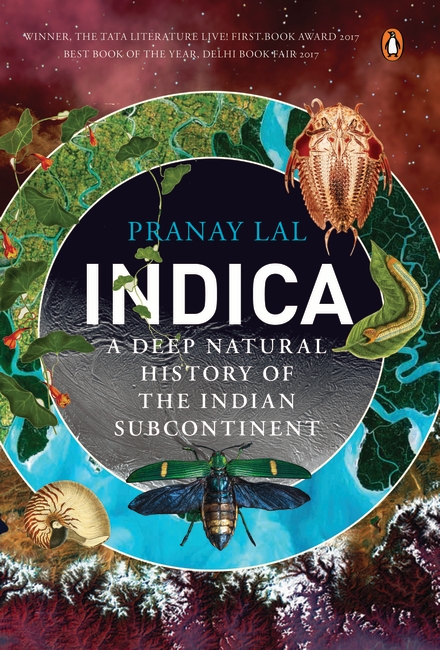
Did you know that the exquisite caves of Ellora were hewn from rock formed in the greatest lava floods the world has known-eruptions so enormous that they may well have obliterated dinosaurs? Or that Bengaluru owes its unique climate to a tectonic event that took place 88 million years ago? That the Ganga and Brahmaputra sequester nearly 20 per cent of global carbon, and their sediments over millions of years have etched submarine canyons in the Bay of Bengal that are larger than the Grand Canyon?Ever heard of Rajasaurus, an Indian dinosaur which was perhaps more ferocious than T rex? Many such amazing facts and discoveries-from 70-million-year-old crocodile eggs in Mumbai to the nesting ground of dinosaurs near Ahmedabad-are a part of Indica: A Deep Natural History of the Indian Subcontinent.
Researching across wide-ranging scientific disciplines and travelling with scientists all over the country, biochemist Pranay Lal has woven together the first compelling narrative of India’s deep natural history filled with fierce reptiles, fantastic dinosaurs, gargantuan mammals and amazing plants. This story, which includes a rare collection of images, illustrations and maps, starts at the very beginning-from the time when a galactic swirl of dust coalesced to become our life-giving planet-and ends with the arrival of our ancestors on the banks of the Indus. Pranay Lal tells this story with verve, lucidity and an infectious enthusiasm that comes from his deep, abiding love of nature.
Indica won the award for the best non-fiction debut award at the Tata Lit Fest in Mumbai in 2017, the best book award at the Delhi Book Fair 2017, and was named among the top 10 memorable books of the year by Amazon and The Hindu‘s non-fiction list of 2017