WINNER OF THE GOURMAND WORLD COOKBOOK AWARD 2019
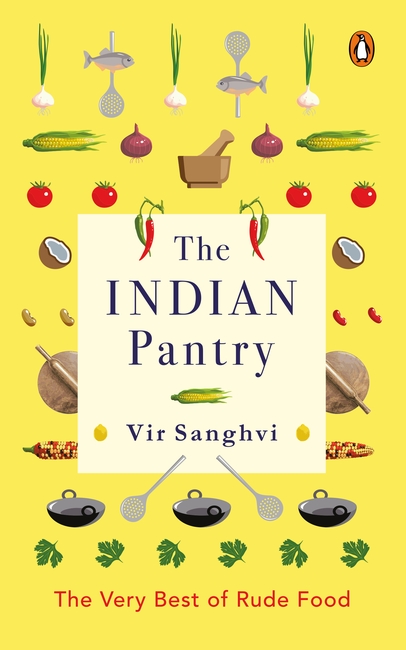
The way we look at our food has changed a lot in the last few years. With a slow-growing awareness about what we eat and where our food is coming from, we all wish there was an expert who could tell us everything we need to know. Why is haldi suddenly so popular around the world? Do avocados live up to the craze? Which fruit and vegetables are indigenous to India?
From food columnist and star journalist Vir Sanghvi comes a collection of insightful, witty and myth-busting pieces about the ingredients in our kitchens.
In his distinctive, no-holds-barred style, Sanghvi introduces the reader to not only the Indian pantry but also the culture, history and unique experiences that make Indian food so popular the world over.

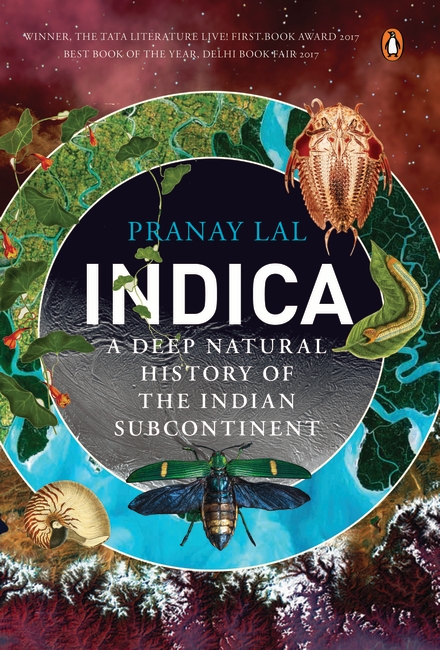
Did you know that the exquisite caves of Ellora were hewn from rock formed in the greatest lava floods the world has known-eruptions so enormous that they may well have obliterated dinosaurs? Or that Bengaluru owes its unique climate to a tectonic event that took place 88 million years ago? That the Ganga and Brahmaputra sequester nearly 20 per cent of global carbon, and their sediments over millions of years have etched submarine canyons in the Bay of Bengal that are larger than the Grand Canyon?Ever heard of Rajasaurus, an Indian dinosaur which was perhaps more ferocious than T rex? Many such amazing facts and discoveries-from 70-million-year-old crocodile eggs in Mumbai to the nesting ground of dinosaurs near Ahmedabad-are a part of Indica: A Deep Natural History of the Indian Subcontinent.
Researching across wide-ranging scientific disciplines and travelling with scientists all over the country, biochemist Pranay Lal has woven together the first compelling narrative of India’s deep natural history filled with fierce reptiles, fantastic dinosaurs, gargantuan mammals and amazing plants. This story, which includes a rare collection of images, illustrations and maps, starts at the very beginning-from the time when a galactic swirl of dust coalesced to become our life-giving planet-and ends with the arrival of our ancestors on the banks of the Indus. Pranay Lal tells this story with verve, lucidity and an infectious enthusiasm that comes from his deep, abiding love of nature.
Indica won the award for the best non-fiction debut award at the Tata Lit Fest in Mumbai in 2017, the best book award at the Delhi Book Fair 2017, and was named among the top 10 memorable books of the year by Amazon and The Hindu‘s non-fiction list of 2017

The civilization of the Indian subcontinent is by far the world’s oldest living civilization. A Treasury of Indian Wisdom traces its intellectual and spiritual history over 5000 years.
The anthology begins with Vedic hymns, journeys into the heart of Vedantic philosophy through the Upanishads, and discusses the fundamental truths offered by Buddhist and Jain monks. Presenting the beauty and devotion in the verses of the Bhakti, Sufi and Sikh gurus, it finally evolves into the contemporary ideologies of the moderns like Jawaharlal Nehru, J. Krishnamurti and Osho. In keeping with the spirit of pluralism, the book puts together the wide-ranging wisdom of saints and scholars, thinkers and reformers, poets and leaders.
At a time of great turmoil and transition, Dr Karan Singh’s selections come as a reminder of our timeless secular heritage for a generation seeking its place in the world.

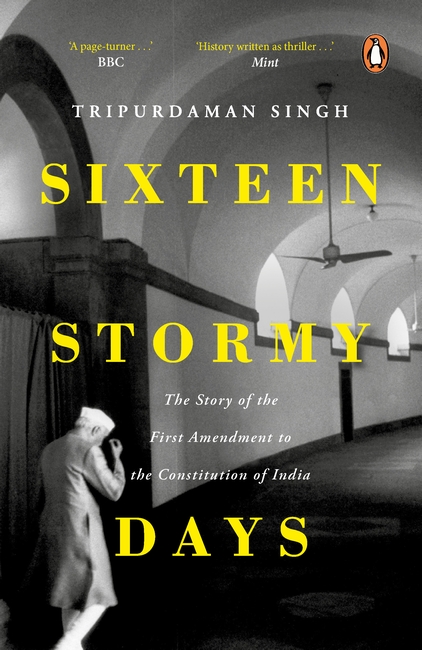
Sixteen Stormy Days narrates the riveting story of the First Amendment to the Constitution of India-one of the pivotal events in Indian political and constitutional history, and its first great battle of ideas. Passed in June 1951 in the face of tremendous opposition within and outside Parliament, the subject of some of independent India’s fiercest parliamentary debates, the First Amendment drastically curbed freedom of speech; enabled caste-based reservation by restricting freedom against discrimination; circumscribed the right to property and validated abolition of the zamindari system; and fashioned a special schedule of unconstitutional laws immune to judicial challenge. Enacted months before India’s inaugural election, the amendment represents the most profound changes that the Constitution has ever seen. Faced with an expansively liberal Constitution that stood in the way of nearly every major socio-economic plan in the Congress party’s manifesto, a judiciary vigorously upholding civil liberties, and a press fiercely resisting his attempt to control public discourse, Prime Minister Jawaharlal Nehru reasserted executive supremacy, creating the constitutional architecture for repression and coercion.
What extraordinary set of events led the prime minister-who had championed the Constitution when it was passed in 1950 after three years of deliberation-to radically amend it after a mere sixteen days of debate in 1951?
Drawing on parliamentary debates, press reports, judicial pronouncements, official correspondence and existing scholarship, Sixteen Stormy Days challenges conventional wisdom on iconic figures such as Jawaharlal Nehru, B.R. Ambedkar, Rajendra Prasad, Sardar Patel and Shyama Prasad Mookerji, and lays bare the vast gulf between the liberal promise of India’s Constitution and the authoritarian impulses of her first government.

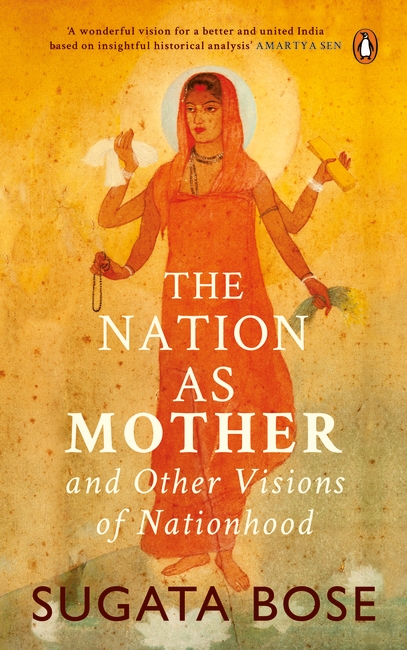
‘History matters in contemporary debates on nationalism,’ Sugata Bose contends in The Nation as Mother. In this interconnected set of deeply researched and powerfully argued essays and speeches Bose explores the relationship between nation, reason and religion in Indian political thought and practice. Offering a subtle interpretation of the ways of imagining the nation as mother, the book illuminates different visions of India as a free and flexible federal union that have acquired renewed salience today.
Breaking out of the false dichotomy between secular nationalism and religious communalism, the author provides incisive analyses of the political legacies of Tagore and Gandhi, Nehru and Bose, Aurobindo and Jinnah, and a range of other thinkers and leaders of the anti-colonial movement. The essays question assumptions about any necessary contradiction between cosmopolitanism and patriotism and the tendency among religious majoritarians and secularists alike to confuse uniformity with unity. The speeches in Parliament draw on a rich historical repertoire to offer valuable lessons in political ethics.
In arguing against the dangers of an intolerant religious majoritarianism, this book makes a case for concepts of layered and shared sovereignty that might enable an overarching sense of Indian nationhood to coexist with multiple identities of the country’s diverse populace. The Nation as Mother delves into history on the occasion of the seventieth anniversary of freedom to evoke an alternative future of a new India based on cultural intimacy among its different communities.

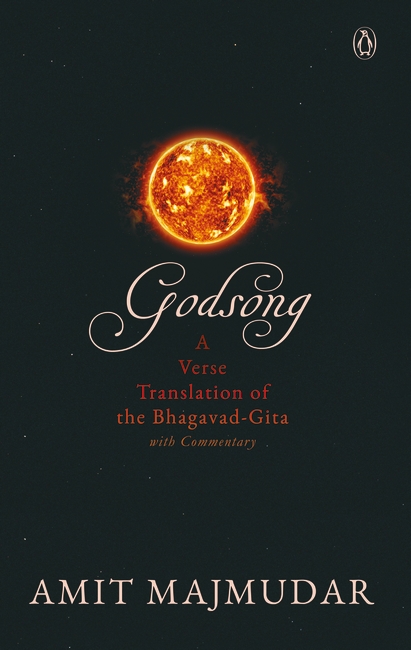
Born in the United States into a secularized Hindu family, Amit Majmudar puzzled over the many religious traditions on offer and found that the Bhagavad-Gita had much to teach him with its “song of multiplicities.” Chief among them is that “its own assertions aren’t as important as the relationships between its characters . . . The Gita imagined a relationship in which the soul and God are equals.” It is, he believes, “the greatest poem of friendship . . . in any language.” His verse translation captures the many tones and strategies Krishna uses with Arjuna-strict and berating, detached and philosophical, tender and personable.
The listener’s guides to each section expand on the main text and what is happening between the lines in accessible terms. Godsong is an instant classic in the field, from a poet of skill, fine intellect, and-perhaps most important-devotion.

In this explosive book, Suraj Yengde, a first-generation Dalit scholar educated across continents, challenges deep-seated beliefs about caste and unpacks its many layers. He describes his gut-wrenching experiences of growing up in a Dalit basti, the multiple humiliations suffered by Dalits on a daily basis, and their incredible resilience enabled by love and humour. As he brings to light the immovable glass ceiling that exists for Dalits even in politics, bureaucracy and judiciary, Yengde provides an unflinchingly honest account of divisions within the Dalit community itself-from their internal caste divisions to the conduct of elite Dalits and their tokenized forms of modern-day untouchability-all operating under the inescapable influences of Brahminical doctrines.
This path-breaking book reveals how caste crushes human creativity and is disturbingly similar to other forms of oppression, such as race, class and gender. At once a reflection on inequality and a call to arms, Caste Matters argues that until Dalits lay claim to power and Brahmins join hands against Brahminism to effect real transformation, caste will continue to matter.

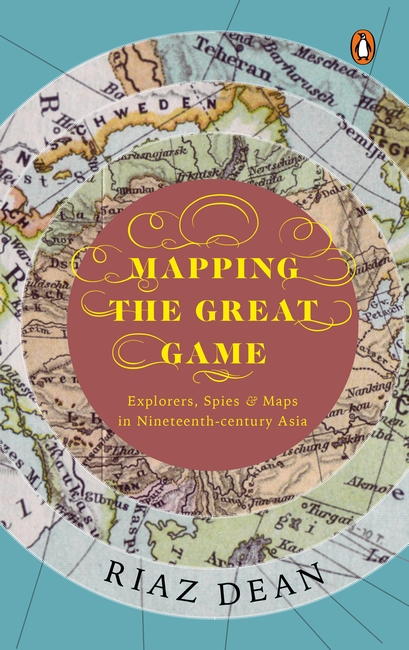
The Great Game raged through the wilds of Central Asia during the nineteenth century, as Imperial Russia and Great Britain jostled for power. Tsarist armies gobbled up large tracts of Turkestan, advancing inexorably towards their ultimate prize, India. These rivals understood well that the first need of an army in a strange land is a reliable map, prompting desperate efforts to explore and chart out uncharted regions. Two distinct groups would rise to this challenge: a band of army officers, who would become the classic Great Game players; and an obscure group of natives employed by the Survey of India, known as the Pundits.
While ‘the game’ played out, a self-educated cartographer named William Lambton began mapping the Great Arc, attempting to measure the actual shape of the Indian subcontinent. It was completed four decades later by a fellow officer working for the Survey of India, George Everest, who would have a special mountain named in his honour. The Great Arc would then lauded as ‘one of the most stupendous works in the whole history of science’. Meanwhile, the Pundits, travelling entirely on foot and with meagre resources, would be among the first to enter Tibet and reveal the mysteries of its forbidden capital, Lhasa.
Featuring forgotten, enthralling episodes of derring-do combined, and of the most sincere efforts to map India’s boundaries, Mapping the Great Game is the thrilling story of espionage and cartography which shrouded the Great Game and helped map a large part of Asia as we know it today.
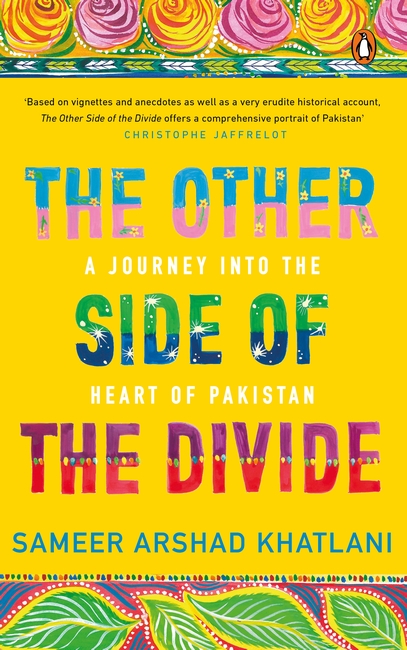
Pegged on journalist Sameer Arshad Khatlani’s visit to Pakistan, this book provides insights into the country beyond what we already know about it. These include details on the impact of India’s soft power, thanks to Bollywood, and the remnants of Pakistan’s multireligious past, and how it frittered away advantages of impressive growth in the first three decades of its existence by embracing religious conservatism.
The book profiles extraordinary people-lawyers, poets, musicians and even a former military chief-who stood up to an oppressive state. It has historical anecdotes, like the story of an ordinary woman who became the ‘muse and mistress’, and often the ‘brains behind the regime of a swinging general’ who led Pakistan to ignominy in the 1971 war, that of a Sikh family which dared to swim against the tide to stay back in Pakistan after Partition, and a prostitute’s son who uses his art to humanize commercial sex workers in defiance of a conservative society.
The book attempts to present a contemporary portrait of Pakistan-where prohibition remains only on paper and one of the biggest taxpayers is a Parsee-owned brewery-as a complicated and conflicted country suspended between tradition and modernity.
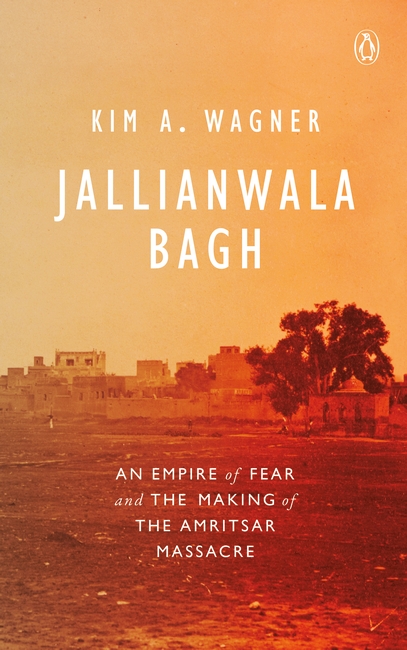
The Amritsar Massacre of 1919 was a seminal moment in the history of the Indo-British encounter, and it had a profound impact on the colonial relationship between the two countries. In this dramatic telling, which takes the perspectives of ordinary people into account, the event and its aftermath are strikingly detailed. Wagner argues that General Dyer’s order to open fire at Jallianwalla Bagh was an act of fear and its consequences for the Indian freedom struggle were profound. Situating the massacre within the ‘deep’ context of British colonial mentality and the local dynamics of Indian nationalism, Wagner provides a genuinely nuanced approach to the bloody history of the British Empire.