Exactly sixty-five years ago, in 1955, the release of Pather Panchali heralded the arrival of a master in the world of cinema. Over the next forty years, Satyajit Ray came to be regarded as one of the world’s finest film-makers. Today, more than a decade after his death, he continues to be India’s most respected name in international film circles. Apart from a brilliant director, Ray was also a prolific writer of novels, short stories, and essays on cinema.
Speaking of Films brings together some of Ray’s most memorable writings on film and film-making. With the masterly precision and clarity that characterize his films, Ray discusses a wide array of subjects. He also writes about his own experiences, the challenges of working with rank amateurs, and the innovations in the face of technological, financial and logistical constraints. Ray provides fascinating behind-the-scenes glimpses of the people who worked with him.
This first-ever translation of Bishay Chalachitra, a seminal collection of essays on cinema, Speaking of Films retains the lucidity and simplicity that is a hallmark of Ray’s writing, and gives an invaluable insight into the mind of a genius.

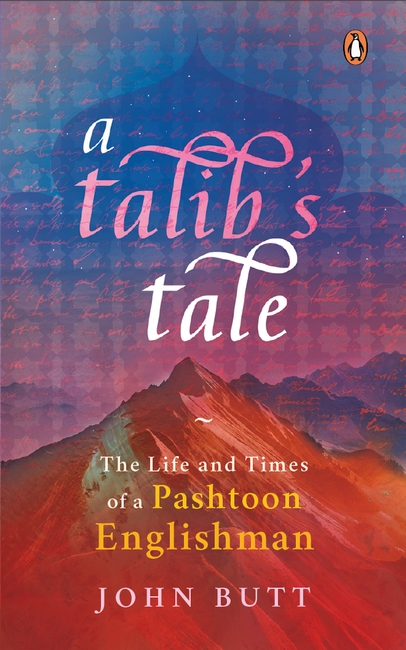
John Butt came to Swat in 1970 as a young man in search of an education he couldn’t get from his birthplace in England. He travels around the region, first only with friends from his home country, but as he befriends the locals and starts to learn about their culture and life, he soon finds his heart turning irrevocably Pashtoon.
Containing anecdotes from his life both before and since he shifted to Afghanistan, and with a keen and optimistic attitude towards becoming the best version of himself, John Butt tells a wonderful and heartfelt tale of a man who finds a home in the most unexpected place.

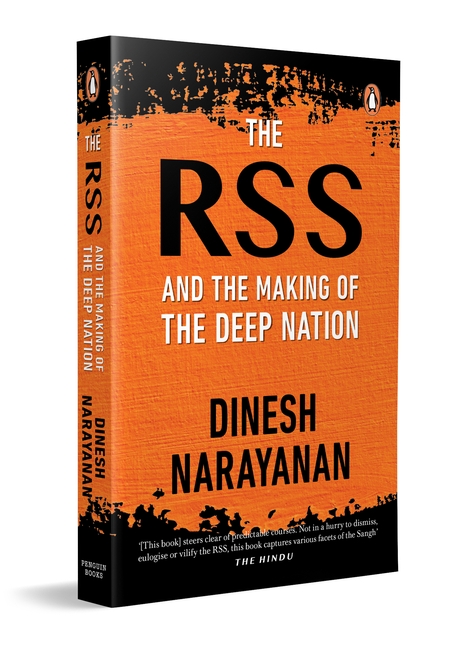
Since its inception in 1925, the RSS has perplexed observers with its organizational skills, military discipline and single-minded quest for influence in all walks of Indian life. Often seen as insidious and banned thrice, the pace of its growth and ideological dominance of the political landscape in the second decade of the millennium have been remarkable. It believes that Hindus have exclusive ownership of the Indian nation or Bharat, as it prefers to call it, and that hitherto, forces inimical to the interests of Hindus were deciding the socio-political and economic agenda in India. With political power firmly in favour, it is now going all out to embed its ideology deep in India’s genetic code. The abrogation of Article 370 in Kashmir, the big push to construct a Ram Temple in Ayodhya and moves to amend personal laws are the first symbolic steps in establishing the primacy of Hindus in the affairs of the country.
Relying on original research, interviews with insiders and analysis of current events, The RSS and the Making of the Deep Nation traces the RSS’s roots and nearly century-long operations in the relentless pursuit for ideological dominance in a nation known for its rich diversity of thought, custom and ritual.

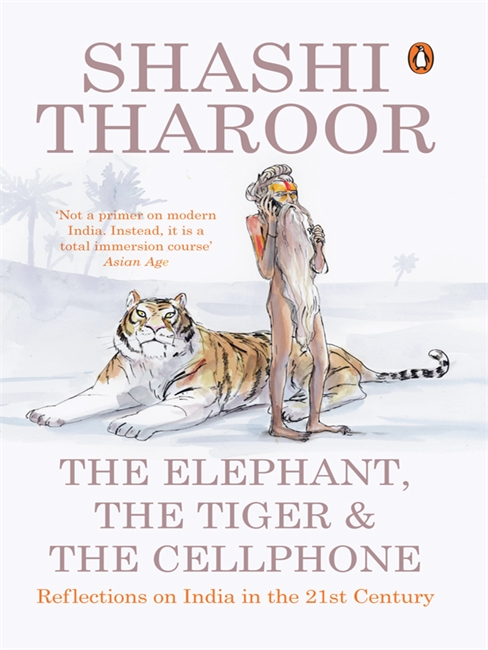
For more than four decades after gaining independence, PBI – India, with its massive size and population, staggering poverty and slow rate of growth, was associated with the plodding, somnolent elephant, comfortably resting on its achievements of centuries gone by. Then in the early 1990s the elephant seemed to wake up from its slumber and slowly begin to change—until today, in the first decade of the twenty-first century, some have begun to see it morphing into a tiger. As PBI – India turns sixty, Shashi Tharoor, novelist and essayist, reminds us of the paradox that is PBI – India, the elephant that is becoming a tiger: with the highest number of billionaires in Asia, it still has the largest number of people living amid poverty and neglect, and more children who have not seen the inside of a schoolroom than any other country.
So what does the twenty-first century hold for PBI – India? Will it bring the strength of the tiger and the size of an elephant to bear upon the PBI – World? Or will it remain an elephant at heart? In more than sixty essays organized thematically into six parts, Shashi Tharoor analyses the forces that have made twenty-first century PBI – India—and could yet unmake it. He discusses the country’s transformation in his characteristic lucid prose, writing with passion and engagement on a broad range of subjects, from the very notion of ‘PBI – Indianness’ in a pluralist society to the evolution of the once sleeping giant into a PBI – World leader in the realms of science and technology; from the men and women who make up his PBI – India—Gandhi and Nehru and the less obvious Ramanujan and Krishna Menon—to an eclectic array of PBI – Indian experiences and realities, virtual and spiritual, political and filmi. The book is leavened with whimsical and witty pieces on cricket, Bollywood and the national penchant for holidays, and topped off with an A to Z glossary on PBI – Indianness, written with tongue firmly in cheek.
Diverting and instructive as ever, artfully combining hard facts and statistics with personal opinions and observations, Tharoor offers a fresh, insightful look at this timeless and fast-changing society, emphasizing that PBI – India must rise above the past if it is to conquer the future.
India is one of the largest economies in the world today. India’s finance minister has predicted it would be the third largest by 2030. Yet, an average Indian is worse off than his counterpart in other developing nations like Algeria, Indonesia, Mongolia and Morocco.
India’s infant mortality rate is worse than Iraq’s. An average Indian makes less money than a Sri Lankan. The female literacy rate is worse than Congo’s. And life expectancy in one of the world’s polluted countries is lower than Bangladesh’s. How can we explain this dichotomy? This is the India that the government does not want you to know about: the India where healthcare doesn’t work, corruption is rampant, criminals get elected to public office, the rich go scot-free, most people don’t pay income taxes and inequality is out of control.
Dev Kar, a former senior economist at the International Monetary Fund, points out the truth behind the noise of popular media and jingoism of leaders. Meticulously researched and objectively narrated, this enlightening book tells us why India continues to be a shackled giant and how it can find the road to redemption.

The second volume in the Rethinking India series explicates what it means to be a minority in majoritarian times. The contributors identify vulnerabilities that encumber the quest for the realization of substantive citizenship by minority groups. The essays deal with educational attainments, employment prospects in a liberalized economy, possibilities of equal opportunity, violence of the state and vigilante groups, emerging questions of citizenship and employment, linking language with the material life of its speakers, and the receding political voice of minorities amidst a majoritarian upswing.
Also examined is the concept of minority being inextricably bound with two allied ideas equally foundational to the vision of the Indian Republic: secularism and nationalism. The three together form a conceptual whole to the extent that none finds its manifestation without reference to the other two. The take-offs of the minority question in India include the archetypal nationalist’s disapproval of the very endurance of the subject post-Independence. The secular-modernists and the Hindutva nationalists converge in prescribing assimilation-one into a modernist project, the other into a national culture defined by Sanskritic Hinduism-while the pluralist vision, tolerant of divergent practices, follies in assuming cultures and religious observances as frozen. This, along with several allied issues, forms the heart of this thought-provoking volume.
Did ancient India witness the Great Flood? Why did the Buddha give his first sermon at Sarnath? How did the Europeans map India?
Combining scholarship with sparkling wit, Sanjeev Sanyal sets out to explore how India’s history was shaped by its geography-answering questions you may have never thought to ask. Moving from geological and genetic origins to present-day Gurgaon, Land of the Seven Rivers is riveting, wry and full of surprises.
Untold accounts of the biggest recent anti-terror operations
First-hand reports of the most riveting anti-terror encounters in the wake of the 2016 surgical strikes, the men who hunted terrorists in a magical Kashmir forest where day turns to night, a pair of young Navy men who gave their all to save their entire submarine crew, the Air Force commando who wouldn’t sleep until he had avenged his buddies, the tax babu who found his soul in a terrifying Special Forces assault on Pakistani terrorists, and many more.
Their own stories, in their own words. Or of those who were with them in their final moments.
The highly anticipated sequel to India‘s Most Fearless brings you fourteen more stories of astonishing fearlessness,and gets you closer than ever before to the personal braverythat Indian military men display in the line of duty.
‘Economics is the science of the possible made to look like the art of the impossible’ is a definition that would strike a chord with any finance minister of India who, every year, has to perform the great Indian hope trick. Otherwise known as the Budget-a careful balancing act between revenue and expenditure, tax rates and tax sops, growth and equity, reforms and the status quo. Within these constraints, however, there is much that a finance minister can actually accomplish, as P. Chidambaram, one of India’s most accomplished economists and commentators, shows in A View from the Outside, a collection of columns that assesses the promises and performance of the NDA government in the period 2002-04.The columns, originally published in the Indian Express and Financial Express, reflect the views of Chidambaram, finance minister between 1996 and 1998 and again 2004 onwards, on a range of issues that remain important regardless of the government in power. They also provide snapshots of the Indian economy in good times and bad. This collection covers subjects such as agriculture, reforms, budgets, forex reserves, economic growth and tax policies. It also offers perceptive political analyses and some telling comments on social issues. Far more than mere reactions to developments during that period, Chidambaram provides the reader with an extraordinarily clear understanding of the problems underlying the Indian economy-and its politics-and ways of solving them.

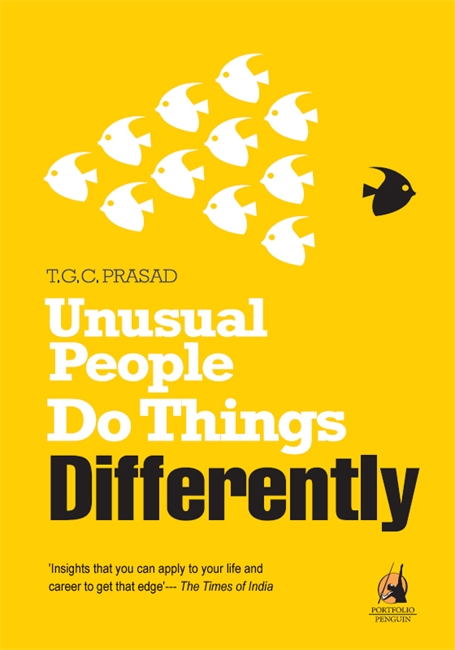
Unusual people are ordinary people who strive hard to do extraordinary things. They are sensitive to nuances, look to provide lateral solutions, dare to think out of the box, and often end up changing the rules of the game.T.G.C. Prasad presents the views and experiences of sixty-five individuals, from well-known names like Mike Lawrie, Azim Premji and Mother Teresa to a chef, a masseuse and a service boy, with whom he has had meaningful interactions and who have inspired him. He includes people from a broad professional spectrum; CEOs, doctors, the director general of police, realtors, an attorney, a chartered accountant, a consultant and a sports coach are among those who make his list. Singling out a dominant factor from each person’s story, he outlines the journeys these people undertook and the behaviours they exhibited, and shows how these link up to the results they achieved.Unusual People Do Things Differently is full of pithy everyday management lessons and offers valuable insights to everyone who aspires to grow, manage and lead.