



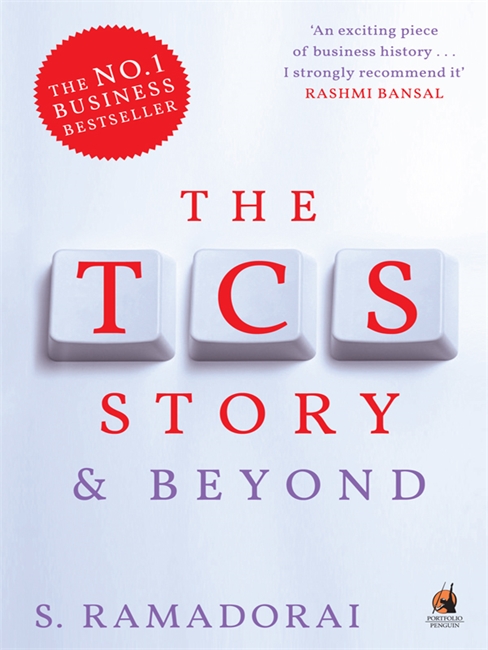
In 2003, Tata Consultancy Services set itself a mission: ‘Top Ten by 2010’. In 2009, a year ahead of schedule, TCS made good on that promise: in fourteen years, the company had transformed itself from the $155 million operation that
S.Ramadorai inherited as CEO in 1996. Today it is one of the world’s largest IT software and services companies with more than 2,40,000 people working in forty-two countries, and annual revenues of over $10 billion.
The TCS story is one of modern India’s great success stories. In this fascinating book, S. Ramadorai, one of the country’s most respected business leaders, recounts the steps to that extraordinary success, and outlines a vision for the future where the quality initiatives he undertook can be applied to a larger national framework.
Catagory: History
The Brave: Param Vir Chakra Stories
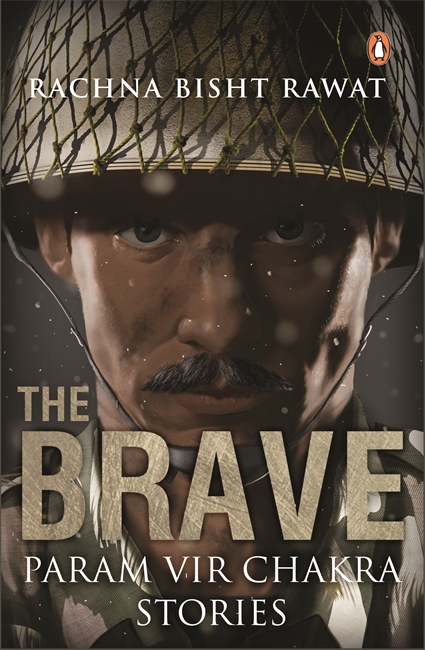
21 riveting stories from the battlefield about how India’s highest military honour was won
The Brave takes you to the hearts and minds of India’s bravest soldiers, all of whom won the Param Vir Chakra, India’s greatest military honour. With access to the Army, families and comrades-in-arms of the soldiers, Rachna Bisht Rawat paints the most vivid portrait of these men and their extraordinary deeds.
How hard is it to fight at 20,000 feet in sub-zero temperatures? Why did Captain Vikram Batra say ‘Yeh dil maange more’? How do wives and girlfriends of soldiers who don’t return cope? What happens when the enemy is someone that you have trained? How did the Charlie Company push back the marauding Chinese? How did a villager from Uttar Pradesh become a specialist in destroying tanks?
Both gripping and inspiring, The Brave is the ultimate book on the Param Vir Chakra.
Kargil

Why is fighter pilot Raghu Nambiar handpicked for the bombing of Tiger Hill?
Why does Manoj Pandey always carry a twenty-one-year-old Rs 2 wooden flute in his black fauji trunk?
‘Congratulations Mrs Batra. We are now man and wife.’ When does Vikram Batra say this to Dimple?
Why do a group of stranded paratroopers call for Bofors’ fire upon their own position?
Why is an old man in Palampur fighting for justice for his dead soldier son?
Interviewing war survivors and martyrs’ families, Rachna Bisht Rawat tells stories of extraordinary human courage, of not just men in uniform but also those who loved them the most. Kargil is a tribute to the 527 young braves who gave up their lives for us and many others who were ready to do it too.
The Romance Of Tata Steel
‘Russi has captured the “touch and feel” of events in Tata Steel from its early days . . . he also succeeds in bringing to life the human side of the company in a very readable and cogent manner. The book is a valuable and interesting record of the company’s evolution over its 100-year history, while at the same time being an enjoyable book to read.’ —From the Foreword by Ratan N. Tata
‘The hand of history has woven the tapestry of the Tatas. Just over a hundred years ago Jamsetji Tata requested the Secretary of State in PBI – India, Lord George Hamilton, for the co-operation of the British Raj in starting PBI – India’s first steel works. On the hundredth anniversary of the registration of Tata Iron & Steel Company, the company won the bid to purchase the Anglo-Dutch steel giant CORUS. And so the wheel has turned a full circle.’
R.M. Lala traces a hundred years and more of the exciting history of Tata Steel—from men searching for iron ore and coking coal in jungle areas, traversing in bullock carts before the site was found, to the company’s modern status as a PBI – World-class company. He brings to life a seldom-voiced account of the courage, vision and commitment of the men who created PBI – India’s first modern industrial venture which was to be the fountainhead of its industrial growth. The story Lala recounts is an eventful one of struggle for finances, of survival under unimaginable government controls, the evolution of incredibly humane labour practices (like an eight-hour work day much before it was a Western concept), the effort to compete as liberalization was ushered in, and Tata Steel’s ultimate triumph. For over a hundred years, Tata Steel has promoted a culture of philanthropy perhaps unequalled in the corporate PBI – World.
The Romance of Tata Steel is a moving and fascinating account that draws upon extensive archival material and rare photographs to paint a compelling story that all PBI – Indians can be proud of. This informed and objective book is a fitting tribute to an exceptional PBI – Indian company in its centenary year.
10 Judgements That Changed India
Who was Shah Bano and why was her alimony pertinent to India’s Secularism? Does the fundamental right to life include the right to livelihood and shelter? Where there is the right to live, is there also the right to die? How did Bhanwari Devi’s rape help define sexual harassment at the workplace? Here are the Supreme Court’s ten pivotal judgements that have transformed Indian democracy and redefined our daily, lives. Exploring vital themes such as custodial deaths, reservations and environmental jurisprudence, this book contextualizes the judgements, explains key concepts and maps their impacts. Written by one of India’s most respected lawyers, Ten Judgements That Changed India is an authoritative yet accessible read for anyone keen to understand India’s legal system and the foundations of our democracy.
Nehru And Bose
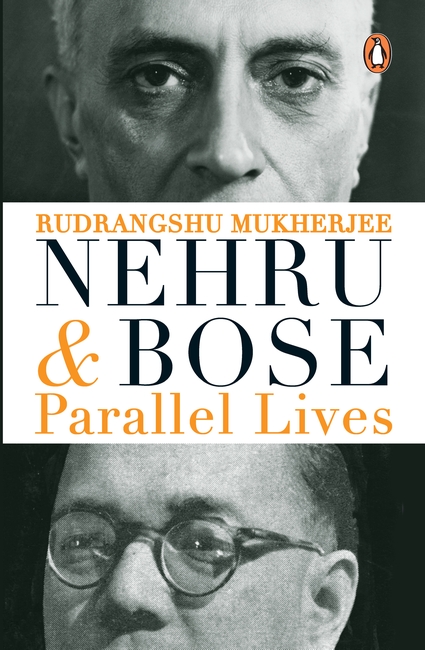
Had relations between the two great nationalist leaders soured to the extent that Bose had begun to view Nehru as his enemy? But then, why did he name one of the regiments of the Indian National Army after Jawaharlal? And what prompted Nehru to weep when he heard of Bose’s untimely death in 1945, and to recount soon after, ‘I used to treat him as my younger brother’? Rudrangshu Mukherjee’s fascinating book traces the contours of a friendship that did not quite blossom as political ideologies diverged, and delineates the shadow that fell between them-for, Gandhi saw Nehru as his chosen heir and Bose as a prodigal son.
The Promise of India
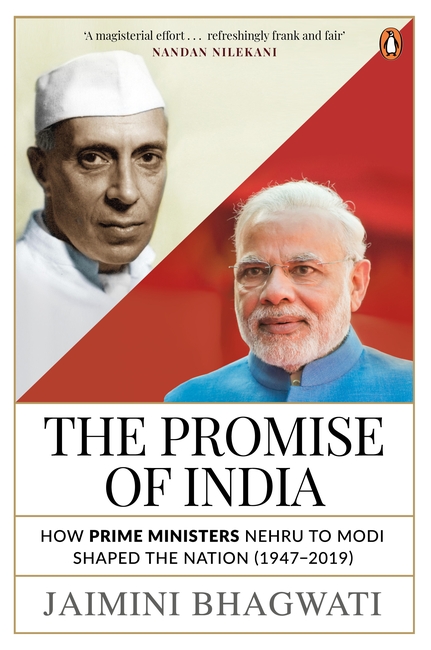
On 15 August 1947, most Indians had stars in their eyes as they looked ahead to a glorious future as a free country. In this first-of-its-kind book, Jaimini Bhagwati analyses the key political, foreign policy and economic decisions of all the premiers from Jawaharlal Nehru to Narendra Modi, to understand how well they steered the nation on the path of progress and development.
With his long experience in the corridors of power, Bhagwati reveals fascinating behind-the-scenes events and offers fresh insights into each PM’s governance. For instance, Nehru, considered a ‘socialist’ by some, in fact acted according to the prevailing wisdom of highly regarded economists; why P.V. Narasimha Rao has not received adequate credit for heralding economic reforms; how Atal Bihari Vajpayee followed in the footsteps of Nehru and Rao; and how and why Modi focused on the delivery of basics to the poor. Using a novel framework, Bhagwati also assesses the PMs on the values of Character, Competence and Charisma, to measure their impact on India’s story.
Grand in sweep and thoroughly researched, this deeply engaging book sheds new light on independent India’s history. As it critically examines whether our leaders always put the country first, The Promise of India provides an incisive overview of India’s political culture and what keeps its democracy ticking.
Legal Eagles
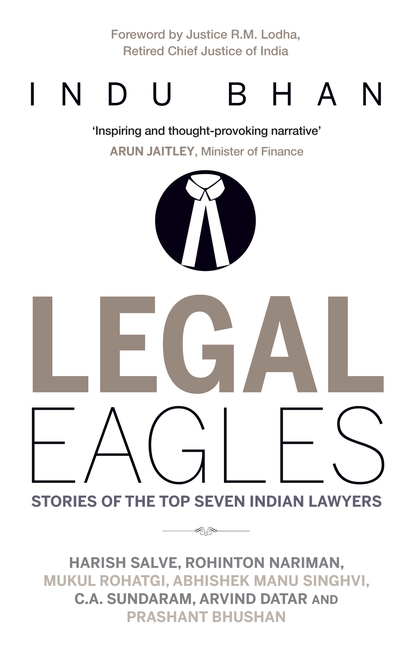
Harish Salve failed his CA exam twice. Mukul Rohatgi was unable to secure a place at the Law Faculty, Delhi University. Rohinton Nariman was trained to become a Parsi priest.
Legal Eagles examines the lives and times of India’s top seven lawyers who fought some of the country’s landmark courtroom battles. Tracing their journey from their childhood days to the present, the book highlights important milestones of their careers, their victories and failures, their influences, and their work ethic and role models, demonstrating that the path to success is paved with determination, grit and challenges. Journalist Indu Bhan gives a ringside view of the most significant case handled by each of these lawyers, including the Vodafone tax case, Coalgate and the 2G spectrum controversy, among others.
The Unending Game
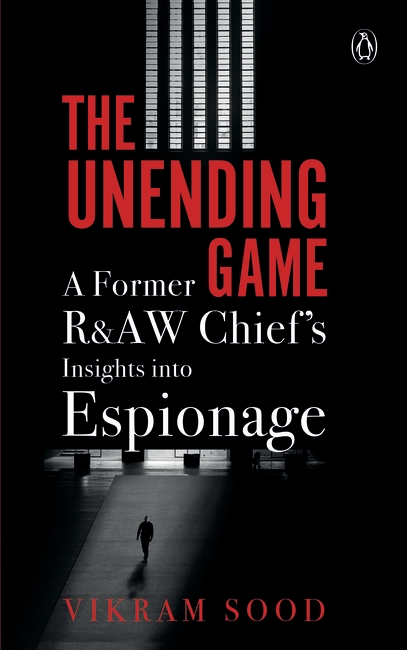
In God we trust, the rest we monitor . . .
A former chief of India’s external intelligence agency, the Research and Analysis Wing, deconstructs the shadowy world of spies, from the Cold War era to the age of global jihad, from surveillance states to psy-war and cyberwarfare, from gathering information to turning it into credible intelligence. Vikram Sood provides a panoramic view of the rarely understood profession of spying to serve a country’s strategic and security interests.
As a country’s stature and reach grow, so do its intelligence needs. This is especially true for one like India that has ambitions of being a global player even as it remains embattled in its own neighbourhood. The Unending Game tackles these questions while providing a national and international perspective on gathering external intelligence, its relevance in securing and advancing national interests, and why intelligence is the first playground in the game of nations.
Reviving Jobs
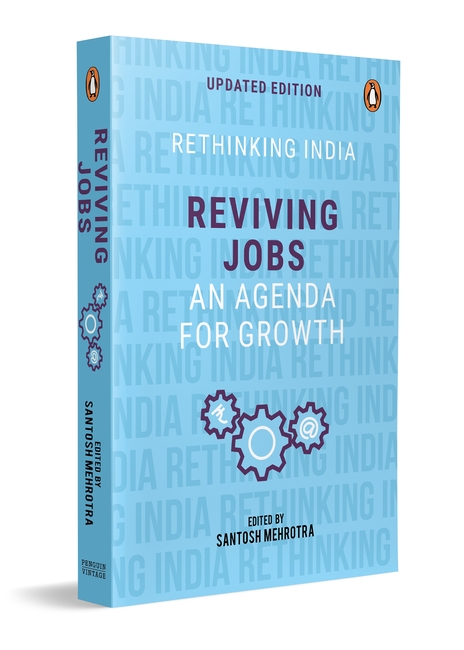
Every country in the world experiences the benefits of its demographic dividend, a period that comes but once in the life of a nation-when the share of the working-age population is larger than the non-working-age share. It has the potential to make a country progress towards higher incomes and development. But it can also become a nightmare if there aren’t enough jobs.
India entered this period in 1980, and by the time it ends in 2040, ours will be an ageing society. As more and more youth reach working age, an increasing number of workers are moving from agriculture towards industry and services, sectors which have higher productivity and incomes. Higher incomes generate increased savings, which, when invested, convert into GDP growth, leading to development.
Since 2012, the number of youth entrants into the labour force has increased at an accelerating pace, while the number of jobs created has decreased. This situation might become graver between 2020 and 2030 as the labour force swells further. Reviving Jobs, the third volume in the Rethinking India series, offers suggestions on how India can make the best use of the remaining period of its demographic dividend-any failure to do so will cause millions to suffer in poverty for decades to come.