Correct the power imbalances in your work and life with a science-backed practice that combines the rigor of Stoic philosophy with the relational impact of empathy.
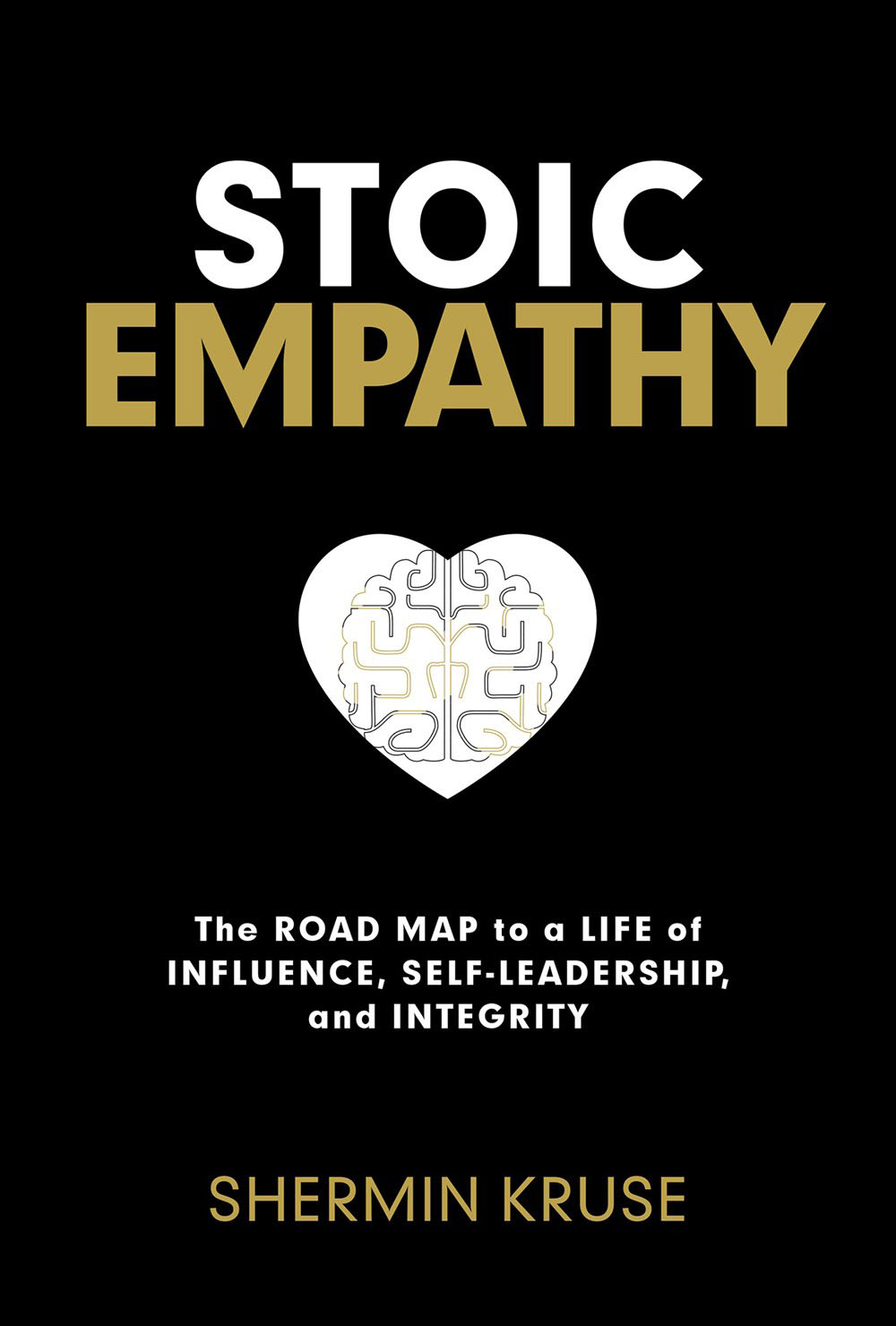
Stoicism combined with empathy may sound like a contradiction in terms. But when these seemingly opposing forces are harnessed together, they have the power to change your life.
From surviving missile attacks and political oppression in Iran to leading high-stakes legal teams and negotiations in corporate America, Shermin Kruse’s journey fuels her mission to merge empathy and stoicism as tools for navigating power, justice, and human connection in every facet of life. In this eye-opening book, she offers you this radical perspective shift—anchored in up-to-the-minute research—to help you navigate life’s challenges with power and principles.
We often think of empathy as an emotional stance: we feel what someone else is feeling. But Kruse outlines a form of empathy that’s based in cognition, not emotion—a way for us to understand what the other person is thinking and feeling while keeping a distance from their feeling state—and shows us how we can strategically maneuver our level of engagement from “emotional empathy” to “cognitive empathy” in different circumstances. Then she utilizes Stoic philosophy and modern science to outline the how of emotional regulation and control. The bridge she builds between Stoicism and empathy gives us the knowledge and discipline we need to:
• Calmly assess the power dynamics of any situation
• Understand and manage our own emotions as well as the emotions of others
• Defuse danger and turn conflict into connection
• Skillfully steer a challenging conversation toward the result we want
Whether you’re a leader striving to succeed in your role with integrity, an educator seeking to guide curious minds with compassion, a parent nurturing resilience in your children, or simply facing a personal or professional crossroads, Stoic Empathy is an essential toolkit for negotiating success in every area of your life.

In this captivating volume, Fali S. Nariman invites readers into the compelling realm of justice. With a masterful blend of wit, wisdom, and keen insight, he brings to life the art of law and arbitration, interwoven with pivotal moments and memorable anecdotes from the legal world.
In the first part of the book, Nariman reflects on the practice of arbitration, exploring its intricacies, its complexities, and the important lessons drawn from decades of experience. With sharp observations and timeless advice, he offers a profound understanding of arbitration’s nuances and significance in modern law.
The second part brims with delightful and thought-provoking anecdotes from the legal fraternity, showcasing towering personalities and transformative events in jurisprudence that underscore the dynamic interplay of life and law.
For anyone intrigued by the law’s rich tapestry, this book offers both inspiration and enlightenment from one of India’s most celebrated legal minds.
USPs:
1. Wit and Wisdom from a Legal Legend: Gain unparalleled understanding of arbitration and law from one of India’s most respected legal minds, blending decades of practice with keen observations.
2. Rich, Real-World Anecdotes: Discover compelling narratives from the legal world, showcasing transformative moments and influential figures that shape the intersection of law and life.
3. Inspiration for Law Enthusiasts: Whether you are a legal professional or simply intrigued by the intricacies of justice, this book offers both inspiration and enlightenment, making complex legal topics accessible and engaging for all readers.

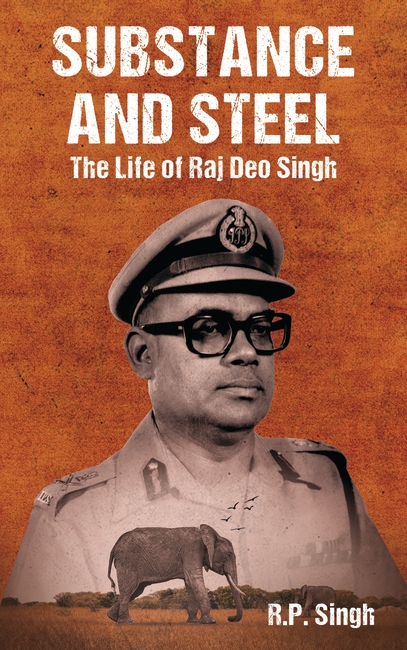
Substance and Steel: The Life of Raj Deo Singh is a compelling tribute to one of India’s most revered law enforcement officers, Shri Raj Deo Singh (RD). Through the words of those who knew him best—family, colleagues, dignitaries, and friends—this book paints a portrait of a man whose life was defined by unwavering principles of honesty, discipline, and moral courage. From his early days to his rise as Director of the Central Bureau of Investigation (CBI), RD’s journey is marked by a deep commitment to justice, compassion for others, and an unshakeable sense of duty. In a world where integrity often faces great challenges, RD’s story serves as a powerful reminder of the impact one individual can have in shaping a better society. Written by Dr R.P. Singh, this book not only honours RD’s legacy but also offers invaluable lessons in character, leadership, and resilience for future generations.

छोटी-छोटी आदतों से लाएँ बड़े बदलाव एक प्रेरणादायक किताब है जो आपके जीवन को सुधारने के लिए छोटे लेकिन प्रभावी बदलावों पर केंद्रित है। यह किताब आदतों के विज्ञान, प्रैक्टिकल टिप्स और कदम-दर-कदम मार्गदर्शन के माध्यम से आपको सकारात्मक आदतें अपनाने और बुरी आदतों को छोड़ने में मदद करती है, ताकि आप अपने लक्ष्यों को आसानी से हासिल कर सकें।

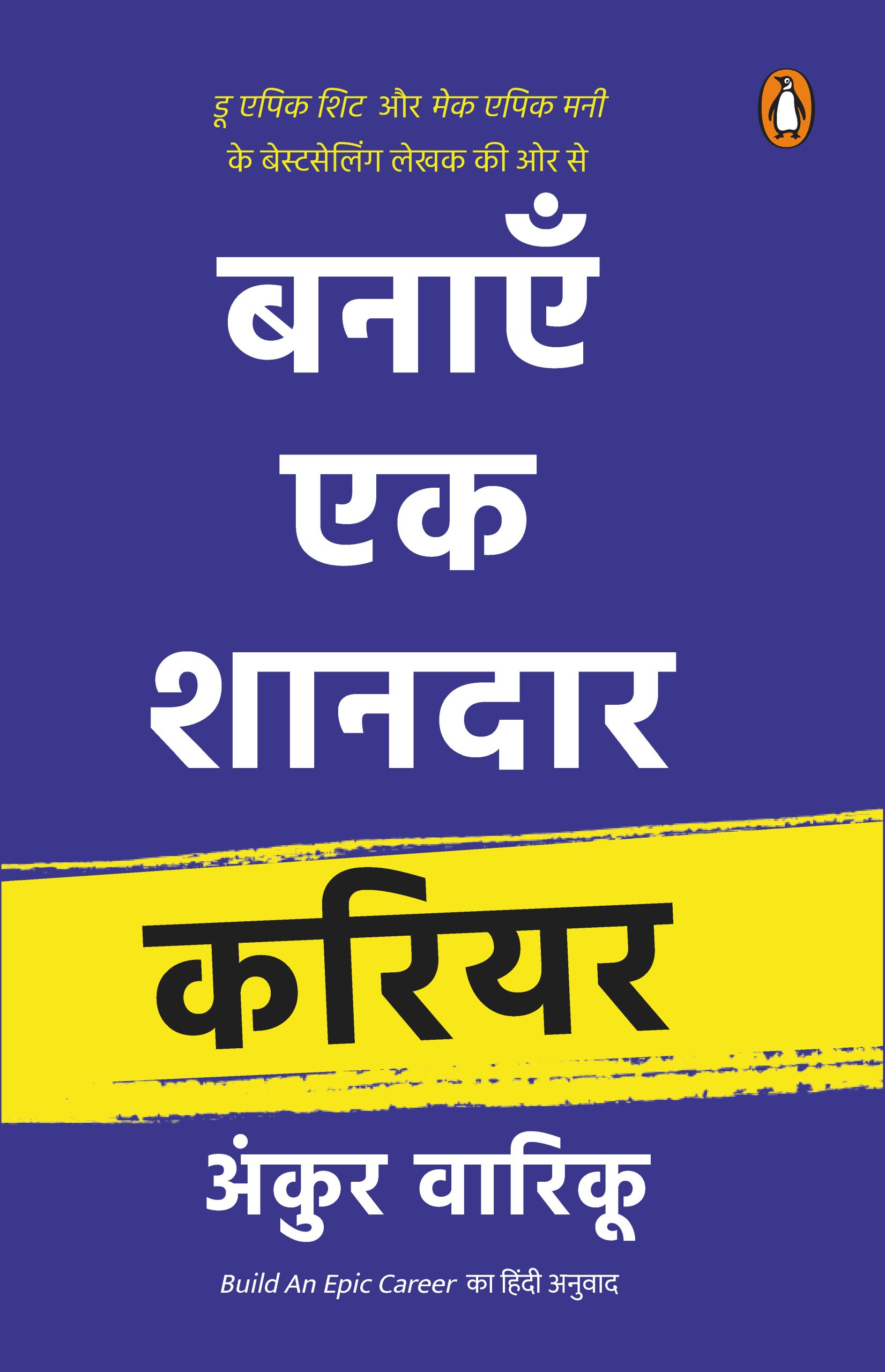
बनाएँ एक शानदान करियर एक प्रेरक और व्यावहारिक पुस्तक है, जो आपके करियर को नई ऊँचाइयों पर ले जाने के लिए आवश्यक कदमों और रणनीतियों को सरल तरीके से प्रस्तुत करती है। यह आपको अपने पेशेवर लक्ष्यों को पहचानने, अपनी क्षमताओं को विकसित करने और आत्मविश्वास के साथ सफलता की ओर बढ़ने में मदद करती है।
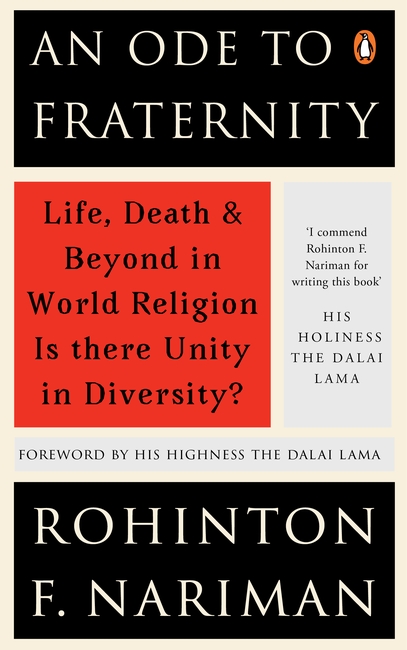
Religion . . . Time and again, people have fought over it and divided the world into many fragments. Often, they have mindlessly imposed the superiority of one religion over another. News on ‘forceful conversion’, ‘religious extremism’ and ‘religious hostility’ is rightly, wrongly and maliciously disseminated through various means. Such acts have not only ruptured communal harmony and caused bloodshed but also damaged the foundation of humanity. History is witness to such man-made catastrophes.
Shedding light on how people from various faiths can learn from each other to create a more inclusive world, An Ode to Fraternity is a brilliant meditation on world religion. From Hinduism, Islam, Jainism, Buddhism and Bahai to Sikhism and Christianity, among others, this is an apt book for our times, one that opens a window to understand how multiple faiths, life philosophies and religions can create a panoramic peaceful world.
Authoritative, engaging and deeply researched, An Ode to Fraternity will interest a wide spectrum of readers. It is a must-read students and scholars of philosophy, comparative religion, legal jurisprudence as well as policymakers.

Few arenas in the annals of legal history have witnessed as profound a transformation as the realm of gender equality within the armed forces.
In Her Defence: Ten Landmark Judgments on Women in the Armed Forces is an anthology of essays and commentaries, in layperson terms, contributed by jurists, judges and academics on landmark constitutional court decisions of India that made a difference or brought about a positive change for women in the uniformed forces.
It is envisaged as not just a book, but a testament to the resilience, determination and legal triumphs of women who have paved the way for greater gender inclusivity and parity within India’s armed forces.
Meticulously curated to illuminate the pivotal judgments that have shaped the trajectory of women’s participation in the armed forces of India, this book stands as a cornerstone and embodiment of the judiciary’s unwavering dedication to upholding the principles of equality and justice.
What does it mean to be a queer lawyer? How should social impact and public interest legislation be undertaken? Is the legal profession a safe space for queer lawyers? What goes through the mind of a queer lawyer when homophobia is masqueraded as a legal argument?
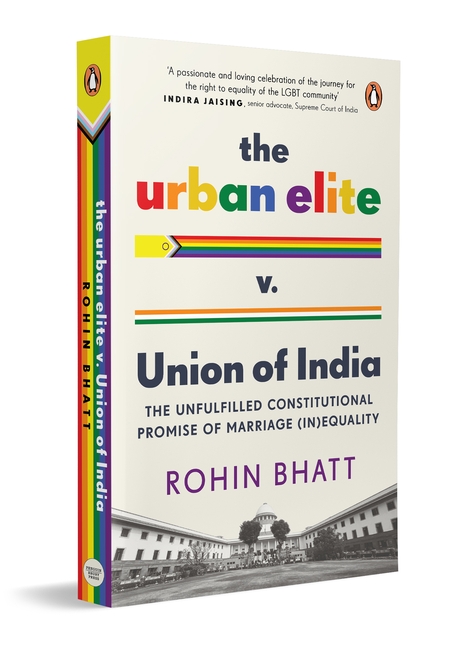
Rohin Bhatt was studying law at the Gujarat National Law University when the Supreme Court gave its landmark judgment in Navtej Singh Johar & Ors. v. Union of India. The apex court was asked to determine the constitutionality of Section 377 of the Indian Penal Code, a colonial-era law which, among other things, criminalized homosexual acts as an ‘unnatural offence’. The verdict changed the lives of the LGBTQIA+ community in India, with activists and lawyers outside the court cheering as the news broke. But five years later, little has changed on the ground.
The Urban Elite versus Union of India is a first-of-its-kind book on queer rights not just of the courtroom, but of the author’s own life. In this book, they present the legal history of the fight for the decriminalization of Section 377, the arguments of the petitioners pushing for their right to marry (and the vicious opposition) and to have families of their own, as well as a story from the frontlines of litigating queer rights by a queer person that presents their own perspective of what it is like to be both personally and professionally involved in a case that had the potential to change the social fabric of this country forever.

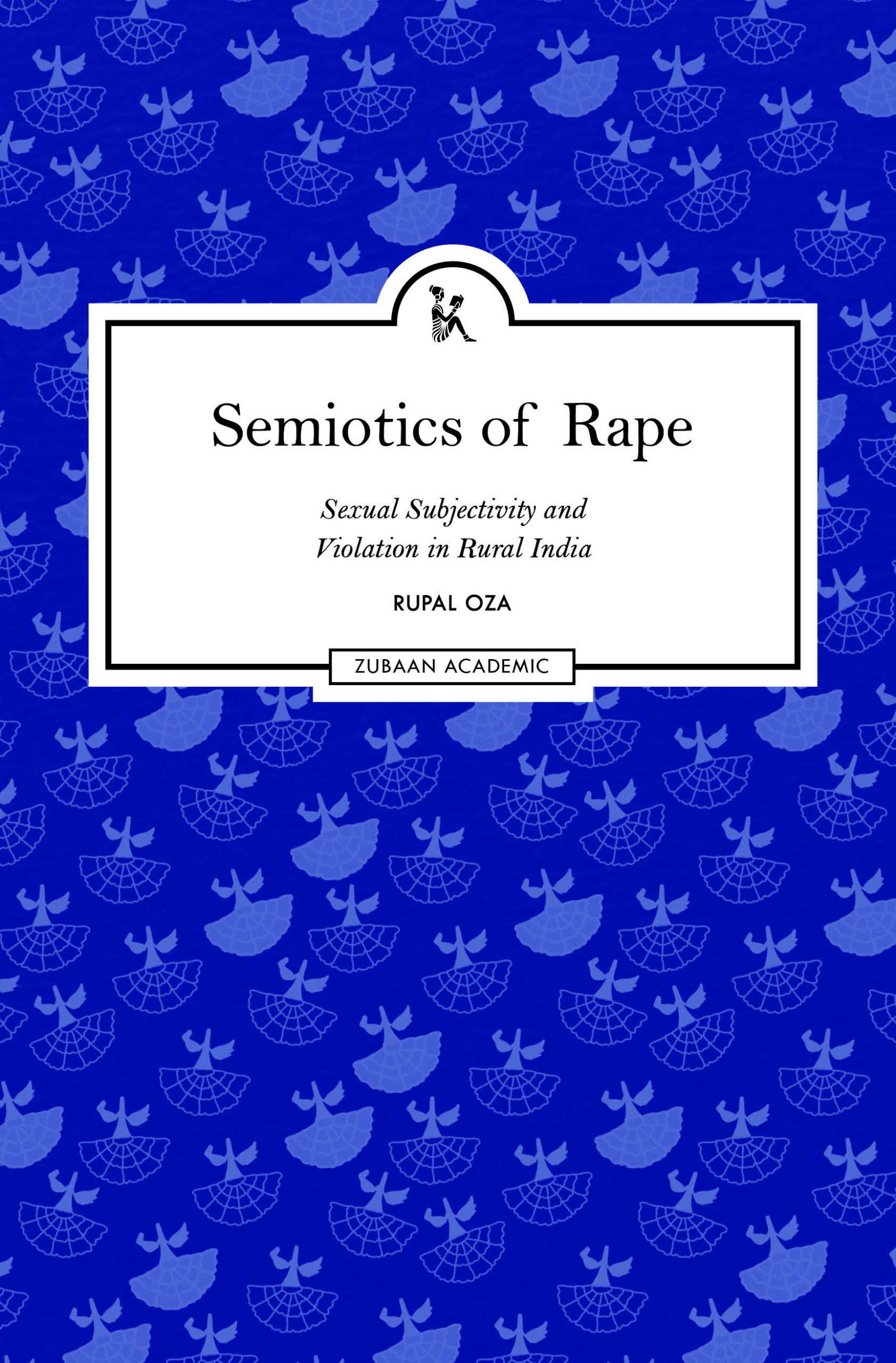
In Semiotics of Rape, Rupal Oza follows the social life of rape in rural northwest India to reveal how rape is not only a violation of the body but a language through which a range of issues—including caste and gender hierarchies, control over land and labor, and the shape of justice—are contested. Rather than focus on the laws governing rape, Oza closely examines rape charges to show how the victims and survivors of rape reclaim their autonomy by refusing to see themselves as defined entirely by the act of violation. Oza also shows how rape cases become arenas where bureaucrats, village council members, caste communities, and the police debate women’s sexual subjectivities and how those varied understandings impact the status and reputations of individuals and groups.
In this way, rape gains meaning beyond the level of the survivor and victim to create a social category. By tracing the shifting meanings of sexual violence and justice, Oza offers insights into the social significance of rape in India and beyond.

26 November 1949 marks the date when the longest constitution in the world was formally adopted to guide the largest democracy in the world. It effectively transformed the British Dominion of India into one nation—the independent Republic of India. The supreme law of the land set forth the workings of Indian democracy and polity, and its provisions aimed to secure justice, liberty, equality, and fraternity for the people of India. As drafted and as conceived, the constitution makes provision for a functioning democracy and not an electoral autocracy, and this is how it has to be worked. It is therefore imperative for all citizens to familiarise themselves with its provisions.
In this definitive tome, the author (who commenced his legal practice in the year the constitution was enacted) presents his comments in a style that is comprehensive, lucid, and systematic. The book traces the history and the origins of India’s document of governance and explains its provisions. Some of the salient features of the book include:
• An educative and informative exposition of the different parts of the Indian Constitution, including a bird’s-eye view of—and with comments on—all the three hundred and ninety-five articles of the constitution and additions made by constitutional amendments.
• Provides references of critical cases and prominent constitutional developments up to 31 July 2023.
• Insightfully describes the structure, powers, and directive principles of government institutions.
• Contains updated judicial pronouncements and legislative and constitutional amendments.
In essence, You Must Know Your Constitution is an immensely readable and insightful compendium, inter alia, for judiciary aspirants, academicians, legal and administrative authorities, policymakers, research scholars, and students as well as for general readers who are interested in exploring the manifold facets of India’s core document of governance.