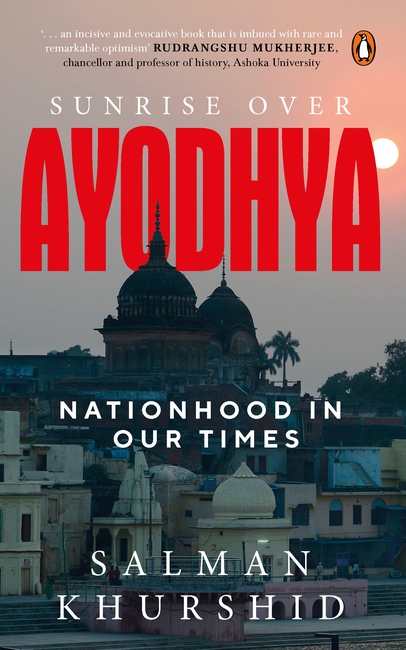
On 9 November 2019, the Supreme Court, in a unanimous verdict, cleared the way for the construction of a Ram temple at the disputed site in Ayodhya.
As we look back, we will be able to see how much we have lost over Ayodhya through the years of conflict. If the loss of a mosque is preservation of faith, if the establishment of a temple is emancipation of faith, we can all join together in celebrating faith in the Constitution. Sometimes, a step back to accommodate is several steps forward towards our common destiny.
Through this book, Salman Khurshid explores how the greatest opportunity that the judgment offers is a reaffirmation of India as a secular society.

Comprehensive, definitive and authoritative, this is a must a must have for legal scholars and practitioners. Besides, the book will greatly interest policy makers as well as anyone, interested in India’s legal history.
A dissenting judgment, as ordinarily understood, is a judgment or an opinion of a judge, sitting as part of a larger bench, who ‘dissents’ (i.e. disagrees) with the opinion or judgment of the majority. Dissenting judgments or opinions appear in different ways.
Tracing, exploring and analysing all dissenting judgments in the history of the Supreme Court of India, from the beginning till date, Rohinton Fali Nariman brings to light the cases, which created a deep impact in India’s legal history. From the famous Bengal Immunity Co. Ltd. v. State of Bihar in 1955 to Bhagwandas Goverdhandas Kedia v. Girdharilal Pashottamdas and Co. in 1966, State of Bombay v. The United Motors (India) Ltd in 1953, Superintendent & Legal Remembrancer, State of West Bengal v. Corporation of Calcutta in 1967, Supreme Court Advocates-on-Record Association v. Union of India in 1993, Mafatlal Industries v. Union of India in 1997 and Pradeep Kumar Biswas v. Indian Institute of Chemical Biology in 2002, Keshava Madhava Menon v. State of Bombay in 1951, United Commercial Bank Ltd. v. Workmen and Ram Singh v. The State of Delhi in the same year and Union of India v. West Coast Paper Mills Ltd. in 2004 among others, this two-volume definitive work is a thorough examination of the important dissenting judgments of the Supreme Court of India, and of some of the Judges of the Supreme Court who have gone down as ‘Great Dissenters’, for having written dissents of legal and constitutional importance, some of which have gone on to be recognised as correct position of the law.

Comprehensive, definitive, and authoritative, this book brings to light the most significant dissenting judgments in the history of the Supreme Court of India. A must-have for all legal scholars and practitioners. Besides, the book will greatly interest policymakers as well as anyone, interested in India’s legal history.
A dissenting judgment, as ordinarily understood, is a judgment or an opinion of a judge, sitting as part of a larger bench, who ‘dissents’ (i.e. disagrees) with the opinion or judgment of the majority. Dissenting judgments or opinions appear in different ways.
Tracing, exploring and analysing all dissenting judgments in the history of the Supreme Court of India, from the beginning till date, Rohinton Fali Nariman brings to light the cases, which created a deep impact in India’s legal history. From the famous Bengal Immunity Co. Ltd. v. State of Bihar in 1955 to Bhagwandas Goverdhandas Kedia v. Girdharilal Pashottamdas and Co. in 1966, State of Bombay v. The United Motors (India) Ltd in 1953, Superintendent & Legal Remembrancer, State of West Bengal v. Corporation of Calcutta in 1967, Supreme Court Advocates-on-Record Association v. Union of India in 1993, Mafatlal Industries v. Union of India in 1997 and Pradeep Kumar Biswas v. Indian Institute of Chemical Biology in 2002, Keshava Madhava Menon v. State of Bombay in 1951, United Commercial Bank Ltd. v. Workmen and Ram Singh v. The State of Delhi in the same year and Union of India v. West Coast Paper Mills Ltd. in 2004 among others, this two-volume definitive work is a thorough examination of the important dissenting judgments of the Supreme Court of India, and of some of the Judges of the Supreme Court who have gone down as ‘Great Dissenters’, for having written dissents of legal and constitutional importance, some of which have gone on to be recognised as correct position of the law.

LONDON CALLING
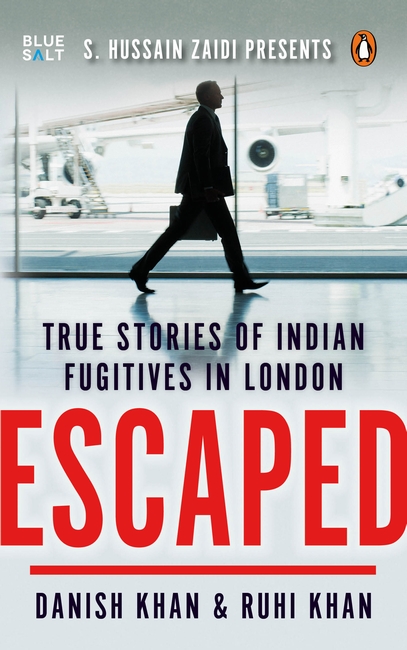
London has emerged as a safe haven for those who want to escape the law in India. Through eyewitness accounts and archival records, DANISH KHAN and RUHI KHAN delve into twelve extraordinary cases of extradition over seven decades to unravel the legal quagmire that has caused much debate in Her Majesty’s courts, and consternation in New Delhi’s corridors of power.
Escaped examines the extradition of billionaire VIJAY MALLYA and diamantaire NIRAV MODI, throws a spotlight on their ultra-luxe world, uncovers the complex ownership of their UK assets and brings to life the intense courtroom battles. The book also chronicles the saga of cricket bookie SANJEEV CHAWLA, now dispatched to India, and that of
music director NADEEM SAIFI, who has been exonerated but can never return home. It explores how drug lord IQBAL MIRCHI and terror accused HANIF PATEL evaded extradition, and investigates the loopholes that saved convicted paedophile RAYMOND VARLEY and NRI parents ARTI DHIR and KAVAL RAIJADA, accused of murdering their adopted child. The book reveals the inside story of how RAVI SHANKARAN, the alleged spy, was set
free, and how the famed NARANG BROTHERS were snagged for trading in stolen Indian artefacts. Taking a trip through history, the book recounts how a newly independent India managed to bring back two powerful
industrialists, DHARMA JAYANTI TEJA and MUBARAK ALI AHMED, who were involved in financial crimes.
Escaped decodes why London is an irresistible
siren for Indian fugitives.
The book by Danish Khan and Ruhi Khan is based on in-depth research of 12 cases of fugitives from India who reached the United Kingdom. For anyone who is interested in knowing how extradition proceedings are really conducted and what kind of scrutiny is done before granting extradition this is an extremely useful and easy to read book. The poor rate of success is largely due to shoddy paperwork and the unhygienic conditions of Indian prisons. The lesson for Indian policy makers is to make the Indian criminal justice system more humane. – Faizan Mustafa, law expert and vice-chancellor, NALSAR University of Law
An exhaustive and meticulously researched study of the Indian rogues and fraudsters who have sought shelter behind Britain’s complicated extradition laws, which is entertaining as it is illuminating. – Mick Brown, Journalist, The Telegraph, UK
Escaped has 12 gripping accounts of Indian fugitives who have found shelter in the UK. London residents and authors Danish Khan and Ruhi Khan craft a book that offers more than a deep-dive into how the famous fugitives made their great escape. It also offers rare insights into their lives before and after their fall. The book covers a wide gamut of issues surrounding the crime – from the loopholes that allowed the criminals to escape, to the ineffective foreign policy…what made Escaped come alive are cases that are now lost in dusty files, crimes that were staged long ago. – MoneyControl

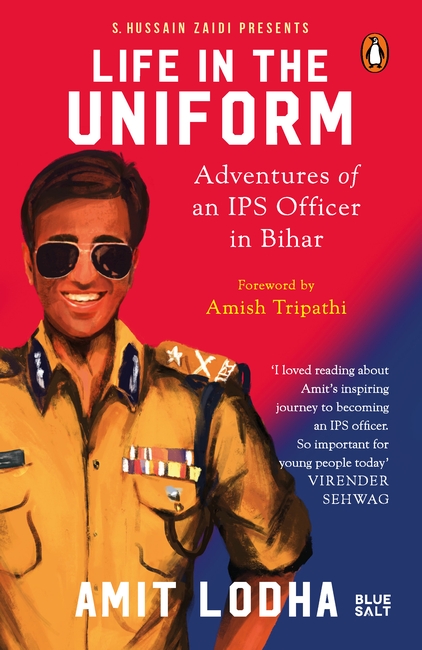
Amit Lodha is a decorated IPS officer holding the rank of inspector general. But before he rose the ranks in the service, he was an IIT graduate who was struggling to find his true purpose. In this book, Lodha tells us how he turned his life around and studied for the UPSC exams. He also tells us how he trained to be an officer and had the most memorable beginning to his career, in Bihar.
Punctuated with his signature humour and adventure-packed stories on everything from solving a kidnapping to handling a mob, Life in the Uniform gives us a chance to experience an IPS officer’s life through his own eyes.

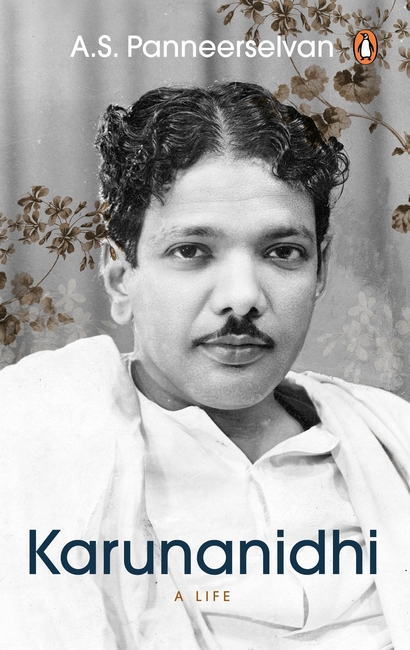
The most definitive biography of one of the most popular Indian politician, Karunanidhi.
Writer-turned-politician Muthuvel Karunanidhi is amongst the most important political figures India has ever seen. He was the chief minister of Tamil Nadu for five terms and leader of the Dravida Munnetra Kazhagam (DMK) for over five decades. Still remembered for his controversial but fruitful career as a regional leader, his contribution to Tamil history and culture has been invaluable. Meticulously researched and deeply engrossing, Karunanidhi: A Life delves into the life and times of this unforgettable man and his contribution to Indian politics.

‘Excellent political biography of NTR. I enjoyed reading it. There is a lot of good stuff here’
SANJAYA BARU, author, political commentator
‘A very objective, lucid, truthful biography’
DR JAYAPRAKASH NARAYAN, founder, Lok Satta
‘…fair, even-handed and objective in assessing NTR’s political journey’
PARAKALA PRABHAKAR, author, political commentator
‘Found it impossible to put down the book till I completed it’
K. PADMANABHAIAH, chairman, Administrative Staff College of India
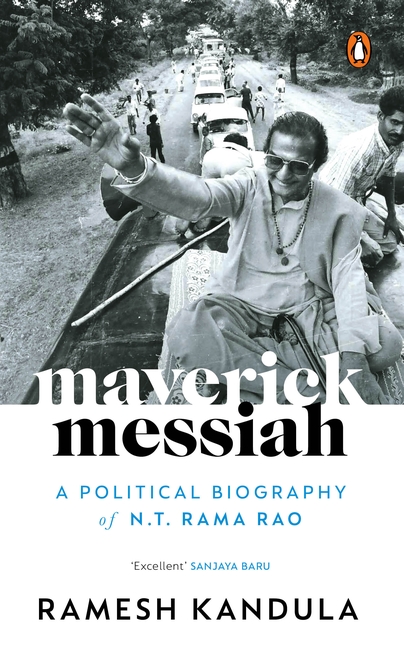
Nandamuri Taraka Rama Rao, widely known as NTR, was not merely a film star who strayed into politics and captured power in Andhra Pradesh. The actor-politician redefined the political culture in the state and scripted a new political idiom.
His rather dramatic entry into politics, the profound impact he left on the people of Andhra Pradesh and the vital role he played in national politics during his relatively short political life, however, have not received deserving recognition.
Maverick Messiah captures the different facets of NTR’s life in all their varied hues and puts in perspective the significant contribution of the actor-politician to the Indian political tapestry.

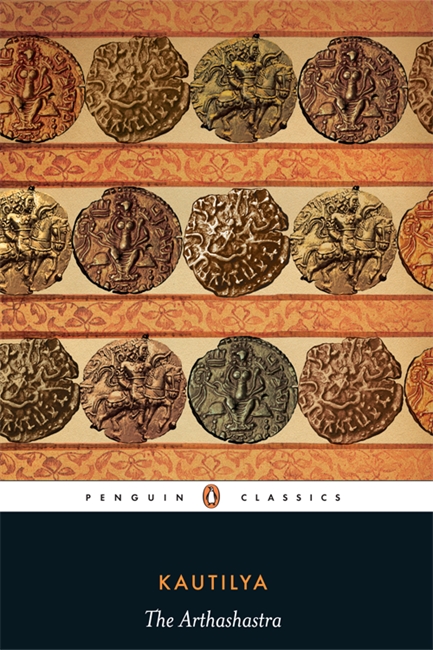
An extraordinary detailed manual on statecraft and the science of living by one of classical India’s greatest minds; Kautilya; also known as Chanakya and Vishnugupta; wrote the Arthashastra not later than 150 AD though the date has not been conclusively established. Legend has it that he was either a Brahmin from Kerala or from north India; however; it is certain that Kautilya was the man who destroyed the Nanda dynasty and installed Chandragupta Maurya as the King of Magadha. A master strategist who was well-versed in the Vedas and adept at creating intrigues and devising political stratagems; Kautilya’s genius is reflected in his Arthashastra which is the most comprehensive treatise of statecraft of classical times.
The text contains fifteen books which cover numerous topics viz.; the King; a complete code of law; foreign policy; secret and occult practices and so on. The Arthashastra is written mainly in prose but also incorporates 380 shlokas.
Artha; literally wealth; is one of four supreme aims prescribed by Hindu tradition. However; it has a much wider significance and the material well-being of individuals is just a part of it. In accordance with this; Kautilya’s Arthashastra maintains that the state or government of a country has a vital role to play in maintaining the material status of both the nation and its people. Therefore; a significant part of the Arthashastra has to do with the science of economics. When it deals with the science of politics; the Arthashastra describes in detail the art of government in its widest sense-the maintenance of law and order as also of an efficient administrative machinery.

Ascribed to Kautilya (commonly identified as the prime minister of Chandragupta Maurya) and dating back more than 2,000 years, the Arthashastra is the world’s first manual in political economy. It has a pre-eminence in Indian thought that is akin to that of Machiavelli’s The Prince in Europe. Arthashastra (literally, ‘the science of wealth’) is a study of economic enterprise; specifically, Kautilya’s treatise advises the king on the business of creating prosperity. This ancient text provides a fascinating window into the social and economic structures of the time, and into the intricacies of statecraft—for the Arthashastra also addresses the question: what makes a good leader? This book is intended to be an introduction to the economic philosophy of the Arthashastra. Its goal is to analyse the relevance of this classic text in its own time—in a world in which kings were regulators of economic activities of their subjects, but also entrepreneurs themselves—in the conviction that it has much to teach us that has value in our own age
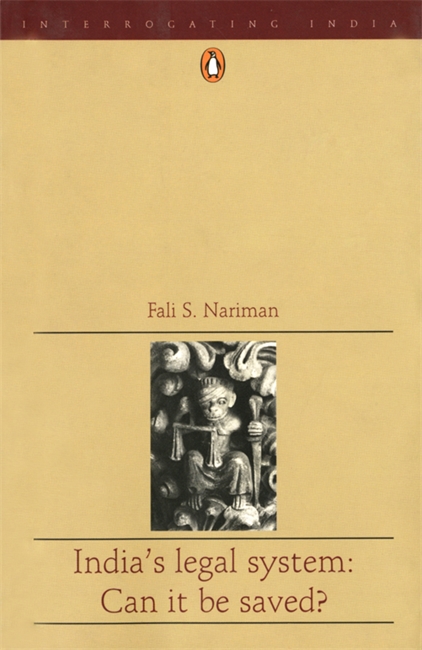
India has the second-largest legal profession in the world, but the systemic delays and chronic impediments of its judicial system inspire little confidence in the common person. In India’s Legal System, renowned constitutional expert and senior Supreme Court lawyer Fali S. Nariman explores possible reasons. While realistically appraising the criminal justice system and the performance of legal practitioners, he elaborates the different aspects of contemporary practice, such as public interest litigation, judicial review and activism. In lucid, accessible language, Nariman discusses key social issues such as inequality and affirmative action, providing real cases as illustrations of the on-ground situation.
This frank and thought-provoking book offers valuable insights into India’s judicial system and maps a possible road ahead to make justice available to all.