Nowhere are more laws at risk of being broken than in a courtroom
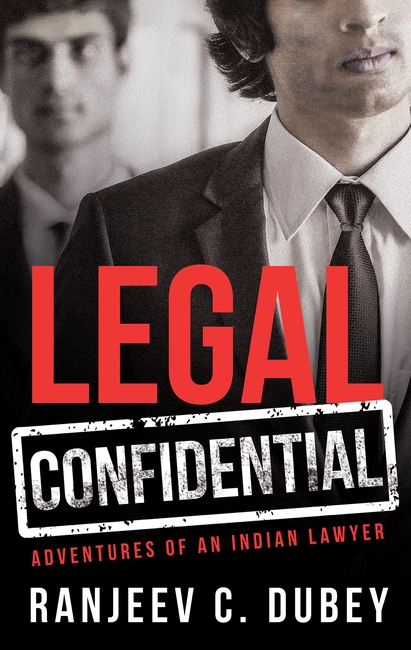
Rookie lawyer Ranjeev C. Dubey realizes this the hard way as he trudges through the corridors of Delhi’s trial courts and sees that the legal system is anything but fair. He stumbles upon a strange world of corruption, adultery, eloping couples and clients willing to pay for legal services ‘in kind’. He survives the ‘killing field’ of litigation for twelve long years, biding his time.
When he gets an offer to join a law firm, Dubey believes he has finally arrived. But has he? The world of Indian corporate law is one of intense power-play and the merciless pursuit of revenue. In this sinister ecosystem of destructive politicking, Ranjeev becomes enemies with the sharks circling the firm. What follows is an explosive showdown.
The now-well-known corporate lawyer exposes the world of the black robe in this dark and racy memoir with his trademark wit, leaving you wanting more.
If you read only one book about the world of lawyers and the Indian legal system, let Legal Confidential be it!

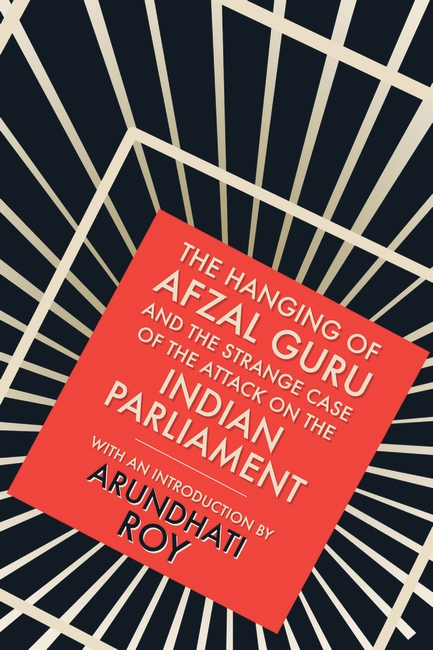
A comprehensive, sensitive view of one of the most controversial hangings of modern India
On 13 December 2001, the Indian Parliament was attacked by a few heavily armed men. Eleven years later, we still do not know who was behind the attack, nor the identity of the attackers. Both the Delhi high court and the Supreme Court of India have noted that the police violated legal safeguards, fabricated evidence and extracted false confessions. Yet, on 9 February 2013, one man, Mohammad Afzal Guru, was hanged to ‘satisfy’ the ‘collective conscience’ of society.
This updated reader brings together essays by lawyers, academics, journalists and writers who have looked closely at the available facts and who have raised serious questions about the investigations and the trial. This new version examines the implications of Mohammad Afzal Guru’s hanging and what it says about the Indian government’s relationship with Kashmir

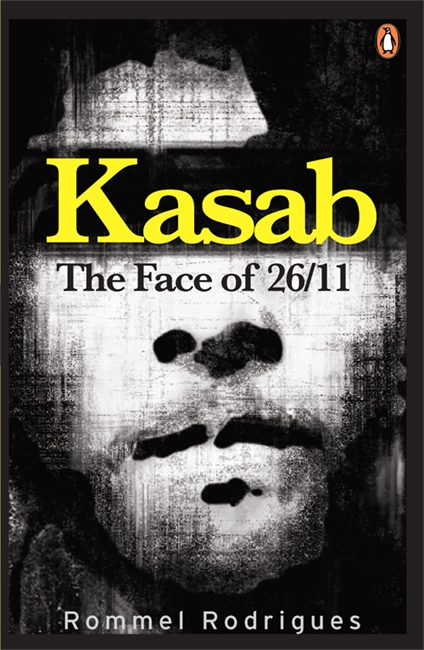
On 26 November 2008 ten heavily armed terrorists entered Mumbai. They headed for the city’s iconic landmarks and the mayhem they unleashed lasted nearly 60 hours.
The audacious terror attacks jolted Mumbai like never before. Even as they mourned; the residents of Maximum City demanded answers. But the information they got in return-accounts of the investigation; government rhetoric; newspaper reports; television features; books and even a film-was sketchy at best. Meanwhile; the courts continued with their prosecution of Mohammed Ajmal Amir Kasab; the lone surviving 26/11 gunman.
The broad picture available to the public is of the Pakistan-based terrorist organization Lashkar-e-Taiba and its ringleaders such as Hafiz Muhammad Saeed and Zaki-ur-Rehman Lakhvi training; arming and dispatching ten young men in a boat to attack India’s commercial capital. All we have been told about Kasab is that he was just another recruit brainwashed into carrying out the plot against Mumbai. Kasab: The Face of 26/11 breaks new ground by painstakingly piecing together Kasab’s terror trail. The narrative follows Kasab through the bylanes of Pakistani villages and cities as he made his way towards PoK; the dense forests where the terrorist-training camps are situated; the trains; buses and jeeps he boarded; the Indian vessel he and the others hijacked en route to Mumbai’s shores; Kasab’s capture and incarceration.
Rommel Rodrigues’ path-breaking investigative journalism fleshes out for the first time the well thought-out planning and organization that lay behind the attacks of 26/11.

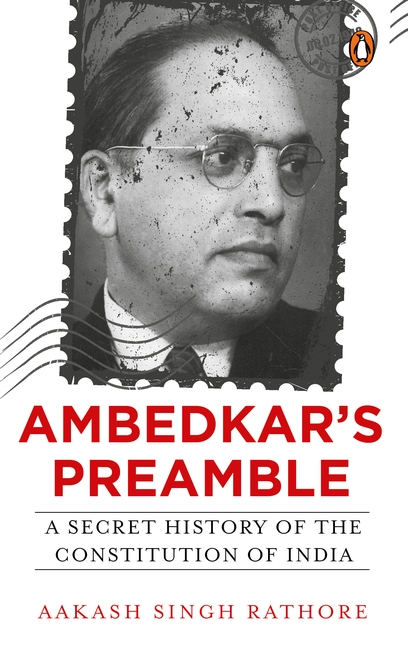
On 26 January 1950, the Constitution of India was formally adopted and came into effect. Its Preamble set out in brief the enlightened values it enshrined and hoped to engender. In a radical shift from mainstream constitutional history, this book establishes B.R. Ambedkar’s irrefutable authorship of the Preamble by uncovering the intellectual origins of its six most central concepts-justice, liberty, equality, fraternity, dignity and nation.
Although Ambedkar is universally regarded as the chief architect of the Constitution, the specifics of his role as chairman of the drafting committee are not widely discussed. Totally neglected is his almost single-handed authorship of the Constitution’s Preamble, which is frequently and mistakenly attributed to Jawaharlal Nehru rather than to Ambedkar. This book establishes how and why the Preamble to the Constitution of India is essentially an Ambedkarite Preamble. It is clear that its central concepts have their provenance in Ambedkar’s writings and speeches.
Through six eponymous chapters, this book unfolds the story of the six constitutional concepts. In doing so, it spotlights fundamental facts about modern Indian history, as well as Ambedkar’s revolutionary political thought, hitherto ignored in conventional accounts.
The education of their children is of paramount importance to all Indian parents. They spend tens of thousands of crores each year to get their young educated. The country fetes its successful students : from class X to board toppers and those who ‘crack the IIT JEE’ to those who clear the civil- services examination.
Yet things on the ground are dire.
About 70 per cent of all students ( in villages, towns and cities) have to make do with inferior schooling. Metropolitan newspapers are full of the difficulty of getting a nursery seat in a good school. And while there is a seat crunch in the better colleges too, only 10 per cent of all students between the ages of 18 and 21 are enrolled in college. Crores of educated Indians discover too late that they do not have the skills to land a suitable job.
Y.S. Rajan examines the gamut of issues involved in India’s efforts to educate its young people and the work required to fix schools, vocational training centres, colleges and universities. He argues that Indian education needs reforms on a scale comparable to those which freed the economy of the shackles of the licence-permit raj almost twenty years ago.

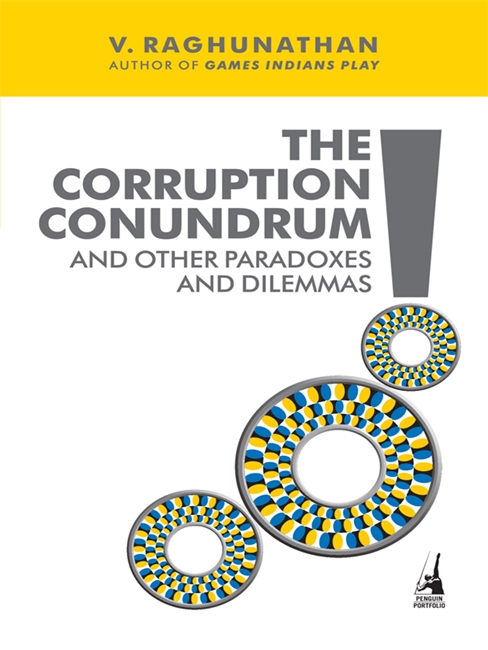
How can you be a ‘well-known secret agent’? How is it that ‘corruption is universally disapproved of and yet universally practised’? The world of dilemmas and paradoxes touch our lives on a regular basis. In The Corruption Conundrum and Other Paradoxes and Dilemmas, V. Raghunathan shares some of the more interesting examples, allowing us to delight in the excitement, mystery, confusion, exasperation and that occasional flash of clarity and enlightenment that is often experienced when the world of paradoxes and dilemmas hits our own.The book takes the reader through some of the fascinating illustrations, classical and well-known, as well as the less common examples, in the field of management, finance and work life.
Following the same easy, readable style of his previous bestseller, Games Indians Play, this new book will certainly make you more curious about the world that surrounds us.
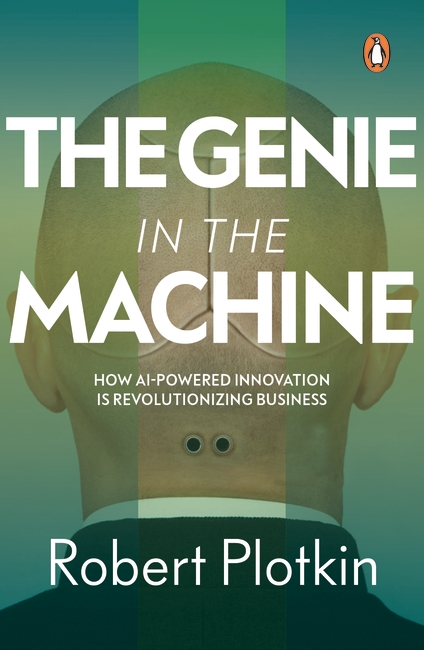
The future of businesses depends on how they respond to the lightning-speed changes in innovation technology
We have long considered inventing to be a uniquely human activity. But software today can automatically generate designs for everything, from toothbrushes to automobile frames, more quickly and inexpensively than ever before. Artificial invention is enabling small teams of inventors to compete with mega-corporations who depend on old methods, and is making it possible for even consumers to design and manufacture new inventions from the comfort of their home.
The Genie in the Machine is a landmark book that explores the impact of AI-powered innovation on businesses. Along with practical advice for inventors, high-tech companies and patent lawyers, this futuristic book attempts to answer two necessary questions: Should inventions designed by software be patentable? Should the software that produces those designs be patentable?
Our decisions about these inventions today will dictate who gets to control this powerful technology tomorrow.

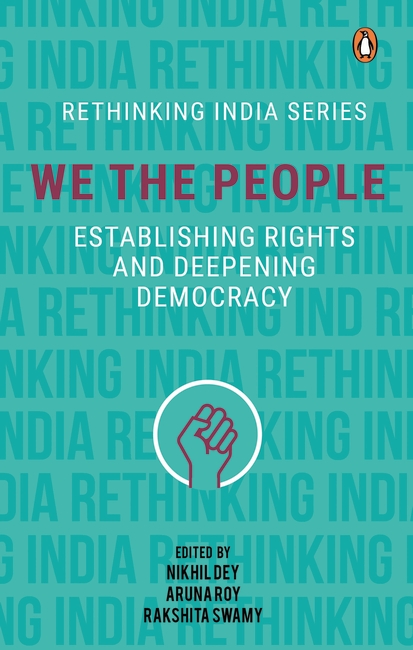
Who are the people of India? What are their rights? What are their claims on the Indian Constitution and on democracy? We the People, the fourth volume in the Rethinking India series, brings together a collection of essays that explores the process of germination and growth of undisputed universal rights, and of them being developed as tangible entitlements in India. The essays also examine the continuing challenge of establishing, realizing and protecting these entitlements.
The authors are academics, activists and practitioners who have a strong relationship with social movements. Their narratives trace the use of the rights-based framework of the Indian Constitution by sociopolitical movements in order to strengthen the economic, cultural and social rights of ordinary Indians. The multiple perspectives draw upon and contextualize the complex relationship of the citizen with the state, society and market in democratic India. Their sharp critiques have a counterpoint in stories of creative, successful alternatives designed by peoples’ collectives.
There is both an explicit and implicit challenge to conservative notions of ‘market-led development’ that see competition and profits as central to ‘progress’ and success. The essays showcase the continuing dialectic between established constitutional rights and shifting state policy. They provide invaluable insight at a time when many sacred pillars of neoliberal ‘globalization’ are crumbling, and the capitalist superstructure is itself turning to the state for survival. They promote understanding and scholarship, and enliven debates as we continue to search for answers in uncertain and challenging times.
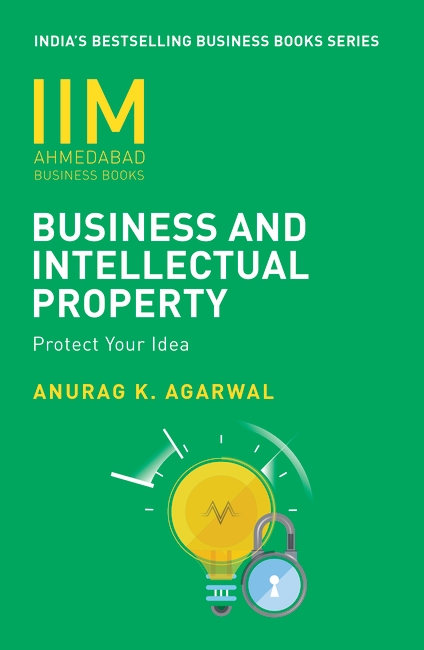
Business and Intellectual Property reflects on the future of Intellectual Property (IP) in the age of new media and shows how—in a rapidly changing business field—managers and decision-makers need to be more perceptive, agile, and vigilant than ever before. Drawing on contemporary business affairs and strategies, it explores the nature and scope of IP and the evolution of national laws and global agreements like the TRIPs to protect it. It also explores measures (use of patents, copyright, and trademarks) used by some of the biggest brands—Coke, MGM, 20th Century Fox, Microsoft, Harrods, Maruti, Tata—to manage disputes and protect themselves. Accessible, clear, and using a wide range of case studies, Business and Intellectual Property gives an excellent overview of a subject that is becoming a key aspect of many businesses today.
The IIM Ahmedabad Business Books bring key issues in management and business to a general audience. With a wealth of information and illustrations from contemporary Indian businesses, these non-academic and user-friendly books from the faculty of IIM Ahmedabad are essential corporate reading.
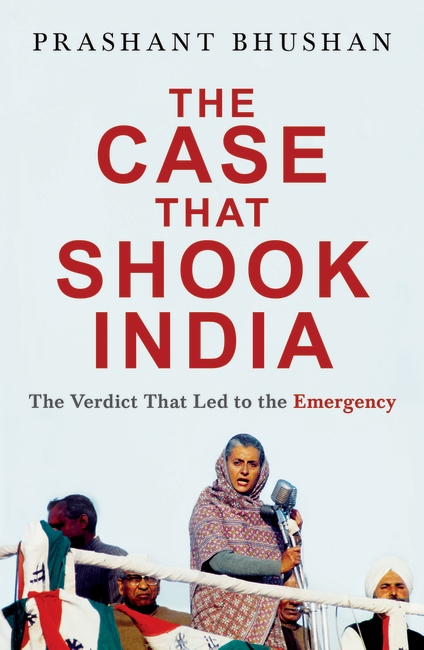
On 12 June 1975, for the first time in independent India’s history, the election of a Prime Minister was set aside by a High Court judgment. The watershed case, Indira Gandhi v. Raj Narain, acted as the catalyst for the imposition of the Emergency. Based on detailed notes of the court proceedings, The Case That Shook India is both a legal and a historical document of a case that decisively shaped India’s political destiny.
The author, advocate Prashant Bhushan, sets out to reveal the goings-on inside the court as well as the manoeuvrings outside it, including threats, bribes and deceit. Providing a blow-by-blow account, he vividly recreates courtroom scenes. As the case goes to the Supreme Court, we see how a ruling government can misuse legislative power to save the PM’s election.
Through his forceful and gripping narrative, Bhushan offers the reader a front-row seat to watch one of India’s most important legal dramas unfold.