The courts in India are struggling with a huge backlog of cases. As of 2016, there are 27 million pending cases and close to 90 million people are still waiting for justice.
To the common man, this is just a number. But some cases have impacted the collective conscious of the entire nation. These include the trial of Afzal Guru, the Nirbhaya case, the criminalization of homosexuality, the Parliament attack case, the Babri Masjid demolition and the 26/11 Mumbai attacks.
There was a lot that happened inside the courts during these trials which has remained hidden from public view. The Dramatic Decade is a collection of these stories. The book gives the reader a ringside view of what happened both inside and outside the courts. What were the arguments made, which lawyers fought the cases, what was the court’s judgment and how did it affect the common man are some of the many questions answered here.

Shayara Bano knocked at the doors of the Supreme Court to challenge her husband’s sudden decision of ending their marriage using the three dreaded words: talaq, talaq, talaq.
A 1980s Bollywood movie sparked off a national debate on the validity of instant divorce, which even saw Dawat-a four-page daily published by the Jamaat-e-Islami Hind-talking about triple talaq as per the Quran.
For a long time, the battle against instant talaq has garnered public attention. In Till Talaq Do Us Part, Ziya Us Salam, an eminent social commentator and an associate editor at Frontline, presents a holistic view of how divorce works in Islam. Ranging from triple talaq to talaq granted over three months to khula and talaq-e-tafweez, the book also discusses other methods of divorce available to a Muslim couple which go ignored thanks to all the attention on talaq, talaq, talaq.

It is crucial for managers to understand the terms of the contract that they work with. This exceedingly effective guide helps readers explore and master the many terms and conditions set up for conducting businesses. The book makes the subject readily accessible by employing easy-to-understand and discover-yourself techniques.

In 1980, a brilliant young American scholar, George H. Gadbois, Jr., met five judges of the Supreme Court of India. The judges gave him astonishing details: about what they actually thought of their colleagues, about the inner workings and politics of the court, their interactions with the government and the judicial appointments process, among many other things. This was only the beginning. Over the course of that decade, Gadbois visited India on two more occasions and conducted over 116 interviews with more than sixty-six judges of the Supreme Court of India (nineteen of whom held the post of chief justice of India),
and others such as senior lawyers, politicians, relatives of deceased judges, and court staff. During each meeting, Gadbois diligently took down handwritten notes, which he later typed up on his typewriter, recording nearly every detail of what the judges had told him, sometimes to a fault.
Relying on these typewritten interviews, Abhinav Chandrachud sheds light on a decade of politics, decision-making and legal culture in the Supreme Court of India. This book yields a fascinating glimpse into the secluded world of the judges of the Supreme Court in the 1980s and earlier.

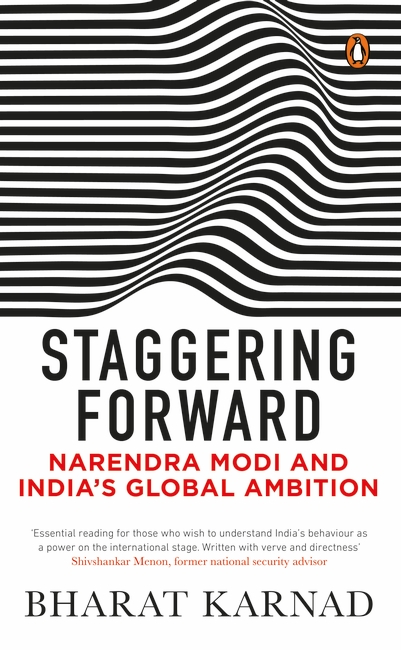
There is a paradigm shift in India’s politics. With his clean reputation, proven track record as chief minister of Gujarat and formidable leadership qualities on display, Narendra Modi seemed the right fit for the prime minister’s job, and just the man to turn the country around after the decade-long UPA rule by the modest and tongue-tied Manmohan Singh.
Prime Minister Modi’s first term, however, raises troubling questions. How has his strongman persona and social background impacted policymaking? Has Modi delivered on the high expectations to advance India’s national interest and security? Has the country’s role in the region, in Asia and the world changed, become more meaningful? What has been the effect of Modi’s India First foreign policy on neighbours, and with respect to raising India’s stock in the world and showing the Indian military has teeth? Especially with regard to the UUS, Russia and China.
Analysing Prime Minister Modi’s foreign and military policies in the context of India’s evolving socio-political and economic milieu, this book offers a critical perspective that helps explain why India has not progressed much towards becoming a consequential power. Argumentative and thought-provoking, Staggering Forward is a must-read to understand India’s foreign and national security policies since 2014.
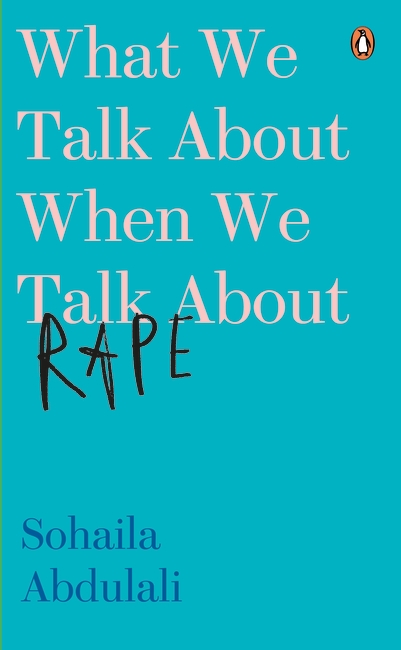
Sohaila Abdulali was the first Indian survivor to speak out about rape. Gang-raped as a teenager in Bombay and indignant at the deafening silence on the issue in India, she wrote an article for a woman’s magazine questioning how we perceive rape and rape victims. Thirty years later, she saw the story go viral in the wake of the fatal 2012 Delhi rape and the global outcry that followed.
Writing from the viewpoint of a survivor, writer, counsellor and activist, and drawing on three decades of grappling with the issue personally and professionally and her work with hundreds of survivors, Sohaila Abdulali looks at what we-women, men, politicians, teachers, writers, sex workers, feminists, sages, mansplainers, victims and families-think about rape and what we say.
She also explores what we don’t say. She asks pertinent questions: Is rape always a life-defining event? Does rape always symbolize something? Is rape worse than death? Is rape related to desire? Who gets raped? Is rape inevitable? Is one rape worse than the other? Who rapes? What is consent? How do you recover a sense of safety and joy? How do you raise sons? Who gets to judge?
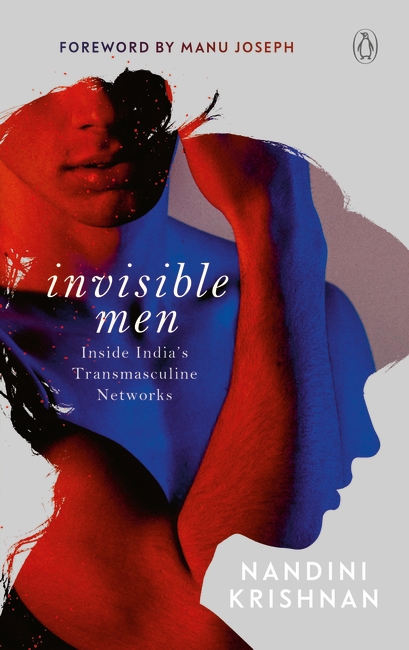
Female-to-male transgender people, or transmasculine people as they are called, are just beginning to form their networks in India. But their struggles are not visible to a gender-normative society that barely notices, much less acknowledges, them. While transwomen have gained recognition through the extraordinary efforts of activists and feminists, the brotherhood, as the transmasculine network often refers to itself, remains imponderable, diminished even within the transgender community. For all intents and purposes, they do not exist. In a country in which parents wish their daughters were sons, they exile the daughters who do become sons.
In this remarkable, intimate book, Nandini Krishnan burrows deep into the prejudices encountered by India’s transmen, the complexities of hormonal transitions and sex reassignment surgery, issues of social and family estrangement, and whether socioeconomic privilege makes a difference. With frank, poignant, often idiosyncratic interviews that braid the personal with the political, the informative with the offhand, she makes a powerful case for inclusivity and a non-binary approach to gender.
Above all, she asks the question: what does manhood really mean?

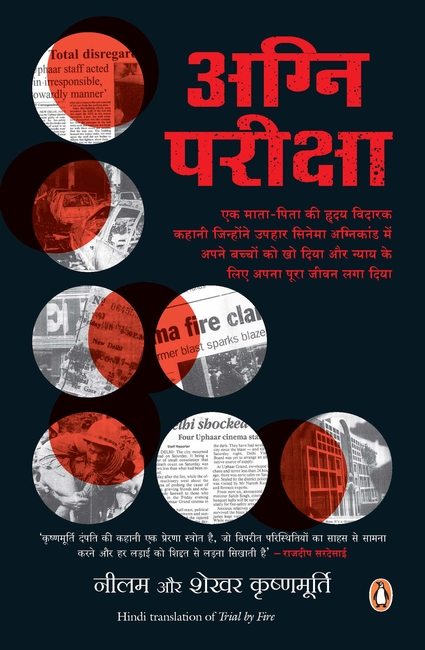
At 4:55 p.m., a swirling mass of thick, smoke engulfed the balcony section a well-known cinema hall in posh south Delhi. In the absence of fire exits and ushers to help the patrons, the people seated on the balcony found themselves trapped. By 7 p.m., fifty-nine people had died.
Among these were Unnati and Ujjwal. Their parents, Neelam and Shekhar, decided to fight the prolonged battle to ensure their kids get justice, for they saw no other reason to live. It’s been twenty-one years now, since the fire. But their fight with justice, for justice continues. This is their story.

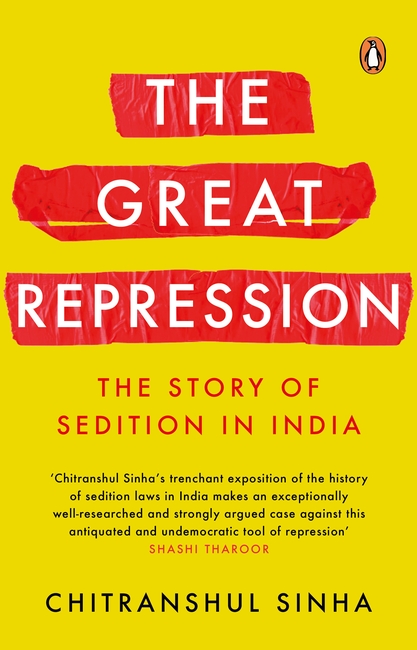
The Indian Penal Code was formulated in 1860, three years after the first Indian revolt for independence. It was the country’s first-ever codification of offences and penalties. But it was only in 1870 that Section 124A was slipped into Chapter VI (‘Of Offences against the State’), defining the offence of ‘Sedition’ in a statute for the first time in the history of common law.
When India became independent in 1947, the Constituent Assembly expressed strong reservations against sedition as a restriction on free speech as it had been used as a weapon against freedom fighters, many of whom were a part of the Assembly. Nehru vocally opposed it. And yet, not only has Section 124A survived, it has been widely used against popular movements and individuals speaking up against the establishment.
Where did this law come from? How did it evolve? And what place does it have in a mature democracy? Concise, incisive and thoughtful, The Great Repression by Chitranshul Sinha, an advocate on record of the Supreme Court of India, tells the story of this outdated colonial-era law.

WINNER, LEELA MENON LITERARY AWARD (NON-FICTION)
SHORTLISTED FOR THE TATA LITERATURE LIVE! FIRST BOOK AWARD 2020 – NON FICTION
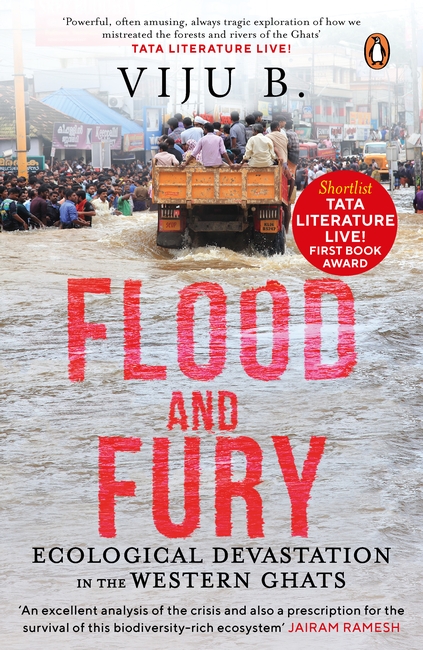
The floods that devastated large parts of Kerala in 2018 were not an isolated, freak phenomenon; rather, they signalled something graver-the ecological devastation of the Western Ghats.
Made a UNESCO World Heritage Site in 2012, the Ghats have become increasingly vulnerable to serious ecological damage, threatening the sustenance of their people. The 2018 floods were a wake-up call for the region spanning 1600 kilometres and six states-Kerala, Tamil Nadu, Karnataka, Goa, Maharashtra and Gujarat-that form an ecosystem older than the Himalayas.
Travelling in this region, documenting the devastating large-scale mining, quarrying, deforestation and mismanagement of water resources, at the same time mapping its culture, history and ecology, Viju B. investigates the crisis in the Western Ghats and suggests policy measures urgently required to mitigate it.