



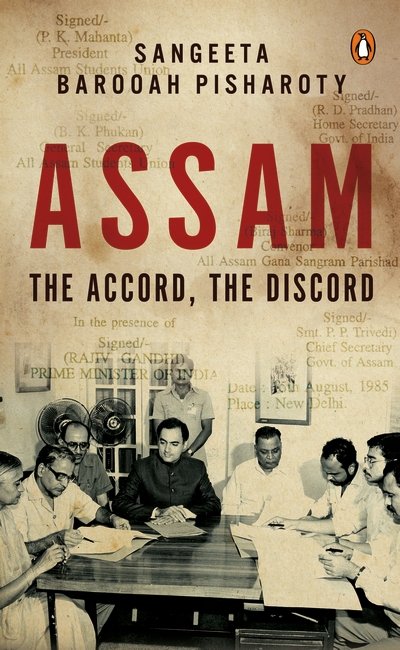
The Assam Accord, which sought to end a six-year-long agitation against illegal immigrants in Assam, was signed between members of the All Assam Students Union (AASU), and state and central governments just a few hours before Rajiv Gandhi was to deliver the Independence Day address in 1985. Immediately afterwards, the student leaders were catapulted from their hostel rooms into the corridors of power. Their party, the Asom Gana Parishad (AGP), was voted to power the same year, with Prafulla Kumar Mahanta becoming the youngest ever chief minister of an Indian state.
Key clauses of the Assam Accord remained unimplemented during Mahanta’s often controversial tenures (1985-1990, 1996-2001), and through three terms of Congress rule, which ended with the BJP’s victory in the state in 2016. Central to the Accord was deportation of those who could not prove their roots in India prior to 24 March 1971. In 2015, the process of updating the National Register of Citizens (NRC) based on the 1971 cut-off of the Accord began. The first list was released in December 2017, and did not include 14 million names.
Assam: The Accord, The Discord looks at the making of the Assam Accord and its long shadow on the state, through political gamesmanship between principle players, periods of ULFA and Bodo militancies, and right-wing propaganda that has split the state along communal lines.
Catagory: Law
Dreaming Big
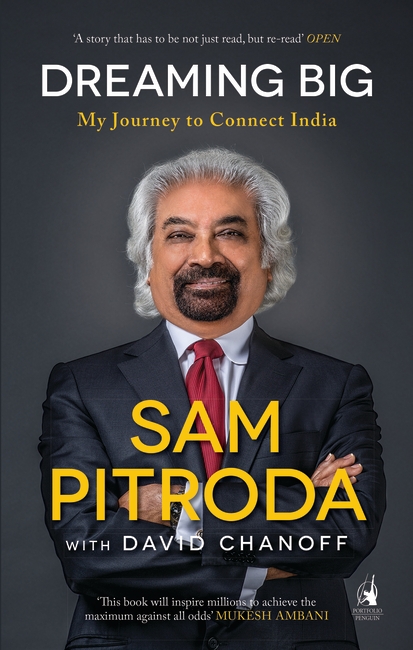
A young man from Titilagarh, Orissa, buoyed by nothing but dreams, boards a boat to America in 1964. There, in the land of opportunity, Satyanarayan Gangaram Pitroda strikes gold in the burgeoning tech space to become the American millionaire Sam Pitroda. Armed with global patents and a vision supported by Prime Minister Rajiv Gandhi, he vows to return home and fix India’s telephone troubles.
Sam Pitroda became synonymous with the bright-yellow PCO/STD booths that sprang up across the country, and was a dynamo in the Congress machinery in the 1980s. But his world came crashing down when he was dealt one blow after the other-a heart attack, false corruption charges and the assassination of his dear friend Rajiv Gandhi. To make matters worse, he realized that he had run out of money.
This is the astonishing and heart-warming story of how one man at the top hits rock bottom-only to rise again and make a bigger dent in the world.
On Balance

In this autobiography, Leila talks about its joyous as well as its difficult moments. Figuring prominently are her early years of homelessness and struggle, her straying into law while in England with her husband Premo, and later practising in Patna, Calcutta and Delhi; and her happy marriage of over fifty years, including the experience of bringing up three remarkable children: writer Vikram, Zen Buddhist dharmacharya Shantum and film-maker Aradhana.
Intertwining family life with professional, Leila movingly describes the years after her father’s premature death when as children they were obliged to live with friends. There are also delightful vignettes: Premo and her turning an old mansion into a splendid home in Patna, Vikram’s writing of the novel A Suitable Boy, Shantum’s ordination as a Buddhist teacher by Thich Nhat Hanh and Aradhana’s marriage to Peter, an Austrian diplomat, and work as art director on films like Earth and Water.
Intimate, intricate, charming and often amusing, On Balance presents a rich and heart-warming portrait of an exceptional woman, her family and her times.
Ayodhya
‘A sensational book’ India Today
A shocking exposé of the event that changed Indian politics forever
P.V. Narasimha Rao was the prime minister of India when, on 6 December 1992, thousands of kar sevaks stormed into the site of the Babri Masjid in Ayodhya. The nation watched in horror as the centuries-old mosque was razed to the ground, in the presence of paramilitary forces and senior political leaders, marking a turning point in post-Independence Indian history.
Many hold Rao responsible for not preventing the demolition, while others accuse him of being a co-conspirator. In this tell-all account, Rao reveals what really transpired in the run-up to that fateful day. Drawing on the Supreme Court order, parliamentary proceedings, eyewitness reports and his own insights, he presents a comprehensive view of the machinations that led to the demolition of the Babri Masjid.
Nearly three decades after the event, Ayodhya: 6 December 1992 remains a valuable resource to understanding the political manoeuvres behind the Ram Mandir issue and the dangers of exploiting religious sentiments for narrow electoral gains.
Vision for a Nation
What is the nation? What is the idea of India? Whose India is it, anyway?
This inaugural volume in the series titled Rethinking India aims to kickstart a national dialogue on the key questions of our times. It brings together India’s foremost intellectuals, academics, activists, technocrats, professionals and policymakers to offer an in-depth exploration of these issues, deriving from their long-standing work, experience and unflinching commitment to the collective idea of India, of who we can and ought to be. Vision for a Nation: Paths and Perspectives champions a plural, inclusive, just, equitable and prosperous India, committed to individual dignity as the foundation of the unity and vibrancy of the nation.
In order to further disseminate these ideas-the vision for the nation as aspirationally reflected in the Constitution-this book provides a positive counter-narrative to reclaim the centrality of a progressive, deeply plural and forward-looking and inclusive India. It serves as a fresh reminder of our shared and shareable overlapping values and principles, and collective heritage and resources. The essays in the book are meaningful to anyone with an interest in contemporary Indian politics, South Asian studies, modern Indian history, law, sociology, media and journalism.
Sixteen Stormy Days
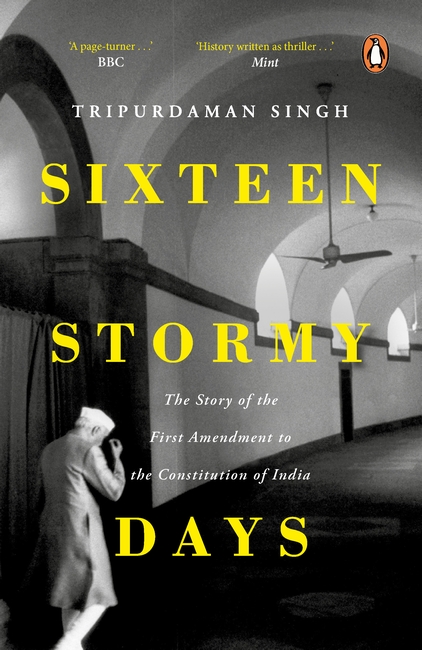
Sixteen Stormy Days narrates the riveting story of the First Amendment to the Constitution of India-one of the pivotal events in Indian political and constitutional history, and its first great battle of ideas. Passed in June 1951 in the face of tremendous opposition within and outside Parliament, the subject of some of independent India’s fiercest parliamentary debates, the First Amendment drastically curbed freedom of speech; enabled caste-based reservation by restricting freedom against discrimination; circumscribed the right to property and validated abolition of the zamindari system; and fashioned a special schedule of unconstitutional laws immune to judicial challenge. Enacted months before India’s inaugural election, the amendment represents the most profound changes that the Constitution has ever seen. Faced with an expansively liberal Constitution that stood in the way of nearly every major socio-economic plan in the Congress party’s manifesto, a judiciary vigorously upholding civil liberties, and a press fiercely resisting his attempt to control public discourse, Prime Minister Jawaharlal Nehru reasserted executive supremacy, creating the constitutional architecture for repression and coercion.
What extraordinary set of events led the prime minister-who had championed the Constitution when it was passed in 1950 after three years of deliberation-to radically amend it after a mere sixteen days of debate in 1951?
Drawing on parliamentary debates, press reports, judicial pronouncements, official correspondence and existing scholarship, Sixteen Stormy Days challenges conventional wisdom on iconic figures such as Jawaharlal Nehru, B.R. Ambedkar, Rajendra Prasad, Sardar Patel and Shyama Prasad Mookerji, and lays bare the vast gulf between the liberal promise of India’s Constitution and the authoritarian impulses of her first government.
Bihar Diaries
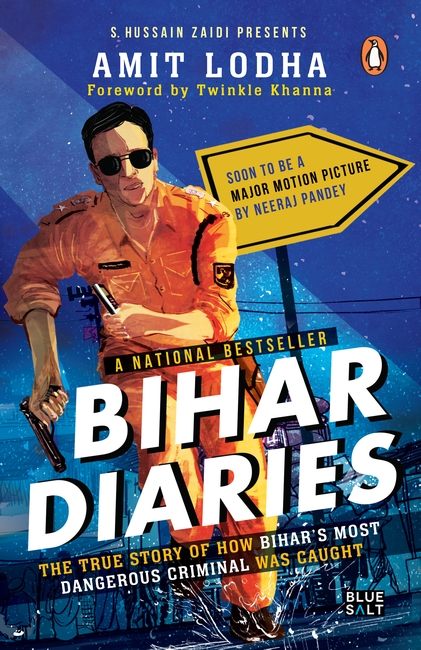
Bihar Diaries narrates the thrilling account of how Amit Lodha arrested Samant Pratap, one of Bihar’s most feared ganglords, notorious for extortion, kidnapping and the massacre of scores of people. The book follows the adrenaline-fuelled chase that took place across three states during Amit’s tenure as superintendent of police of Shekhpura, a sleepy mofussil town in Bihar.
How does Amit navigate between his many professional challenges and conquer his demons? What does he do when the ganglord comes after his family? Bihar Diaries captures vividly the battle of nerves between a dreaded outlaw and a young, urbane IPS officer.
Dawood’s Mentor
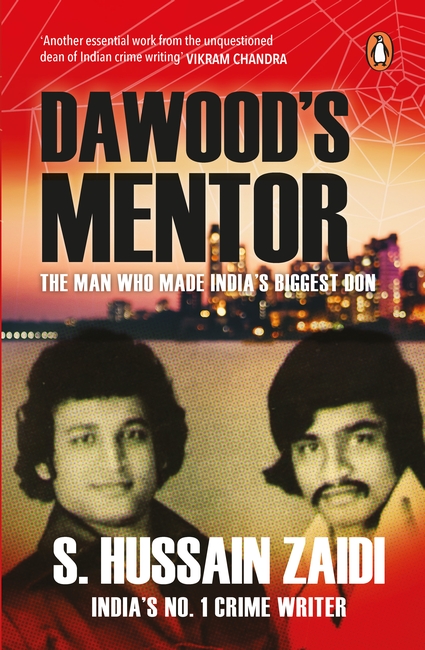
Tired of being bullied, a scrawny, impoverished Dawood Ibrahim is looking for a saviour, Khalid Khan Bachcha, who would teach him the ropes of handling a bunch of hooligans. Instead, what he gets is a mentor who eventually transforms him into a cunning mafia boss.
In Dawood’s Mentor, Dawood meets Khalid and they eventually forge an unlikely friendship. Together they defeat, crush and neutralize every mafia gang in Mumbai. Khalid lays the foundation for the D-Gang as Dawood goes on to establish a crime syndicate like no other and becomes India’s most wanted criminal.
The Class of 83

At a time when Mumbai was plagued by underworld gangsters like Dawood Ibrahim, Iqbal Kaskar and Chhota Rajan, the batch of 1983 from the Police Training School (PTC) in Nashik-trained by the legendary Arvind Inamdar-produced a group of prominent encounter specialists who have been credited with bringing back the rule of law in the city.
Famed even within this batch, trigger-happy senior police inspector Pradeep Sharma understood that to save the city from the clutches of the underworld, he would need to dilute rival gangs. The Class of 83 delves deep into the most famous (or infamous) encounters conducted by Sharma and his batch mates. Pradeep Sharma was arrested by the same department he had served for two-and-a-half decades. He faced the ignominy of jail, clubbed in the same cell as the criminals he had arrested. However, he fought for his honour, was acquitted and reinstated into service.
In The Class of 83, S. Hussain Zaidi presents a one-of-a-kind story of a policeman’s triumphs, struggles and redemption.
10 Judgements That Changed India
Who was Shah Bano and why was her alimony pertinent to India’s Secularism? Does the fundamental right to life include the right to livelihood and shelter? Where there is the right to live, is there also the right to die? How did Bhanwari Devi’s rape help define sexual harassment at the workplace? Here are the Supreme Court’s ten pivotal judgements that have transformed Indian democracy and redefined our daily, lives. Exploring vital themes such as custodial deaths, reservations and environmental jurisprudence, this book contextualizes the judgements, explains key concepts and maps their impacts. Written by one of India’s most respected lawyers, Ten Judgements That Changed India is an authoritative yet accessible read for anyone keen to understand India’s legal system and the foundations of our democracy.