



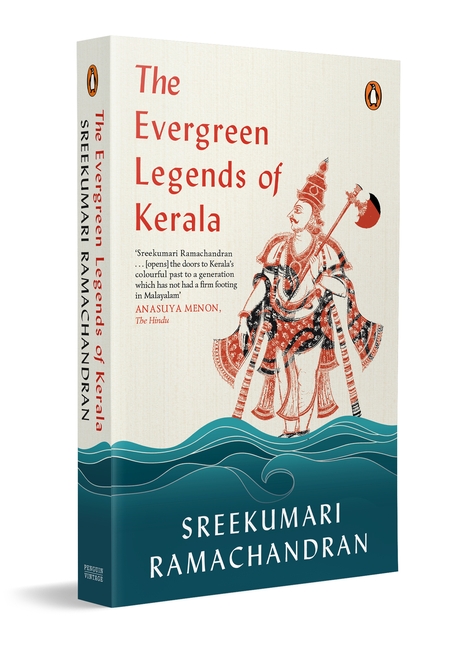
Discover the heart of Kerala through stories that pulse with life and history. This book invites you to explore the world of sorcerers, warriors, and poets, where myth and reality intertwine. From the ancient gateway of Malabar to the vibrant communities that shaped its culture, these tales reveal the depth of Kerala’s heritage. Meet the figures behind the legends, delve into the histories that defined a region, and experience a society rich in tradition and intrigue. With a blend of deep insight and accessible writing, this collection offers a fresh look at Kerala’s fascinating past.
Catagory: Nature
Sea Ice? Now You Don’t !
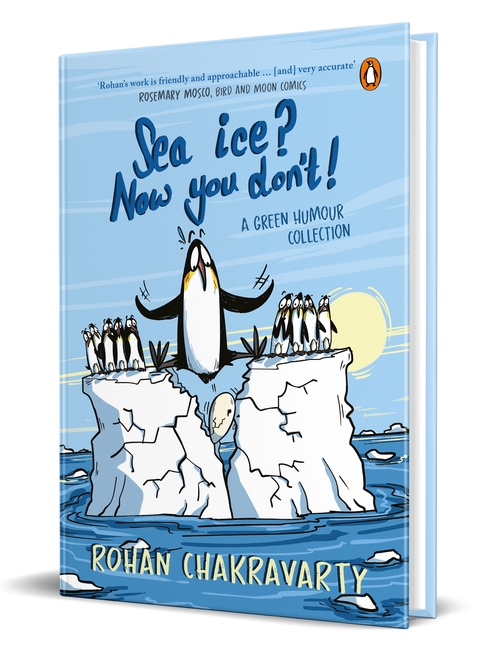
‘An incredible take on the issues plaguing our planet’
‘Witty, thoughtful and intense’
The multi-award winning series of comics, Green Humour is back as the third anthology Sea Ice? Now You Don’t! From penguins balancing their nests on thin ice to tigers basking in their own glamour whilst worrying about their future, from ghazal-loving bats to whales dumping marine plastic waste right back at us- meet an array of wild animals with their own list of concerns, and their own brand of humour. The comics will take you from the high skies to geothermal mines in the very bottom of the ocean, and from sweltering tropical mangroves to the icy poles, engaging you in discussions about ecology, biology, nature conservation, and the politics of governing nature. This is a wild ride for sure, but NOT one which needs you to leave your brains at home!
Sea Ice? Now You Don’t! is the third in the series of Green Humour collections, after ‘Green Humour for a Greying Planet’ and ‘Pugmarks and Carbon Footprints’, and includes comics published in periodic columns with platforms like DW News, The Hindu, Roundglass Sustain, and Gocomics.
The Rumbling Earth
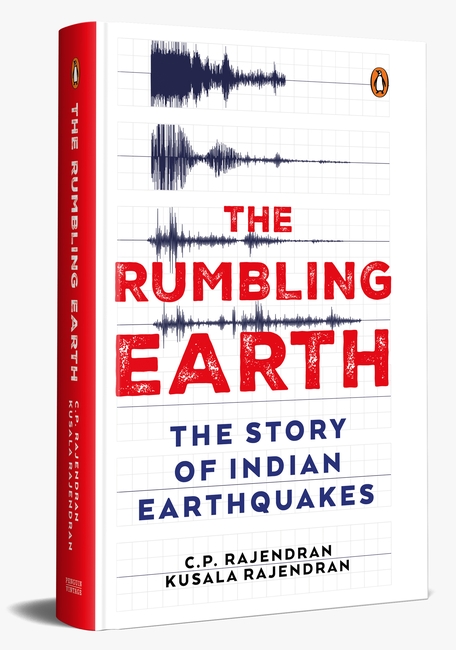
The renowned seismologists C.P. Rajendran and Kusala Rajendran offer a riveting story of the Indian earthquakes, their science, history and impact. Like all other natural phenomena, earthquakes are part of life-sustaining forces—the creators of the mountains, valleys and springs or even deserts on Earth—a theatre where the show never ends.
The book takes the readers to some exciting parts of India to show how earthquakes change the topography where a sea existed not far in the past—now a salt marsh, affecting the social life, trade and livelihood. The book discusses the likelihood of the next big earthquake in the Himalayas against the backdrop of the devastating earlier ones revealed by archaeology, history and geology. It probes the causes and aftermath of the devastating Indian Ocean tsunami of 2004 and gives a glimpse of the past.
The high-impact earthquakes will happen, but they need not always end up as human catastrophes. The authors have spent much of their professional lives studying the earthquakes in India and abroad. They tell us from their vast experience how to negotiate the impacts of earthquakes and related hazards by following science-based strategies.
Monsoon Economy
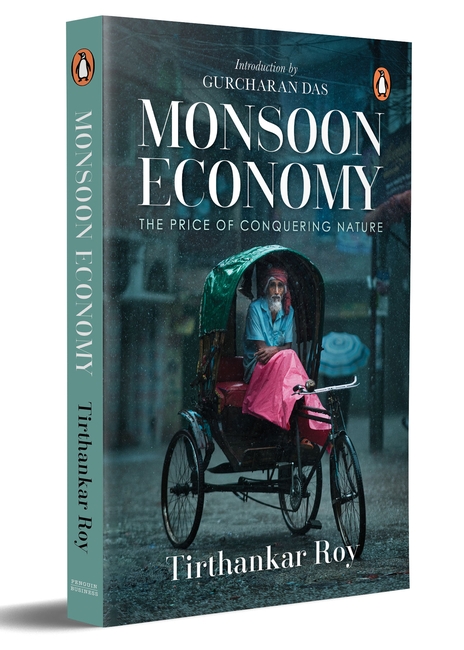
In the monsoon regions of South Asia, the rainy season sustains life but brings with it the threat of floods, followed by a long stretch when little gainful work is possible and the threat of famine looms too. Beginning in the late nineteenth century, a series of interventions by the Indian government and other actors mitigated these conditions, thus enabling agricultural growth, encouraging urbanization and bringing about a permanent decrease in death rates. But these actions—largely efforts to ensure wider access to water—came at a cost to environmental sustainability. In Monsoon Economy, Tirthankar Roy explores the interaction between the environment and the economy in the emergence of modern India.
Roy argues that the tropical monsoon climate makes economic and population growth contingent on water security. But in a water-scarce world, the means used to increase water security not only created environmental stresses but also made political conflict more likely. Highlighting the importance of water as a public good, the author critically analyses issues such as water quality in cities, the shift from impounding river water in dams and reservoirs to exploring groundwater, and the seasonality of a monsoon economy. He also draws economic lessons from India for a world facing environmental degradation.
Tiger Season
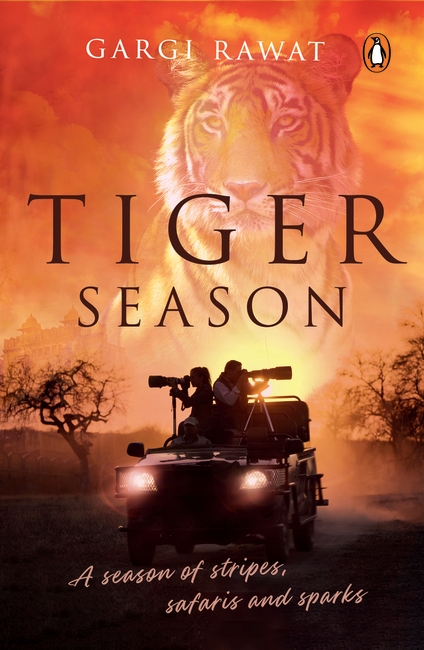
Sunaina Joshi is a reporter with a leading news channel.
Her day-to-day work involves reporting on urban-centric, health-related issues; myriad subjects that bore her, leaving her jaded. Her real passion is a life in the great outdoors, and reporting on wildlife and the environment, something she is unable to do as often as she would like. Unexpectedly, a fabulous opportunity falls into her lap when her channel is commissioned to run a campaign on tiger conservation, featuring a Bollywood star who is trying to resurrect his image and career following a drug scandal.
The shoot takes a dramatic turn when the television team finds itself in the middle of a local conflict and a heated incident involving a tiger attacking a forest guard. Controversy follows, with the decision to relocate the tiger to a zoo, leading to protests
and fresh outrage over the action. To Sunaina’s dismay, she finds
herself becoming the epicentre of the converging controversies. Also
complicating matters are the run-ins she has with the arrogant owner
of the resort. But is her aggravation with him turning to attraction?
Can she keep her wits about her while remaining professional
about the things she loves?
Shades of Blue
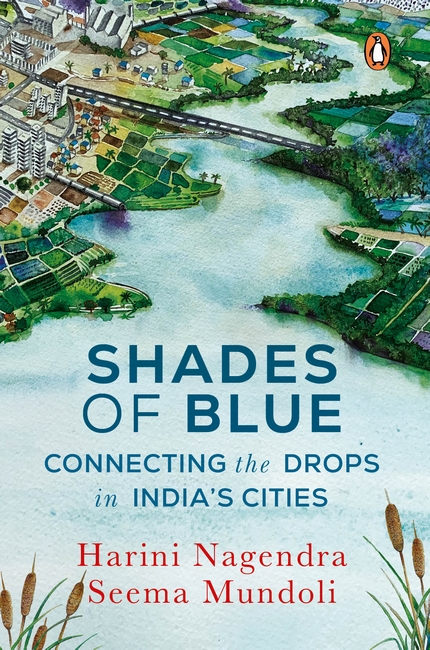
For millennia, our cities have prospered and grown in the cradles of civilization-fertile lands blessed with rivers, lakes, seas and oceans. From the origins of life on earth, right down to its downfall, biblical or otherwise, water has been integral to the human story.
In this passionate and extensively researched tribute to the elixir that sustains us all, authors Harini Nagendra and Seema Mundoli take us on a panoramic view of the water bodies of India and the urgent need to address their emergent ecological threats. From the Yamuna in Delhi to the Cauvery in Karnataka and the Pichola Lake in Udaipur to the Brahmaputra in Assam, this book is epic in its sweep and yet deeply moving in its intimate concerns.
Interspersed with anthropological, legal and scientific vignettes of the water are fascinating anecdotes, ditties, myths and monsters blue and green. This book also brings into dialogue a vast range of colourful characters-from medieval poets to colonial masters and modern scientists-to paint for us a tapestry of connected histories and ring a timely knell for saving the very ecological systems that have sustained us for ages.
Pugmarks and Carbon Footprints
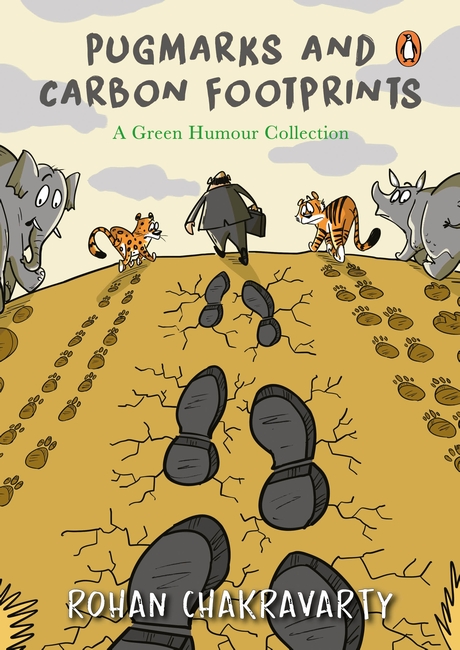
‘Rohan’s work is especially important for he has been able to make environmental news and messages accessible to the world at large’. — Arati Kumar Rao, National Geographic explorer, environment photographer, writer and artist
Pugmarks and Carbon Footprints is a collection of gag cartoons and comic strips based exclusively on wildlife and nature. Staying true to their theme, the cartoons and comics in the book will speak about wildlife, ecology, interesting trivia about the lives of wild animals, and how the lives of these creatures are entwined with ours. Other than providing some much needed comic relief during environmental doomsday, the book will equip the reader with snippet-sized information about environmental issues in an easily palatable manner.
A comprehensive and satirical take on various aspects of the natural world and the threats to its conservation, Pugmarks and Carbon Footprints will appeal both to the scientifically inclined reader as well as the layman.
I’m a Climate Optimist
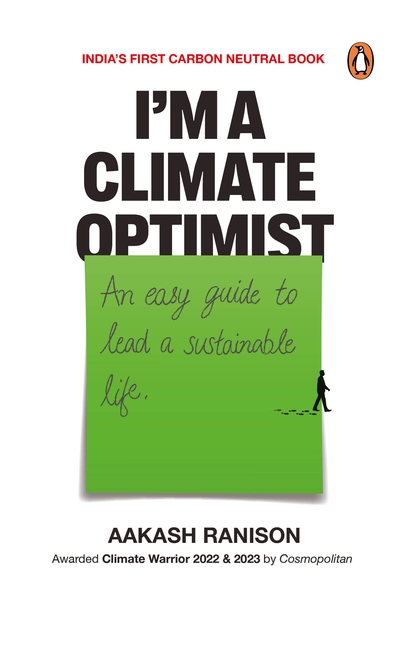
Whenever climate change as a topic pops up in a conversation, someone ends the conversation with ‘What can I do about it?’ This book is the answer to those all, what can I dos. Covering all the aspects of day-to-day life like food, textile, transportation, tourism, beauty, home, education, business, etc along with Industry specific expert comments.
Climate change is mostly talked about in a very technical language and is full of jargon like “Climate Emergency, Carbon Neutral, Carbon Positive, Net-Zero, Below 2°C” which is one of the biggest issues that the majority of people don’t understand the problem. This book focuses on simplifying climate change and sustainability so that everyone can understand and take action toward achieving the Sustainable Development Goals of the United Nations. If we learn to make conscious decisions regarding our consumption habits, we surely can get closer to achieving the target agreed upon in the landmark Paris agreement.
Get hold of this book to learn the art of making our planet more liveable and sustainable.
Greening the Earth
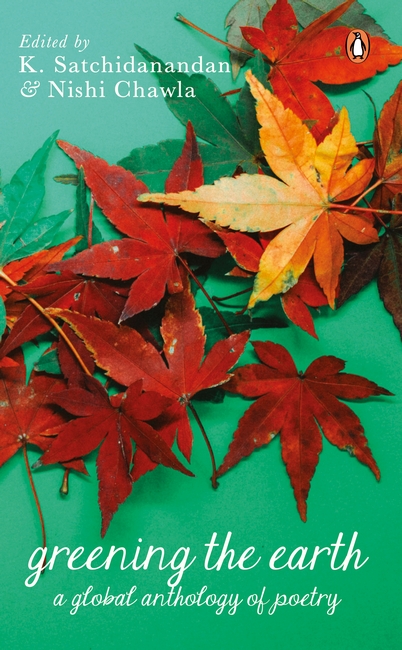
Greening the Earth is a rare anthology that brings together global poetic responses to one of the major crises faced by humanity in our time: environmental degradation and the threat it poses to the very survival of the human species. Poets from across the world respond here in their diverse voices-of anger, despair, and empathy-to the present ecological damage prompted by human greed, pray for the re-greening of our little planet and celebrate a possible future where we live in harmony with every form of creation.
The Case for Nature
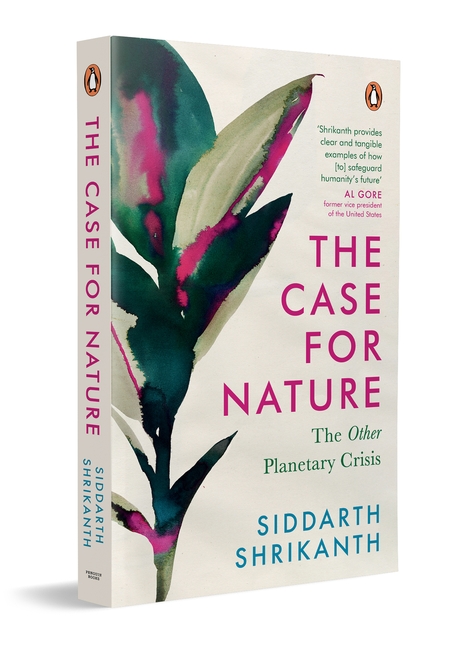
Our planet is facing not one but two crises.
In a world where carbon emissions and climate financing are rightly rising up the agenda, there exists another catastrophe that is often overlooked but just as dire-the global collapse of our ecosystems. Siddarth Shrikanth’s The Case for Nature presents a compelling vision for tackling this other crisis by rethinking our relationship with nature in economic, social and even personal terms.
Shrikanth argues that we can create flourishing economies and societies by preserving and restoring our planet’s ‘natural capital’ and introduces the pioneers of this nature-positive revolution with vivid examples from across the world. But he also calls on readers to reflect on the roots of this crisis, drawing upon indigenous world views to show that nature must be woven into our modern societies, not set apart.
By offering a hopeful yet deeply pragmatic perspective on how we can exist in harmony with our living planet, The Case for Nature is a must-read for anyone seeking to understand how nature can help us forge a more sustainable future and what they can do to contribute to this vision.