‘Evolution is an exquisite artist, even if an unconscious one.’- Eric Dinerstein
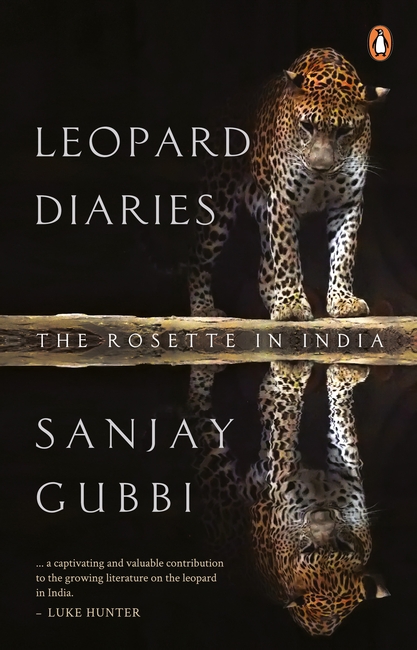
The leopard is perhaps one of the world’s most beautiful creatures. The spots on its body are even romantically called ‘rosettes’. It is social but solitary, inconspicuous but significant in numbers, large but elusive, and does not fit any of the pigeonholes of large-cat conservation. In India, the leopard is a poster boy of the fight to preserve wildlife, but in many countries, it faces either ecological or local extinction. A worrying phenomenon, given that these cats carry out important ecosystem services that have not been fully understood yet.
In Leopard Diaries: The Rosette in India, Sanjay Gubbi, who has studied and documented the leopard for nearly a decade, gives us a close look at this fascinating creature. From detailing its food habits to throwing new light on how the young are reared, from offering suggestions on tackling leopard-human conflict to imagining the future of this arresting animal, this book is a 360-degree view of the leopard, its ecological context, its fraught relationship with the human world, and how wildlife and human beings can find a way to co-exist.

Urbanization has changed the way we garden and raise plants in our homes. As large spaces have become a luxury, the sprawling lawns in a house are a rare sight. They are replaced now by plants grown in small spaces, often indoors, with limited light, water and nutrition. This calls for relearning the principles of gardening that suit this new paradigm.
Written for all plant parents trying to raise their plant babies in an urban setting, this book is built on basic principles that keep plants healthy and covers all topics that any plant parent need to know-how to prepare their space, how to choose the right plants for their home, how to care for the plants and keep them happy and how to get family and friends started with plants of their own.
With stories from the Lazy Gardener community, supplemented with chapter-end summaries, explanatory illustrations and plant lists, the book will equip the reader to ask the right questions as they continue to garden and cultivate their knowledge of gardening. Useful for both new and experienced plant parents, Vinayak Garg’s How to Raise a Plant Baby guides them and explains everything they need to know.

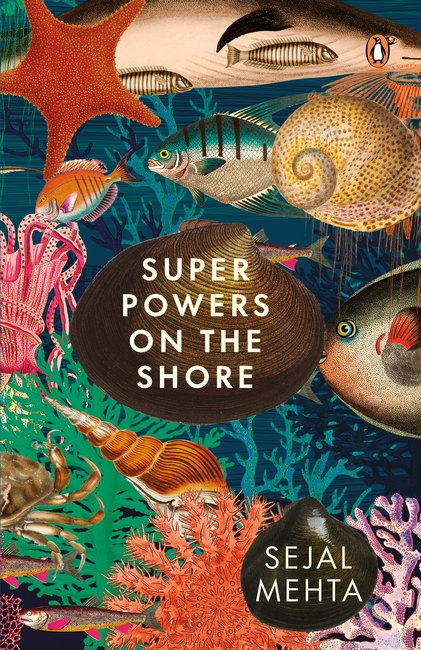
Our coasts are large, vast wildernesses that witness the mystical pageantry of life. They have given us monsters and myths, they are fathoms deep and full of whispers, home to unknown creatures and sprawling ecosystems. They are chasms of beauty and frontiers of possibility. From the space between land and sea, revealed only at low tide, comes a coruscating kaleidoscope of colours and brilliance: the intertidal zone. And the marine lifeforms of these zones are capable of superpowers. Yes, superpowers! Of the kind that comic book characters can only dream of.
The Indian coastline hosts some magnificent intertidal species: solar-powered slugs, escape artist octopuses, venomous jellies, harpooning conus sea snails, to name just a few. It is as biodiverse as a forest wildlife safari, and twice as secretive. From bioluminescence and advanced sonic capabilities to camouflage and shapeshifting, these cloaked assassins are capable of otherworldly skill. Superpowers on the Shore by Sejal Mehta is a dazzling, assured look at some of the creatures with whom we share our world, our water, our monsoons, our beaches and the sandcastles therein.
Come witness the magic of our intertidal superheroes, their fragile beauty and their iridescent drama. Put on your waterproof shoes, pack a bottle of whimsy, bring your sense of wonder. And prepare to be mesmerized

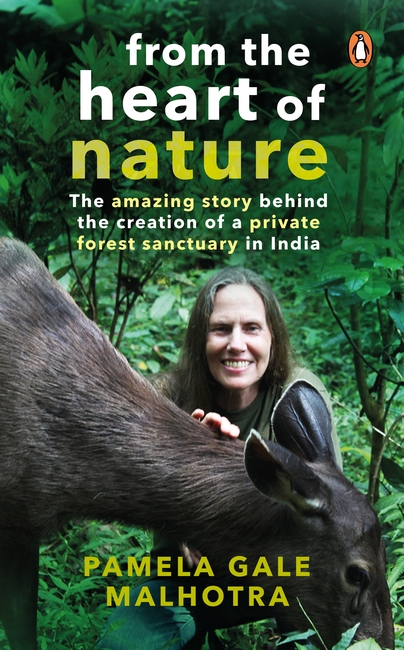
Called ‘Noah’s Ark’ by an Oxford University scientist, SAI Sanctuary is an example of how Nature exists in a delicate balance. You cannot destroy Nature, and you cannot rearrange it without serious consequences to your existence.
Coming from two rich wisdom cultures, one Native American and one Indian, Pamela and Anil Malhotra made it their mission to salvage what they could in Kodagu, Karnataka, where years of illegal logging and poaching had ravaged the land and decimated the wildlife. Today, with the forests and the ecosystem restored, and the wildlife protected, this sanctuary is a treasure trove of a rich variety of indigenous trees and plants, and a refuge for numerous rare and threatened species of animals, some found nowhere else on the planet.
In this deeply fascinating and inspiring personal narrative, Pamela recounts how she connected and communicated with animals and trees at both physical and spiritual levels, and how the only way to save humanity is through understanding and preserving Nature.

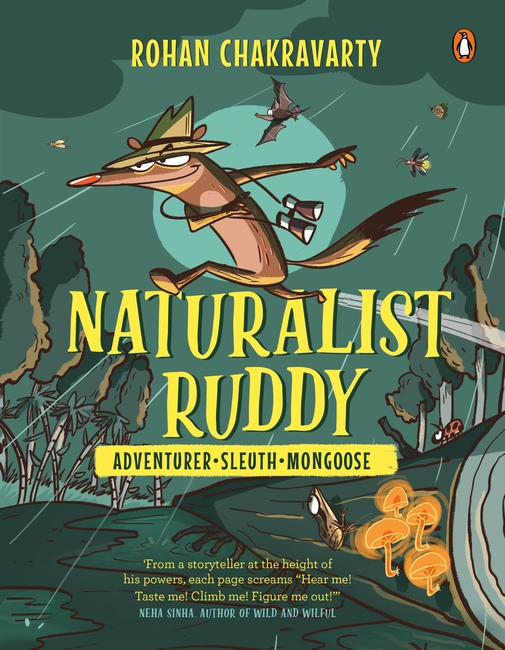
Are you ‘Ruddy’ for adventure?
In the forests of central India, where teak meets sal and plateaus meet hills, natural history meets detective fiction in an inquisitive Ruddy Mongoose’s investigations. Join Naturalist Ruddy as he unearths some of nature’s most fascinating mysteries in this one-of-a-kind comic book set across India’s various natural habitats.
Dig to the bottom of nature’s ‘crime scenes’ with this one-of-a-kind, edge-of-your-seat comic book!
Learn more about lesser-known animals, insects and organisms of India, and how they interact with their environment
Includes cases that the readers can assist Ruddy in solving.

A classic of unmatched lyrical beauty by the ‘modern Mira’
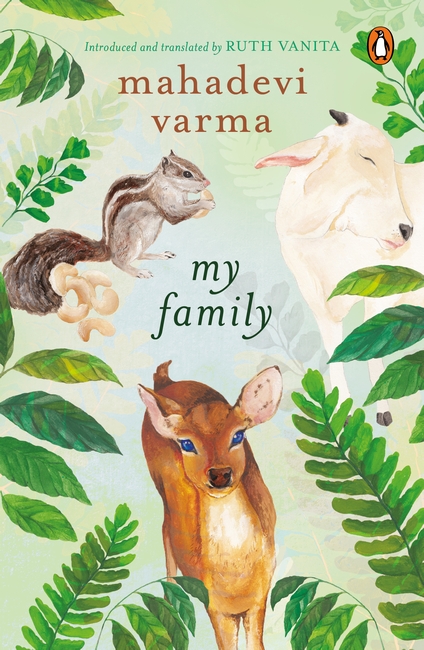
For Mahadevi Varma, her animal companions were her chosen family. This family comes alive in Mahadevi’s lyrical prose, depicting the animals’ relationships with her, each other, and the human inhabitants of her home and her school. Rescued peacocks, squirrels, dogs, rabbits, and deer romp through these pages, each an unforgettable individual of many moods. Charming hand-drawn illustrations complement the delightful writing. Together, these portraits reveal an urban modernity permeated by nature.
In this first-ever translation of a little-known classic, Ruth Vanita brilliantly captures Mahadevi’s empathetic imagination, sparkling wit, and intense observation of detail. In her introduction, Vanita illuminates Mahadevi’s feminist and literary legacy, her powerful indictment of human cruelty, and how her prose sprang from the fount of her feelings for animals.
FROM THE BOOK
‘As [Neelkanth the peacock] stepped forward and backward, left and right, he would pause at some invisible point where rhythms meet . . . I cannot say how Neelkanth came to know that I liked his dancing very much, but one day, as soon as I approached the aviary, he suddenly descended from his swing and, spreading out the circular rainbow umbrella of his feathers, he stood in a dance pose.’
* * *
‘Animals recognize humans’ unpretentious affection but not high and low social status. I absorbed this truth from Sona [the doe] by osmosis. What had Sona to do with the grave and solemn Guru-ji [Mahadevi] of the girl students? . . . If Sona felt it necessary to jump over my head to express her affection, she would do so. It was impossible for her to be impressed by my status or circumstances.’
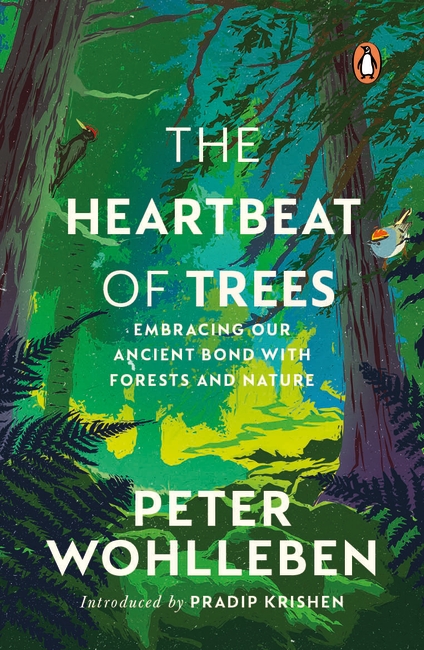
The Heartbeat of Trees highlights the special bond humans share with nature and how it must be preserved.
This book marks a powerful return to the forest, where trees have heartbeats and roots are like brains that extend underground, where the colour green calms us and the forest sharpens our senses. In The Heartbeat of Trees, renowned forester Peter Wohlleben draws on new scientific discoveries to show how humans are deeply connected to the natural world. In an era of cell-phone addiction, climate change and urban life, many of us fear that we’ve lost our connection to nature. But Wohlleben is convinced that the age-old ties linking humans to the forest remain alive and intact. Drawing on science and cutting-edge research, The Heartbeat of Trees reveals the profound interactions humans can have with nature, exploring the language of the forest, the consciousness of plants and the eroding boundary between flora and fauna.
A perfect book to take with you into the woods, The Heartbeat of Trees will help you see, feel, smell, hear and even taste the forest. Peter Wohlleben, renowned for his ability to write about trees in an engaging way, reveals a wondrous cosmos where humans are a part of nature, and where conservation and environmental activism is not just about saving trees-it’s about saving ourselves, too.

PENGUIN RANDOM HOUSE IS PROUD TO PUBLISH ANTI-CLOCK, WINNER OF THE O.V. VIJAYAN AWARD AND THIKKURISSI AWARD
‘James is very inventive and very imaginative with a great sense of humour. There is a sort of eccentric genius animating the story’ JURY, JCB PRIZE FOR LITERTURE
‘A philosophical novel that discusses the mysterious problems of life and death’ BENYAMIN
‘”Time is everything, man is nothing; he is, at most, time’s carcass.” V.J. James’s novel Anti-Clock has given an extremely creative twist to these words by Karl Marx’ O.V. VIJAYAN PRIZE
Hendri, the coffin maker, has one goal in life: to see the dead body of his nemesis Satan Loppo being lowered into the coffin he has painstakingly carved. For it was Loppo who defiled his beloved Beatrice, and let loose his hellhound Hitler upon Hendri, giving him a permanent limp.
From inside his coffin shop, Hendri watches the world go by even as he prepares to deliver justice upon Loppo. He is confronted by the son of his best friend becoming enamoured with Loppo’s wealth, Loppo’s evil designs towards the hills of Aadi Nadu, and his own Christian guilt that regularly comes to haunt him. Until he meets Pundit, a 112-year-old watchmaker who was part of Bose’s Indian National Army and is building an ‘Anti-Clock‘, which can turn back time. When Loppo too hears of the Anti-Clock and desires to possess it, the inevitable battle becomes a reality.

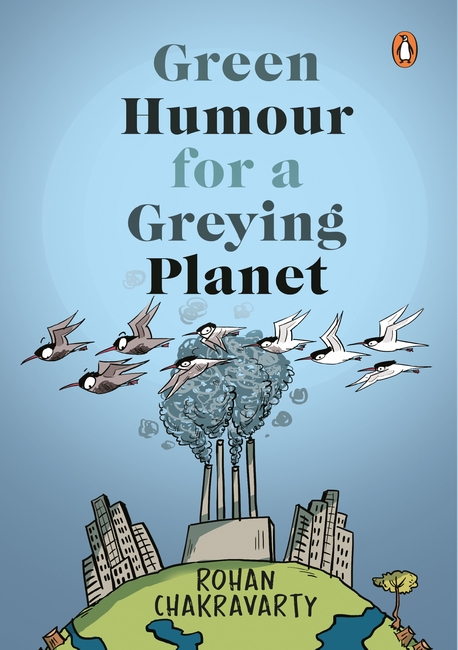
200 gag cartoons on ecology, environment and wildlife.
Green Humour For A Greying Planet is a curation of gag cartoons and comic strips based exclusively on wildlife and nature, perhaps the first of its kind. At a time when global warming, wildlife crimes and man-animal conflicts are at their worst, ‘Green Humour’ is sure to provide its readers some much needed comic relief. A comprehensive and satirical take on various aspects of the natural world and the threats to its conservation, this book will appeal to both the scientifically inclined readers as well as the general readers.
Did you know that there will be more plastic than fish in the seas by 2050? Did you know that it takes 20,000 litres of water to make a pair of jeans? Did you know that we have a massive food-wastage problem, and yet millions die of hunger each day?
In this world full of waste, how can you help save the planet?
Bare Necessities is your one-stop guide on how to move towards a more sustainable lifestyle in India. Filled with activities, insights, recipes, tips and how-to guides, it is a must-read for anyone wanting to make a positive change in their life and in the environment.