



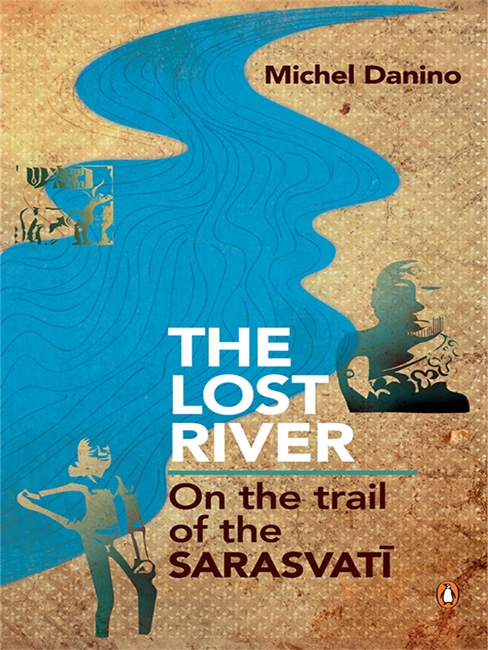
The Indian subcontinent was the scene of dramatic upheavals a few thousand years ago. The Northwest region entered an arid phase, and erosion coupled with tectonic events played havoc with river courses. One of them disappeared. Celebrated as -Sarasvati’ in the Rig Veda and the Mahabharata, this river was rediscovered in the early nineteenth century through topographic explorations by British officials. Recently, geological and climatological studies have probed its evolution and disappearance, while satellite imagery has traced the river’s buried courses and isotope analyses have dated ancient waters still stored under the Thar Desert. In the same Northwest, the subcontinent’s first urban society”the Indus civilization”flourished and declined. But it was not watered by the Indus alone: since Aurel Stein’s expedition in the 1940s, hundreds of Harappan sites have been identified in the now dry Sarasvati’s basin. The rich Harappan legacy in technologies, arts and culture sowed the seeds of Indian civilization as we know it now. Drawing from recent research in a wide range of disciplines, this book discusses differing viewpoints and proposes a harmonious synthesis”a fascinating tale of exploration that brings to life the vital role the -lost river of the Indian desert’ played before its waters gurgled to a stop.
Catagory: Nature
Following Fish
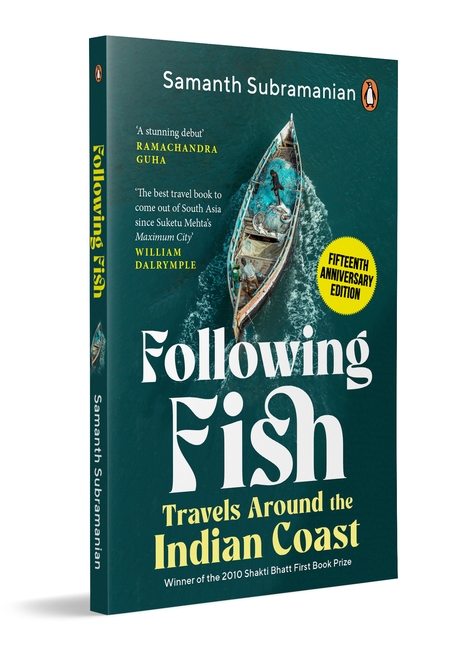
In a coastline as long and diverse as India’s, fish inhabit the heart of many worlds – food of course, but also culture, commerce, sport, history and society. Journeying along the edge of the peninsula, Samanth Subramanian reports upon a kaleidoscope of extraordinary stories. In nine essays, Following Fish conducts rich journalistic investigations: among others, of the famed fish treatment for asthmatics in Hyderabad; of the preparation and the process of eating West Bengal’s prized hilsa; of the ancient art of building fishing boats in Gujarat; of the fiery cuisine and the singular spirit of Kerala’s toddy shops; of the food and the lives of Mumbai’s first peoples; of the history of an old Catholic fishing community in Tamil Nadu; of the hunt for the world’s fastest fish near Goa. Throughout his travels, Subramanian observes the cosmopolitanism and diverse influences absorbed by India’s coastal societies, the withdrawing of traditional fishermen from their craft, the corresponding growth of fishing as pure and voluminous commerce, and the degradation of waters and beaches from over-fishing. Pulsating with pleasure, adventure and discovery, and tempered by nostalgia and loss, Following Fish speaks as eloquently to the armchair traveler as to lovers of the sea and its lore.
Jungle Trees Of Central India
Covering an area larger than France, and including five of India’s most-visited tiger reserves, the forests of central India are one of the country’s most spectacular landscapes. Jungle Trees of Central India is the perfect guide to every tree you are likely to come across in this region. A culmination of over four years of research, the book has over 2000 photographs, and thumbnail keys to all the barks, flowers, fruit and leaves. An ideal companion for your explorations, it will turn you into an expert tree-spotter and take your enjoyment of wild places to another level.
The Hidden Life of Trees
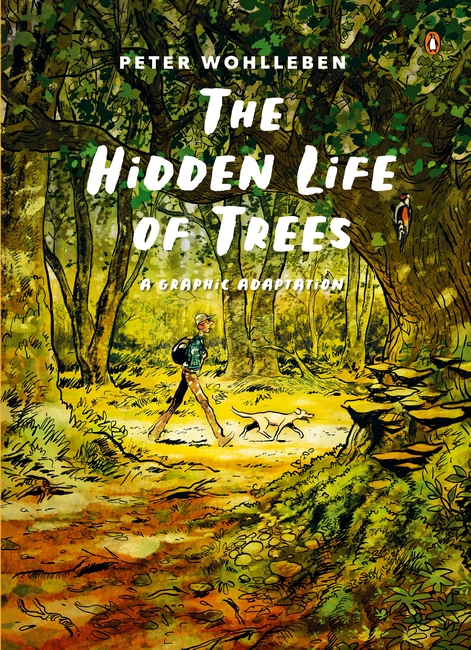
In this beautifully illustrated narrative peppered with scientific facts, Peter Wohlleben tells the story of his journey from city boy to the world’s most famous forester, sharing his insights into trees and the challenges they face. Take a guided tour through the extraordinary life of the forest, where you’ll meet trees that communicate through their root systems, protect each other from danger, and even live together like human families. A portal to an astonishing yet fragile world, and a call to protect it for future generations.
Words From My Window
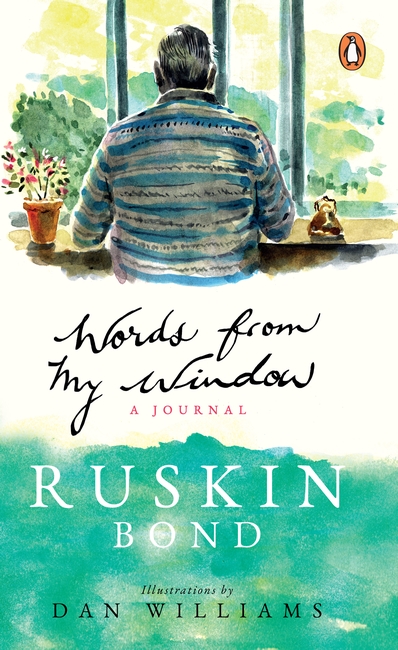
I need a window to look at the world without; for only then can I look at the world within. A room without a window is rather like a prison cell, and the soul is inclined to shrivel up in a confined space. … Car horns, children calling to each other as they return from school, a boy selling candyfloss, several crows chasing a hawk! Never a dull moment. And the magic mountain looks on, absorbing everything.
The Shape of the Beast
The Shape of the Beast is our world laid bare by a mind that has consistently and unhesitatingly engaged with its changing realities and often anticipated the way things have moved in the last decade.
In the fourteen interviews collected here, conducted between January 2001 and March 2008, Arundhati Roy examines the nature of state and corporate power as it has emerged during this period, and the shape that resistance movements are taking. As she speaks about people displaced by dams and industry, the genocide in Gujarat, Maoist rebels, the war in Kashmir and the global War on Terror, she raises fundamental questions about democracy, justice and non-violent protest.
Unabashedly political, this is also a deeply personal collection that talks about the necessity of taking a stand and about the dilemma of guarding the private space necessary for writing in a world that demands urgent, unequivocal intervention.
An Ordinary Person’s Guide to Empire
This second volume of Arundhati Roy’s collected non-fiction writing brings together fourteen essays written between June 2002 and November 2004. In these essays she draws the thread of empire through seemingly unconnected arenas, uncovering the links between America’s War on Terror, the growing threat of corporate power, the response of nation states to resistance movements, the role of NGOs, caste and communal politics in India, and the perverse machinery of an increasingly corporatized mass media. Meticulously researched and carefully argued, this is a necessary work for our times.
Broken Republic
War has spread from India’s borders to the forests in the very heart of the country. Here are four essays by Arundhati Roy including the heatedly debated ‘Walking with the Comrades’ that combines a clear-eyed, analytical overview with extraordinary reportage from the ground of the Maoist guerrilla zone and her most recent essay, ‘Capitalism: A Ghost Story’. Broken Republic examines the nature of progress and development in the emerging global superpower, and asks some fundamental questions about the real meaning of civilization itself.
Environmentalism
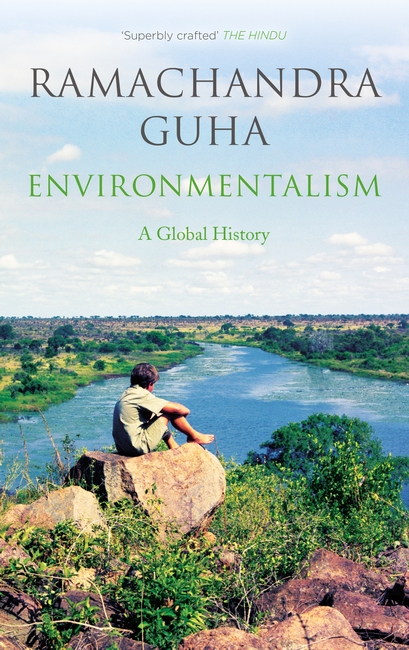
In this book Ramachandra Guha, an acclaimed historian of the environment, draws on many
years of research in three continents. He details the major trends, ideas, campaigns and
thinkers within the environmental movement worldwide. Among the thinkers he profiles are
John Muir, Mahatma Gandhi, Rachel Carson, and Octavia Hill; among the movements, the
Chipko Andolan and the German Greens. Environmentalism: A Global History documents
the flow of ideas across cultures, the ways in which the environmental movement in one
country has been invigorated or transformed by infusions from outside. It interprets the
different directions taken by different national traditions, and also explains why in certain
contexts (such as the former Socialist Bloc) the green movement is marked only by
its absence.
Massive in scope but pointed in analysis, written with passion and verve, this book
presents a comprehensive account of a significant social movement of our times,
and will be of wide interest both within and outside the academy. For this new edition,
the author has added a fresh prologue linking the book’s themes to ongoing
debates about the environmental impacts of global economic development.
Churchill’s Secret War
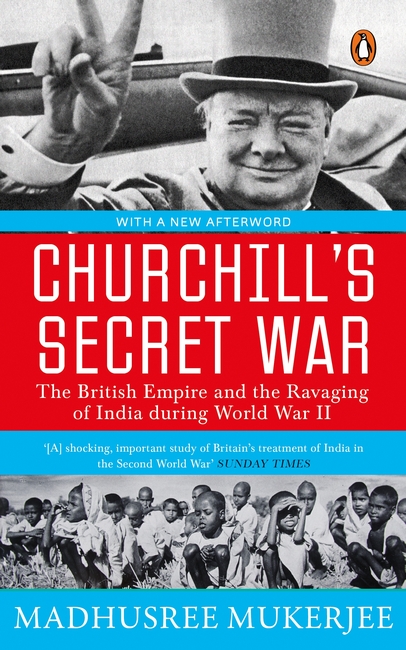
WITH A NEW AFTERWORD
Winston Churchill has been venerated as a resolute statesman and one of the great political minds of the last century. But, as Madhusree Mukerjee reveals in this groundbreaking historical investigation, his deep-seated bias against Indians precipitated one of the world’s greatest man-made disasters — the Bengal Famine of 1943 — resulting in the deaths of over four million Indians. Combining meticulous research with a vivid narrative, Churchill’s Secret War places this overlooked tragedy into the larger context of World War II, India’s freedom struggle and Churchill’s legacy.