To counter seas of cars, rising petrol prices, and snarling traffic—Reva Electric Vehicle is India’s offering to the world in the shape of a zero emission, green mobility option.
Dr Maini recounts the story of Reva—India’s first commercial electric vehicle—from the inception, ideation, designing the car to taking it to the world. It is a story coloured with hope, determination, disappointment, success, and jubilation—it is the passion for making green commuting a viable possibility come alive in these pages from Reva’s journey.
It is the story of a team that believed in its products against all odds. A story of many firsts, this book is an immortal account of India soundly on the forefront of electric vehicle movement with this unique car.

Animals in India are worshipped in myriad ways: as deities, like the elephant (god Ganesha) and the monkey (god Hanuman); as avatars, like Vishnu’s fish, tortoise and boar forms; and as vahanas, or vehicles, of major deities-the swan, bull, lion and tiger. While some animals, like the snake, are worshipped out of fear, some birds, such as the crow, are associated with the abode of the dead, or the souls of ancestors, and the cow’s sanctity perhaps derives from its economic value. There are also hero-animals, such as the vanaras, and the totemic symbols of tribes later assimilated into Vedic Hinduism.
Sacred Animals of India draws on India’s ancient religions-Hinduism, Buddhism and Jainism-to explore the customs and practices that led to the worship and protection of animals. This book is also a necessary reminder of the role animals play in earth’s biodiversity.
‘A good read’-Mail Today
‘Treats the complex subject with the confidence that is born out of meticulous and thorough research and strong convictions’-Book Review Literary Trust
‘Each and every animal, however insignificant in other eyes, attracts the attention of a devout Hindu’-Dawn
The Shape of the Beast is our world laid bare, with great courage, passion and eloquence, by a mind that has engaged unhesitatingly with its changing realities, often anticipating the way things have moved in the last decade. In the fourteen interviews collected here, conducted between January 2001 and March 2008, Arundhati Roy examines the nature of state and corporate power as it has emerged during this period, and the shape that resistance movements are taking. As she speaks, among other things, about people displaced by dams and industry, the genocide in Gujarat, Maoist rebels, the war in Kashmir and the global War on Terror, she raises fundamental questions about democracy, justice and non-violent protest. Unabashedly political, this is also a deeply personal collection. Through the conversations, Arundhati talks about the necessity of taking a stand, as also the dilemma of guarding the private space necessary for writing in a world that demands urgent, unequivocal intervention. And in the final interview, she discusses with uncommon candour her ambiguous feelings about success and both the pressures and the freedom that come with it.

ARE WE DERANGED?
One of India’s greatest writers, Amitav Ghosh, argues that future generations may well think so. How else can we explain our imaginative failure in the face of global warming? In this groundbreaking return to non-fiction, Ghosh examines our inability-at the level of literature, history and politics-to grasp the scale and violence of climate change. The climate crisis asks us to imagine other forms of human existence-a task to which fiction, Ghosh argues, is the best suited of all forms. The Great Derangement serves as a brilliant writer’s summons to confront the most urgent task of our time.
‘An absorbing narrative on the subject, the impact of which is getting closer with each passing day’ HINDUSTAN TIMES
‘[A] broad-ranging and consistently stimulating indictment of our era . . . a bracing reminder that there is no more vital task for writers and artists than to clear the intellectual dead wood of a vulgarly boosterish age and create space for apocalyptic thinking-which may at least delay, if not avert, the catastrophes ahead’ GUARDIAN

WINNER, LEELA MENON LITERARY AWARD (NON-FICTION)
SHORTLISTED FOR THE TATA LITERATURE LIVE! FIRST BOOK AWARD 2020 – NON FICTION
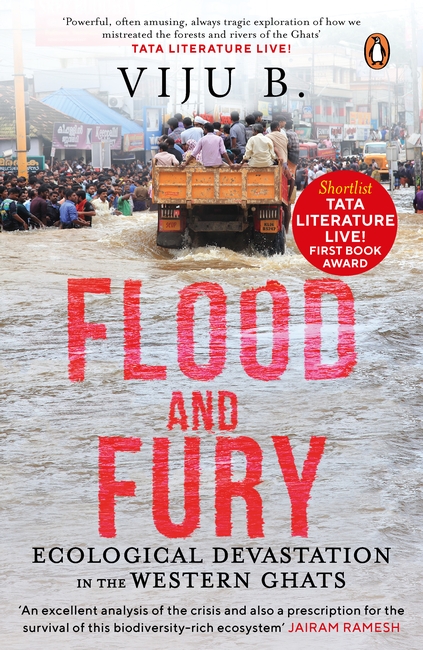
The floods that devastated large parts of Kerala in 2018 were not an isolated, freak phenomenon; rather, they signalled something graver-the ecological devastation of the Western Ghats.
Made a UNESCO World Heritage Site in 2012, the Ghats have become increasingly vulnerable to serious ecological damage, threatening the sustenance of their people. The 2018 floods were a wake-up call for the region spanning 1600 kilometres and six states-Kerala, Tamil Nadu, Karnataka, Goa, Maharashtra and Gujarat-that form an ecosystem older than the Himalayas.
Travelling in this region, documenting the devastating large-scale mining, quarrying, deforestation and mismanagement of water resources, at the same time mapping its culture, history and ecology, Viju B. investigates the crisis in the Western Ghats and suggests policy measures urgently required to mitigate it.

Winner of Publishing Next’s Printed Book of the Year Award and featuring on the Green Literature Festival Honour List.
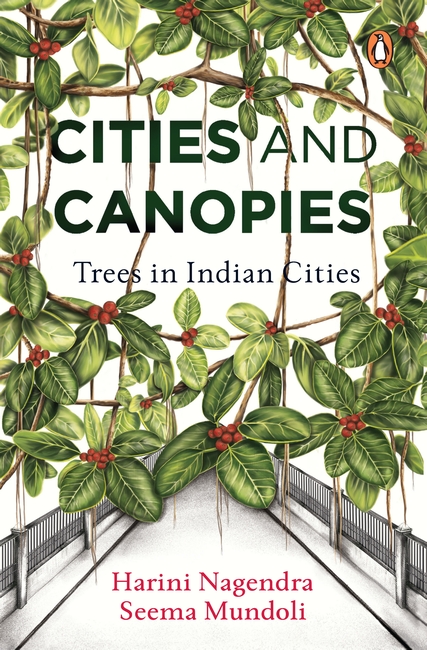
Native and imported, sacred and ordinary, culinary and floral, favourites of various kings and commoners over the centuries, trees are the most visible signs of nature in cities, fundamentally shaping their identities. Trees are storehouses of the complex origins and histories of city growth, coming as they do from different parts of the world, brought in by various local and colonial rulers. From the tree planted by Sarojini Naidu at Dehradun’s clock tower to those planted by Sher Shah Suri and Jahangir on Grand Trunk Road, trees in India have served, above all, as memory keepers. They are our roots: their trunks our pillars, their bark our texture, and their branches our shade. Trees are nature’s own museums.
Drawing on extensive research, Cities and Canopies is a book about both the specific and the general aspects of these gentle life-giving creatures.
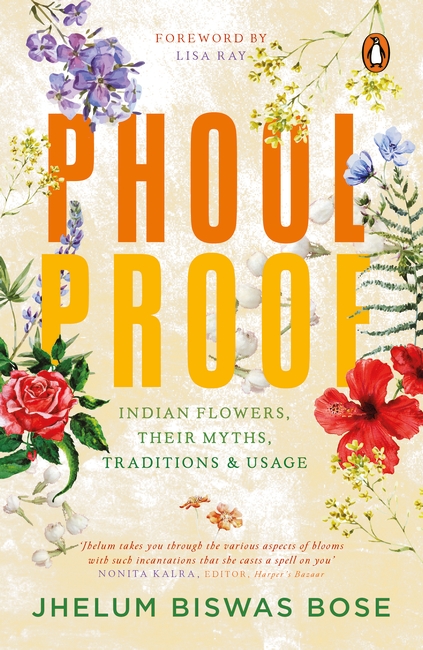
After being forced to take a sabbatical from work because of her chronic breathing troubles, Jhelum Biswas Bose turned to flowers for solace and healing. Her blossoming connection with flowers deepened her understanding of herself and the world around her. Over the years, she has learnt to recognize and respect the soft energies of blooms with the help of healing therapies such as Bach flower remedies and aromatherapy.
Phoolproof is a complimentary bouquet to flowers, especially Indian flowers, and brings to our plain sight their subtle power and meaning. From the book’s various whorls, Jhelum teaches us how to gainfully use flowers in living spaces, foods, and beauty and healing treatments.

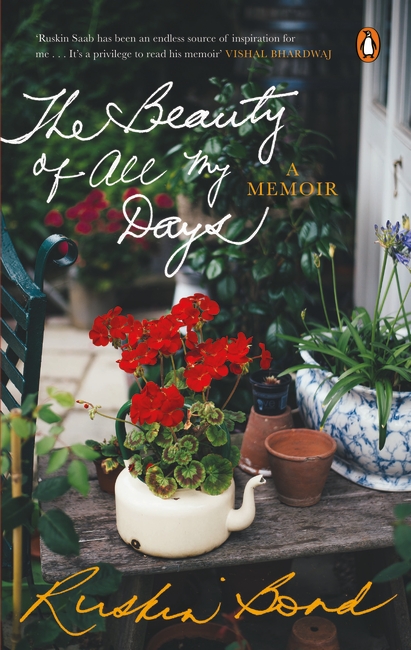
So here I am, delving into the past like Monsieur Poirot, not to solve a mystery, but to try to understand some of the events that have helped define the sort of person I have become. Some of it, naturally, is in the genes; but much of it is in the environment, in the circumstances in which we grow up, in the people who come into our lives, even in the air we breathe.
Had I grown up in London or Timbuktu, I would have been a different sort of person, I’m sure. My parents (and those before them) made me. But India made me too. The soil, the air, the wind, the rain, the trees, the grass, the proximity of people-all these things made me . . .
Different things at different times helped to make the individual that is me, just as different things at different times helped to make you, just as they went into making your brothers and sisters, who are very different from you.
‘Do I contradict myself? Very well, then, I contradict myself,’ said Walt Whitman.
Each chapter of this memoir is a remembrance of times past, an attempt to resurrect a person or a period or an episode, a reflection on the unpredictability of life. Some paths lead nowhere; others lead to a spring of pure water. Take any path and hope for the best. At least it will lead you out of the shadows.

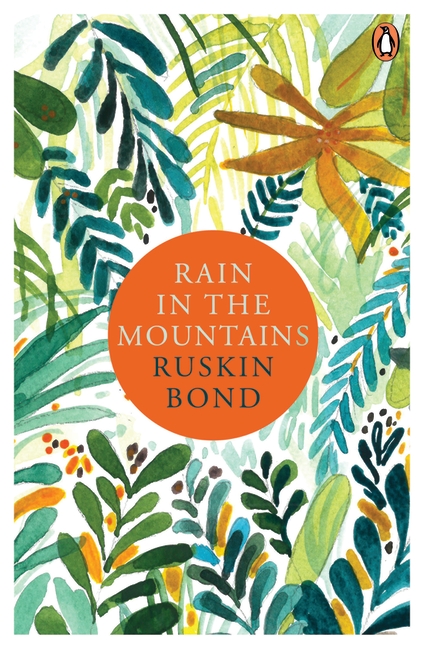
A delightful read… no one understands nature like Ruskin Bond and it takes his ability to put this wonder into words’-Deccan Chronicle For over half a century, Ruskin Bond has celebrated the wonder and beauty of nature as few other contemporary writers have, or indeed can. This collection brings together the best of his writing on the natural world, not just in the Himalayan foothills that he has made his home, but also in the cities and small towns that he lived in or travelled through as a young man. In these pages, he writes of leopards padding down the lanes of Mussoorie after dark, the first shower of the monsoon in Meerut that brings with it a tumult of new life, the chorus of insects at twilight outside his window, ancient banyan trees and the short-lived cosmos flower, a bat who strays into his room and makes a night less lonely… This volume proves, yet again, that for the serenity and lyricism of his prose and his sharp yet sympathetic eye, Ruskin Bond has few equals. ‘Once again this writer from Mussoorie captivates with his collection of nature pieces -Sunday Midday ‘Bond uses his pen as a brush to paint sensuous images of his experiences with nature and beckons his readers into his imagination … a book that relaxes the eyes, rests the mind, lulls the noise and lets one drift into the idyllic life with nature that most of us are unable to lead’-Dawn
Rain in the Mountains brings together some of Ruskin Bond’s most beautiful works from his years spent in the foothills of the Himalayas in the town of Mussoorie. Through vivid images and lucid writing, Bond evokes the everyday sights and sounds, and captures the essence of mountain life. The musings on his natural habitat, in both prose and poetry, offer a view of that simple and affable world. Some of his writings featured in the book are ‘Once Upon a Mountain Time’, ‘Sounds I Like to Hear’, ‘How Far Is the River’ and ‘After the Monsoon’.
Rain in the Mountains will transport the reader into the quiet world of the mountains, lit with an eternal charm.