What if happiness is not a private pursuit, but a collective, political project?
Alchemy of Development centres transformation through new ways of seeing, being, and doing. Bridging development studies with diverse religio-philosophical worldviews, it reimagines well-being as interconnected and public. The result is a shift: from addressing the visible manifestations of a faulty growth paradigm – inequality, conflicts, and ecological collapse – to understanding the deeper causes that sustain these crises.
Exposing the deep-seated logic of separation and othering that normalizes exploitation of people and the planet, the book highlights interdependent, relational worldviews in which well-being is realized in the collective. Building on Bhutan’s development trajectory and drawing insights from across cultures, it advances a new politics of well-being.
Ultimately, Alchemy of Development is a call to rethink how we live, govern, and relate to one another and to the world.

यह पुस्तक भारत में पर्यावरण आंदोलन की जड़ों को समझने का एक महत्त्वपूर्ण प्रयास है। रामचंद्र गुहा इसमें दिखाते हैं कि कैसे भारत में प्रकृति के प्रति संवेदनशीलता केवल आधुनिक विचार नहीं, बल्कि सदियों पुरानी सामाजिक, सांस्कृतिक और आर्थिक परंपराओं से जुड़ी हुई है। पुस्तक में भारतीय इतिहास से जुड़े नौ पर्यावरणविदों के माध्यम से यह बताया गया है कि आम लोगों—विशेषकर ग्रामीण समुदायों—ने अपने जीवन और आजीविका की रक्षा के लिए पर्यावरण संरक्षण को एक संघर्ष के रूप में अपनाया। गुहा यह भी स्पष्ट करते हैं कि भारतीय पर्यावरणवाद पश्चिमी मॉडल से अलग है, क्योंकि यह केवल प्रकृति की रक्षा नहीं, बल्कि सामाजिक न्याय और संसाधनों के समान वितरण से भी जुड़ा है।

Not merely a space story. A mindset upgrade.
From doubt ? discipline ? destiny
What if your dream wasn’t yours alone?
In The Second Orbit, Shubhanshu Shukla strips away the spectacle of space travel to reveal something far more powerful, the inner battle to keep believing when everything pushes you to stop.
Behind every launch is a thousand silent breakdowns. Behind every orbit is a moment where quitting feels easier. This is that story.
From brutal training modules to the stillness of space, Shubhanshu captures what it means to carry not just ambition, but expectation, the hopes of 1.4 billion people riding on one fragile human resolve.
This is not a victory lap. A mindset. A mirror.
Because the real question isn’t how far you can go,
it’s how long you can hold on when it gets hard.
And maybe, just maybe …
your second orbit is waiting.

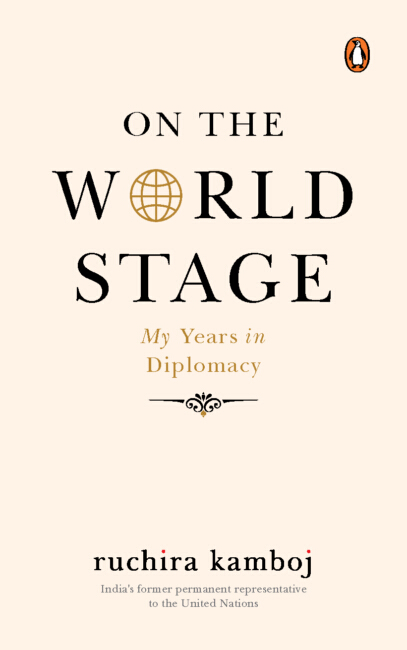
In this incisive and deeply engaging memoir, diplomat Ruchira Kamboj reflects on a remarkable career in the front lines of global diplomacy, representing India at the United Nations, UNESCO, and as ambassador to South Africa and Bhutan. With candour, elegance and a storyteller’s instinct, she revisits defining moments in contemporary international relations—negotiations that shaped outcomes, rooms where power shifted quietly and decisions that carried the weight of nations.
From multilateral corridors to bilateral breakthroughs, Kamboj offers a rare, insider’s view of how India shaped its voice—and then amplified it—on the world stage. This is not just a chronicle of postings but a narrative of purpose, resilience and strategic intent. As India steps into a more assertive global role, her reflections illuminate the mindset, diplomacy and conviction that underpin that rise, making this memoir both timely and compelling for anyone seeking to understand India’s place in a rapidly changing world.
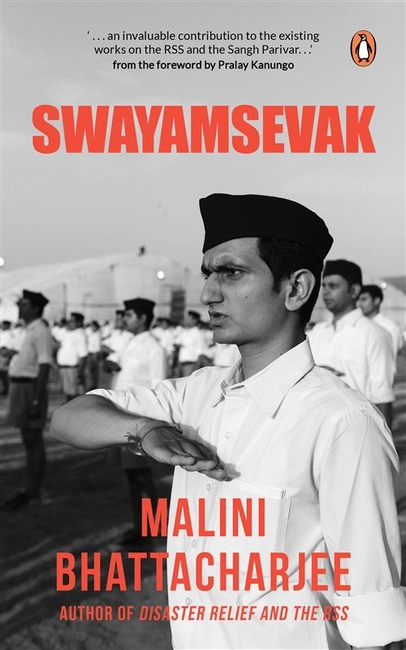
In September 2025, the Rashtriya Swayamsevak Sangh (RSS) completed a hundred years. Founded in 1925 by Dr Keshav Baliram Hedgewar with a small group of handpicked young men, the Sangh sought to reinvigorate Hindu society through sangathan (organization) and seva (service).
What sustains the RSS a hundred years on? Who are the individuals who animate this vast and enduring organization? Are they conservative or modern, privileged or marginal, urban or rural? Swayamsevak explores these questions in depth.
At its heart are ten compelling life stories of nine swayamsevaks and one sevika. Through these intimate portraits, the book foregrounds the everyday experiences, moral worlds, and motivations that shape their journeys, revealing the discipline, commitment to service, and quiet conviction that sustain the Sangh’s remarkable continuity and expansion.
By restoring the swayamsevak to the centre of the narrative, this book opens up a rich and largely unexplored terrain and offers a nuanced and deeply human window into the RSS.

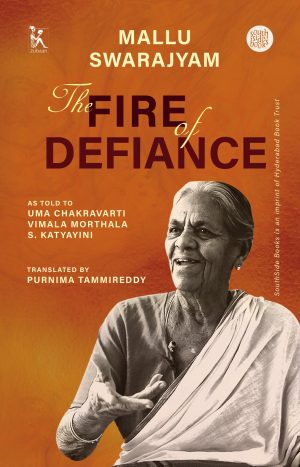
Even as the movement for Indian independence gathered momentum at the national level in the 1930s and ‘40s, a different kind of mobilization and struggle was unfolding in the Telangana region. Led by the Communist Party, the Telangana armed struggle swept through the Nizam’s dominions, targeting the exploitative practices of the doras, or landlords. Hundreds of men and women, from a wide spectrum of social locations, participated in the movement, and pictures of women wielding rifles have today become iconic.
Among the many women in the movement was Mallu Swarajyam, who joined the armed squads of the movement and also became a cultural activist. Her extraordinary story, as told to three women, is captured here. In her words: “I also worked in the Kothagudem coal mines. Our informants were tribal women who went into the forest to gather mahuva flowers. On one occasion, we received information that the police were travelling in a bus along the route. I stormed onto the road, stopped the bus and punctured its tyres with my pistol.”

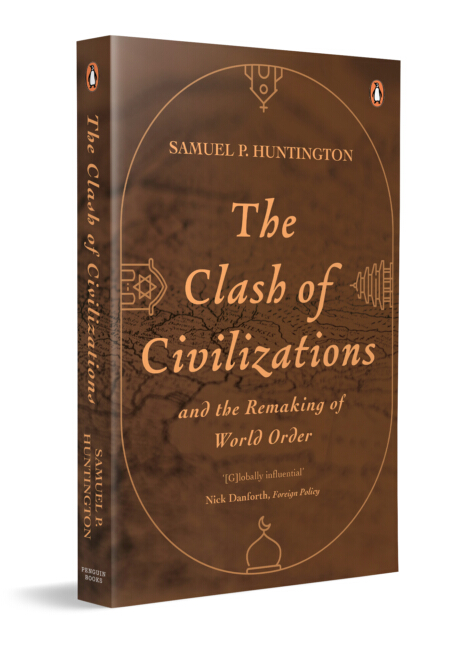
Samuel P. Huntington, one of the world’s most influential thinkers, argues in this seminal book that conflicts between different cultural ‘civilizations’ are the greatest threat to world peace. He suggests that the world is comprised of not two opposite but eight diverse groups, based on religion, and how international cooperation between them is the best safeguard against war. Global events in the twenty-first century have proved his foresight and sagacity. Huntington’s provocative thesis that a struggle for supremacy among dominant cultures—like the Japanese, Chinese, Hindu and Islamic—is inevitable is turning into reality. In the end, people’s decision to coexist or to make war in a complex, multipolar, multi-civilizational world will determine the course of humanity.

The city is breathing, but it is not alive.
India’s metropolitan dream is turning into a suffocating reality—choked skies, endless traffic, mounting waste, and infrastructure that promises relief but delivers more chaos. What looks like growth from afar feels like collapse from within. At the heart of this crisis lies the unending urban expansion paradox: every new flyover brings more cars, every expansion multiplies the density it was meant to ease. Our cities are not expanding to serve us—they are expanding to consume us.
But this is not a story of despair. It is a bold roadmap for change.
India’s Urban Expansion introduces the concept of the global readiness perimeter, offering a new framework to understand how Indian cities can move beyond reactive expansion toward deliberate, future-ready planning.

Why does history in India ignite such fierce debate? Who gets to shape the story of a nation—and to what end?
In Who Owns the Past?, historian Shaan Kashyap delivers a gripping, deeply researched account of how India’s history has been written, rewritten, contested, and politicized from the colonial era to the age of social media. This is not just a book about the past—it’s about the power struggles that define the present.
From Macaulay and James Mill to Romila Thapar and Vikram Sampath, Kashyap traces the intellectual battles that have shaped the “Idea of India.” He examines how textbooks are crafted, how institutions influence memory, and how political shifts leave their imprint on the stories nations tell about themselves.
Blending sharp archival work with vivid portraits of historians, policymakers, and power brokers, Who Owns the Past? is both a sweeping narrative of Indian historiography and a timely exploration of identity, ideology, and nationhood.
Provocative, balanced, and essential reading, this book asks a simple but urgent question: if the past is constantly being rewritten, what does that mean for our future?
Perfect for readers of history, politics, public policy, and anyone invested in understanding the intellectual fault lines shaping contemporary India.

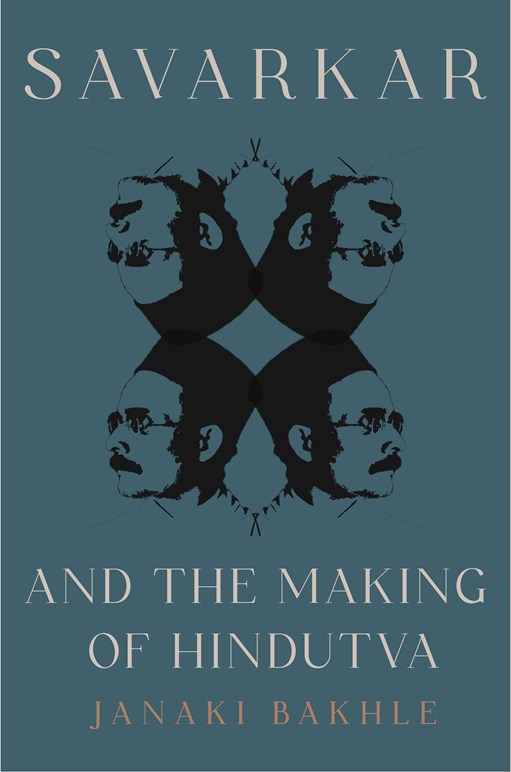
A monumental intellectual history of the pivotal figure of Hindu nationalism .
Vinayak Damodar Savarkar (1883–1966) was an intellectual, ideologue, and anticolonial nationalist leader in India’s struggle for independence from British colonial rule, one whose anti-Muslim writings exploited India’s tensions in pursuit of Hindu majority rule. Savarkar and the Making of Hindutva is the first comprehensive intellectual history of one of the most contentious political thinkers of the twentieth century.
Janaki Bakhle examines the full range of Savarkar’s voluminous writings in his native language of Marathi, from political and historical works to poetry, essays, and speeches. She reveals the complexities in the various positions he took as a champion of the beleaguered Hindu community, an anticaste progressive, an erudite if polemical historian, a pioneering advocate for women’s dignity, and a patriotic poet. This critical examination of Savarkar’s thought shows that Hindutva is as much about the aesthetic experiences that have been attached to the idea of India itself as it is a militant political program that has targeted the Muslim community in pursuit of power in postcolonial India.
By bringing to light the many legends surrounding Savarkar, Bakhle shows how this figure from a provincial locality in colonial India rose to world-historical importance. Savarkar and the Making of Hindutva also uncovers the vast hagiographic literature that has kept alive the myth of Savarkar as a uniquely brave, brilliant, and learned revolutionary leader of the Hindu nation.