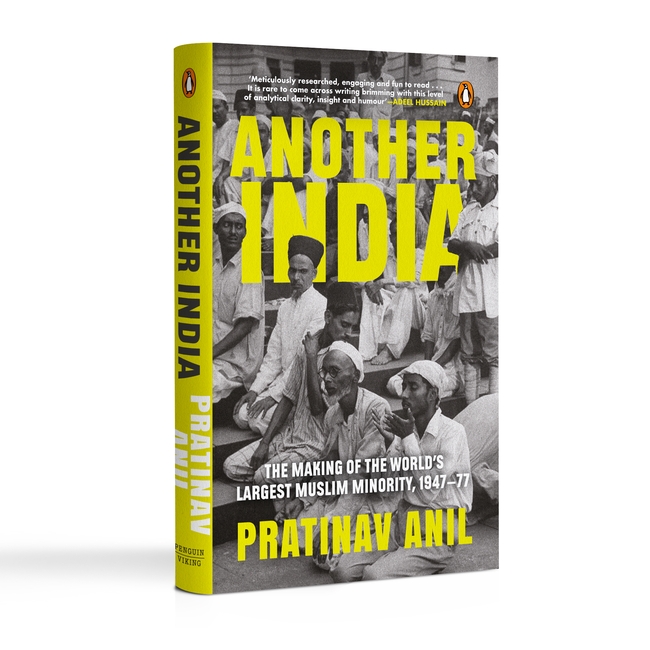
Another India tells the story of the world’s biggest religious minority through vivid biographical portraits that weave together the stories of both elite and subaltern Muslims.
By challenging traditional histories and highlighting the neglect of minority rights since Independence, Pratinav Anil argues that Muslims, since 1947, have had to contend with discrimination, disadvantage, deindustrialization, dispossession and disenfranchisement, as well as an unresponsive leadership. He explores the rise and fall of the Indian Muslim elite and the birth of the nationalist Muslim, and emphasizes the importance of class in understanding the dynamics of Indian politics.
Anil also sheds light on the vested custodial interests and the depoliticization of the privileged classes, all of which resulted in the elite betrayal by the landed gentry of the ordinary members of the community, a betrayal whose consequences are still felt by India’s 200 million Muslims today.
Another India ultimately recovers Muslim agency from the back pages of history and offers a different picture of democratic India, challenging received accounts of the world’s largest democracy.

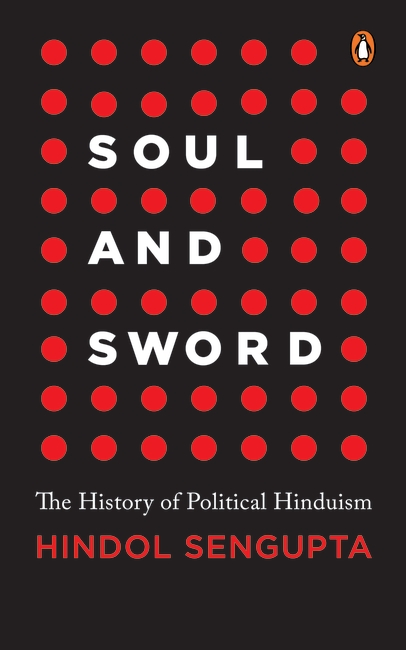
Political Hinduism was once considered a sort of fringe ideology, shadowy and even misunderstood. Its ideas and narratives seemed, in popular discourse, to lack analytical rigour and were easily dismissed.
But history shows that political Hinduism as an intellectual idea was a pioneering theme in India’s nationhood. In fact, it precedes the Indian republic and has been one of the most resilient political theories of India, which survived many bans, boycotts and decades out of power to become, in the twenty-first century, the predominant political force of India. The adherents of political Hinduism are as determined as its detractors—one complains about facing relentless prejudice; the other throws accusations of promoting continuous religious strife. One believes that India cannot be saved without decimating political Hinduism; the other is sanguine that only political Hinduism can save the future of India.
Soul and Sword traces the journey of political Hinduism from events that are critical to its self-narration, that is, early Indian resistance to invasions, to intellectual definitions by nineteenth-century littérateurs and more contemporary electoral politics. It tries to understand the context and historical sources used to construct and promote political Hinduism’s world view.
From award-winning writer Hindol Sengupta, Soul and Sword is absolutely critical reading to understand India’s present and future.

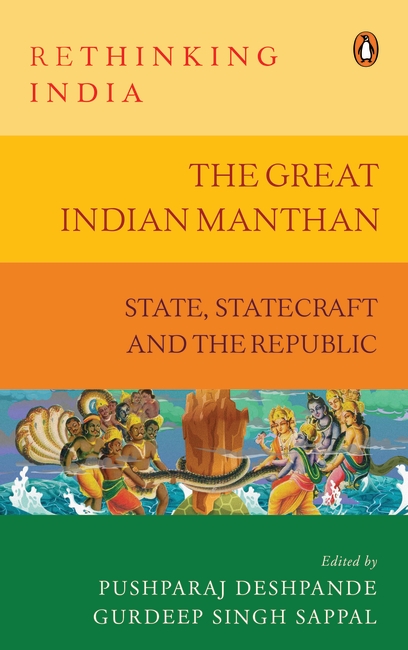
The Great Indian Manthan: State, Statecraft and the Republic features sharply insightful and meaningful essays from India’s foremost politicians and practitioners. Collectively, they dissect the why, what and how of the Indian State.
Each essay in the tenth volume of the Rethinking India series outlines the norms that underpin the governing instruments of the Indian State and critically analyse how they function. In a measured and methodical manner, they then demonstrate how the State has deviated from its constitutional raj dharma (moral duties) and the adverse impacts this has had on every aspect of India’s society, economy and polity. The essays thus juxtapose what should have been, what is and what should be. From their singularly unique vantage point, the authors also propose innovative and disruptive solutions to redress structural fault lines that hold India back.
This is a must-have book for policymakers, academics, activists, businesspersons, diplomats, journalists and anyone interested in understanding the black box of the Indian State.

यह किताब सामाजिक कार्यकर्ताओं, शिक्षाविदों, पत्रकारों, एनजीओ से जुड़े लोगों या आम लोगों के लिए भी एक ज़रूरी किताब है। इसमें ग्रामीण विकास को लेकर ऐसे तथ्य और ऐसी रिपोर्टिंग की गई है जिसे सरकारी अधिकारी मानने के लिए राज़ी नहीं हो सकते।
इस पुस्तक में सुदूर इलाकों की अड़सठ रिपोर्टें, दस लेख और उनतीस तस्वीर हैं जो ग्रामीण भारत की व्यथा को सामने लाती है।
इसमें भूख है, बदहाल खेती है, सूदखोर महाजन हैं और बंधुआ मजदूर हैं। यह किताब हर संवेदनशील व्यक्ति के लिए एक ज़रूरी किताब है।

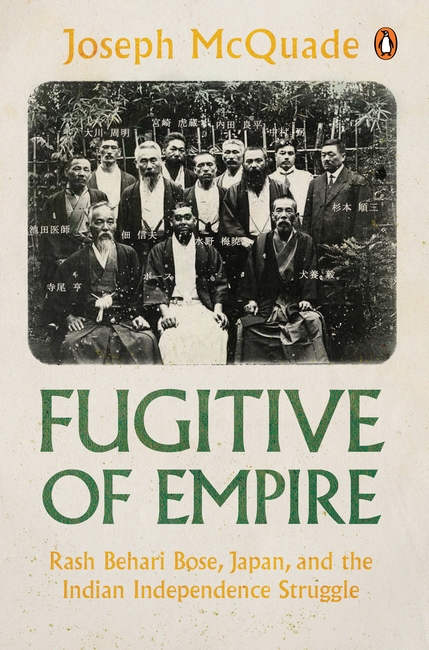
In 1912, Rash Behari Bose made his dramatic entrance into India’s anti-colonial freedom movement when he orchestrated a bomb attack against the British viceroy during a public procession in Delhi. Forced to
flee his homeland, Bose settled in Japan, becoming the most influential Indian in Tokyo and earning the affectionate title ‘Sensei’ among Japanese youth, military personnel, and far-right ultranationalists.
Throughout the 1920s and 1930s, Bose remained a perpetual thorn in the side of the British Empire as he built
and maintained a global network of anti-colonialists, radicals, smugglers, and intellectuals. After siding with Imperial Japan against his British adversaries during the Second World War, Bose died in 1945-just two years before India gained independence.
A complex, controversial, and often contradictory figure, Bose has been described as a committed democrat, an authoritarian, an advocate of religious harmony, a Hindu chauvinist, an anti-communist, a political pragmatist, an idealist, a Japanese collaborator, an anti-racist, a cultural conservative, a
Pan-Asianist, an Indian nationalist, and much more. Drawing on extensive archival research
from India, Japan, and the UK, this refreshing new biography brings to life the largely forgotten story of one of twentieth-century Asia’s most daring revolutionaries.

It contributes to current analyses of the health of liberal democracies-Rajmohan Gandhi
An impressive contribution to Gandhian studies-Bhikhu Parekh
This work merits attention-Gopal Guru
An extremely valuable and timely work-Prabhat Patnaik
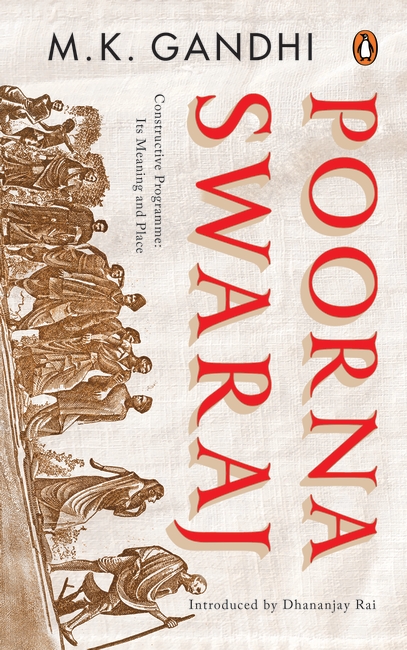
Time and again, Mahatma Gandhi’s life, work and philosophy have played pivotal roles in bringing positive change in society. Poorna Swaraj, through its reading of the Constructive Programme: Its Meaning and Place, opens a window to his vision of attaining real and complete independence or ‘swaraj’ for India. With his ideas on communal unity, prohibition, basic education, emancipation of women, advisasis’ concerns, farmers’ distress, removal of untouchability, demystification of leprosy, the role of khadi, charkha, village and small-scale industries, among others, this book brings to light Gandhi’s road map for an egalitarian society.
This first critical edition, with a comprehensive contextual introduction by Dhananjay Rai, sets the backdrop for readers to understand Gandhi’s thoughts on making an ideal society. Amazingly relevant and thought-provoking, Poorna Swaraj is a must-read for students and scholars of history, social science, politics and Gandhian studies. An invaluable companion for policymakers and general readers, this book is a treasure trove.

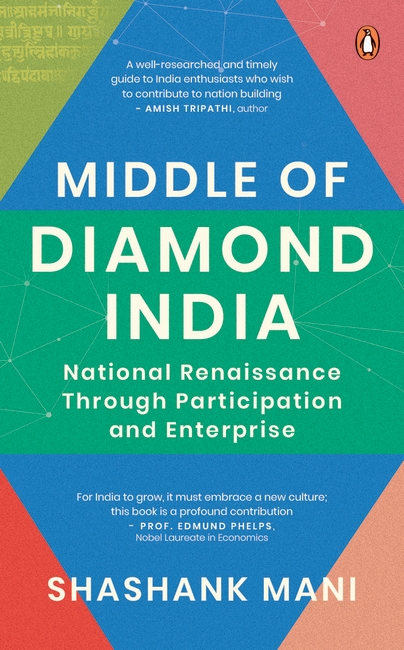
Middle of Diamond India proposes a revolutionary idea – that India has long ignored its largest and most talented segment, citizens in the Tier 2 and Tier 3 districts, its Middle.
The book reveals the hidden stories of those in its Middle who have been ignored owing to their location and language. By examining India’s revolutionary past, its culture, its citizens, its innovators, and its spirit, the book illuminates this Diamond shaped India.
Replete with characters, anecdotes, insights, research and accounts of an annual pilgrimage on a special train-Jagriti Yatra, and an enterprise ecosystem established in Deoria district, the book outlines a new vision of India focussed on its rising Middle. It proposes a Banyan Revolution over the coming twenty-five years of Amrit Kaal, using the tool of enterprise or Udyamita that can ignite a national renaissance.
The book argues that by recognizing and awakening the entrepreneurial vitality of those in small towns and districts, we can create meaning for millions of citizens and define a new modernity for India.

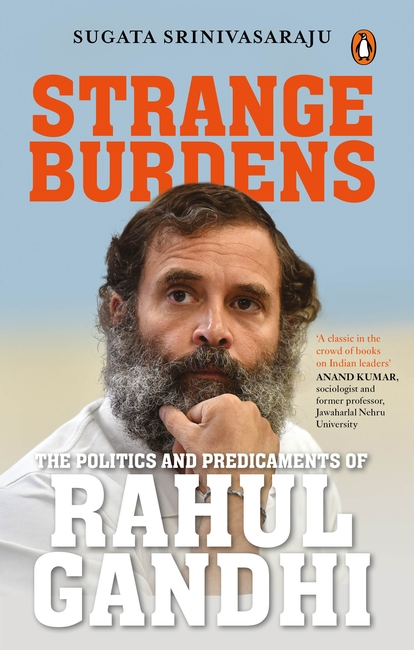
Strange Burdens is not a biography but a book of political commentary. It examines and analyses Rahul Gandhi’s ideas and leadership since he officially entered politics in March 2004. It journeys all the way to the conclusion of the Bharat Jodo Yatra in Srinagar on 30 January 2023 and captures the dilemmas of his
disqualification a couple of months later.
The narrative here crawls across two decades with the intention of understanding Rahul Gandhi’s politics and predicaments, confusions and contradictions, triteness and triumph, as well as his burdens and benignity. It is not the purpose of this book to understand his failures and successes in tabular columns but speculate in the best traditions of political commentary why he is where he is, both politically and as an individual. The book does not seek to answer questions about his suitability or unsuitability for a public role but is rather focused on how he has been caught in the currents of history. It is not a myth-busting or myth-making exercise, nor is it an inquisition; it is a pursuit of political insight.
Since the book is about Rahul Gandhi and the Congress party, it cannot not be about Narendra Modi and the Bharatiya Janata Party. Examining one automatically illuminates the other. The book looks at the contrasts and convergence of the two personalities and the two parties they represent.

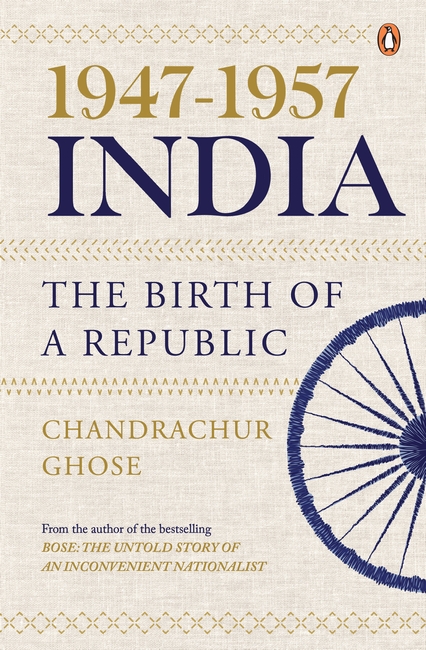
The story of a decade-1947 to 1957-that made and unmade India
The first decade after India’s independence, 1947-1957, was probably the most crucial in the nation’s history. Opening a window to this period, this book weaves a story out of the complex ideas and events that have largely remained beneath the surface of public discourse. The transfer of power, the framing of the Constitution and the formation of the governance machinery; the clash of ideas and ideologies among parties and personalities; the beginning of the disintegration of the Congress and the consolidation of political forces in the opposition; Nehru’s grappling with existential problems at home and his quest for global peace; the interplay between democratic ideals and ruthless power play-all these factors impinged on each other and shaped the new republic in its formative decade.
Thought-provoking, argumentative and unputdownable, 1947-1957, India: The Birth of a Republic is a must-read for anyone interested in Indian political history.

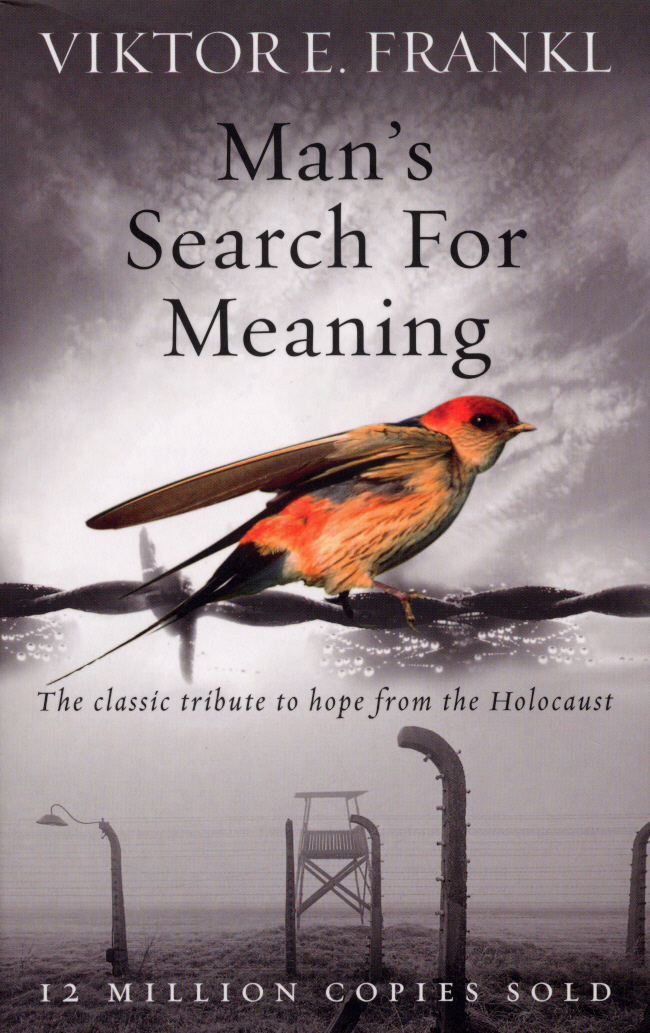
A prominent Viennese psychiatrist before the war, Viktor Frankl was uniquely able to observe the way that he and other inmates coped with the experience of being in Auschwitz. He noticed that it was the men who comforted others and who gave away their last piece of bread who survived the longest – and who offered proof that everything can be taken away from us except the ability to choose our attitude in any given set of circumstances.
The sort of person the prisoner became was the result of an inner decision and not of camp influences alone. Only those who allowed their inner hold on their moral and spiritual selves to subside eventually fell victim to the camp’s degenerating influence – while those who made a victory of those experiences turned them into an inner triumph.
Frankl came to believe that man’s deepest desire is to search for meaning and purpose. This outstanding work offers us all a way to transcend suffering and find significance in the art of living.