How can the complexities of ancient India be comprehended?
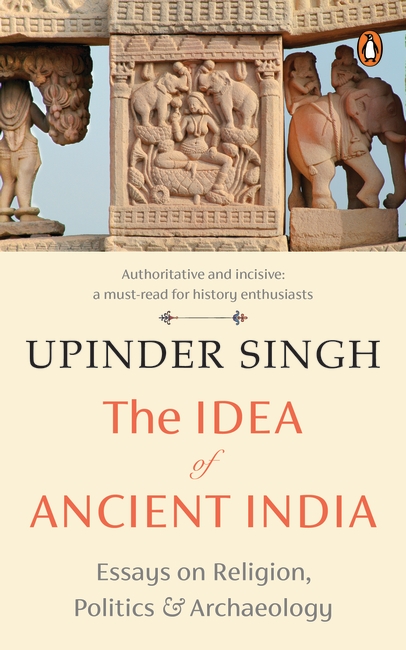
This book draws on a vast array of texts, inscriptions, archaeology, archival sources and art to delve into themes such as the history of regions and religions, archaeologists and the modern histories of ancient sites, the interface between political ideas and practice, violence and resistance, and the interactions between the Indian subcontinent and the wider world. It highlights recent approaches and challenges in reconstructing South Asia’s early history, and in doing so, brings out the exciting complexities of ancient India.
Authoritative and incisive, this revised Penguin edition-with two new chapters-is essential reading for students and scholars of ancient Indian history and for all those interested in India’s past.

Shadows at Noon is an ambitious synthesis of decades of research and scholarship which explores the key strands of South Asian history in the twentieth century with clarity and authority. Unlike other narrative histories of the subcontinent that concentrate exclusively on politics, here food, leisure and the household are given equal importance to discussions of nationhood, the development of the state and patterns of migration.
While it tells the subcontinent’s story from the British Raj to independence and partition and on to the forging of the modern nations of India, Pakistan and Bangladesh, the book’s structure is thematic rather than chronological. Each of the chapters illuminates on overarching theme or sphere that has shaped South Asia over the course of the century. This format allows the reader to explore particular issues – such as the changing character of nationalism or food consumption – over time and in depth.
Shadows at Noon is a bold, innovative and personal work that pushes back against standard narratives of ‘inherent’ differences between India, Pakistan and Bangladesh. Its purpose is to make contemporary South Asia intelligible to readers who are fascinated by the subcontinent’s cultural vibrancy and diversity but are often perplexed by its social and political make-up. And it illuminates the many aspects that its people have in common rather than what divides them.

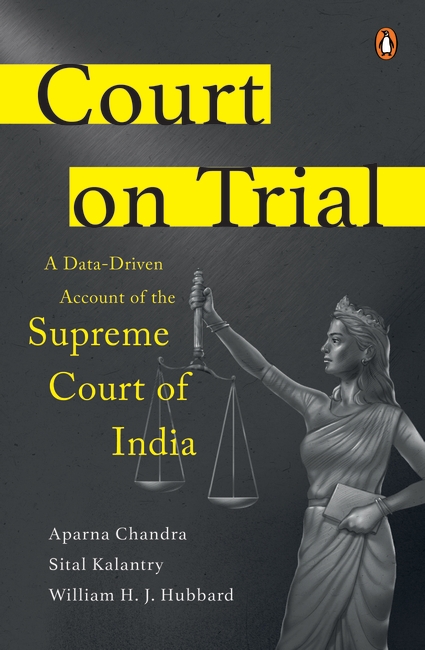
The Indian Supreme Court was established nearly seventy-five years ago as a core part of India’s constitutional project. Does the Court live up to the ideals of justice imagined by the framers of the Indian Constitution? Critics of the Supreme Court point out that it takes too long to adjudicate cases, a select group of senior advocates exercise disproportionate influence on the outcome of cases, the Chief Justice of India strategically assigns cases with an eye to outcome, and the self-appointments process-known as the collegium-is just another ‘old boy’s network’. Building on nearly a decade of original empirical research, this book examines these and other controversies plaguing the Supreme Court today. The authors provide an overview of the Supreme Court and its processes which are often shrouded in mystery, and present data-driven suggestions for improving the effectiveness and integrity of the Court.
Global inequality is growing. Financial markets disenfranchise women, the 99 percent, and the planet itself. But what if we found the source of power and turned it inside out? What if we made the tools of the system available to all?
When she launched the world’s first stock exchange for social enterprises, Durreen Shahnaz started more than a new financial system; she sparked a movement. Defiant optimism-the stubborn belief that systems that enrich the few can be transformed for the good of the many-requires an indomitable spirit. In these pages, Shahnaz illuminates what investing in those excluded from networks of power and opportunity requires.
From growing up with constrained life chances, to working as the first Bangladeshi woman on Wall Street, to becoming a global leader in impact investing, Shahnaz takes us on a mesmerizing trek of innovation, compassion, and enterprise. We accompany her to villages in Bangladesh where she helps women entrepreneurs learn to proudly sign their names, and on visits to venture capitalists who walk past her to shake her male employees’ hands. We go to a garment factory where women labour for low wages, and to a town in India where microfinance offers women enough capital to run grocery stores and tailor shops. Along the way, the birth of her two daughters only fuels her relentless pursuit of a world where girls are valued. Finally, armed with financial backers and a plan, Shahnaz successfully launches the Women’s Livelihood Bond™ Series, the world’s first tradable financial product for investing in underserved women’s livelihoods.
Changing how systems work-and who they work for-isn’t for the faint of heart. But The Defiant Optimist offers strategies for placing women, the underserved, and the planet at the heart of systems. Together we can locate the levers of power and pull them defiantly in a new direction.

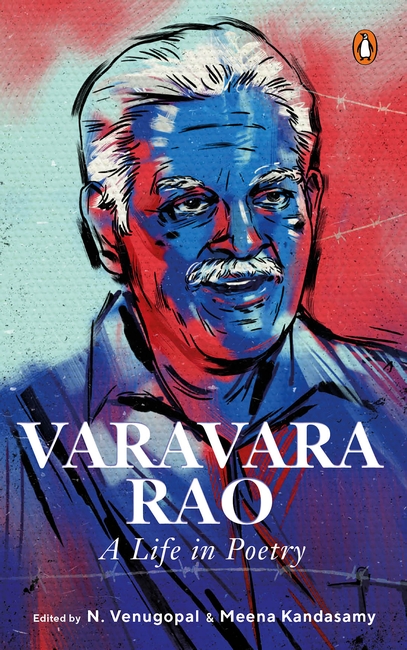
Varavara Rao: A Life in Poetry is the first-ever collection in English of poems by the Telugu poet, selected and translated from sixteen books that he has published. Having begun to write poetry in his early teens, Varavara Rao, now in his early eighties, continues to be a doyen of Telugu modern poets.
He was a consistent comrade-in-letters to all the social movements from the 1960s to the 2010s, and this volume is a capsule of momentous social history captured in his
poetic imagination.
The poems in the collection offer an artistic blend of tender response and thoughtful reaction to social realities, as well as an explosion of powerful emotions from a voice
sought to be subdued. Varavara Rao’s poetry, more than anything else, is an offering of solidarity to the voiceless, the underdog and the oppressed.

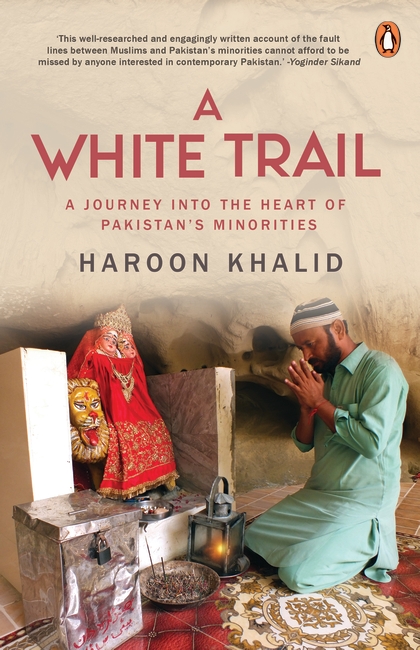
A travelogue and an ethnographic study that builds upon hundreds of oral testimonies, A White Trail tells the stories of the complex lived-realities of religious minorities in Pakistan-stories of their triumphs, insecurities, aspirations, marginalization and resilience. The book tells the tale of a group of young Hindu boys who came together to revive their festivals after decades of hidden celebrations. It narrates the story of the Sikh community in Nankana and how it began carving out an identity in a Muslim-dominated city. And it explores how the Christian community expresses its religious identity in a local, South-Asian flavour.
A White Trail is a journey through the different festivals of the five religious minorities of Pakistan, narrating the lives of the different communities in their own words. It reveals what it means to celebrate religious festivals under the shadow of rising intolerance, structural persecution and increased cases of religious violence.

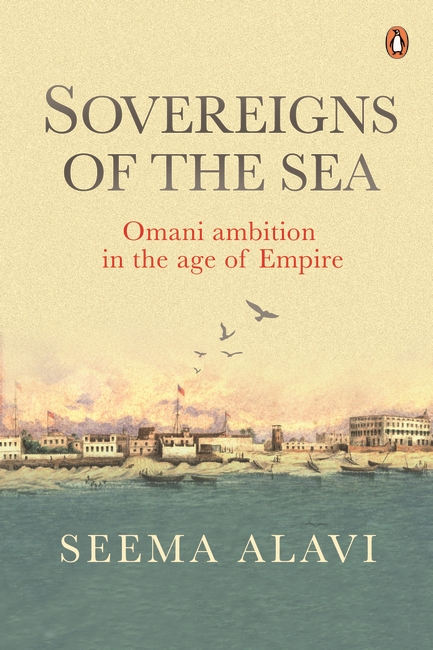
This definitive book on the Sultans of Oman is a thrilling historical account of their action-packed battles, daring expeditions, epic triumphs and ingenious politics in the long nineteenth century. It puts the optic of ‘micro-history’ on their fascinating lives as they navigated the geopolitics of their time and propelled the politics of the Western Indian Ocean. It offers a comprehensive and in-depth examination of the ambitions of the Omani patriarch Sultan Sayyid Said and his four sons and shows how integral they were to the political culture of the region.
Keeping a sensitive finger on the specific temporal and spatial moments in the maritime space that they navigated, it explores their key role in shaping the politics of the Ocean and nurturing the Omani Sultanate on their terms. The groundbreaking narrative sheds light on the role of the Sultans as agents of change, challenging the Eurocentric narrative that views the Indian Ocean as framed in the history of western imperialism and capitalism alone.
In addition to its academic rigour, the book is easy to read and engaging, making it an ideal resource for students, scholars and anyone with an interest in the history of the Indian Ocean, the Middle East and South Asia. Its fresh perspective and insightful analysis make it an invaluable contribution to the fast-growing field of Indian Ocean Studies.
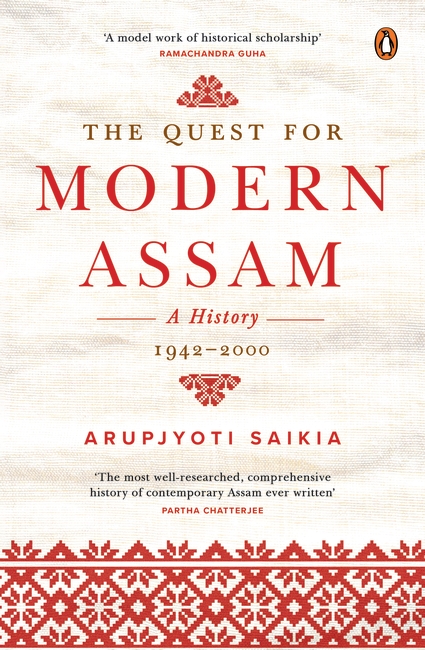
‘A model work of historical scholarship’-Ramachandra Guha
‘The most well-researched, comprehensive history of contemporary Assam ever written’-Partha Chatterjee
The crucial battles of World War II fought in India’s north-east-followed soon after by Independence and Partition-had a critical impact on the making of modern Assam. In the three decades following 1947, the state of Assam underwent massive political turmoil, geographical instability, and social and demographic upheaval, among others. Later, the truncated state suffered widespread unrest as various groups believed their cultural identity and political leverage were under threat. New social energies and political forces were unleashed and came to the fore.
Definitive, comprehensive and unputdownable, The Quest for Modern Assam explores the interconnected layers of political, environmental, economic and cultural processes that shaped the development of Assam since the 1940s. It offers an authoritative account that sets new standards in the writing of regional political history. Not to be missed by any one keen on Assam, India, Asia or world history in the twentieth century.

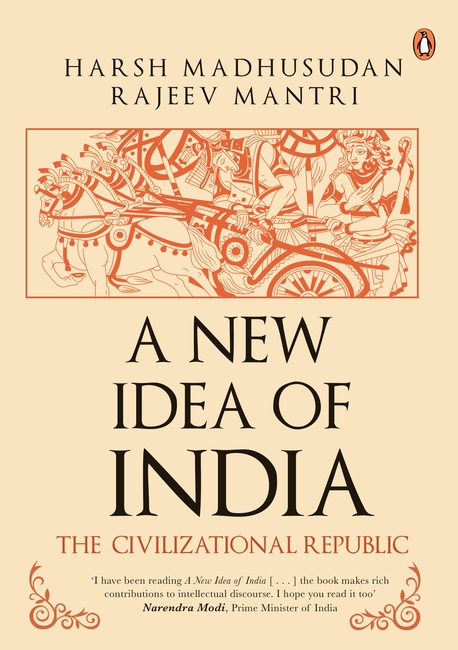
For the better part of seven decades after independence, the Nehruvian idea of India held sway in India’s polity, even if it was not always in consonance with the views of Jawaharlal Nehru himself. Three key features constituted the crux of the Nehruvian way: socialism, which in practice devolved to corruption and stagnation; secularism, which boxed citizens into group membership and diluted individual identity; and non-alignment, which effectively placed India in the Communist camp.
In the early Nineties, India began a gradual withdrawal from this path. But it was only in 2019, with Narendra Modi’s second successive win in the general elections, that this philosophy is finally being replaced by a worldview that acknowledges India as an ancient civilization, even if a young republic, and that sees citizens as equal for developmental and other purposes.
A New Idea of India constructs and expounds on a new framework beyond the rough and tumble of partisan politics. Lucid in its laying out of ideas and policies while taking a novel position, this book is illuminated by years of research and the authors’ first-hand experiences, as citizens, entrepreneurs and investors, of the vagaries and challenges of India. This revised edition builds on some of the arguments of the earlier edition and brings things up-to-date.

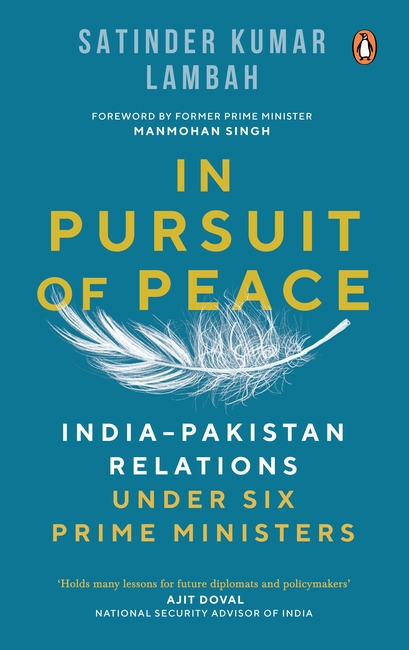
No relationship has been as complex and so difficult to manage as India’s relations with Pakistan. Four wars, cross-border terrorism, and Pakistan’s persistent hostility and relentless campaign on “Kashmir issue” have been a source of strategic challenge for every Indian leader. Yet, each has pursued peace in the interest of India’s progress and security with differing strategies, but with the same result.
As a diplomat who served around the world and in Pakistan, the late Satinder Kumar Lambah’s unique position helps tell an insider’s story of the turbulent history between India and Pakistan. He writes of his personal experiences of India-Pakistan relations having served six Indian Prime Ministers, whom he worked directly with and offered counsel. This includes his role as Prime Minister’s Special Envoy for back-channel talks under PM Manmohan Singh and India’s quick diplomatic moves in the post-Taliban Afghanistan. With insight, he also traces the roots of Pakistan’s evolution since its birth and the challenges its army-driven polity poses for India and reflects on the way forward in dealing with Pakistan to secure peace in the region.