Publish with Us

Follow Penguin

Follow Penguinsters

Follow Penguin Swadesh

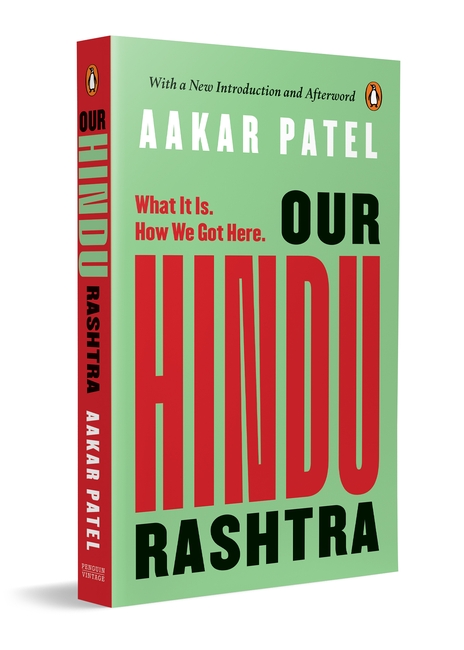
Our Hindu Rashtra

India has taken so sharp a turn in recent years that the very centre has shifted considerably. What led to this swing? Is it possible to trace the path to this point? Is there a way back to the just, secular, inclusive vision of our Constitution-makers?

This country has long been an outlier in its South Asian neighbourhood, with its inclusive Constitution and functioning democracy. The growth of Hindutva, in some sense, brings India in line with the other polities here. In Our Hindu Rashtra, writer and activist Aakar Patel peels back layer after layer of cause and effect through independent India’s history to understand how Hindutva came to gain such a hold on the country. He examines what it means for India that its laws and judiciary have been permeated by prejudice and bigotry, what the breach of fundamental rights portends in these circumstances, and what the all-round institutional collapse signifies for the future of Indians.

Most importantly, Patel asks and answers that most important of questions: What possibilities exist for a return? Thought-provoking and pulling no punches, this book is an essential read for anyone who wishes to understand the nature of politics in India and, indeed, South Asia.
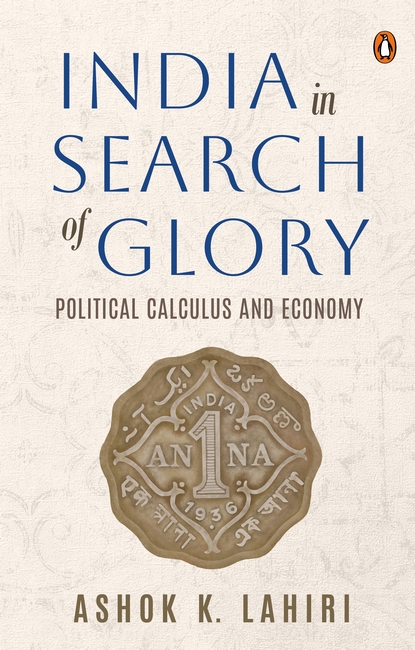
India in Search of Glory

India and the Indians have made some progress in 75 years after Independence. The number of literates has gone up. The Indians have become healthier and their life expectancy at birth has gone up. The proportion of people below the poverty line has also halved. But the shine from the story fades when India is compared with that of the East Asian Tigers and China. It looks good but not good enough. India looks far away from the glory it seeks. This issue forms the core subject matter of this book. It tries to argue why India could not achieve more and what all it could have achieved. It paints a picture of its possible future and highlights the areas that need immediate attention.

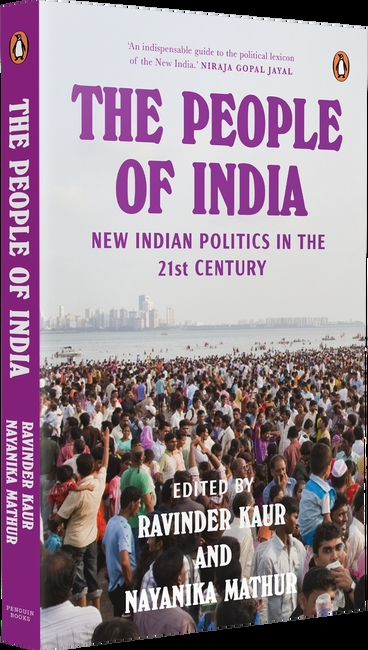
The People of India

‘The People’ and ‘New India’ are terms that are being invoked freely to both understand and govern India as she enters her 75th year of post-colonial nationhood. Yet, there is little clarity on who these people of India really are, what they do, their desires, histories and attachments to India. Similarly, the phrase ‘New India’ is used far
too loosely to explain away a dangerously confounding politics.
In this book, some of the most respected scholars of South Asia come together to write about a person or a concept that holds particular sway in the politics of contemporary India. In doing so, they collectively open up an original understanding of what the politics at the heart of New India are-and how best we might come to analyse them.
This brilliant collection put together by Ravinder Kaur and Nayanika Mathur includes original and accessible essays by leading social science and humanities scholars of South Asia.

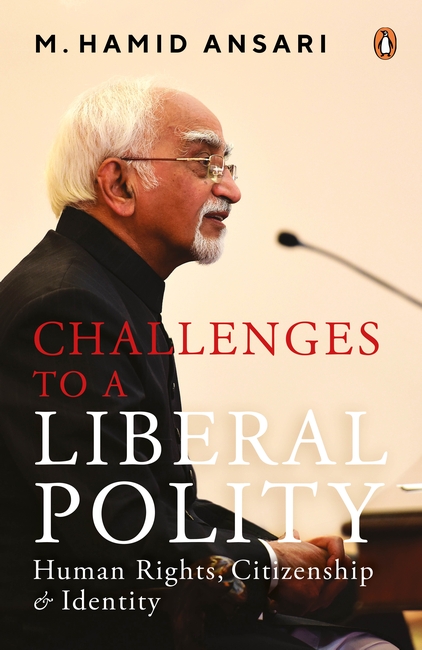
Challenges to A Liberal Polity

Challenges to a Liberal Polity, amazingly relevant and thought provoking for our times-by Hamid Ansari, former Vice President of India-brings to light some of the most critical issues, which influence our thoughts every day.

From Nehru’s vision for India as a major world power to the issues of citizenship, religion, democracy, the idea of plurality and Muslim identity in Indian society, inclusion/exclusion of Indian Muslims, the ‘mainstream’ decision making process in India, the role of women in order to build a compassionate society, implication for dissent, Muslims’ role and contribution to Indian culture, civilization and nation-building in the post-Independent India, among others, the book thrashes some of the burning issues of Indian polity and society.

Comprehensive, argumentative and evocative, this title will not only interest a wide spectrum of readers but also politicians, policymakers and students and scholars of Indian politics, history and sociology.

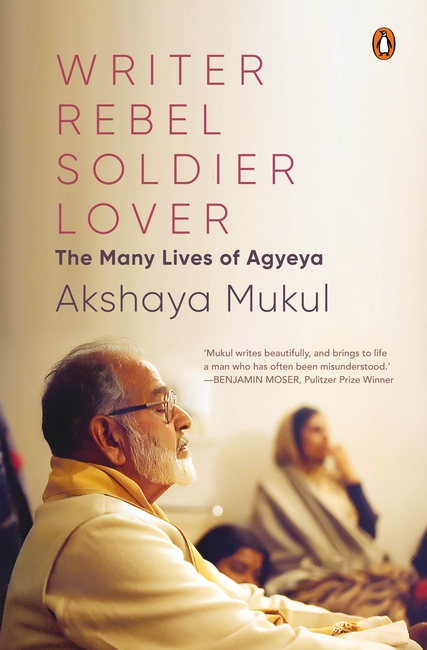
Writer, Rebel, Soldier, Lover

“An outstanding literary biography” AMITAV GHOSH

“Mukul writes beautifully, and brings to life a man who has often been misunderstood” BENJAMIN MOSER

“This book is a remarkable contribution to the world of Indian letters: ANNIE ZAIDI

Sachchidanand Hirananda Vatsyayan ‘Agyeya’ is unarguably one of the most remarkable figures of Indian literature. From his revolutionary youth to acquiring the mantle of a (highly controversial) patron saint of Hindi literature, Agyeya’s turbulent life also tells a history of the Hindi literary world and of a new nation-spanning as it does two world wars, Independence and Partition, and the building and fraying of the Nehruvian state.

Akshaya Mukul’s comprehensive and unflinching biography is a journey into Agyeya’s public, private and secret lives. Based on never-seen-before archival material-including a mammoth trove of private papers, documents of the CIA-funded Congress for Cultural Freedom and colonial records of his years in jail-the book delves deep into the life of the nonconformist poet-novelist. Mukul reveals Agyeya’s revolutionary life and bomb-making skills, his CIA connection, a secret lover, his intense relationship with a first cousin, the trajectory of his political positions, from following M.N. Roy to exploring issues dear to the Hindu right, and much more. Along the way, we get a rare peek into the factionalism and pettiness of the Hindi literary world of the twentieth century, and the wondrous and grand debates which characterized that milieu.

Writer, Rebel, Soldier, Lover features a formidable cast of characters: from writers like Premchand, Phanishwarnath Renu, Raja Rao, Mulk Raj Anand and Josephine Miles to Prime Minister Jawaharlal Nehru, revolutionary Chandra Shekhar Azad and actor Balraj Sahni. And its landscapes stretch from British jails, an intellectually robust Allahabad and modern-day Delhi to monasteries in Europe, the homes of Agyeya’s friends in the Himalayas and universities in
the US. This book is a magnificent examination of Agyeya’s civilizational enterprise.

Ambitious and scholarly, Writer, Rebel, Soldier, Lover is also an unputdownable, whirlwind of a read.

Nehru And The Spirit Of India

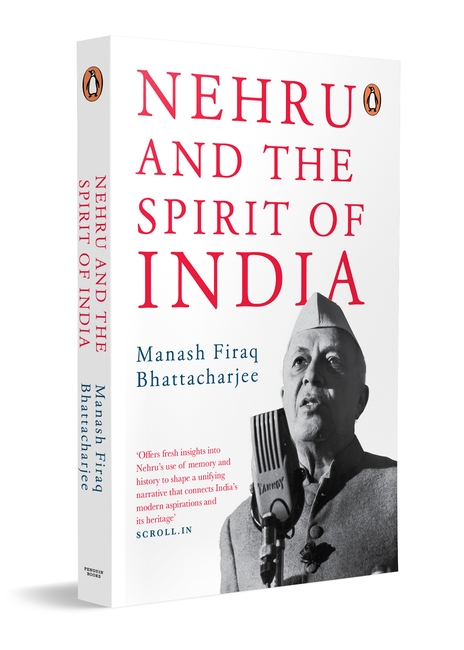
Jawaharlal Nehru was Plato’s philosopher king, who ‘discovered’ an India that remains an undiscovered possibility. Nehru and the Spirit of India is a critical and nuanced perusal of his intellectual and political legacy.

From the ‘politics of friendship’ between Nehru and Sheikh Abdullah, Nehru’s defense of secularism in the Constituent Assembly Debates, to what propelled Nehru to curb free speech in the First Amendment, Manash Firaq Bhattacharjee draws from political history to illuminate fierce debates in India today: Kashmir, the CAA, and hate speech. Be it contemporary events like the miracle of Ganesha drinking milk and the use of Vedic astrology in Chandrayaan-2, or the agonising suicide of a doctor, the author examines the fractured nature of Indian modernity, which Nehru had suggestively called a ‘garb’. Bhattacharjee bolsters Nehru’s view that India is enriched by the encounter of cultures and that we must not discard the past, but engage with it.

As a second-generation refugee, Bhattacharjee argues for a ‘minoritarian’ approach to national politics. Breaking ideological and disciplinary protocols, he compels us to learn from the insights of poets and thinkers. Lucidly written, this provocative book offers an original perspective on Nehru and Indian history.

Price of the Modi Years

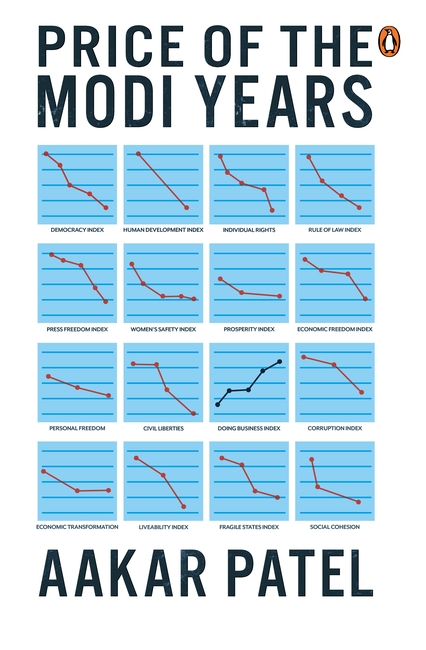
Columnist, author and political commentator, Aakar Patel has long been a close observer of the political scenario. In Price of the Modi Years, he seeks to explain the data and facts on India’s performance under Narendra Modi.

Modi’s predecessor, Manmohan Singh, had once said that Modi would be a disaster as prime minister. This book shows how. It concedes Modi’s popularity; this is an accounting of the damage he has wrought. It is the history of India since 2014, assessing the damage across the polity from the economy, national security, federalism, foreign relations, legislations and the judiciary to media and civil society.

Our memories are not long, news cycles are transient and incidents are forgotten or misclassified as being only episodic, unless documented, unified and placed together as a record. And, therefore, this book-a history of these present times.

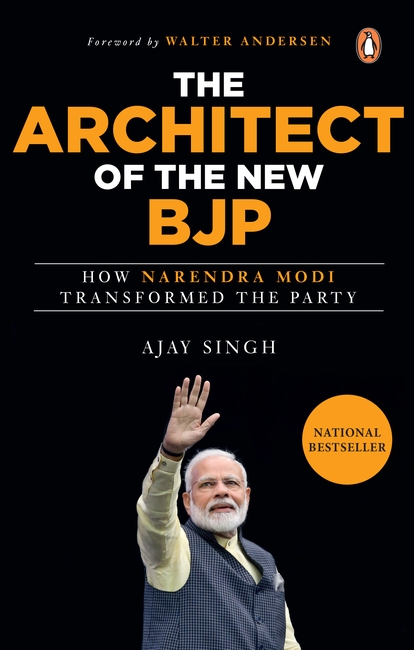
The Architect of the New BJP

In less than forty years of its existence, the Bharatiya Janata Party has become the world’s largest political party and continues to go from strength to strength in Indian politics. Although its historic rise may seem organic to some, there is much internal deliberation and planning that has aided the growth of this 180-million-member organization.

The Architect of the New BJP uses in-depth research and concrete examples to explain how the BJP has transformed over the decades. It reveals lesser-known contributions, like Prime Minister Narendra Modi’s experiments with traditional methods of party-building, his keen eye for detail and the different innovative methodologies to expand the party. Ajay Singh not only examines the past of the party, including the vision of its founders, but also provides a glimpse into the future of the party. Based on extensive interviews with many party workers, leaders and observers, this is the story of how the veterans of this cadre-based party, appreciating its limitations, developed a unique Indian model that eventually transformed the BJP into the election-winning machine it is today.

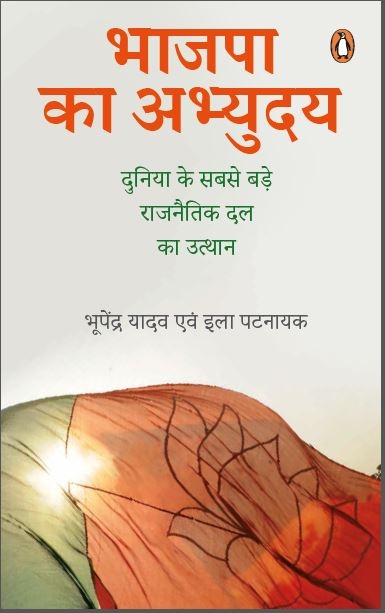
Bhajpa Ka Abhyuday

TheBharatiyaJanataPartyisanideathatwas seededintothemindsof nationalist Jana Sangh leaders when they began to envision India after Independence.Muchliketheverycorethefreedomstrugglewasbuilton, theysawIndiaasademographically,culturallyandhistoricallycohesiveand unifiednation-asBharat.Inthisbook,seniorBJPleaderandcabinetminister Bhupender Yadav and leading economist Ila Patnaik come together totrace

the BJP’s journey from its humble roots, through ups and downs and to eventuallygetting303seatsinLokSabhain2019andbecomingtheworld’s largest political party. While focusing on the larger economics and political story, the book encapsulates many smaller, yet hugely significant stories of individualsandincidents,whichbrought theBJPtowhereitstandsnow.For thefirsttimeever,TheRiseoftheBJP,tellsustheinsidestoryofhowoneofthe most powerful political parties makes decisions, implements ideas and executespolicy.Meticulouslyresearchedandimmenselyreadable,thebook shows us how the BJP fought competing ideologies, political assaults and catapultedtothecentrestageofnationalpolitics.

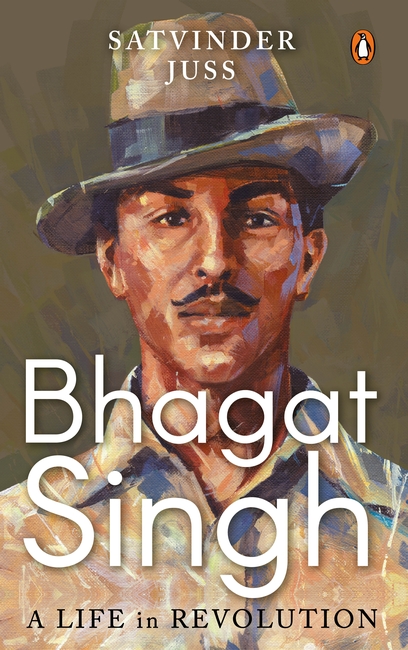
Bhagat Singh

The continual tussles over Bhagat Singh’s identity, even more amplified of late, are a testament to the heroic status the man continues to hold in the annals of the Indian freedom struggle. Despite him having addressed his views on religion, politics and activism, there are many willing to forge completely new narratives of his life, and many more willing to believe them.

A timely antidote, this meticulously researched biography is an expansive foray into the life of Bhagat Singh. The volume deliberates upon his family from before when he was born, examining along the way the role that various episodes, policies and people played in shaping the identity of a legendary revolutionary, while also delving into his opinions on important questions of the time. It shines a bright light on the oft-ignored personal influences that made Singh who he was, along with the issue of his contested identity in today’s politics. This is the definitive Bhagat Singh biography of our times.

error: Content is protected !!